What Makes a Notebook Actually Good for Writing?
I’ve been in this business long enough to know that most people don’t think about notebooks until they get a bad one. You know the feeling — you’re halfway through a meeting, pen hits the paper, and the ink bleeds through three pages. Or the spine cracks on day two.
If you’re buying in bulk for a school or an office, that kind of frustration multiplies fast. So when someone asks me about the best notebooks for writing, I don’t start with brand names. I start with what holds up.
Let me be direct: a good writing notebook comes down to three things — paper weight, binding strength, and ruling clarity. Everything else is a bonus. And if you’re ordering a thousand units, the margin between “good enough” and “actually good” matters more than you’d think.
At our factory — Sri Rama Notebooks — we’ve been making notebooks since 1985. I’ve seen what works and what doesn’t. Here’s what I’d tell a friend who’s ordering notebooks for the first time.
Paper Quality: The Thing Nobody Talks About Until It Fails
I was talking to a procurement manager from a college in Vizag last month. He said, “We just need any notebook with 70 GSM paper.” And I get it — GSM is easy to specify. But here’s the thing: GSM alone doesn’t tell you how the paper will behave with a fountain pen or a ballpoint on the other side.
What you actually want is paper that’s been sized properly. That means the fibers are treated so ink doesn’t spread like a rumor. At our plant, we use 54–60 GSM paper that’s been tested for bleed-through. It’s not the thickest paper out there, but for everyday writing — notes, exams, office work — it does the job without feeling like cardboard.
Here’s a quick comparison of what different paper weights mean for writing:
| Paper GSM | Best For | Common Issues |
|---|---|---|
| 50–54 GSM | Budget notebooks, rough work | Ink bleed, transparency |
| 60–70 GSM | School notes, general office writing | Minimal bleed with ballpoint |
| 80–100 GSM | Premium diaries, fountain pens | Heavier, more expensive |
| 100+ GSM | Art, sketching, special projects | Too heavy for bulk orders |
So if you’re ordering for a school where kids write with gel pens and cheap ballpoints, 60 GSM is probably your sweet spot. Don’t let anyone upsell you to 80 GSM unless there’s a specific need.
Binding Types: Stitched vs Spiral vs Perfect — Which One Survives?
I’ve seen notebooks fall apart in a month. Not because the paper was bad — but because the binding gave up. If you’re buying best notebooks for writing in bulk, binding is where you save money or lose it.
Let me give you a real example. A school in Kakinada ordered 500 spiral notebooks last year. Within three weeks, the spirals on a quarter of them had popped out. Kids were walking around with loose pages. The principal called me and said, “Never spiral again.”
Here’s what I’ve learned over 40 years:
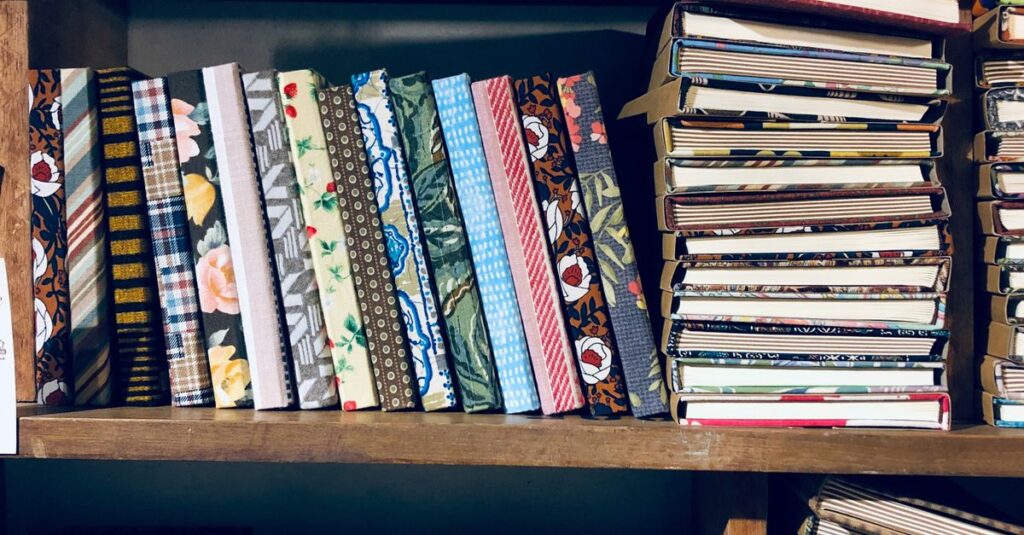
- Stitched binding — strongest option. Pages won’t fall out. Best for notebooks that need to last a whole year. Slightly more expensive, but worth it for schools and offices.
- Spiral binding — lays flat, easy to tear pages. But the wire can bend. Good for diaries and notepads where you’re not throwing them in a bag.
- Perfect binding — glued spine, like a paperback book. Cheap and looks clean, but pages will loosen if you force the notebook open. Acceptable for short-term use.
For bulk orders, I recommend stitched binding 9 times out of 10. It’s the one that doesn’t make you look bad six months later.
Expert Insight
I remember a supplier from Dubai who visited our factory around 2018. He’d been importing notebooks from China for years. He walked through our stitching unit and just stood there watching the machines for five minutes. Then he said, “You know, I’ve never seen a Chinese notebook with this stitch density. They cut corners — literally. Your thread count per inch is double.”
I didn’t know that was a selling point until he said it. But he was right. We’ve never skimped on stitches. And those notebooks? They hold. The lesson stuck with me: what you can’t see matters as much as what you can.
Ruling Layouts — It’s Not Just Lines on a Page
You’d think ruling is ruling. But after dealing with hundreds of schools and offices, I can tell you: people have strong opinions about their lines. And they’re often right.
Here are the common ruling types and when to use them:
- Single Ruled (SR) — Standard for most writing. Good for notes, assignments, and general office use.
- Four Ruled (FR) — Used in primary schools for handwriting practice. Four lines per row to guide letter size.
- Double Ruled (DR) — Margin line and writing line. Common in exam notebooks.
- Unruled (UR) — For drawing, diagrams, and free writing. Also used in corporate diaries where people want flexibility.
- Cross Ruled (CR) — Grid layout for mathematics and engineering.
I’ve seen schools order single ruled for everything and then complain that the kids can’t write in a straight line. That’s not a notebook problem — that’s a ruling mismatch. If you’re ordering for a specific purpose, get the ruling right the first time.
And here’s a detail most people miss: the spacing between lines. Our standard is 8mm for single ruled. Some manufacturers go down to 7mm to save paper. That’s cramped. For younger students, 9mm is better. It’s a small difference but it matters when you’re writing all day.
Customization — When Off-the-Shelf Won’t Cut It
I met a woman named Priya last year. She’s 34, runs a training institute in Guntur, and she needed notebooks with her logo and a specific cover color — something between teal and navy. She’d been to five printers before she found us. Every single one said, “We can do it, but minimum order is 5000.” Her order was 700.
Look, I get it — short runs are a headache for big factories. But we’ve always believed that if someone comes to us with a clear idea, we should find a way. We printed her 700 notebooks with her logo embossed on the cover, spiral bound, 60 GSM paper. She’s ordered twice since then.
If you’re buying in bulk — even as few as 200 units — you can get custom covers, logo printing, foil stamping, and private labeling. Most companies think customization is only for big corporate orders. It’s not. At Sri Rama Notebooks, we offer custom printing for schools, colleges, and businesses of any size. The minimum is lower than you think.
Why does this matter? Because if the notebook has your school’s name on it, it builds pride. If it has your company logo, it’s marketing that people actually use. That’s the kind of return on investment you can’t get from a billboard.
Size and Page Count — Don’t Guess, Measure
I’ve seen bulk orders go wrong because someone assumed “A5” meant the same thing across suppliers. It doesn’t. A5 is a standard size, but the actual dimensions can vary by a few millimeters depending on the cutting and binding. For school notebooks, the most common sizes in India are Long (27.2 cm × 17.1 cm) and Short (19.5 cm × 15.5 cm).
Here’s a quick reference:
- Long Notebook — Standard for high school and college. Fits in a bag side pocket. 200 pages common.
- Short Notebook — Compact, used for notes and rough work. 100–120 pages.
- King Size (23.6 cm × 17.3 cm) — Wider, good for diagrams and tables.
- A4 (29.7 cm × 21 cm) — Used for official documents, accounts, and corporate diaries.
Page count matters too. A notebook with 200 pages of 60 GSM paper weighs about 250 grams — that’s manageable. A 400-page notebook with the same paper? Heavy. If you’re ordering for students who carry multiple books, don’t overload them. 100–200 pages is the practical sweet spot for everyday writing.
One more thing: always ask for a sample before finalizing a bulk order. Not just a picture. A physical sample. We ship samples to any address in India — often free for serious inquiries. Because what looks good on screen can feel wrong in your hand.
Frequently Asked Questions
What is the best paper GSM for school notebooks?
60 GSM is widely considered the best balance of cost and durability for school writing. It handles ballpoint and gel pens without significant bleed. For fountain pens, go up to 80 GSM.
Which binding lasts longer for daily use?
Stitched binding outlasts spiral and perfect binding in most cases. The pages are sewn together, making it nearly impossible for pages to fall out. It’s the preferred choice for school notebooks and corporate diaries.
Can I get custom printed notebooks for my school or company?
Yes. Many manufacturers, including Sri Rama Notebooks, offer custom logo printing, embossing, and foil stamping. Minimum order quantities vary — we typically start at 200 units for custom covers.
What sizes are available for bulk notebook orders?
Common sizes include Long (27.2 × 17.1 cm), Short (19.5 × 15.5 cm), King (23.6 × 17.3 cm), and A4. We also produce A5 and Crown sizes. Tell your supplier your preferred dimensions.
How do I choose between single ruled and double ruled?
Single ruled (SR) is standard for general writing and note-taking. Double ruled (DR) has a red margin line on the left and is often used in exam notebooks. For younger students, four ruled (FR) is better for handwriting practice.
So — What Actually Are the Best Notebooks for Writing?
I’ll be honest: there’s no single perfect notebook. But if I had to give you a formula, it would be this: 60 GSM paper, stitched binding, single ruled, in a Long size with around 200 pages. That works for 80% of bulk buyers I deal with. Schools, colleges, even corporates.
The rest depends on your specific need. Maybe you need spiral for a diary that lays flat. Or A4 for account books. Or four ruled for kindergarten. That’s fine — the point is to know what questions to ask.
I don’t think there’s a universal answer here. Probably there never will be. But if you’re buying notebooks in bulk, the real question isn’t which brand — it’s whether the notebook will actually survive a year of use. Because a notebook that falls apart isn’t the best anything.
If you’re looking for a reliable partner who’s been making notebooks since 1985, Sri Rama Notebooks is here. We’ll help you figure out the details. No pressure, just honest advice.