Why Finding the Right Book Manufacturers Actually Matters
I’ve been in this industry since 1985. And I’ll tell you something — most people start looking for book manufacturers only after they’ve been burned once. They ordered 10,000 notebooks from someone. Got a good price. Then the binding started falling apart three weeks into the school term. The paper was so thin you could see the next page through it. And the company? Ghosted.
Look, I’m not saying that to scare you. I’m saying it because that call still comes to our factory at least once a month. Somebody’s procurement manager, sitting with a pile of unusable stock, trying to figure out where they went wrong.
You don’t have to learn that way. If you’re checking out book manufacturers right now — whether for school notebooks, corporate diaries, or account books — there are a few things you need to look at before you sign anything. I’ve been on both sides of this desk. Let me save you some trouble.
If this sounds familiar, you might want to check out what we do at Sri Rama Notebooks.
What Actually Makes a Book Manufacturer Reliable?
I think — and I could be wrong — that most buyers assume every factory is roughly the same. Paper, binding, cover. How different can it be?
It can be very different. Here’s a short list of things I’ve seen go wrong in 40 years:
- Paper that’s 50 GSM when they promised 60. You feel it the first time you write on it.
- Binding that looks tight but splits after 30 days. Happens with poor thread quality or rushed stitching.
- Covers that fade in two months. Or worse — curl up at the edges because the lamination was done wrong.
- Delivery dates that slip by weeks. Sometimes months. And no one tells you until you call.
I’m not saying every book manufacturers has these problems. But the ones that do? They’re usually cutting corners on things you can’t see right away.
One thing I’ve learned: a reliable manufacturer isn’t the one with the flashy website. It’s the one who answers the phone when you have a problem. That sounds simple. But you’d be surprised how rare it is.
Micro-Story: A Procurement Manager’s Wake-Up Call
Arun, 42. He works for a chain of 15 schools in and around Vijayawada. Last year, he ordered 25,000 notebooks from a manufacturer he found on a B2B marketplace. Price was good. Samples looked fine. But when the full order arrived, the paper was 52 GSM instead of 60. The spiral binding on 20% of the notebooks had the rings misaligned. He spent a month fighting with the supplier. Got a partial refund. But the damage to his school’s trust — that doesn’t come back easily.
He told me, “I should have visited the factory. Or at least asked for a reference.” I hear that a lot.
Anyway. That’s the kind of thing I think about when people ask what makes a manufacturer reliable.
The Hidden Details That Separate Good Manufacturers From Average Ones
Here’s something most people don’t think about: the glue. Not the most exciting topic, I know. But the type of adhesive used in perfect binding or the thread count in stitched notebooks — these are the things that determine whether a notebook lasts 3 months or 3 years.
I remember a conversation I had with an old binder in our Rajahmundry factory. He’d been doing this since before I joined. He said, “A notebook isn’t made of paper. It’s made of decisions.” At the time I thought he was being dramatic. Now I know he was right.
When you’re evaluating book manufacturers, here are a few things that matter more than people realize:
- Paper GSM consistency: Not just the number they quote, but whether every batch matches. We’ve seen suppliers who mix 54 GSM with 52 GSM in the same pallet.
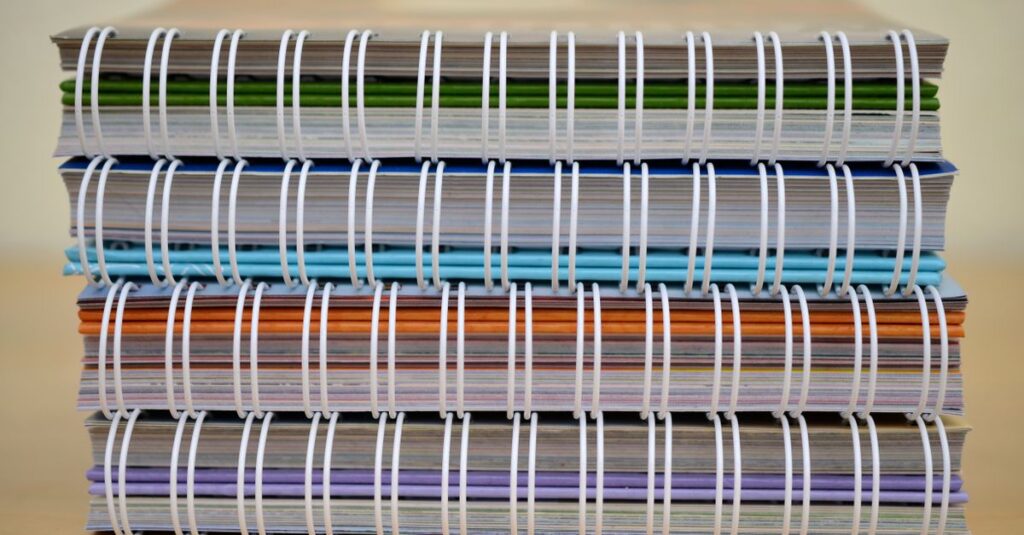
- Binding alignment: In spiral binding, if the holes are even 2mm off, the pages won’t turn right. That drives teachers crazy.
- Cover board density: A flimsy cover means the notebook bends in a backpack within a week. Good manufacturers use a higher GSM board.
- Print registration: If the ruled lines are uneven or the logo is off-center, it looks cheap. Even if the price wasn’t.
The thing is — okay, let me be direct. Most manufacturers can do a decent job on a small order. The real test is whether they can do 50,000 units and still keep the same quality. That’s rare.
Don’t quote me on this, but I’d say maybe 4 out of 10 manufacturers can actually deliver consistent quality at scale. The rest rely on luck or hope. Neither is a good plan for your supply chain.
Book Manufacturers: What You Need to Know About Customization
So you need custom notebooks. Logo on the cover. Maybe a brand color. Private label. Maybe you want a spiral notebook with your company name on it, or a diary with foil stamping for a corporate event.
This is where most book manufacturers stumble. Because customization isn’t just about printing a logo. There’s a lot of coordination that has to go right.
Let me give you a comparison table so you can see the difference between what I’d call a basic manufacturer and a manufacturer who actually knows how to handle custom work.
| Capability | Basic Manufacturer | Experienced Manufacturer |
|---|---|---|
| Logo printing | Single color, screen print only | Offset, foil stamping, embossing, multiple colors |
| Cover design | Limited to 2-3 standard templates | Custom artwork, any layout, full design support |
| Page ruling | SR and UR only | Any ruling type available |
| Binding options | Usually stitched only | Stitched, spiral, perfect binding |
| Delivery reliability | Often delays, poor communication | Clear timelines, regular updates |
| Minimum order | As low as 500 (but inconsistent) | Volume requirement ensures consistency |
I’m not saying basic manufacturers are bad. They can work for small orders. But if you’re buying for a school chain or a corporate event with 10,000 diaries, you need someone who’s done it before. Not someone learning on your order.
A quick thought on timelines: Custom work always takes longer than standard. Always. If a manufacturer promises you custom diaries in 7 days, they’re either lying or cutting serious corners. Three weeks is realistic for a good job.
How to Vet a Book Manufacturer Before You Commit
I’m going to be honest with you. There’s no magic checklist that guarantees you’ll get a good manufacturer. But after doing this for decades, I’ve seen a few patterns that separate the real ones from the pretenders.
Here’s what I’d do if I were in your shoes today:
- Ask for three references — and actually call them. Not the ones they give you. Ask for a client from 2 years ago. A manufacturer who’s proud of their work will happily connect you.
- Request a pre-production sample — Not a showroom demo. A sample from the exact paper stock and binding process they’ll use for your order. Write in it for a week. See how it holds up.
- Visit the factory if you can — Even by video call. Look at the shop floor. Is it organized? Are machines being maintained? Or is it chaotic? The physical environment tells you things no brochure can.
- Ask about their paper supplier — A manufacturer who doesn’t know where their paper comes from is a red flag. We source from specific mills because we’ve tested them. Good manufacturers know their supply chain.
- Get clarity on your order timeline — Not just delivery date. Ask about production milestones. When does printing start? When does binding begin? A vague answer means they don’t have a real process.
Look, I’ve seen companies skip all these steps and still get a good product. I’ve also seen them do everything and still have problems. That's just how manufacturing works. But the odds shift dramatically when you do your homework.
An apology in advance — I know this sounds like common sense. But you’d be surprised how often people ignore it because they’re in a hurry or the price is too good. And honestly? That’s exactly when things go wrong.
Expert Insight
I was reading something last month — I can’t remember where exactly — about the psychology of bulk buying. The researcher said something like: “When people buy in volume, they make decisions based on price, not trust. And that’s almost always a mistake.” It stuck with me because I’ve seen it happen so many times. A procurement manager saves 2 rupees per notebook. Then loses 2 lakh rupees in returns and unhappy customers. The math doesn’t add up, but people do it anyway.
Frequently Asked Questions
How do I find reliable book manufacturers for bulk orders?
Start with referrals from other businesses or look for manufacturers with a long track record. Check their factory, ask for samples, and confirm they can handle your volume. Avoid manufacturers who only communicate through sales reps without any production access.
What paper quality should I expect from professional book manufacturers?
Standard writing notebooks use 54 to 60 GSM paper. For corporate diaries or premium notebooks, 70 to 80 GSM is common. Always verify the GSM in writing. Some manufacturers swap paper grades between the sample and the bulk order.
Can book manufacturers do custom logo printing on notebooks?
Yes, most established manufacturers offer logo printing, foil stamping, embossing, and full cover customization. The key is to confirm the process they use. Screen printing works for simple logos, while offset printing is better for detailed designs.
How long does it take to manufacture a bulk notebook order?
Standard orders without customization usually take 2 to 3 weeks. Custom orders with printing or special binding can take 4 to 6 weeks depending on volume. If a manufacturer promises faster, be sceptical and ask for guarantees.
What binding type is best for school notebooks?
Stitched sewn binding is the most durable for school use. It doesn’t come apart easily. Spiral binding works well for smaller notebooks but can get damaged in backpacks. Perfect binding is better for diaries and account books, not daily use notebooks.
So What’s the Takeaway Here
Honestly, I don’t think there’s a perfect way to choose book manufacturers. Every company has its strengths and weaknesses. The question is whether their weaknesses are things you can live with.
For me, the non-negotiables are: consistent paper quality, reliable binding, and a person you can call when something goes wrong. Everything else can be worked out.
I’ve been doing this long enough to know that trust isn’t built in one conversation. It’s built over years. But you have to start somewhere. If you’re still looking, you can reach us at Sri Rama Notebooks. We’ve been at this since 1985. We’ll be here.