So, What Is A5 Paper Format, Really?
Here’s the thing — nine times out of ten, when a procurement manager asks me about A5 paper size, what they’re really asking is: “Is this too small? Is it the wrong size for what we need?” I get it. You’re looking at a spec sheet for thousands of notebooks, and trying to visualize a millimeter measurement on a page is a headache, honestly.
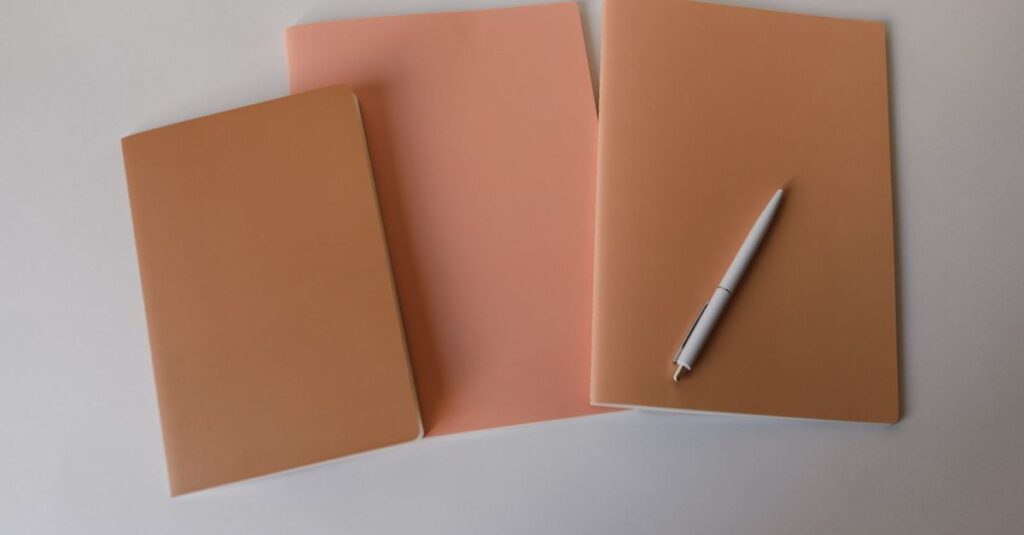
The A5 paper size is exactly half of a standard A4 sheet. Think 148mm by 210mm. Or, if you think in centimetres like most of us here, that’s about 14.8 cm by 21 cm. It’s not tiny, but it’s not a full-blown A4 notepad either. It’s the Goldilocks zone for a lot of jobs. Compact enough to be portable, but with enough real estate to actually write a decent meeting note.
I used to think it was just a stationery enthusiast’s thing. Then I started making them for businesses. And the demand just kept going up. Which makes complete sense when you see the way people actually use them. If you’re ordering in bulk, you need to know what you’re getting into.
A5, A4, B5 — Let’s Stop The Confusion
Most confusion happens here. People hear “A5 notebook” and picture a pocket diary. Sometimes it is. But often, it’s not the smallest size out there. The whole “A” series is based on halving the bigger size. So A4 is the office standard sheet, right?
Fold it in half. That’s A5. Fold it again. That’s A6—which is your classic pocket notebook size. B5 is a different standard entirely, and it sits between A4 and A5 size-wise, which is why so many students and professionals love it.
Look, I’ll be direct. If you’re ordering for corporate gifting or internal use, the wrong size can make the whole batch feel cheap or useless. I saw this happen once — a big bank ordered custom-branded notebooks for a conference. They went with A6, thinking “handy.” They looked like promotional notepads you’d get with a realtor’s calendar. People left them on the tables. The A5 ones? They got taken back to desks.
| Paper Size / Format | Dimensions (mm) | Dimensions (approx. inches) | Best For |
|---|---|---|---|
| A4 Notebook | 210 × 297 mm | 8.3 × 11.7 in | Legal/office reports, full meeting notes, student long-answer sheets. |
| A5 Notebook | 148 × 210 mm | 5.8 × 8.3 in | Main daily notebook, project logs, client meeting notes, to-do lists. |
| B5 Notebook | 176 × 250 mm | 6.9 × 9.8 in | Perfect for students, planners, people who want more space than A5 but more portability than A4. |
| A6 Notebook | 105 × 148 mm | 4.1 × 5.8 in | Pocket-sized notes, quick lists, personal journals, retail freebies. |
| Crown Size (India Standard) | 173 × 235 mm | 6.8 × 9.25 in | Traditional Indian school notebooks, specific regional stationary orders. |
This is the part nobody says out loud: the size sets the expectation for quality and purpose before anyone even opens the cover.
Why A5 Is Probably Your Best Bet for Bulk Corporate Orders
Think about it this way. What most people don’t realize is that a notebook is, in a weird way, a tool for thought. The format dictates how someone will use it. Give someone a massive A4 ledger, and they feel like they need to write formal minutes. Give them a tiny A6 pad, and they scribble a phone number and throw it away. But an A5? It invites actual thinking. It’s the size of a printed book page. It feels substantial enough for work, but you can still slip it into a laptop sleeve or a bag without it looking like you’re carrying a manual.
I was talking to a client from a big software company last week. They were ordering branded notebooks for their entire sales team. Their first instinct was to go cheap and small — A6. But we talked them into A5. After a year, they told me the feedback was simple: the A5 notebooks became their team’s go-to for client meetings. The slightly larger format forced a bit more space, which meant they jotted down more details about the client’s needs. It wasn’t just a notebook; it became part of their sales process. A5’s size creates that balance.
Here’s my honest take on when to pull the trigger on A5:
- Corporate Diaries & Planners: It’s the international standard for mid-size planners. Professional, not bulky.
- In-House Team Notebooks: For daily stand-ups, project tracking, idea capture. It feels like a “work” tool.
- Conference & Event Giveaways: Higher perceived value than an A6 pad, more portable than an A4 binder.
- Custom Notebooks for Branding: More space on the cover for your design and logo to actually be seen and felt.
- Senior Management Gifts: You’re not giving a scrap pad. You’re giving a leather-bound A5 executive notebook. Vibe matters. A lot.
Anyway. Where was I. The short version: A5 gets used. And that’s the whole point of a promotional or internal notebook.
A Tiny Story
Meet Priya. She’s 34, a project lead at a tech firm in Hyderabad. Her company gave her one of our custom A5 notebooks with the corporate logo. I met her at a trade fair months later. She still had it, about half-full. “I use it for meeting notes,” she said. “The thing is, I don’t have to find a new one every week. I can track a whole project in here. It lives on my desk, and people see the logo every time they come in for a meeting.” She pointed to a small coffee stain on the cover. “That happened when we were closing a big deal. I keep it there. For luck.” She didn’t say anything else about the product. But she said that.
The Manufacturing View: What Changes When You Order A5
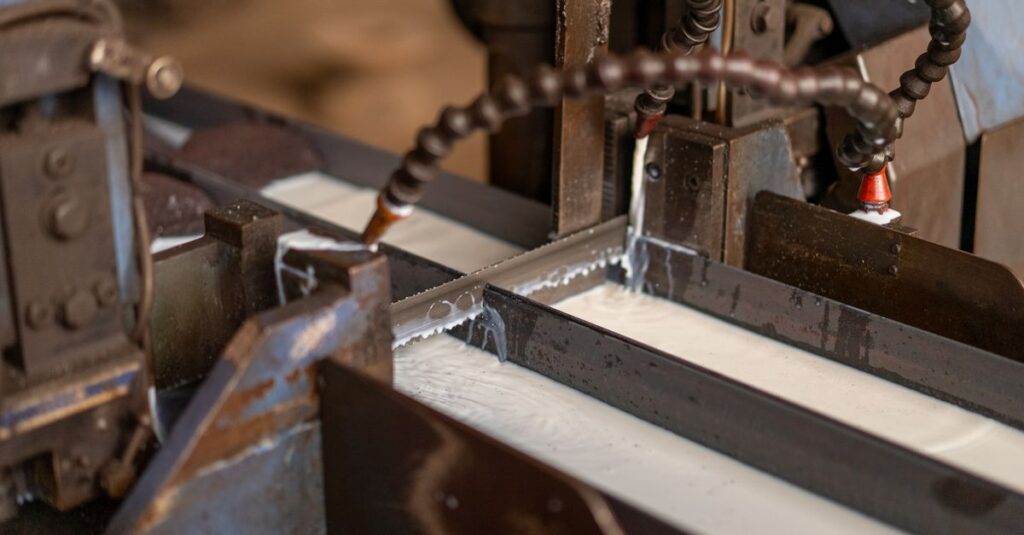
Right. So, from our side of the factory floor, A5 is interesting. It starts life as an A4 sheet. That’s the most efficient way to cut it — you get two A5 pages from one A4 sheet with minimal wastage. This is a good thing for cost. It means we can often offer a better price per unit on bulk A5 orders because the raw material process is so streamlined.
Expert Insight
I was reading something last month and one line stuck with me. It was from a print production handbook, the dry kind from the 90s. It said something like: “The most economical formats are those dictated by the geometry of the parent sheet. You are not just buying dimensions; you are buying the efficiency of the machine’s cut.” I don’t have a cleaner way to put it than that. For us, A5 isn’t a special request — it’s a natural, economical by-product of the notebook world. And that efficiency translates directly into a more stable price for you, especially if you’re looking at volume.
But the binding gets different. The smaller the book, the harder it is to get a clean, durable spine. An A4 book has a big, flat area to work with. An A5 book is more… finicky. You need the right glue or stitch pattern so it doesn’t feel flimsy. That’s where the 40 years of this specific craft comes in. Our perfect-binding machine for A5 notebooks is set up differently than the one for A4 school registers. It’s a finesse thing. The margins are smaller, literally and figuratively. And most bulk buyers don’t know to ask about this.
The paper feels different, too. Same 54 GSM writing paper, but in a smaller format, it feels stiffer, more premium. It’s a psychology thing — you’re not flexing a large, thin sheet. You’re turning a sturdy, compact page.
Your Checklist Before You Place an A5 Order
Before you finalize that bulk purchase of 5,000 A5 notebooks, run through this. I’ve heard this enough times now to know it’s not a coincidence.
- Purpose Check: Are these for jotting or for documenting? Jotting = maybe A6. Documenting = A5 or B5.
- Portability Test: Ask for a sample. Seriously. Put it in the bag your team uses. Does it fit in the laptop compartment?
- Page Count Matters: An A5 notebook with 200 pages is a thick, substantial object. 92 pages is sleek and professional. 700 pages is a tome. The thickness changes the feel and the binding we recommend.
- Ruling Type: What are people writing? Single Ruled (SR) for most notes. Unruled (UR) for sketches or freeform thinkers. Broad Ruled (BR) for bigger handwriting. Think about the user, not just the price list.
- Customization Scope: You have more usable cover space on an A5 than an A6. Don’t waste it. A good custom cover design makes the notebook a keeper. A cheap one makes it recyclable.
Three things happen when you get this right: the notebooks get used, your brand stays on desks longer, and you don’t get that awkward call six months later asking why the spines are falling apart.
And honestly? Most people know this already, intuitively. They just need someone in manufacturing to confirm it. The notebook isn’t a commodity. It’s a statement about how you treat your people and your ideas.
A5 for Schools and Specialized Use Cases
Now, A5 isn’t just for corporate offices. Schools and colleges use them a lot for specific subjects. Language labs, chemistry practicals, field research notes. It’s a perfect size for a supplementary subject notebook — not the main 200-page long notebook, but the one you use for a single project.
A5 is also the darling of the creative niche — writers, artists, designers. They use them as idea books because they’re easy to carry, but the page isn’t intimidatingly large. A blank A4 page can stare back at you. A blank A5 page just asks you to start.
This, by the way, is why we do so much private label work for international stationery brands. They sell A5 notebooks as a premium lifestyle product. We manufacture them at bulk efficiency. Two different worlds, meeting in the middle.
Frequently Asked Questions
Is A5 the same as a small notebook?
Not exactly. “Small” is vague. A5 is a specific international standard (148 x 210 mm). It’s half of A4. It’s bigger than a pocket notepad (A6) and smaller than a standard school exercise book (which is often Crown or B5 size). So it’s a distinct mid-sized format.
What is A5 paper size good for?
A5 format is a great all-rounder. It’s ideal for daily to-do lists, meeting notes, project journals, client logs, and personal planning. It’s big enough for detailed notes but small enough to carry comfortably, making it a popular choice for corporate diaries and custom-branded notebooks.
Is A5 or B5 better?
It depends! B5 is slightly larger, giving you more writing space per page, which is great for students or detailed note-takers who want less flipping. A5 is more portable and is often the preferred size for professionals who carry their notebook to meetings. It’s a trade-off between space and convenience.
What is the Indian equivalent of A5 paper?
There isn’t a direct, traditional Indian equivalent. The closest standard Indian notebook size would be a “Short Notebook” which is 19.5 x 15.5 cm. That’s actually a bit wider and shorter than A5. For international compatibility or exports, the international A5 paper format is the way to go.
Can you customize A5 notebooks in bulk?
Absolutely. That’s where a manufacturer like us comes in. You can customize the cover (logo, full-color design), the paper (ruling, GSM, page count), and the binding (spiral, stitched, perfect). Bulk customization is often more cost-effective per unit for A5 notebooks due to efficient paper cut patterns.
So, Which Size Actually Wins?
I don’t think there’s one answer here. Probably there isn’t. But if you’ve read this far, you’re not just looking for dimensions. You’re figuring out if A5 is the right tool for the job you’re giving someone.
My take? The A5 paper format has quietly become the workhorse of the professional notebook world for a reason. It disappears into the work instead of getting in the way. It feels considered, not cheap. And in bulk manufacturing, it’s a format we can produce efficiently, which means you get a better quality product for your budget. That’s really the whole point.
If your goal is to give something that will be used every day — not tossed in a drawer — then A5 is almost always the safe, smart bet. It just works. And if you want to see what that looks and feels like with your brand on it, we should probably talk.