Look, Let’s Get This Straight About A5 Paper
You’re probably here because you need to order notebooks. A lot of them. And someone, somewhere, mentioned “A5” and now you’re staring at a spec sheet trying to figure out if it’s the right fit for your school, your corporate giveaway, or your next bulk shipment. I get it. It’s not just a measurement — it’s a decision that affects cost, usability, and whether the person using it will actually, you know, use it.
Here’s the thing. Most people think of A5 as just “that smaller notebook.” But when you’re ordering 10,000 units, the difference between an inch here and a centimeter there isn’t just academic. It’s money. It’s logistics. It’s user satisfaction. And honestly? A lot of suppliers gloss over this. They’ll just quote you a price per piece without ever asking what you actually need it for.
If you’re a procurement manager, a school administrator, or a distributor, this is the part of the job nobody warns you about. The paper size rabbit hole. Let’s climb out of it together. If you’re in the middle of a bulk order headache, this might be worth a look.
So, What Exactly Is A5 Paper Size?
In the simplest terms, A5 is half of an A4 sheet. That’s the elevator pitch. But that doesn’t help you when you’re holding a sample, does it? Let’s get specific.
The standard A5 dimensions are 148 x 210 millimeters. In inches, that’s roughly 5.8 x 8.3. Think of a medium-sized paperback novel. Or a standard daily planner. It’s that Goldilocks zone — not too big to be cumbersome, not too small to be useless. It fits in most bags, sits comfortably on a desk, and gives enough writing space without feeling overwhelming.
The “A” series, by the way, is an ISO standard. It starts with A0 (a massive sheet) and halves its way down. A4 is the office paper we all know. A5 is its handy little sibling. The math is beautifully consistent — the ratio of the sides is always the square root of 2 (about 1.414). This means you can scale up or down perfectly without distorting the layout. It’s one of those quietly brilliant ideas that makes mass production possible.
But here’s the real-world twist I see all the time: not every “A5” notebook is truly A5. Some manufacturers cut corners — literally. They’ll call something “A5” if it’s in the ballpark, shaving off a few millimeters to save on paper costs. When you’re buying in bulk, those millimeters add up to real savings for them… and potential frustration for your end-users when the notebook doesn’t fit a standard sleeve or holder.
Why A5? The Unspoken Reasons It Works
You don’t choose a paper size in a vacuum. There’s a context. A mood, almost. Let me tell you about Priya. She’s 28, a project manager at a tech startup in Hyderabad. Her company ordered 500 custom A5 notebooks as swag for a conference. Priya’s notebook sits on her desk, wedged between a wireless charger and a dying succulent. She uses it for meeting notes, but only the important ones. The quick, disposable stuff goes on her laptop. The A5 size, for her, signals “this is worth keeping.” It’s intentional. It has weight.
That’s the first reason A5 works: perceived value. It feels substantial without being ostentatious. For corporate gifts, that’s everything.
Second, and this is huge for schools and training institutes: portability meets functionality. A student can carry an A5 notebook in a backpack with a textbook and a lunchbox. It’s large enough for detailed diagrams in a science class, but compact enough for quick vocabulary lists during language lab. It’s the workhorse size. I’ve talked to principals who swear by A5 for middle and high school — it’s the transition from the smaller, simpler notebooks of primary school to the more serious tools of higher education.
Third, and this is pure logistics: efficiency. The A-series paper sizes are designed to minimize waste. You can cut them from larger sheets with almost no off-cuts. For a manufacturer like us, that means we can optimize paper usage, which keeps costs down. That saving gets passed on to you, the bulk buyer. When you’re ordering for an entire district or a year’s worth of corporate diaries, that efficiency translates directly to your bottom line.
The question isn’t really “What is A5?” It’s “What can A5 do for my specific need?”
Expert Insight
I was reading an old industry journal last month — one of those physical magazines that still gets printed — and a bindery manager said something that stuck with me. He was talking about the feel of a notebook in your hand. He said the ideal size isn’t measured in millimeters, but in the space between your thumb and forefinger when you hold it open, one-handed. A5, he argued, hits that sweet spot for most adult hands. It’s balanced. It’s about ergonomics as much as it is about dimensions. I don’t have a cleaner way to put it than that. We design for hands, not just for specs.
A5 vs. The Competition: A Real-World Comparison
Okay, let’s get practical. You’re probably comparing A5 to other common sizes. Maybe your current supplier offers “Long” or “Crown” size and you’re wondering if A5 is a better fit. Here’s a breakdown that cuts through the marketing speak.
| Feature | A5 Notebook (148×210 mm) | Common “Long” Notebook (~272×171 mm) |
|---|---|---|
| Primary Use | General note-taking, journals, planners, corporate gifts. | Schoolwork, lengthy subject notes, accounting columns. |
| Portability | Excellent. Fits in handbags, laptop sleeves, small backpacks. | Good, but requires a larger bag or dedicated space. |
| Writing Experience | Comfortable for paragraphs, lists, sketches. Feels personal. | Great for structured, line-by-line work. Feels academic/professional. |
| Bulk Order Cost | Often very competitive due to standard paper size efficiency. | Can vary more as it’s not always an ISO standard cut. |
| Customization | Easy. Standard size means standard packaging, sleeves, and printing plates. | May require custom tooling for covers and binding, potentially higher cost. |
| International Appeal | High. Instantly recognizable globally. Simplifies export. | Lower. Primarily a regional (e.g., Indian) standard, can confuse international buyers. |
See the difference? It’s not about one being “better.” It’s about fit. If you’re supplying notebooks to schools across Tamil Nadu, the familiar “Long” size might be the safe, expected choice. But if you’re a business sourcing branded notebooks for a global sales team, or a distributor looking to export, A5 is the lingua franca. It removes a layer of friction. Seeing the options side-by-side in a catalog often makes the choice obvious.
How to Specify A5 When You Order (And Avoid Pitfalls)
This is where most bulk buyers get tripped up. You ask for “A5 notebooks” and assume everyone is on the same page. They’re not. Here’s what you actually need to specify, beyond just the size:
- Paper GSM: This is the weight. For a standard A5 writing notebook, 70-80 GSM is sturdy without being bulky. For a premium feel, go 90-100 GSM. For a budget school notebook, 58-64 GSM does the job. Don’t just say “good quality.” Name the number.
- Ruling: Single-ruled (SR)? Double-ruled (DR) for younger students? Unruled (UR) for sketches? This changes the whole function of the book.
- Page Count: 92 pages? 200? This determines the thickness (the “bulk”) of the spine. A 200-page A5 notebook has a very different heft than a 92-page one.
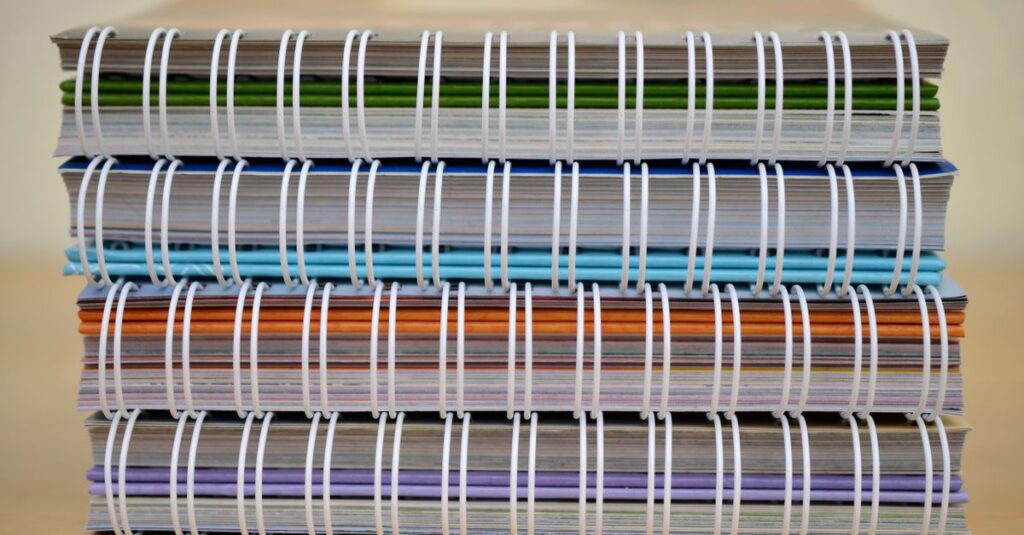
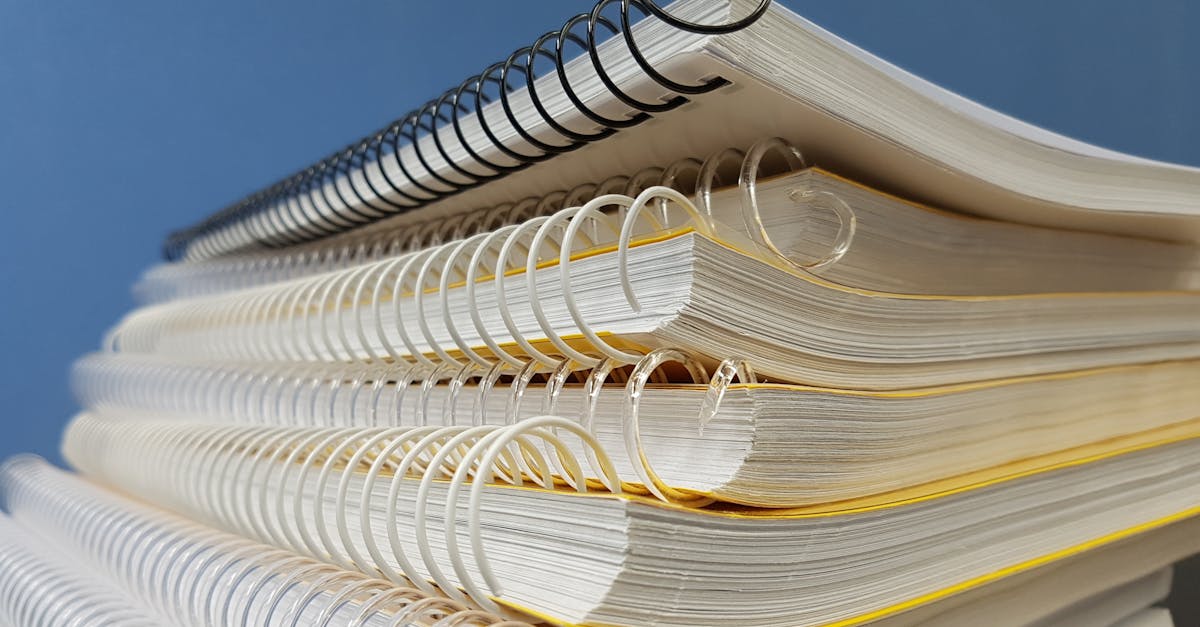
- Binding: Stitched binding is classic and lays flat. Spiral binding is great for planners that need to fold right back. Perfect binding (glued spine) gives a clean, book-like look for corporate diaries.
- Cover: Art card? Laminated? Hardbound? The cover material needs to be chosen for the notebook’s life. A student’s notebook needs to survive a year in a backpack. A corporate diary needs to look sharp on a boardroom table.
I think — and I could be wrong — that 90% of post-order dissatisfaction comes from mismatched expectations on these details, not the core size. The size is just the box. Everything inside the box is what makes it useful.
The Manufacturing View: What A5 Means on the Factory Floor
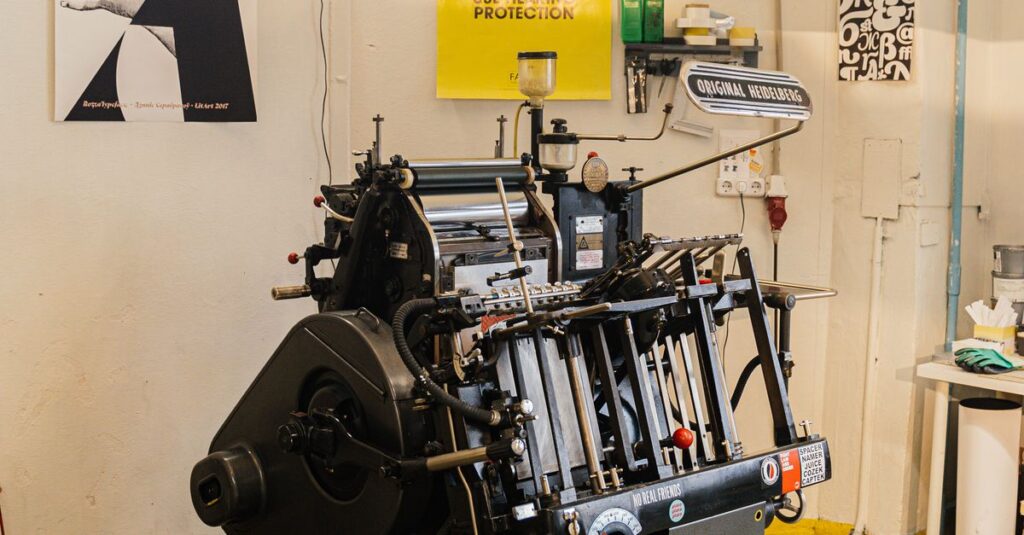
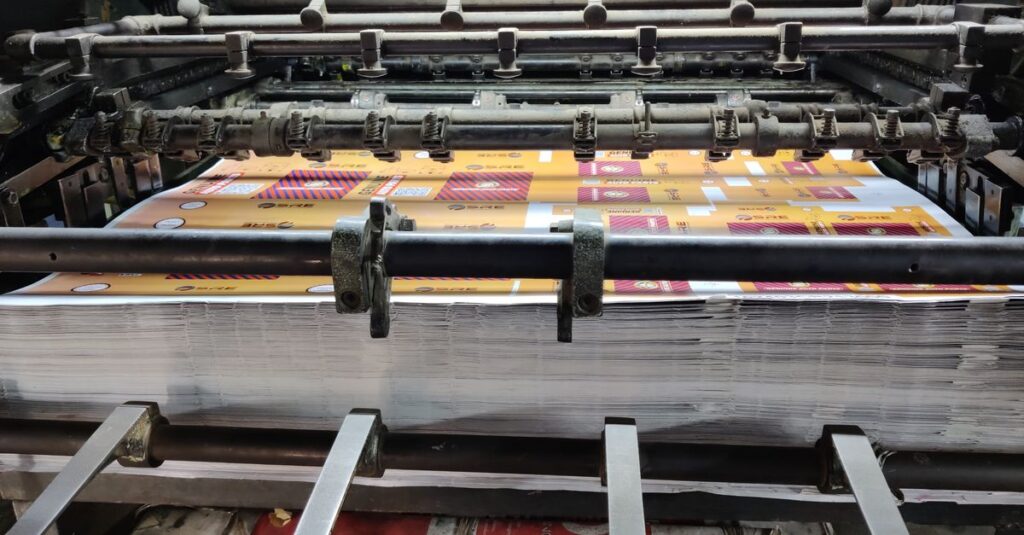
Right. Let’s pull back the curtain for a second. When you place an order for 20,000 A5 notebooks, what actually happens? At our place in Rajahmundry, it starts with the paper reels. Because A5 is a standard ISO size, we can use pre-programmed cutting patterns. The giant sheets come in, the guillotine cuts them down to A4, then to A5, with a rhythm that minimizes waste. It’s fast. It’s precise.
The real magic, though, is in the binding line. An A5 signature (a group of folded pages) is a manageable size for machines to collate, stitch, and glue. It’s less prone to misalignment than a huge A4 book, and sturdier than a tiny A6 one. We can run A5 production at a consistent, high speed — which is why, if you call us on a Tuesday with a large A5 order, we can often have it on a truck by Friday. That reliability matters when you’re supplying a network of schools or fulfilling a time-sensitive corporate contract.
And customization? It’s easier. Printers are calibrated for standard sizes. Designing a cover for an A5 notebook is straightforward because every designer has templates for it. There are no weird, non-standard corners to design around. This keeps your design costs lower and your turnaround time faster. It’s one of those behind-the-scenes things that makes a big difference, but you’d never know unless you’ve seen the machines run.
Frequently Asked Questions
Is A5 the same as a half letter size?
No, and this is a common mix-up, especially with international buyers. A5 is 148 x 210 mm. US “Half Letter” size is 140 x 216 mm. They’re close, but not interchangeable. If you need a notebook to fit a pre-made A5 holder or sleeve, Half Letter won’t work. Always confirm the exact metric dimensions.
What is A5 paper size best used for?
It’s the ultimate all-rounder. Think: student notebooks, professional journals, corporate notepads, travel diaries, recipe books, and medium-sized planners. Its strength is versatility. It’s big enough for serious work but small enough for daily carry. For bulk orders, it’s often the safest, most widely accepted choice.
How many A5 pages are in an A4 sheet?
Two. One A4 sheet, cut in half widthwise, gives you two A5 pages. This is the core of the A-series logic. It makes calculating paper needs for a large print run incredibly simple for manufacturers, which helps control costs.
Can I get custom-printed A5 notebooks in bulk?
Absolutely. In fact, A5 is one of the most popular sizes for custom printing because of its standard dimensions. You can print logos, mascots, corporate guidelines, or educational content on the covers and even inside pages. The process is streamlined for bulk orders.
Is A5 a good size for school notebooks?
Yes, particularly for secondary school and above. It provides ample space for detailed notes across subjects like mathematics (for graphs) and literature (for essays), while still being easy to organize and carry. For younger children with smaller handwriting, A6 or a custom “short” copy might be better.
The Bottom Line on A5
So, what is A5 paper size? It’s a standard. A reliable, globally understood container for ideas. For you — the buyer, the specifier, the person responsible for getting the right tools into the right hands — it represents clarity in a confusing market.
Choosing A5 isn’t a revolutionary decision. It’s a sensible one. It means you’re picking the path of least resistance for manufacturing, for user adoption, and often, for cost. It tells your students, your employees, or your customers that you chose something considered. Not the cheapest, not the flashiest, but the appropriately sized tool for the job.
I don’t think there’s one perfect paper size for every situation. Probably there isn’t. But if you’ve read this far, you’re not just looking for dimensions. You’re looking for confidence in your specification. You’re figuring out if this particular box is the right one to put your organization’s thoughts into. And honestly? For most needs, A5 is a very good box.