Why This Question Matters When You’re Ordering Notebooks in Bulk
I’ve seen procurement managers stare at a quote for five minutes, then look up and ask: “Offset or digital — which one should I pick?”
And honestly? Most of the time, they’re not asking about the technology. They’re asking about risk.
Will the print look cheap? Will the colors fade after three months? Am I paying too much for something that doesn’t matter to the end user?
So let me answer the real question first: What Is the Difference Between Offset & Digital Printing? Then we’ll talk about what it means for your notebook order.
If you’re in a hurry, Sri Rama Notebooks has been making both work since 1985 — we can help you decide faster than Google ever will.
How Offset Printing Works (and Why It Still Matters)
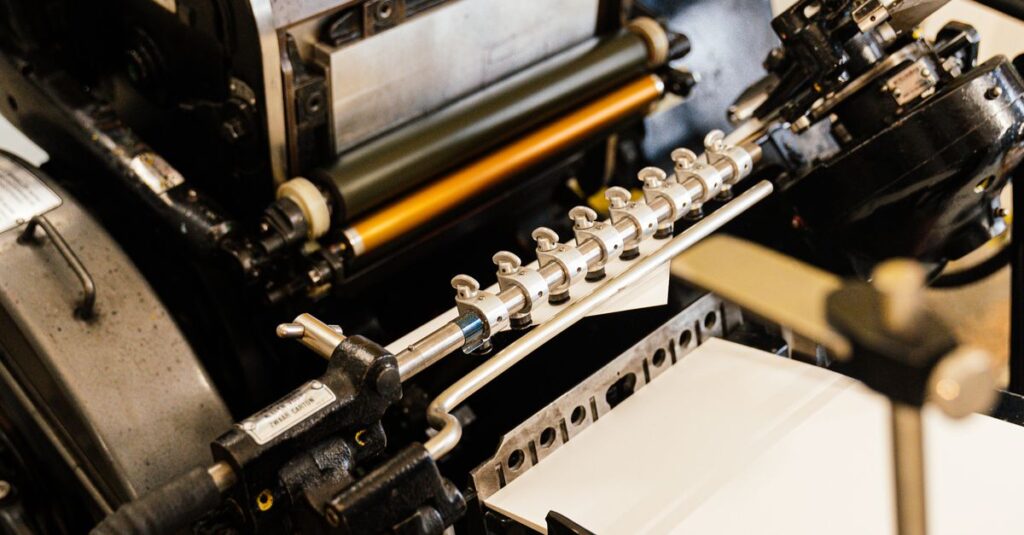
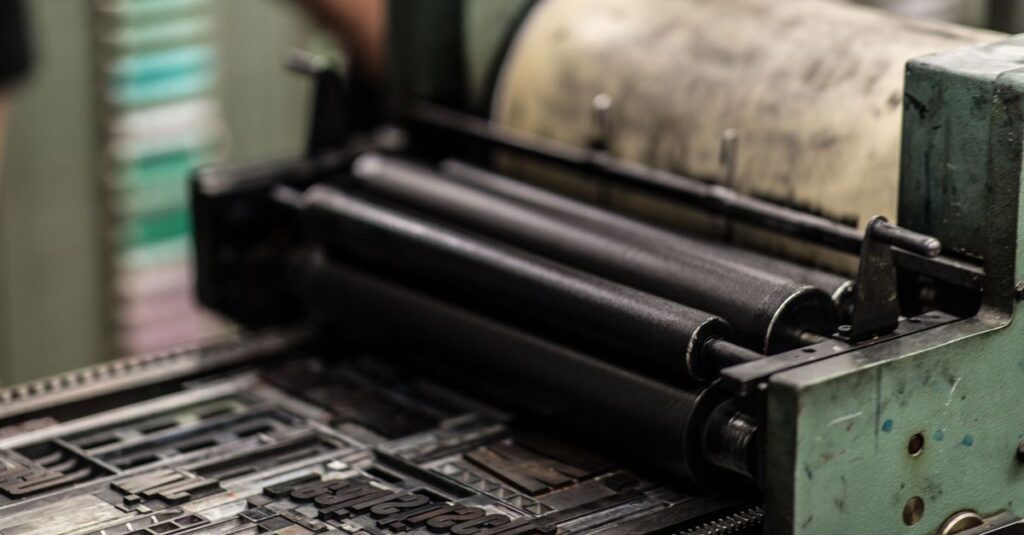
Offset printing is the old-school heavyweight. You make metal plates — one for each color — and transfer ink from the plate to a rubber blanket, then onto paper.
It’s not fast to set up. You might spend an hour aligning plates, mixing inks, running test sheets. But once it’s running? It flies. And the quality is rock-solid.
The Offset Advantage
- Best for long runs — 5,000 notebooks or more
- Color consistency across thousands of sheets
- Sharp, clean text and fine details
- Lower cost per unit once setup is done
- Works with a wide range of paper sizes and weights
But here’s the catch nobody tells you: offset printing hates change. If you need to fix a typo after the plates are made, you pay for new plates. And that hurts.
I once had a client — Ahmed, runs a chain of schools in Hyderabad — who ordered 20,000 notebooks with his logo. Halfway through, he realized the address on the cover was wrong. We had to scrap plates and restart. He swallowed the cost because his deadline was tight. Offset is powerful, but it’s not flexible.
The question isn’t whether offset is good. It’s whether your quantity and design are stable enough to handle it.
Digital Printing – The Flexible Alternative
Digital printing is like having a supercharged office printer that doesn’t stop. No plates, no chemicals, no long setup. You send a PDF, press print, and the machine starts rolling.
This changes everything for small runs and custom orders.
- No minimum quantity — print 50 notebooks or 500
- Change your design between batches at zero cost
- Variable data printing — each notebook can have a different name or message
- Faster turnaround — often same-day for small orders
But here’s the thing: digital printing uses toner or liquid ink that sits on top of the paper. It doesn’t absorb into the fibers the way offset ink does. Over time, the colors may fade or crack if the notebook gets bumped around.
Is that a dealbreaker? For a corporate diary that sits on a desk all year, maybe. For a school notebook that gets tossed in a bag and rained on, definitely think twice.
I’ve seen digital prints look amazing on high-gloss covers. I’ve also seen them peel off cheap paper after three months. Paper quality matters more in digital printing than anyone admits.
Offset vs Digital: The No-Nonsense Comparison Table
| Factor | Offset Printing | Digital Printing |
|---|---|---|
| Best for quantity | 1,000+ (ideal 5,000+) | 50–1,000 |
| Cost per notebook (bulk) | Lowest once setup is covered | Higher per unit, no setup |
| Setup time | 1–2 hours | 10–15 minutes |
| Color consistency | Excellent across entire run | Good, but can drift between batches |
| Design changes | Costly after plates made | Free and instant |
| Paper options | Wide range, rough to coated | Limited to papers toner can bond with |
| Turnaround | 5–14 days (includes setup) | 1–5 days |
| Durability | Ink bonds with paper, lasts decades | Surface coating may wear over time |
That table makes it look clean. It’s not that clean in real life. I’ve seen offset jobs where the printer rushed and the registration was off by half a millimeter. And digital runs that fooled everyone into thinking it was offset.
The real difference is predictability versus flexibility.
The Real-World Decision — A Story and What I’ve Learned
Let me tell you about Rajesh. He’s 38, a procurement officer for a university in Vijayawada. He needed 8,000 branded notebooks for a new academic year — four different departments, each with a slightly different cover design.
He came to us thinking he had to pick one method. Offset for the bulk, he assumed. But when we looked at four separate designs (only 2,000 each), digital made more sense. The total cost was higher per notebook, but he saved on plate charges and avoided 2,000 leftover notebooks with “Physics Dept.” on the cover when they needed “Chemistry.”
Rajesh later told me: “I was so focused on the unit price, I forgot about waste.” That’s the trap most buyers fall into.
Expert Insight
I was talking to an old printer friend last month — he runs a small press in Rajahmundry, third generation. He told me something I keep thinking about: “Offset is like cooking biryani for a hundred people. Digital is like making dosa one at a time. Both are good, but you wouldn’t make dosa for a wedding, and you wouldn’t fire up the biryani pot for a single guest.”
He’s right. The choice isn’t about which technology is better. It’s about matching the tool to the job. And most buyers don’t sit down long enough to figure out what the job actually is.
Cost, Quantity, and Quality – Breaking It Down
Let’s get practical. Here’s how I guide our clients at Sri Rama Notebooks when they ask about these two methods.
If your order is under 500 pieces: go digital. Period. The setup cost for offset will eat your budget alive.
If your order is between 500 and 2,000: it depends on how many different designs you need. One design? Offset might still be cheaper. Five designs? Digital wins.
If your order is over 2,000: offset is almost always the smarter choice. The per-unit price drops so low that digital can’t compete.
But there’s a wildcard: color. Offset handles pantone colors (spot colors) beautifully. Digital printers do CMYK and some spot colors, but matching a specific brand’s blue can be a headache.
I had a client who insisted on digital because they needed quick turnaround. Their corporate blue came out slightly purple. They weren’t happy. We reprinted on offset — took two extra days, but the color was exact.
So here’s my rule: if brand color matters more than speed, choose offset. If speed matters more than color, choose digital. And if both matter equally? You might need to adjust your expectations or your budget.
Which One Should You Pick for Your Notebook Order?
I can’t give you a single answer, because I don’t know your exact situation. But I can tell you what I’ve seen work for hundreds of buyers.
- Schools ordering 10,000+ notebooks with one cover design? Offset every time.
- Corporate gifts where each diary has a different person’s name? Digital is the only option.
- Small batches for a test launch? Digital lets you change the design next month without crying over wasted plates.
The question that matters more than “What Is the Difference Between Offset & Digital Printing?” is: What are you trying to avoid? If you’re trying to avoid high upfront costs, go digital. If you’re trying to avoid per-unit waste, go offset for large runs.
At the end of the day, both methods can produce a beautiful notebook. Sri Rama Notebooks uses both, because one size never fits all. We’d rather help you choose the right one than push you into something that only works for us.
Frequently Asked Questions
Frequently Asked Questions
Is digital printing cheaper than offset for small runs?
Yes. Digital has no plate setup costs, so for runs under 500 pieces it’s usually the better deal. Offset becomes cheaper per unit only after the setup cost is spread across enough copies.
Does offset printing give better quality than digital?
Generally, yes — offset produces sharper text, more consistent color, and ink that bonds with the paper. However, modern digital printers can look nearly identical, especially on coated stock.
Can I do full-color covers with digital printing?
Absolutely. Digital machines handle CMYK full color well. But if you have a specific pantone color that must be exact, offset is more reliable for matching spot colors.
What’s the minimum quantity for offset printing notebooks?
Most offset printers, including us, prefer at least 1,000 copies to make the plate costs worthwhile. For smaller orders, digital is usually the smarter route.
Does the paper type affect which printing method I should use?
Yes. Offset works on a wider range of paper surfaces — textured, uncoated, recycled. Digital printers need paper that toner can fuse to, so very rough or thick sheets may cause issues.
Conclusion (Two Takeaways, No Fluff)
Offset gives you unbeatable quality and price at scale, but demands volume and stable designs. Digital gives you flexibility and speed, but at a higher per-unit cost and sometimes shorter print life.
The real answer? It’s not about picking the “best” method. It’s about knowing your own constraints: quantity, number of designs, color accuracy needs, and timeline. Most people overthink this. I've made that mistake myself.
If you’re still unsure, pick up the phone. We deal with this every day at Sri Rama Notebooks. One conversation can save you a lot of regret.