I've been in this industry since 1985. Started when everything was analog — plates, films, ink that smelled like a memory. And I can tell you one thing: the future of commercial printing industry in India is not a funeral march. It's something else.
You hear people say printing is dying. That's nonsense. What's dying is the old way of doing things — the way we used to do it. The industry is shifting under our feet. And if you're ordering notebooks or diaries in bulk, you need to understand where this is headed. Because it affects your cost, your timelines, and frankly what you can even get printed now.
I'll be direct: the next five years will decide which printers survive and which don't. And if you're looking for a partner who actually gets it, Sri Rama Notebooks has been watching this change longer than most.
Why the Future of Commercial Printing Industry in India Won't Look Like the Past
Technology is the obvious reason. But that's not the whole story.
You see, the commercial printing industry in India has always been about volume. Run thousands of sheets, cut the cost per unit. That worked for decades. But now buyers want something different. They want shorter runs. Faster turnaround. Customisation without a price penalty.
Let me give you an example. A school principal called me last year. Needed 10,000 notebooks with the school logo. That's standard. But then she said: "I need 200 of them with the student's name printed on the cover." Ten years ago, that would have been impossible at that price. Now? We can do it. Not easily, but doable.
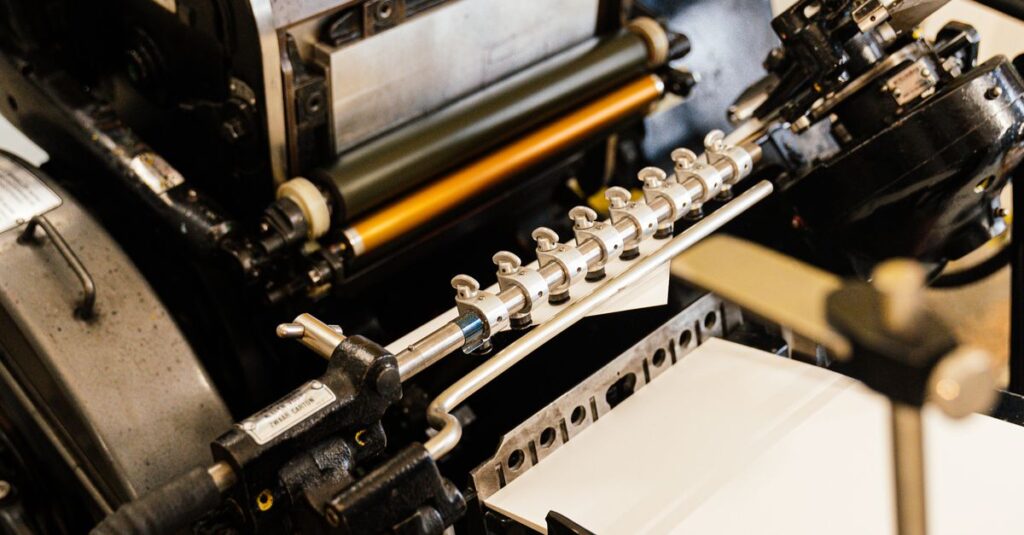
This is the shift. Digital printing isn't replacing offset — it's sitting beside it. And the future of commercial printing industry in India is about knowing when to use which. Here's a simple comparison:
| Aspect | Offset Printing | Digital Printing |
|---|---|---|
| Setup cost | High (plates, film, makeready) | Low (no plates) |
| Per-unit cost at high volume | Very low | Higher |
| Turnaround time | Days to weeks | Hours to days |
| Customisation per copy | Difficult | Easy (variable data) |
| Colour consistency | Excellent | Good to excellent |
| Best for | Long runs (5,000+ units) | Short runs (100–1,000 units) |
The point: There's no winner-take-all. The smart printers — the ones who survive — will offer both. And if you're a buyer, you want a partner who can flex. Not a one-trick pony.
Sustainability: The Unspoken Demand
I almost didn't put this section in. Because honestly? Most buyers don't ask for it. Not yet. But it's coming.
Expert Insight
I remember sitting with a paper supplier in 2019. Old guy, been in the business forty years. He said something that stuck: "The next generation won't buy paper that bleaches our rivers. They'll just buy different paper." He wasn't being dramatic. He was describing what he saw happening in Europe already. That's now hitting India. Slowly, but it's here. The future of commercial printing industry in India will involve recycled fibres, vegetable-based inks, and certifications that your notebook didn't kill a tree for nothing.
It's not a moral thing. It's a procurement requirement. Some corporate buyers already demand ISO 14001 or FSC-certified paper. Schools, especially international schools, ask about it. If you're a distributor, you'll need to care about this soon. I wish I had better news, but that's the direction.
Customization and Personalization Are Becoming the Norm
Look, I know this sounds like marketing fluff. But hear me out.
Three things happened in the last two years that changed our business:
- A company ordered 500 diaries — each with a different employee name embossed on the cover.
- A college wanted notebooks with their logo on every page — not just the cover.
- An event organiser ordered 2,000 notebooks with a QR code linking to the event app — and they wanted them in 4 days.
None of this was possible when I started. Now it's normal. The future of commercial printing industry in India is moving from "we print what we have" to "we print what you need, exactly as you need it."
And here's where it gets interesting — and slightly messy. The technology exists, but not every printer has invested in it. So when you're sourcing notebooks, you want a manufacturer that offers things like logo printing, private label, embossing, foil stamping, custom cover design. That's the future. Take a look at our customisation options
The On-Demand Revolution and What It Means for Bulk Orders
I was talking to a friend who runs a stationery shop in Vijayawada — Ravi, 48 years old, been supplying notebooks to government offices for twenty years. He told me: "Earlier I would order 10,000 notebooks in January and pray I don't run out before exams. Now I order 2,000 every month. Never overstock, never understock."
That's on-demand thinking. And it changes everything for commercial printers. Because you need a printer who can deliver small batches fast and still keep the price reasonable. That's a balancing act. Not everyone can do it.
The future of commercial printing industry in India will favour printers who have flexible production lines — digital for short runs, offset for big runs, and a workflow that switches between them without losing time. If your current supplier says "minimum order 5,000 units," start looking around. The industry is moving past that.
Export Opportunities: India as a Printing Hub
I'll be honest — I didn't believe we'd be exporting notebooks to the US and UK five years ago. But here we are. Gulf countries, Africa, Australia — they're all buying printed products from India. Why? Cost, quality, and turnaround.
The future of commercial printing industry in India isn't just domestic. It's global. The same digital tools that enable short runs here also let us work with buyers overseas. You can send a PDF, get a proof in 24 hours, and have finished notebooks on a ship in three weeks. That's unheard of in traditional printing.
But there's a catch. Exporting requires compliance — accurate paperwork, consistent quality, reliable shipping. Not every printer has that infrastructure. So if you're an international buyer, you want a manufacturer with export experience. We ship to over 15 countries currently.
Frequently Asked Questions
Is commercial printing dying in India?
No. It's evolving. Demand for printed products like notebooks, diaries, and packaging is still strong. But the methods are changing — digital, on-demand, and sustainable printing are growing. Printers that adapt will thrive. Those stuck in old ways may struggle.
What is the future of offset printing in India?
Offset isn't going away. It's still the most cost-effective for large runs — 5,000 notebooks or more. But it will coexist with digital. The future of commercial printing industry in India will see offset used for volume, digital for customisation and speed. Both are needed.
How is digital printing affecting the notebook industry?
It allows short runs and personalisation that weren't possible before. Schools can order 200 notebooks with different names. Companies can get branded diaries without huge minimums. Digital is a game-changer for customisation, not a replacement for offset.
What printing method is best for corporate diaries?
It depends on quantity. For 500+ diaries, offset gives better colour consistency and lower per-unit cost. For smaller orders or variable data (each diary has a different name), digital is the way to go. Talk to your printer about hybrid solutions.
How do I find a reliable commercial printing partner in India?
Look for experience, flexibility, and certifications. Ask about turnaround times, customisation options, and export capabilities. Visit the factory if possible. A partner like Sri Rama Notebooks with 40 years in the business can handle both traditional and modern demands.
So where does that leave us? The future of commercial printing industry in India is not a single path. It's many. Digital and offset. Domestic and export. Plain notebooks and fully personalised diaries. The printers who survive will be the ones who can walk all these paths at once.
I don't have a neat conclusion. The industry is too messy for that. But if you've been ordering notebooks the same way for years, maybe it's time to ask your supplier some uncomfortable questions. Because the future is already here — it's just unevenly distributed.
If you want to talk about your specific bulk order, contact Sri Rama Notebooks. We've been printing since 1985. We've seen changes. And we're still here.