Why Your Business Needs a Printing Poster Strategy
I was sitting with a procurement manager last month — Rajesh, from a corporate office in Vijayawada. He was frustrated. They'd spent sixty thousand rupees on posters for a product launch. Sixty thousand. And nobody noticed them.
“They just blended in,” he said. “Gray walls. Gray posters. Gray everything.”
That's the thing about a printing poster — it can either make people stop walking, or it can be invisible wallpaper. There's no middle ground. And most businesses get the invisible kind.
I've been in this industry since 1985. Seen posters that sold out inventory in two days. Seen posters that got turned into packing material. The difference isn't budget — it's knowing what you're doing. And honestly, most people don't.
If you're ordering in bulk — for a campaign, an event, or brand awareness — you need to think about this differently. Sri Rama Notebooks has been printing for decades, and I'll tell you what works and what doesn't.
What Actually Makes a Printing Poster Stand Out?
Here's what nobody tells you about a printing poster — the paper matters more than the design. I know that sounds backward. But I've seen a hundred thousand-rupee design printed on cheap paper look like a photocopy. It kills the whole thing.
Most people walk into a print shop and ask for the cheapest option. Don't do that. If you're going to the trouble of designing something, at least print it on paper that doesn't feel like a napkin.
Paper Weight That Works
For posters that go on walls — not handouts — you want 150 GSM to 250 GSM. Less than that and the poster curls at the corners. More than that and it's hard to stick and costs double. 170 GSM is the sweet spot for most indoor uses. For outdoor, go to 200 GSM with a laminate finish.
Finish Type Matters
- Matte finish — good for indoor, no glare, feels premium. But it absorbs moisture faster.
- Glossy finish — colors POP. Great for retail. But fingerprints show instantly.
- Satin finish — middle ground. Most corporate buyers I work with prefer this.
I remember a college principal from Kakinada — she ordered posters for a science fair. We suggested 170 GSM matte. She went with 120 GSM glossy to save money. The matte ones that we printed for display faded after three days. She called me and said, “You were right.” I didn't say I told you so. But I thought it.
The question isn't whether a poster can work. It's whether the one you're printing is built to last long enough to do its job.
The Real Problem with Most Bulk Orders
Let me tell you about Venkatesh. He's 34, works as a marketing head for a real estate firm in Gachibowli, Hyderabad. His company ordered 5,000 posters for a new housing project. They got them printed at some random shop. The colors were off — the sky looked grey instead of blue. They had to reprint the whole lot.
Here's the thing about bulk printing poster orders — a small mistake at the beginning becomes a big problem at the end. One wrong CMYK value. One misaligned margin. One bad proof approval. And suddenly you've wasted forty thousand rupees on paper that sits in a warehouse.
I've seen it happen enough times now that I know it's not bad luck. It's rushing. Everyone wants the posters yesterday. Nobody wants to check the proof carefully.
Look, I'll be direct — if you're ordering more than a thousand posters, you need to get a physical proof before the full run. Not a digital PDF. A physical print. Because colors on screen and colors on paper are two different languages.
And honestly? That's not even the biggest problem.
I think — and I could be wrong — that the biggest problem is that most people don't know what they want the poster to DO. They know they want a poster. But do they want people to call? Visit a website? Remember a name? Each of those needs a different design.
Which is… a lot to figure out when you're trying to get approvals from three different managers.
Printing Poster vs Digital Display — What Works Better
People ask me this all the time. “Is print dead? Should we just do Instagram ads?”
My answer is always the same. It depends.
Here's a comparison I made for a client last week. I think it helps.
| Factor | Printing Poster | Digital Display Screen |
|---|---|---|
| Cost for one-time setup | Low. Once printed, it's done. | High. Screen + software + maintenance. |
| Attention span from viewer | 3 to 7 seconds if placed right. | 1 to 3 seconds. Skips fast. |
| Durability | Weeks to months. | Years — but tech becomes obsolete. |
| Best for location | Hallways, lobbies, waiting rooms, retail. | High-footfall areas, events, reception. |
| Human memory recall | Higher. Physical touch helps memory. | Lower. Screen blindness is real. |
| Changeable content | No. You print it, it stays. | Yes. Change anytime instantly. |
The short version: if you want people to REMEMBER something, print a poster. If you want to show ten different things in one day, use a screen. Both work. But for brand recall, print still wins. Nine times out of ten.
What I've Learned from 40 Years of Printing Posters
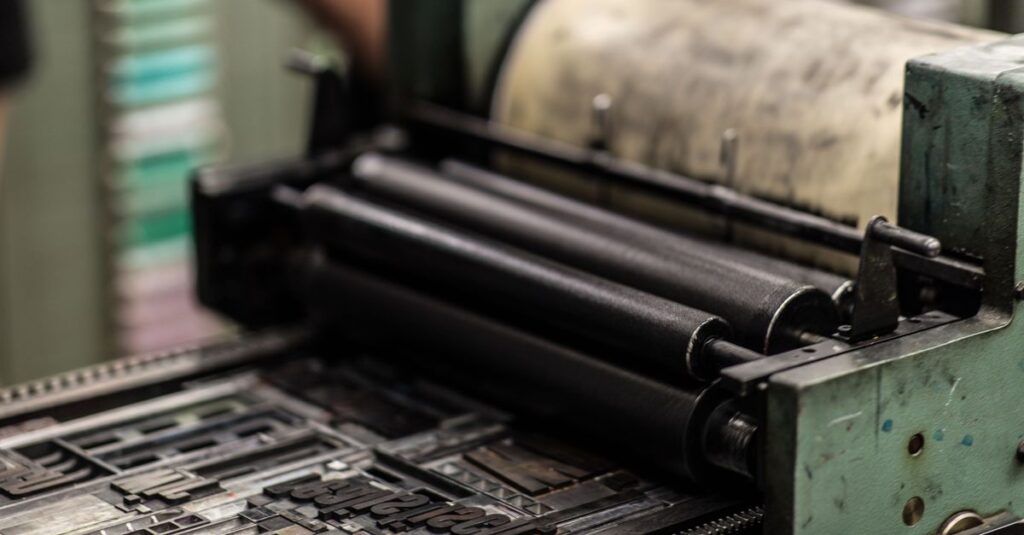
Back in the late 80s, we used to print posters on letterpress machines. They were slow. Noisy. Smelled of ink and metal. And every poster was a small miracle because one mistake meant starting over.
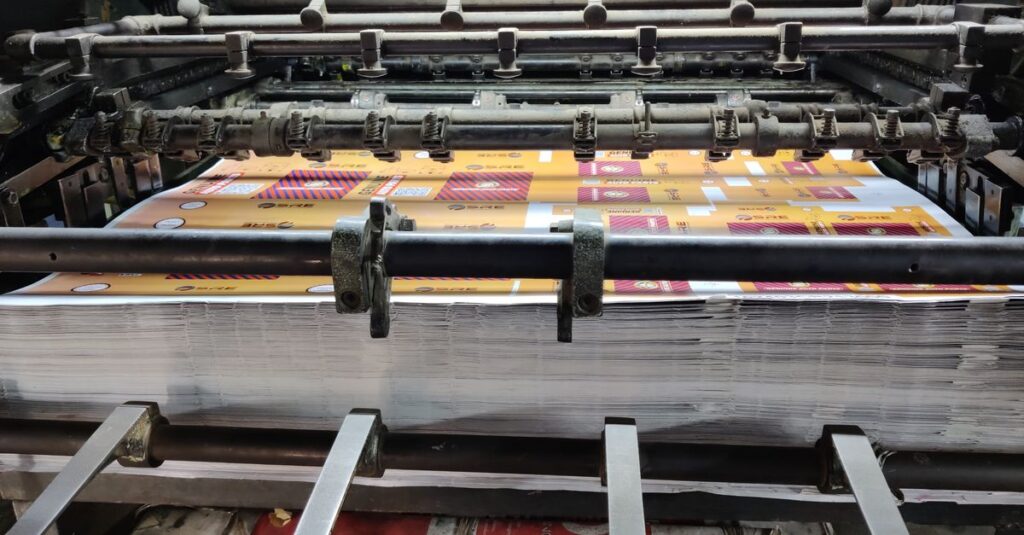
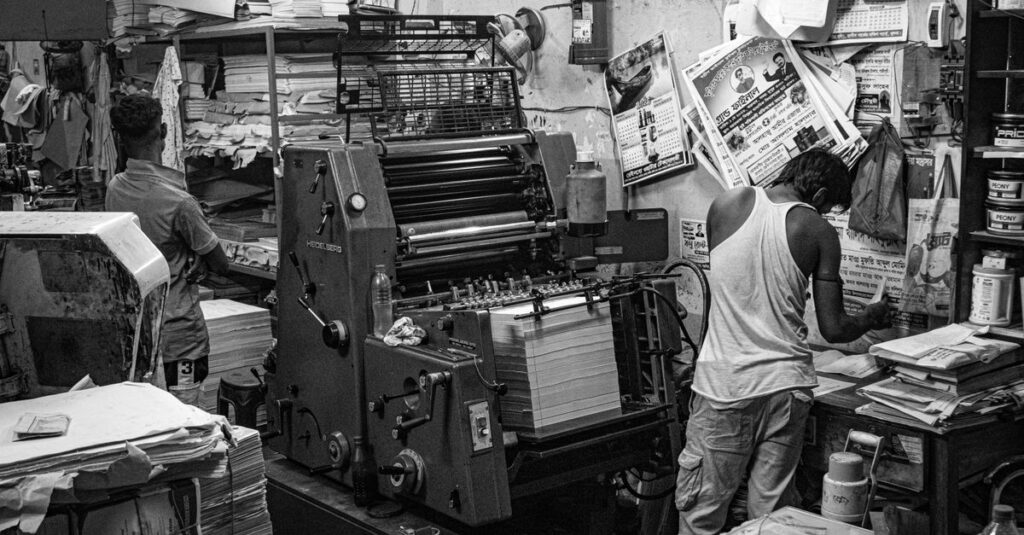
Things are different now. We have offset machines that can do 40,000 posters in a day if we push it. But some things haven't changed.
One thing I noticed early on: the best posters always had three things. A clear message. A strong color. And space — lots of empty space. The worst posters tried to say everything at once. Like a menu inside a movie poster. Nobody reads that.
I was talking to an old printer friend from Visakhapatnam last year, over chai, and he said something I keep thinking about. He said: “A good poster doesn't sell the product. It sells the decision to stop looking at other things.”
I don't have a cleaner way to put it than that.
Most people think printing is just putting ink on paper. It's not. It's about asking someone to pause their day and look at what you made. That's not a manufacturing problem. That's a trust problem. And you build trust by getting the details right.
Sri Rama Notebooks has been getting these details right since 1985. Not because we're fancy. Because we've made every mistake you can make, and we learned from them.
Frequently Asked Questions
Frequently Asked Questions
What is the best paper for a printing poster?
For indoor posters, 170 GSM to 200 GSM art paper or matte paper works best. For outdoor posters, use 200 GSM with a glossy laminate to protect against rain and sun. Cheap paper makes even good design look bad.
How long does a printing poster last?
Indoor posters without lamination last 2 to 4 weeks depending on sunlight and humidity. Laminated posters last 2 to 3 months. Outdoor posters with UV lamination can last up to 6 months in moderate weather conditions.
What size should a printing poster be?
Standard sizes: A3 (29.7 x 42 cm) for small displays, A2 (42 x 59.4 cm) for medium visibility, and A1 (59.4 x 84.1 cm) for maximum impact. For events, 24 x 36 inches is common. Choose based on where it hangs.
Can I get a sample before bulk printing poster orders?
Yes, always ask for a physical proof before approving a large run. Digital proofs can mislead because screen colors differ from print colors. At Sri Rama Notebooks, we provide physical samples for approval before bulk production.
How much does a printing poster cost in bulk?
Cost depends on paper quality, size, finish, and quantity. For matte finish, laminated posters you can expect around 15-30 rupees per piece for 1000+ posters. Prices drop significantly above 5000 pieces. Contact us for a custom quote.
Conclusion
A poster is one of the simplest things you can print. But simple doesn't mean easy. If you get the paper wrong, the finish wrong, or the size wrong, you've wasted time and money. I've seen it happen too many times.
Three things to remember: use good paper (150 GSM minimum), get a physical proof first, and know what you want the poster to DO before you design it. That's 80% of the work.
I don't think there's one perfect formula. Probably there isn't. But if you've read this far, you probably care about getting it right. And that matters more than anything else. Sri Rama Notebooks can help with your next bulk order.