What Exactly Is Bound Paper?
Look, I'll be direct. If you've ever ordered notebooks in bulk and ended up with pages falling out after two weeks, you know the problem isn't the cover. It's the bound paper inside.
Bound paper is just what it sounds like: sheets of paper that are fastened together along one edge. But here's where most buyers get it wrong — they think all bound paper is the same. It's not. And that difference costs you money, time, and a lot of frustrated users.
I'm talking to procurement managers, school administrators, anyone who places orders for hundreds or thousands of notebooks. You need bound paper that stays put. That doesn't tear out. That actually lets people write on both sides without bleeding through.
If that sounds like what you're after, Sri Rama Notebooks has been making bound paper products since 1985. But first, let me walk you through what actually matters.
Three Ways to Bind Paper (and Why You Should Care)
Not all bound paper is created equal. The method used to hold the pages together changes everything — durability, cost, how flat the notebook opens, even how long it lasts in a student's bag.
Stitched Binding
Thread is sewn through the center fold of each signature, then the signatures are stitched together. This is the old-school way. It's strong. A stitched notebook can survive being thrown around, opened flat, stuffed into a backpack. But it takes longer to make, so it costs a little more.
Spiral Binding
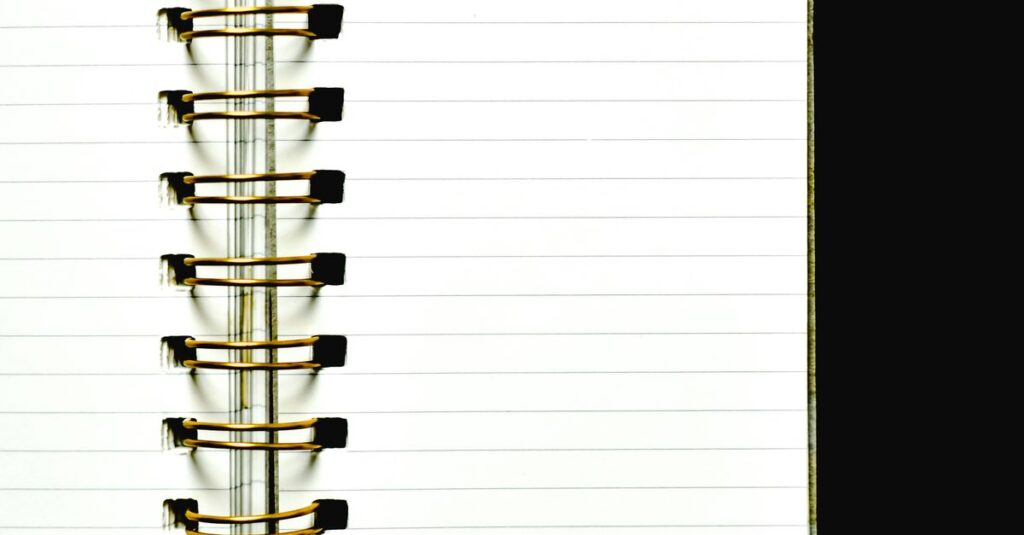
A wire or plastic coil runs through holes punched in the paper. The notebook opens 360 degrees. Great for artists, engineers, anyone who needs to fold the cover back. The downside? Pages can tear out if you're rough. And the coil can get bent.
Perfect Binding
Pages are glued at the spine with a strong adhesive. This is what most paperback books use. Cheap, fast, looks clean. But it has a weakness: if you force the notebook flat, the glue can crack and pages fall out. That's a real problem in a classroom or office setting.
Each method produces bound paper — but the experience is completely different. I've seen bulk buyers go for perfect binding to save money, then regret it when the notebooks fall apart. And honestly? That's a headache nobody needs.
Paper Quality in Bound Paper: GSM, Bleed, and Feel
Here's something most people don't think about until it's too late. The paper itself — not the binding — is half the story.
GSM (grams per square meter) tells you how thick the paper is. For notebooks used with pens, 54 GSM to 70 GSM is standard. Lower than that and you get ghosting — you can see the writing from the other side. Higher GSM feels nicer but makes the notebook thicker and heavier.
I remember a customer — a college in Hyderabad — who ordered 10,000 notebooks with 48 GSM bound paper. Saved about three rupees per notebook. Six months later they called me. The ink bled through every page. They had to reorder. That savings? Gone. Plus the mess of complaints from students.
So when you're comparing bound paper options, don't just look at the binding. Look at the paper. Ask for GSM. Ask about bleed-through. If a supplier can't answer that, walk away.
Comparison: Stitched vs Spiral vs Perfect Bound Paper
| Feature | Stitched Binding | Spiral Binding | Perfect Binding |
|---|---|---|---|
| Durability | High — thread holds signatures tight | Medium — pages can tear | Medium — glue can crack |
| Opens Flat | Yes, lies flat naturally | Yes, folds back completely | No, spine resists |
| Cost per unit | Higher | Medium | Lower |
| Best for | School notebooks, long-term use | Sketchbooks, planners | Economy notebooks, event diaries |
| Page removal | Difficult, not designed for it | Easy, but weakens binding | Impossible without damage |
| Typical lifespan | Years | Months to a year | Weeks to months |
Which one should you choose? It depends on the user. A school needs stitched bound paper — it takes the beating. A corporate diary for a desk? Perfect binding is fine. But don't mix them up. I've seen that mistake more times than I can count.
Expert Insight: What Forty Years Taught Me About Bound Paper
I was sitting in our factory in Rajahmundry a few months ago, watching a batch of 200-page stitched notebooks go through the line. The machine was humming, the smell of fresh paper and thread in the air. And I remembered something my father told me back in the 90s: 'The paper doesn't care if it's bound or loose. But the person writing on it does.'
I think he was right. Good bound paper isn't about the factory — it's about the end user. The student who writes for hours. The accountant who needs every page to hold. The business owner who wants a notebook that lasts through the year. If you lose sight of that, you end up with cheap binding and thin paper that looks fine in the box but fails in real life.
I don't have a magic formula. But I know this: if you're ordering bound paper in bulk, spend the extra rupee on better binding and better GSM. The people using those notebooks will thank you — even if they never say it out loud.
Real Story: How Rajesh Learned the Hard Way
Rajesh is a procurement manager for a chain of 30 schools in Vijayawada. Last year, he ordered 25,000 perfect-bound notebooks. The price was unbeatable. Three months later, teachers started calling: pages falling out, covers detaching, kids writing on one side only because the ink bled through.
He had to reorder everything. Stitched notebooks this time. He told me later, 'I thought bound paper was bound paper. Now I know better.' It cost him almost double what he saved. But the next year, he came back to us. And he hasn't switched since.
That's the thing about buying bound paper — the real cost isn't what you pay upfront. It's what happens after.
Anyway. That's the situation. If you're placing a bulk order, talk to a manufacturer who actually makes the stuff, not someone who just resells it. Sri Rama Notebooks can show you samples, explain the differences, and help you pick the right bound paper for your needs. Or you can learn the hard way like Rajesh did. Your call.
Frequently Asked Questions
What is the best bound paper for school notebooks?
For schools, stitched binding is the most durable choice. Combined with at least 60 GSM paper, it handles daily use, erasing, and carrying in bags without pages falling out. It costs a bit more but saves replacement costs.
How does paper GSM affect bound paper notebooks?
GSM stands for grams per square meter — higher GSM means thicker paper. For most writing, 54–70 GSM is standard. Lower GSM may cause ink bleed-through. For fountain pens, aim for 80 GSM or above. Always ask your supplier for the GSM before ordering.
Can I get custom bound paper with my company logo?
Yes, most manufacturers offer customization. You can print logos on the cover, emboss, or foil stamp. Some even offer custom page layouts. Sri Rama Notebooks provides private label and OEM services for bound paper products. Just share your design.
Why do some bound paper notebooks fall apart quickly?
Usually it's the binding method or paper quality. Perfect-bound notebooks with low-quality glue can crack. Thin paper (under 50 GSM) tears easily. Cheap spiral coils can pop out. Always ask for stitched binding and at least 54 GSM for durable bound paper.
What is the difference between bound paper and loose paper?
Bound paper is fastened together into a notebook or pad — stitched, spiral, or glued. Loose paper is individual sheets. Bound paper is more organized, portable, and harder to lose pages. For schools and offices, bound paper is almost always the better choice.
Final Thoughts (Not a Conclusion, Really)
So here's what I want you to take away. First: not all bound paper is the same — binding type and paper GSM matter more than you think. Second: the cheapest option is rarely the cheapest in the long run. Third: talk to a manufacturer who knows their craft, not just a middleman.
I don't have a neat ending for this. There isn't one. Every order is different, every user has different needs. Maybe you'll order stitched notebooks this time. Maybe you'll stick with perfect binding. That's fine — as long as you know what you're getting.
If you want to see how real bound paper should feel, visit Sri Rama Notebooks. We've been making it for forty years. We're not going anywhere.