Why Most Corporate Diaries Miss the Mark
I’ve been in this business since 1985. And over forty years, I’ve seen a lot of corporate diaries. Most of them? Honestly, they're forgettable. You get a diary from some vendor at a conference, it sits on your desk for a month, and eventually it ends up in the recycle bin. Nobody says it out loud, but that's the truth.
The thing about corporate diary design is that most companies treat it as an afterthought. They pick a generic leather-look cover, slap their logo on it, and call it a day. But here’s the thing — your employees and clients use this thing every single day. If it doesn’t feel right, they won’t use it. If the paper bleeds through, they’ll toss it. If the binding cracks in three months, it becomes a negative ad for your brand.
I think — and I could be wrong — that the real problem is people don’t know what to ask for. They don’t know what makes a diary actually good. So they end up with something that looks okay in a box but falls apart in real life. That’s what this is about.
We’ve been making these at Sri Rama Notebooks long enough to know what works. And what absolutely doesn’t.
What Actually Makes Good Corporate Diary Design?
Let me break this down simply. There are four things that matter, and nothing else comes close.
Paper Quality Isn’t Optional
You’d be surprised how many corporate diaries use paper that might as well be newspaper. You write with a basic ballpoint and it bleeds through to the next page. Want to use a fountain pen? Forget it. The paper buckles and the ink spreads like a map of some unknown country.
What you want is at least 54 GSM paper. That’s the baseline. Anything less and you're buying something that frustrates people. We use 54 GSM in ours, sometimes 60 GSM for premium runs. It handles ink. It doesn't ghost. It feels solid when you turn a page.
Here’s a short list of what to check:
- Hold a page up to light — can you see your hand through it? Too thin.
- Write on both sides with a pen you actually use. Check for bleed-through.
- Rub the surface with your thumb. Does it feel rough? Cheap paper feels rough.
The paper is the single biggest cost in a diary. Cheap manufacturers save here. You shouldn’t.
Binding Needs to Survive Daily Use
There’s nothing worse than a diary that loses pages. I’ve seen it happen with stitched bindings that weren’t done right. The thread snaps halfway through the year. The whole thing becomes a loose stack of paper. That’s not a diary. That’s a pile of recycling.
We use stitched binding for most corporate diaries. It holds up. For spiral-bound versions, the wire needs to be thick enough that it doesn’t bend out of shape when you shove the diary into a bag. Perfect binding works for thinner diaries but it won’t survive a year in a briefcase.
Right. So those are two big ones. The third thing is just as annoying when it’s wrong.
Cover Design: The Balance Between Professional and Forgettable
This is where most corporate diary design goes wrong. Companies want something that looks serious. So they pick black. Or dark blue. Maybe a fake leather texture. And they print their logo in gold foil. The result? It looks like every other corporate diary in existence.
I’m not saying go wild with neon colors. But there’s a middle ground. A dark green cover with silver foil stands out more than another black diary. A matte finish looks more premium than glossy. And honestly, the texture of the cover matters more than people think. A smooth, soft-touch cover feels good in your hand. A cheap plastic cover feels like a toy.
Fourth thing, and this one’s subtle but real.
The Page Layout Needs to Actually Work
Most corporate diaries copy the same layout some factory designed in 1995. Big date headers. Tiny writing spaces. A section for “notes” that nobody uses. It’s like nobody asked a human being what they actually write in a diary.
People write appointments. They jot down phone numbers. They make quick to-do lists. The page layout should support these things. Hourly columns if it’s a day-planner style. Enough blank space for quick notes. A ribbon bookmark, because everyone uses it. A pocket in the back for business cards and receipts.
These sound like small things. But small things are what make someone actually use a diary instead of leaving it in a drawer.
Anyway. Where was I. Let me tell you a story about a guy named Ravi.
A Real Example: Ravi, 38, Procurement Manager in Mumbai
Ravi works for a logistics company in Andheri East. His office is near the Marol Maroshi road, and if you know Mumbai traffic, you know that’s a rough commute. I met him at a trade show in Delhi maybe three years ago. He was frustrated.
His company ordered 500 corporate diaries for their annual client gifts. The vendor they used made them look great in the sample photos. But when the order arrived, half the covers had this weird sticky feel. The gold foil was already peeling off on some of them. And the paper — Ravi showed me — you could write a note on one page and it showed through to the next like a watermark.
He told me, “I can’t send these to clients. This makes us look cheap.”
He wasn’t wrong. The company that made those diaries probably focused on making them look good in a picture. They didn’t think about how they’d feel in someone’s hands after a month of use. Ravi ended up having to order replacements at the last minute, paying extra for express production. It was a mess.
That’s the thing about corporate diary design that doesn’t show up in a brochure. It’s what the diary feels like on day 45. Not day one.
Options Comparison: Stitched vs Spiral vs Perfect Binding
Let me lay this out simple. Here’s how the three main binding types compare for corporate diaries.
| Feature | Stitched Binding | Spiral Binding | Perfect Binding |
|---|---|---|---|
| Durability | High — lasts full year or more | Medium — wire can bend | Low — spine cracks over time |
| Lays Flat | Yes, with proper stitching | Yes, fully | No, needs to be held open |
| Page Removal | Not possible | Easy to remove pages | Pages fall out over time |
| Premium Feel | High — looks like a real book | Medium — more casual | Medium — depends on glue quality |
| Best For | Executive diaries, annual planners | Team notebooks, field use | Short-term use, thin diaries |
| Cost | Higher | Medium | Lower |
For most corporate orders, I’d recommend stitched binding. It lasts. It looks premium. People keep them. Spiral is fine if you need something for note-taking in meetings. Perfect binding? Only if you’re on a tight budget and the diary won’t be used heavily.
The question isn’t which one is technically best. It’s which one matches what your people actually need.
Common Mistakes in Corporate Diary Design
I’ve made some of these myself, so I’m not pointing fingers. But here’s what I see most often.
Mistake one: Treating the diary as a billboard.
Companies want their logo huge. They want it on the cover, on the spine, maybe even embossed on every page. Look, I get it. You want brand visibility. But a diary isn’t a hoarding. People use it. If your logo dominates the cover, the diary looks like an ad, not a tool. Smaller logo, better placement. Let the quality of the diary speak for your brand.
Mistake two: Trying to save money on customization.
Custom cover design, foil stamping, embossing — these things cost money. And some buyers try to skip them to save a few rupees per unit. But here’s the truth: a plain diary with no customization might as well be a generic one anyone can buy. The whole point of a corporate diary is that it’s yours. If you skip the details, what’s the difference between your diary and a notebook from a supermarket?
Mistake three: Ignoring the end user.
I’ve had companies order diaries for their sales team and choose thick, heavy ones because they look “premium.” But salespeople carry these things everywhere. They need something that fits in a bag. They need spiral binding so they can fold it back. They need a pocket for cards. Nobody asked the sales team what they wanted. The person ordering assumed.
Expert Insight: What I’ve Learned Making Diaries for 40 Years
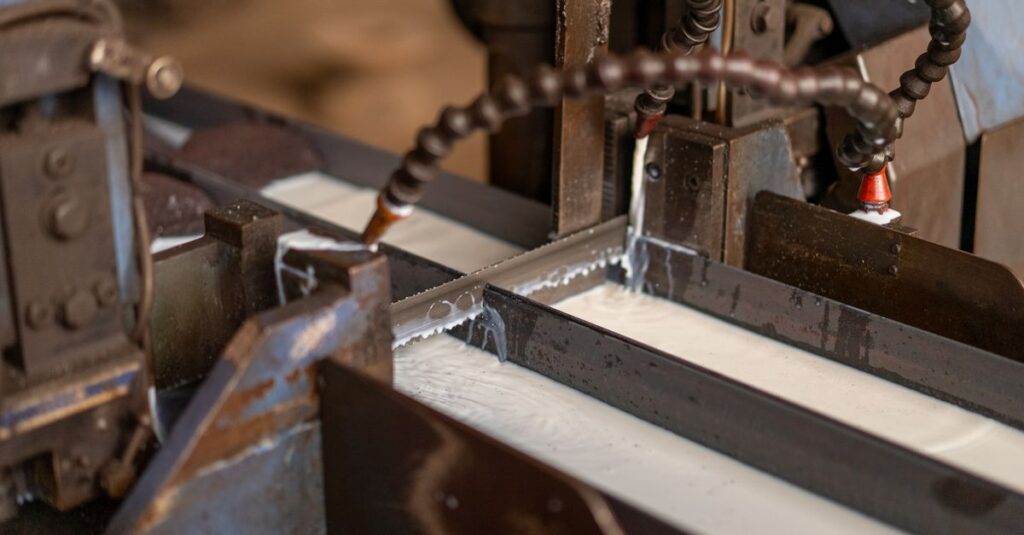
I was sitting in our factory in Rajahmundry last month, watching the cutting machine run. And I was thinking about something. We’ve been making diaries and notebooks since 1985. That’s before a lot of people reading this were born. And the one thing I’ve learned — the only thing that really matters — is consistency.
A sample is easy to make. You pick the best paper, the best binding, you check every detail. But when you’re making 30,000 units in a single production run, things change. The machine heats up. The paper stock varies slightly. The glue cures differently on a humid day. The difference between a good manufacturer and a bad one is whether those 30,000 units all come out the same.
I’ve seen orders where the first 5,000 were perfect and the rest had issues. That’s not acceptable. But it happens more than people know. And you only find out when your clients start calling to complain.
I don’t have a cleaner way to put it than that. Even the best corporate diary design fails if the manufacturing can’t execute it consistently.
Frequently Asked Questions
What is the best paper GSM for a corporate diary?
54 GSM is the minimum for a decent writing experience. 60 GSM is better if people might use fountain pens. Anything below 50 GSM will likely bleed through with regular ink.
Can I print my company logo inside the diary pages?
Yes. You can have your logo printed on every page or just the first page. We also offer foil stamping and embossing on covers for a more premium look.
How long does it take to manufacture a custom corporate diary order?
For a standard order with logo printing, expect 15 to 20 working days. Complex designs with foil stamping or custom covers may take 25 to 30 days. Express runs possible depending on production load.
What is the minimum order quantity for custom corporate diaries?
We typically start at 500 units for full customization. Smaller quantities are possible but the per-unit cost goes up significantly. For bulk orders of 5,000 and above, we offer better pricing.
Do you ship corporate diaries internationally?
Yes. We export to Gulf countries, Africa, the USA, UK, Europe, and Australia. We handle all export documentation and packaging. Shipping costs depend on destination and order volume.
Conclusion
Corporate diary design isn’t complicated, but it’s easy to get wrong. Focus on paper quality, binding durability, and layouts that people actually use. Skip the flashy gimmicks. And work with a manufacturer who has the experience to deliver consistency at scale.
I don’t think there’s a perfect diary. Probably there isn’t. But if you know what to look for and what questions to ask, you can get pretty close. And that’s better than most companies do.
If you’re planning a corporate diary order and want to talk it through, Sri Rama Notebooks has been doing this since 1985. We know what works.