Alright, Let’s Talk About A3 Paper Size
Okay, look. If you’re buying notebooks in bulk for a school, or ordering custom diaries for your company, you’ve probably heard “A3 size” thrown around. You nod along. But then someone asks for an order of A3 notebooks and your brain goes — wait, what is that actually? It’s bigger than A4, right? But how big? And why would you use it?
I get it. Procurement managers have a thousand things to think about. Paper specs shouldn’t be one of the headaches. But here’s the thing — picking the right notebook size isn’t just about dimensions. It’s about cost, usage, logistics, and what the paper is actually meant for. And A3 is a special case. It’s not your everyday student notebook. It’s a workhorse for specific jobs.
So let’s cut through the jargon. I’m going to explain what A3 size is, where it fits in the real world, and what you need to know if you’re thinking about ordering it in bulk. Because honestly, most suppliers just list the numbers. They don’t tell you the story behind them. If you’re sourcing notebooks, you need the story.
So What Exactly Is A3 Paper?
Let’s start with the numbers. A3 paper measures 297 millimeters by 420 millimeters. In inches, that’s about 11.7 by 16.5. If you’re used to the common A4 notebook (that’s your standard long notebook), A3 is basically two A4 sheets side-by-side.
Think about it this way: A4 is what most students write on. A3 is what an architect sketches on, or an accountant spreads a ledger across. It’s a canvas. It’s expansive.
The “A” series — A0, A1, A2, A3, A4, A5 — is an international standard (ISO 216). Each size is half the area of the previous one. A3 is half of A2. A4 is half of A3. It’s a beautifully logical system that makes scaling and printing predictable. But in the notebook and stationery world, A3 isn’t just a math problem. It’s a physical one.
Storage. Handling. Binding. All of it changes when you jump to A3.
Where Do You Actually Use A3 Notebooks?
This is where most generic guides stop. They give you the dimensions and leave. But you’re buying for a purpose. So who uses A3?
First — creative professionals. Architects, artists, designers. They need space to sketch, draft, and layout ideas without cramping. An A3 drawing book gives them that room. It’s not a notebook you carry in a backpack; it’s a portfolio you open on a desk.
Second — technical and engineering fields. Schematics, diagrams, flowcharts. Anything that needs a broad visual field. An A3 graph book or cross-ruled notebook becomes a tool, not just a record.
Third — accounting and ledger work. Old-school ledger books were huge, right? A3 account books carry that tradition. You can spread columns across the page, see a whole month’s transactions at once. For businesses that still do manual bookkeeping or need physical audit trails, this is the size.
Fourth — education, but selectively. Not for everyday notes. For specific subjects like technical drawing, art classes, or large science diagrams. A school ordering notebooks might get 95% A4, and 5% A3 for those special classes.
And fifth — planning and project management. Giant brainstorming sessions, project timelines laid out visually. An A3 notebook becomes a shared workspace.
The point? A3 isn’t a general-purpose product. It’s a specialist tool. Which means when you order it, you’re solving a specific problem, not filling a generic need.
The Real-World Logistics of A3 Size
Now, let’s get practical. From a manufacturing and buying perspective, A3 changes everything.
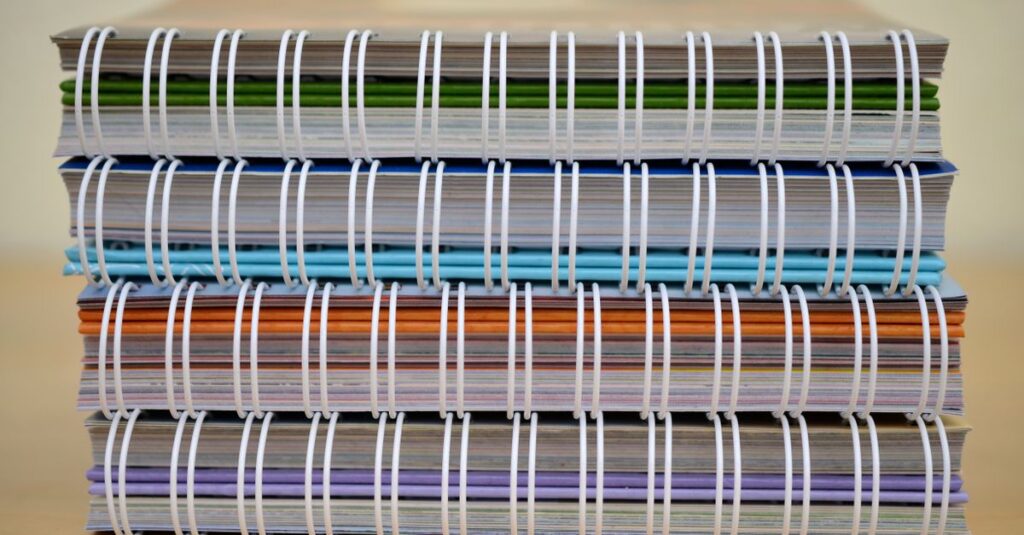
Paper cost jumps. You’re using more sheet per notebook. Binding becomes more complex — a standard stitch might not hold a thick A3 book through heavy use. Spiral binding or reinforced stitching often comes into play. Cover material needs to be more durable because the book is handled differently.
Then there’s storage and shipping. A3 notebooks are bulky. They don’t pack neatly into standard boxes. They take up more warehouse space. If you’re a distributor ordering 10,000 notebooks, mixing in A3 means adjusting your entire logistics plan. Pallet sizes, box dimensions, shipping costs — all of it gets a little more complicated.
I was talking to a procurement manager from a technical college last week — over email, actually — and he said something I keep thinking about. He said, “We ordered A3 drawing books for the first time last year. The teachers loved them. The logistics team hated them.” It’s that tension. The product is perfect for the user, but a headache for the supply chain.
So if you’re considering A3, you have to factor in not just the unit price, but the handling price. The space it consumes. The special packaging it might need. Most buyers miss that part.
Expert Insight
I’ve been in this industry a long time. One thing I’ve noticed is that the demand for A3 isn’t steady. It’s spikey. A university revamps its engineering curriculum and suddenly needs 500 A3 graph books. A corporate decides to go old-school with physical ledgers for audit purposes. It’s not like A4, which is a constant, flowing river of orders. A3 is a series of sudden, deep pools. And that affects manufacturing. You can’t run A3 lines continuously. You batch it. You plan around those spikes. Which means if you need A3 notebooks in bulk, timing matters. You can’t always get them next week. You might need to sync with a production cycle. That’s the part of the story suppliers don’t always tell you upfront.
A3 vs A4: The Decision Table
Let’s make it visual. When you’re deciding between A3 and A4 for a bulk order, here’s what you’re really comparing.
| Factor | A3 Notebooks | A4 Notebooks |
|---|---|---|
| Primary Use | Specialized: drawing, accounting, technical work | General: everyday writing, notes, student use |
| User Portability | Low: usually desk-bound, portfolio style | High: fits in bags, easy to carry |
| Paper & Binding Cost | Higher: more paper, stronger binding needed | Lower: standard materials suffice |
| Storage & Shipping | Bulky: requires more space, special packaging | Compact: standard packaging, efficient logistics |
| Order Patterns | Spikey: large batches for specific projects | Consistent: regular, predictable volume |
| Customization Complexity | Higher: large area for logos/designs, print setup changes | Lower: common size, standard templates work |
The table makes it obvious: A3 is a commitment. Not just in budget, but in planning. A4 is the default. A3 is the deliberate choice.
Manufacturing A3 Notebooks: What Changes?
From our side — the manufacturer’s side — producing A3 isn’t just scaling up an A4 line. It’s a different beast.
The paper sheets are larger, which means the cutting and trimming machinery has to be adjusted. The binding process needs more attention — you can’t just fold and stitch. You often need to reinforce the spine. Spiral binding for A3 books uses thicker wire or plastic coils. Perfect binding (like a paperback) requires stronger adhesives because the book is heavier.
Cover printing is another thing. An A3 cover is a big canvas for branding. If you’re doing custom logo printing, you have more space to work with, which is great. But it also means the print setup has to be precise. A small misalignment on an A4 cover is minor; on an A3 cover, it’s glaring.
And then there’s quality control. You’re checking for more things: spine integrity, cover alignment, sheet flatness (large sheets can warp easier). It’s a more hands-on process.
We run A3 production in batches. Because the demand isn’t daily, we schedule it between our regular A4 runs. That allows us to recalibrate machines, stock the right paper, and allocate the team. It’s not something we can switch to on a whim. Which is why, when a client comes with an urgent A3 order, we sometimes have to say, “We can do it, but we need three weeks.” It’s not a delay; it’s a recalibration.
A Real-Life Scenario
Let me give you a picture. Not a case study — just a scenario.
Rohit, 42, procurement head for a mid-sized architecture firm in Hyderabad. He’s been ordering A4 notepads for the office for years. Then the design team complains. They’re sketching concepts on two A4 sheets taped together. It’s messy. They want proper A3 sketchbooks. Rohit finds a supplier, gets a quote, orders 200. They arrive. The designers are thrilled. But the office manager is annoyed. The books don’t fit in the standard supply cabinets. They have to clear a separate shelf. Shipping was more expensive than estimated. And when Rohit needs another 50 six months later, the supplier says they’re out of stock and need a month to produce.
He didn’t know. Because nobody told him that A3 isn’t just a bigger notebook. It’s a different product category with its own rules.
Anyway.
What Should You Ask When Ordering A3 Notebooks?
If you’re a corporate buyer, a school administrator, or a distributor looking at A3, here’s what you need to ask your manufacturer. Not just price.
- Binding type: What binding do you recommend for this use? Spiral? Stitched? Perfect bound? Why?
- Paper GSM: Larger pages can feel flimsier if the paper is too light. Ask for a slightly higher GSM (maybe 60-70 instead of 54) for durability.
- Lead time: Is this a standard item you keep in stock, or a batch-produced item? What’s the realistic production time?
- Packaging: How will they pack and ship it? Will it require special boxes? Is there a palletization difference?
- Customization limits: For logo printing, what’s the maximum detail you can achieve on that large cover? Are there extra costs for large-area printing?
Most importantly — ask if they regularly produce A3. Some notebook factories mostly do A4 and A5. A3 is a side line for them. Others, like us, have dedicated setups for it. That affects everything — quality, consistency, and your experience.
And honestly? If they hesitate on these answers, they might not be the right supplier for an A3 order.
So, Should You Choose A3?
It comes down to need. If your users require the space — for drawing, for accounting, for planning — then A3 is worth the extra cost and logistics hassle. The productivity gain outweighs the operational friction.
If you’re just looking for a general notebook for meetings or student notes, stick with A4. Or even A5. Don’t go bigger for prestige. Go bigger for purpose.
I think — and I could be wrong — that a lot of A3 orders happen because someone saw it in a catalog and thought, “Bigger must be better.” Not always. Bigger is different.
The question isn’t whether A3 is a good size. It’s whether it’s the right tool for your specific job.
Frequently Asked Questions
What is A3 size in notebooks used for?
A3 notebooks are used for specialized tasks that need a lot of space on a single page. Think architectural sketching, engineering diagrams, large accounting ledgers, art class drawings, or big project planning maps. It’s not for everyday note-taking; it’s for visual, expansive work.
Is A3 bigger than A4?
Yes, significantly. A3 paper (297mm x 420mm) is twice the area of A4 (210mm x 297mm). An A3 notebook is like two A4 pages side-by-side. It’s a portfolio-sized book, while A4 is a standard notebook size.
Can I get custom printed A3 notebooks for my company?
Absolutely. Many manufacturers offer custom printing on A3 notebooks. The large cover area is great for detailed logos and branding. But it requires a different printing setup, so lead times and costs might differ from A4 custom orders.
Why are A3 notebooks more expensive?
Three reasons: more paper per book, stronger binding required to handle the larger size, and often more complex packaging and shipping. The raw material cost is higher, and the manufacturing process is less common, so it’s usually batched, not continuously produced.
How do I store and distribute A3 notebooks in bulk?
You need to plan for it. They won’t fit in standard storage bins. Dedicate shelf space with greater depth. For distribution, they may need larger boxes or different pallet configurations. Talk to your supplier about their packaging — they should advise you on the logistics.
Wrapping This Up
A3 size isn’t mysterious. It’s just specific. It serves a clear, important niche in the notebook world. If you need that kind of space for your work, it’s invaluable. If you don’t, it’s an unnecessary complication.
For buyers, the key is to match the product to the actual task. For manufacturers, the key is to be honest about the production reality — that it’s a batch product, not a shelf staple.
I don’t think there’s one universal answer here. Probably there isn’t. But if you’ve read this far, you already know whether A3 is a solution you’re looking for — you’re just figuring out how to get it done right.
If you’re exploring an order for A3 notebooks or need advice on sizing for a bulk purchase, sometimes it helps to talk to someone who’s been making them for decades. Just a thought.