Here’s the thing about pricing notebooks
If you’re looking for a “100 pages notebook price”, you’re probably trying to quote a project. A school order. A corporate giveaway. You’re sitting with a spreadsheet open and a budget that’s already too tight. The thing that frustrates you—right? “Price” is a number on a website. The “real cost” is a headache of paper, binding, shipping, and deadlines. I think nine times out of ten, the number you find online is useless. It’s missing the context. It’s not telling you why one notebook is Rs. 12 and another is Rs. 45. And that gap decides everything.
The real question isn’t what a 100-page notebook costs. It’s what you’re actually paying for. Let’s talk about that. If you need to see how we build notebooks from scratch, this might be worth a look.
It’s not just pages. It’s everything between them.
When you ask for a price, most suppliers give you a per-unit rate. Fine. But that rate hides about seven different cost layers. The paper weight. The ruling type. The cover stock. The binding method. The printing on the cover. The packaging for shipping. The margin for the guy who quoted you.
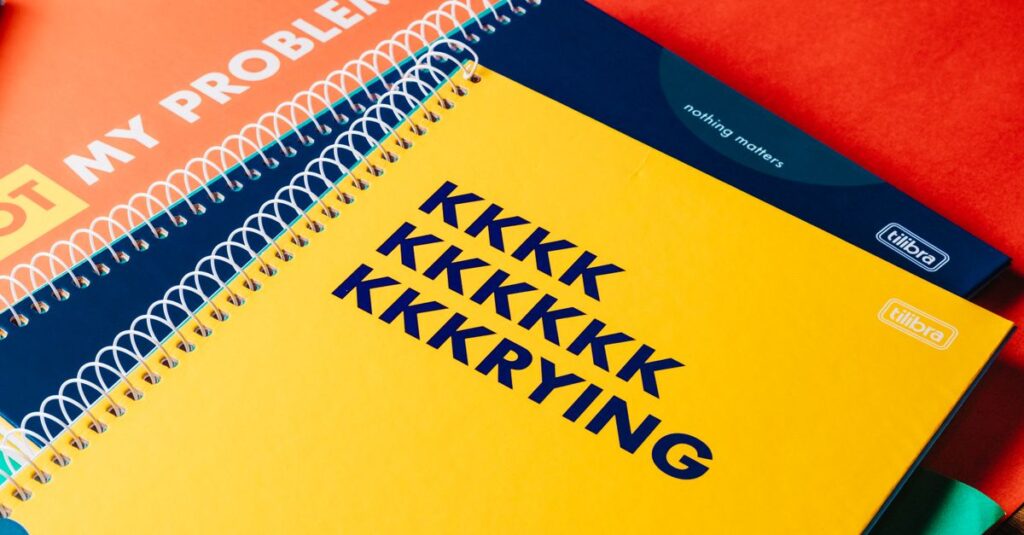
Think about it this way: a 100-page notebook with 54 GSM paper, single ruled, stitched binding, and a plain card cover—that’s a baseline. Cheap. Functional. Perfect for a school exercise book. But a 100-page notebook with 70 GSM paper, unruled, spiral bound, a laminated cover with your company logo printed in four colors, packed in individual boxes—that’s a product. The price difference isn’t a mystery. It’s physics.
And honestly? Most people I’ve spoken to—procurement managers, school principals—they know this. They just don’t know how to quantify it. They get three quotes that look identical on paper but vary by 30%. They panic. They think someone’s cheating them. Usually, nobody’s cheating. They’re just quoting different things.
A real-life example
I was talking to a college admin in Hyderabad last month—over a very bad coffee, honestly—and she had this exact problem. She needed 5000 notebooks for the new semester. Her budget was locked. She got three quotes: Rs. 15, Rs. 18, Rs. 22 per notebook. All “100 pages, single ruled”. She assumed the Rs. 15 guy was the hero. She ordered. The notebooks arrived. The paper was so thin the ink bled through. The binding started failing in week two. The covers tore. She spent the next month dealing with complaints from departments. The real cost wasn’t Rs. 15. It was her time, her reputation, and the hidden cost of replacing half the batch later.
Look, I’ll be direct. The cheapest quote is often the most expensive choice.
Breaking down the cost layers (so you can actually compare)
Let’s get specific. What actually changes the price of a 100-page notebook?
- Paper GSM: This is the weight of the paper per square meter. 54 GSM is standard writing paper. 70 GSM feels thicker, more premium. 80 GSM is often used for drawing books. Each jump in GSM adds cost. It’s more raw material.
- Ruling: Single ruled (SR) is simple. Double ruled (DR), four ruled (FR), cross ruled (CR)—these require more precise printing setup. Unruled (UR) is actually cheaper to produce, but if you want one side ruled (OSR), that’s a specific machine setup. Complexity adds time. Time adds cost.
- Cover: A plain cardstock cover is baseline. A laminated cover (plastic film coating) costs more. A printed cover—especially with your custom logo—adds printing cost. If you want embossing or foil stamping, that’s another machine, another process.
- Binding: Stitched binding (thread sewn through the pages) is durable and cost-effective for bulk. Spiral binding (metal or plastic coil) allows the notebook to open flat—great for artists, engineers—but it’s a slower process. Perfect binding (glued edge, like a paperback) looks sleek for corporate diaries. Each method has a different machine, a different labor cost.
- Quantity: This is the big one. Ordering 100 notebooks will have a high per-unit cost. Ordering 10,000 notebooks drops the per-unit cost dramatically. Setup costs (printing plates, binding machine setup) are fixed. They get amortized over the volume.
So when you get a quote, you need to ask: “Is this for 54 GSM or 70 GSM? Stitched or spiral? Plain cover or printed?” Otherwise, you’re comparing apples to… something that isn’t even a fruit.
Expert Insight
I was reading an old industry report a while back—I can’t remember the exact year—and one line stuck with me. It said that for bulk notebook buyers, the biggest cost mistake isn’t overpaying. It’s under-specifying. You ask for a “100-page notebook” and assume everyone fills in the same blanks. They don’t. The guy with the lowest price is often filling those blanks with the cheapest possible options. He’s not cheating. He’s just giving you exactly what you asked for, minimally. And that’s the headache.
The comparison table you actually need
Let’s put this side-by-side. Here’s what different “100 pages notebook” specs actually mean for price and use.
| Specification | Lower-Cost Option | Mid-Range / Reliable Option |
|---|---|---|
| Paper Quality | 54 GSM writing paper | 60-70 GSM smoother paper |
| Ruling Type | Single Ruled (SR) | Double Ruled (DR) or Unruled (UR) |
| Cover Material | Plain 250 GSM cardstock | Laminated 300 GSM cardstock |
| Binding Method | Stitched binding | Stitched or reinforced stitching |
| Printing | No printing / basic template | Custom logo printed (1-2 colors) |
| Typical Use Case | School exercise books, internal rough notes | Corporate internal use, student premium notebooks |
| Price Sensitivity | High. Budget is the primary driver. | Moderate. Balance of durability and cost. |
This isn’t about good vs. bad. It’s about matching the notebook to its job. A school needs thousands of functional, durable notebooks for daily use. A corporate client needs 500 branded notebooks for a conference—they need to look good, feel premium, but they’re not being used for years. The “right” price depends entirely on which column you’re in.
How bulk buying changes everything (and why your quote should reflect it)
Here’s where the magic happens. Or the math, really. When you’re ordering in bulk—say, 10,000 units or more—the per-unit cost drops not linearly, but dramatically. The setup cost for printing your custom cover is fixed. Whether we print 100 covers or 10,000 covers, the plate cost is the same. The binding machine takes time to set up for your specific page count and ruling. That setup time is fixed. So, the more notebooks we run through that setup, the cheaper each notebook becomes.
Most institutional buyers know this intuitively. But they don’t leverage it. They ask for a “price per notebook” without locking the quantity. The supplier gives a conservative price for a hypothetical 1000 units. You think it’s high. You walk away. The real conversation should be: “I need 15,000 notebooks for August delivery. What’s your best rate for that volume, with these specs?” That’s when you see the numbers move.
I’ve seen this enough times now. A school in Visakhapatnam needed 20,000 notebooks. They got a quote at Rs. 17 per unit for a decent spec. They asked: “What if we commit to 25,000 and give you the order for next year as well?” The rate dropped to Rs. 14.5. That’s a difference of Rs. 50,000 on the order. Because the factory can plan. They can allocate machine time. They can buy paper in bigger, cheaper lots. Volume isn’t just a number. It’s efficiency.
If you’re planning a large order, looking at our production capacity might help you understand how we scale.
The hidden costs nobody talks about (until they hit)
Right. Let’s talk about the stuff that doesn’t show up on the quote.
- Delivery Time: A “standard” notebook might be shipped in 2 weeks. A custom notebook with printed covers might need 4-5 weeks. If your school term starts in July and you order in June, you’re risking delays. Rush production costs more. Sometimes, a higher quote includes guaranteed on-time delivery. A lower quote might have “subject to production schedule” hidden in the terms.
- Packaging: Are the notebooks shipped in bulk cartons? Or individually packed in boxes for retail? Individual packaging adds material cost, labor cost, and shipping volume. It’s not trivial.
- Payment Terms: Some suppliers offer better rates for advance payment or larger upfront commitments. Others work on credit—which might be easier for a school but adds a risk premium to the price.
- After-Sales: What if 2% of the notebooks have binding issues? Does the supplier replace them? Is there a warranty? The “cheapest” supplier often has the least support. The real cost of a defective batch is your time managing the replacement.
And honestly? This is the part most procurement managers learn the hard way. The price on the paper is just the entry fee. The real cost is the total experience of getting the product, on time, in good condition, without you losing sleep over it.
So what should you do when asking for a quote?
Look, I’ll give you a blunt list. This is from watching buyers get good results and bad ones for forty years.
- Specify everything. Don’t say “100-page notebook.” Say “100-page notebook, 70 GSM paper, single ruled, stitched binding, laminated cover with our logo printed in blue.”
- Lock your quantity. Even if you’re estimating, give a firm range. “We need between 8,000 and 10,000 units.”
- Ask about the production timeline. “What is your current lead time for this spec?”
- Ask about packaging. “How will these be packed for shipping?”
- Compare the total cost, not the unit cost. Factor in delivery, reliability, and your peace of mind.
Three things happen when you do this. You get comparable quotes. You expose the suppliers who are cutting corners on quality. You find the right partner, not just the right price.
Anyway. The goal isn’t to find the cheapest notebook. It’s to find the notebook that does its job without causing you a second problem. That’s the real price.
Frequently Asked Questions
What is the average price of a 100-page notebook for bulk orders?
There is no single “average”. For a basic school notebook (54 GSM, single ruled, stitched binding, plain cover) in quantities over 5,000, you might see prices between Rs. 12 to Rs. 18 per unit in India. For a corporate-grade notebook with better paper, laminated cover, and custom printing, the range can be Rs. 25 to Rs. 40 per unit. The volume and exact specifications decide everything.
Why do prices vary so much between suppliers for the same “100-page notebook”?
Because “100-page notebook” is a vague description. One supplier assumes basic paper and a plain cover. Another assumes you want better paper and a printed cover. They’re quoting different products. Always provide a detailed specification list when asking for quotes to get comparable numbers.
Does page count alone determine the price?
No. Page count is one factor. Paper quality (GSM), ruling type, cover material, binding method, and customization (printing) have a much larger impact on cost. A 100-page notebook with premium paper and a custom cover can cost more than a 200-page notebook with basic specs.
Is it cheaper to order notebooks from a manufacturer directly?
Usually, yes. Manufacturers like us control the entire production process—paper sourcing, printing, binding. We don’t have middleman margins. For bulk orders (schools, corporations, distributors), working directly with a manufacturer gives you better control over specs, pricing, and delivery timelines. You can see our manufacturing process here.
What’s the biggest mistake buyers make when comparing notebook prices?
Comparing only the per-unit price without comparing the specifications. They see Rs. 15 vs. Rs. 20 and choose the lower one, assuming the product is the same. Often, the Rs. 20 notebook uses thicker paper, better binding, and a more durable cover—which means it lasts longer and performs better. The real cost is over the lifetime of use, not the purchase moment.
I don’t think there’s one answer here
The “price” of a 100-page notebook isn’t a number you find on Google. It’s a calculation of what you need it to do, how many you need, and how soon you need them. The cheapest option is often the one that fails first. The most expensive option is often over-engineered for your purpose. The right price is in the middle—where the notebook meets the need without creating new problems for you.
Probably there isn’t a perfect formula. But if you’ve read this far, you already know you’re not just looking for a price. You’re looking for a reliable solution. You’re figuring out who to trust with your order. That’s the real question.
If you want to talk specifics—your quantity, your deadline, your exact notebook specs—reach out directly. We’ve been doing this since 1985. We know the numbers, and we know why they matter.