Color Printing Price: More Than Just Ink on Paper
You look at a quote for printed notebooks. The number seems high. Your first thought is probably something like, “Come on, it’s just colored ink, how expensive can it be?”
Right. I’ve been in this exact meeting with procurement managers who are sweating an annual budget. The frustration is real. You’re comparing three quotes, and they’re all over the place. One is suspiciously cheap, another is eye-wateringly high, and the third is… confusing. The problem isn’t that you don’t understand money — it’s that nobody explains what you’re *actually* paying for.
It’s not just ink. It’s paper absorbing that ink differently. It’s a machine running for eight hours straight. It’s the guy who checks every tenth notebook for consistency. That’s the real cost. If you’re trying to nail down the actual color printing price for your school’s branded notebooks or a corporate diary run, you need to see the whole picture.
Look, I’ll be direct. Let’s break it down, piece by piece. No fluff. Just what matters when you’re spending company money.
What You’re Actually Paying For (It’s Not What You Think)
Most people think the formula is simple: Quantity x Per-Unit Price = Total. In notebook printing, that’s a fantasy. The price per unit shifts because of things you barely see. Let’s call them the hidden gears.
First, and this is the big one: paper quality and weight. You can’t put vibrant color on tissue paper. The cheaper the paper, the more the ink bleeds — colors go muddy, logos look blurry. We standardize on 54 GSM writing paper for most projects because it holds the ink without bleeding and still feels good to write on. But if you want a premium diary? That’s 70 GSM or higher. The paper cost jumps. And that’s before we even start printing.
Then there’s the coverage. Printing a single-color logo on the corner? Cheap. Printing a full-color photograph that covers the entire notebook cover? That’s a different machine, different plates, and a lot more ink. The difference in cost isn’t linear; it’s exponential. And that’s where quotes get confusing.
I was talking to a college administrator in Hyderabad last week — over a terrible video call, his audio kept cutting out — and he said the most frustrating thing was not knowing which variable to change to lower the cost. Should he reduce colors? Change the paper? Order more? He had no lever to pull. That’s the headache.
Expert Insight
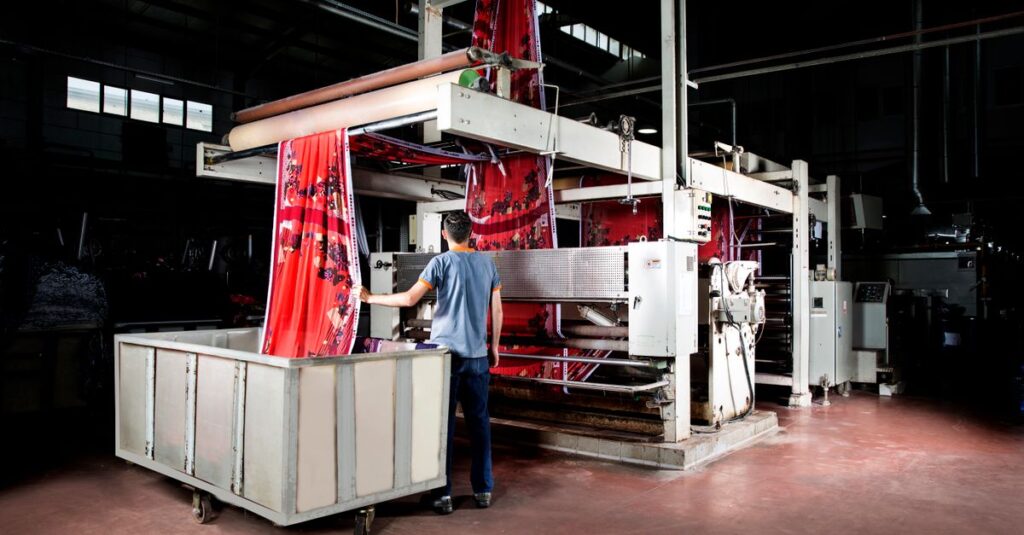
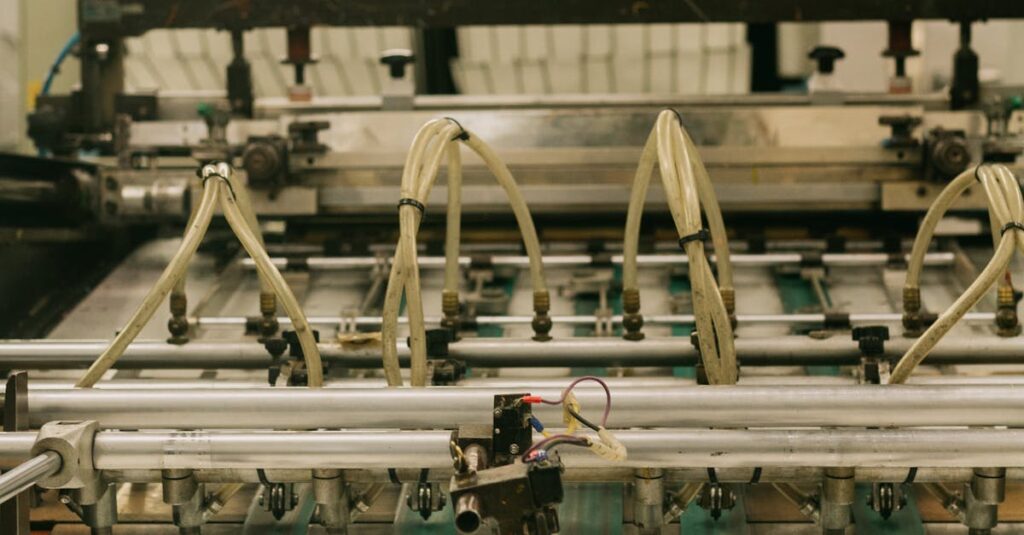
I was reading an old industry report a while back, and one line stuck with me. It said the consumable cost (ink, plates, blankets) for a high-coverage color job can be up to three times that of a simple one-color print. That’s wild, right? But it makes sense when you see the machines running. The more you ask from them, the more they consume. It’s not a printer in your office. It’s a beast that eats money. I don’t have a cleaner way to put it than that.
Customization: The Biggest Price Driver (and Confusion)
This is where budgets live or die. “Customization” sounds like one thing. It’s not. It’s a sliding scale of complexity, and each step adds a chunk to your color printing price.
- Spot Color vs. Full Color: A spot color (like a specific Pantone for your logo) is precise and often cheaper for simple designs. Full-color process printing (CMYK) is for photos, gradients, complex artwork. It needs more setup, more calibration.
- Number of Printing Sides: Printing color on the outside cover only? Standard. Need full-color inside pages? That’s essentially a second job on a different part of the line.
- Special Finishes: A gloss lamination over that beautiful color? A spot UV coating to make your logo pop? Each of these is an extra station, extra material, extra labor. They look incredible. They cost.
Think about Ananya, 34, a procurement lead for a retail chain in Bangalore. She needed gift diaries for top clients. The design had a metallic foil logo on a deep blue background. The first quote made her gasp. She thought it was greed. It wasn’t. It was the cost of running foil stamping, then aligning the color print perfectly over it. Two specialized processes, zero margin for error. Her “notebook” was now a luxury product.
That’s the shift. Your need defines the process. And the process defines the price.
Anyway. Where was I.
The binding choice messes with the print price, too. You can’t do perfect binding on a notebook that’s already fully printed on every page — the glue needs a clean margin. Spiral binding means you need to account for the hole punch area in your design. It’s all connected. Which is… a lot to sit with when you just wanted a quote.
The Volume Myth: Does Bulk Always Mean Cheaper?
Here’s the conventional wisdom: order more, pay less per piece. It’s mostly true. But with color printing, the discounts have a ceiling. Let me explain.
The huge fixed costs are in the setup. Making the printing plates. Calibrating the color press. Setting up the binding line for your specific size. Those costs get spread across your total quantity. So, for 1,000 notebooks, the setup cost per piece is high. For 10,000, it’s much lower. That’s where your bulk discount comes from.
But after a certain point — say, 50,000 units — the per-unit savings slow down dramatically. Why? Because now you’re mostly paying for raw materials (paper, ink, binding wire) and runtime. And the price of paper isn’t going to drop just because you ordered more; we’re buying it in train-loads already. The machine is running at max efficiency. The big levers are gone.
So when a supplier promises a shockingly low price for a million notebooks, ask questions. Are they using thinner paper? A lower-grade ink that might fade? The cheapest possible binding that won’t last a semester?
The real goal isn’t the lowest price. It’s the best value for the price. A notebook that survives a school year versus one that falls apart in a month. A corporate diary that impresses a client versus one that feels cheap. You know this already. The trick is mapping that value back to the line items in the quote.
Color Printing Methods: A Quick, Honest Comparison
Not all color printing is the same. The method your manufacturer uses changes the output, the durability, and yes, the cost. Here’s the stripped-down version.
| Factor | Digital Printing | Offset Printing |
|---|---|---|
| Best For | Short runs (under 1000), super fast turnaround, variable data (like individual names). | Long runs (1000+), consistent color across massive quantities, higher image quality. |
| Cost Driver | Low setup cost, but a high per-page cost. You pay for convenience. | High setup cost (plates, etc.), but very low per-unit cost after that. Volume wins. |
| Color Vibrancy | Good. Can struggle with very dense, solid colors or special Pantone matches. | Excellent. The gold standard for color accuracy and rich, solid ink coverage. |
| Speed | Incredibly fast for small jobs. No drying time needed. | Slower setup, but once running, it’s a high-speed beast. Needs drying time. |
| The Hidden Thing | Great for testing a design before a big commitment. Less waste. | The workhorse of the industry. For bulk school notebooks or corporate orders, this is it. |
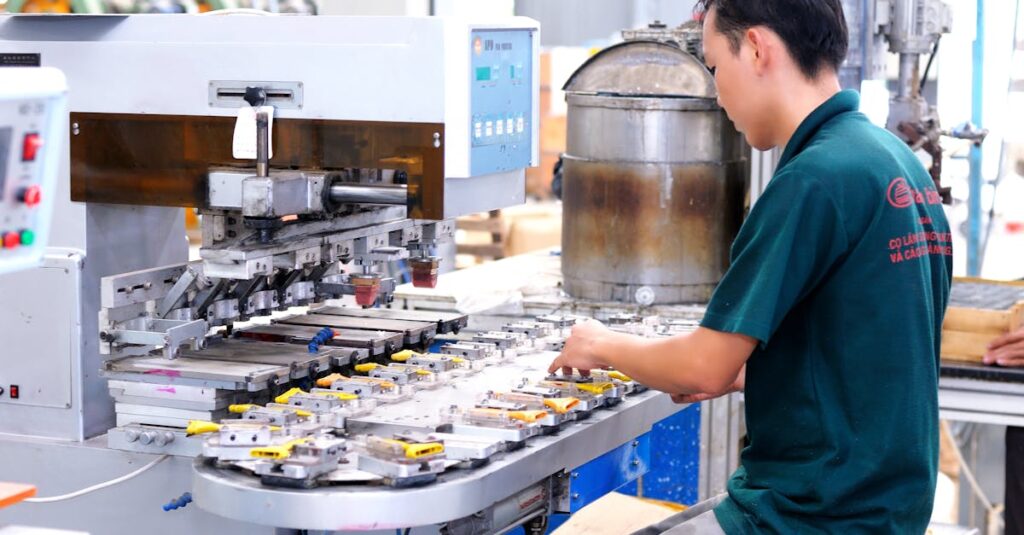
Most of our bulk work — for schools, for distributors — is offset. It’s the only thing that makes economic sense when you’re producing 30,000 notebooks a day. The color is consistent from the first book to the hundred-thousandth. Digital? We use it for samples, for urgent tiny corporate gifts. It has its place. But if your quote doesn’t specify the method, ask. Because they are pricing two completely different worlds.
How to Get an Accurate Quote (Without the Games)
So you need a real number. Not a guess. Here’s what to have ready before you even send an email. This checklist saves about a week of back-and-forth, in my experience.
- Exact Specifications: Not “a small notebook.” Say: “A5 Short Notebook, 92 pages, 54 GSM paper, Single Ruled.”
- Printing Details: “Full-color print on front cover only. Provide the high-resolution PDF.” Say if you have specific Pantone colors.
- Binding Type: Stitched, spiral, or perfect bound. This changes the production line.
- Quantity Range: Be honest. “We need 10,000, with a possible repeat of 5,000.” This helps us plan paper procurement.
- Finish: Plain cover? Lamination? If you don’t know, say that. We can suggest.
And then… this is the part nobody says out loud.
ASK FOR A SAMPLE. Always. A physical sample shows you the paper weight, the print quality, the binding strength. A price on a page is meaningless without the product in your hand. Any reputable manufacturer will do this. If they hesitate, that’s your first red flag.
I think — and I could be wrong — that at least half of the “sticker shock” comes from mismatched expectations. You pictured a glossy, thick-covered diary. The supplier quoted for a standard exercise book. A sample kills that confusion dead.
Getting the right notebook manufacturer involved early can actually save you money. They can tweak the design to be more production-friendly without losing the impact. A millimeter shift in a logo can sometimes save a plate. It’s that granular.
Frequently Asked Questions
Why is color printing so much more expensive than black & white?
It’s a completely different process. Black and white is usually one ink station, simple. Full color requires four separate ink stations (Cyan, Magenta, Yellow, Black) to be perfectly aligned. More setup, more consumables, more machine time, and more room for error that needs checking. You’re paying for that complexity.
Does the number of colors in my design affect the price?
Absolutely. A design using one or two spot colors is cheaper to print than a full-color photograph (which uses the four CMYK colors blended). More colors mean more plates and more ink on the press. Simplifying your design is the single biggest lever for reducing your color printing price.
What’s the minimum order quantity (MOQ) for custom color printed notebooks?
It varies, but for offset printing (which gives the best per-unit price), the realistic MOQ starts around 500-1000 pieces. Below that, the setup costs dominate the quote, making each notebook very expensive. For tiny runs under 100, digital printing might be your only option.
Can I get a discount for a very large order?
Yes, definitely. The bulk discount is real because we spread the fixed setup costs over more units. However, the discount rate flattens out after a certain high volume (like 50k+), as you’re then mostly paying for raw materials. The biggest per-unit savings happen when you jump from, say, 1,000 to 10,000 pieces.
How can I reduce my custom notebook printing cost?
Three main ways: 1) Increase your order quantity. 2) Simplify the design (reduce colors, avoid full-page coverage). 3) Opt for standard specs (use our existing paper stock and standard binding instead of special requests). Talking to your manufacturer early about these trade-offs is key.
Cutting Through the Noise
At the end of the day — and I hate that phrase, but it fits — you want a fair price for a good product. The color printing price isn’t a mystery. It’s a sum of visible, tangible things: paper, ink, machine time, skilled labor, and the risk of getting it wrong.
The cheap quote often cuts a corner you’ll discover later. The paper feathers. The color fades. The binding fails. The expensive one might be using a process you don’t actually need.
Your job is to match the spec to the need. A school notebook needs durability and clarity, not metallic foil. A CEO’s gift diary is a statement. Price them differently.
I don’t think there’s one perfect formula here. Probably there isn’t. But if you’ve read this far, you already know what to ask for — you’re just figuring out if the numbers will make sense to the person who signs the cheque.
If you want to move from a confusing quote to a clear specification, getting a sample based on your idea is the only sane next step. It turns an abstract price into a physical thing you can judge.