The Quiet, Essential Tool
Think about the notebooks in your office stockroom, or the ones your kids bring home from school. Most of them? Single line. A single horizontal line across the page. It’s one of the most basic, common, and frankly, overlooked notebook formats out there. But here’s the thing — it’s not simple because it’s unimportant. It’s simple because it does exactly what it’s supposed to do, without fuss. When you’re ordering 5,000 notebooks for your school district, or 2,000 for your corporate training programs, you’re probably looking at a lot of single line notebooks. The question isn’t whether you need them. It’s whether you know what you’re actually buying. If you’re figuring out your next bulk notebook order, this might be worth a look.
So, What Exactly is a Single Line Notebook?
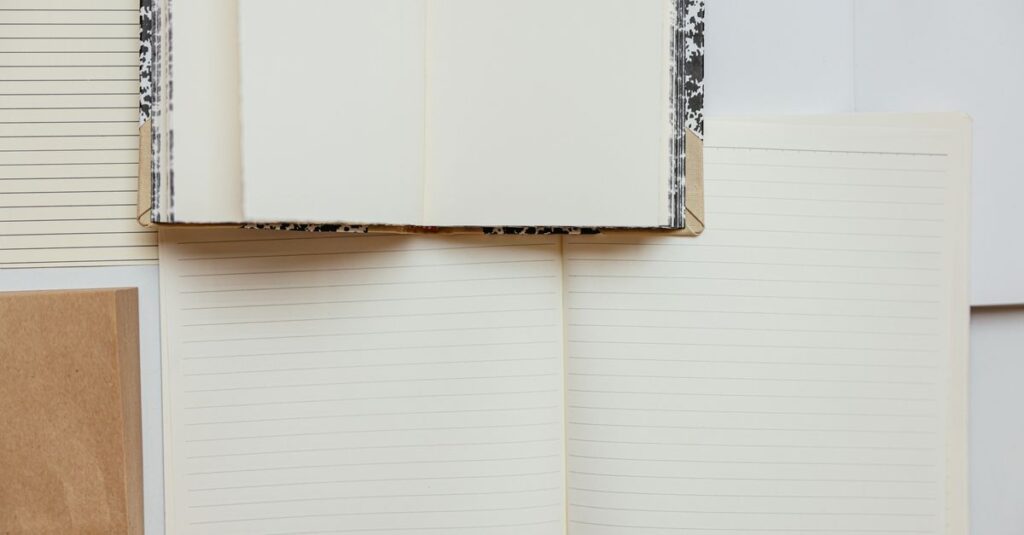
Let’s get straight to it. A single ruled notebook, often abbreviated SR in manufacturer catalogs, is a notebook where every page has a single horizontal ruling line. No margins. No double lines. Just one line running across the width of the page, usually from left to right. It’s the default setting for most writing. You know, the classic school notebook look. Most of the world writes on these. The ruling guides handwriting without being restrictive, which is why it’s the go-to for everything from elementary school essays to corporate meeting notes.
What It Looks Like (And Doesn’t)
I’ve had procurement managers call and ask, “Is it like a blank page with just one line?” No. It’s a full page of single lines, spaced evenly. The spacing between those lines is a whole conversation — broad ruling versus normal ruling — which changes how many lines fit on a page and who uses it. It’s not a ledger. It’s not a graph book. It’s just… lines for writing.
Right. So who actually uses these things?
Who Needs Single Line Notebooks? (Hint: Almost Everyone)
Okay, let’s break it down. You’re not buying these for a niche art project. You’re buying them because a large group of people need to write stuff down consistently. Three main groups:
- Schools and Students: This is the biggest market. From primary school where kids learn letter formation on those lines, to university students taking lecture notes. The single line is the universal language of education. It’s predictable, which teachers need, and flexible, which students need.
- Corporate Offices & Training: Think about all the internal training manuals, workshop note-taking pads, or standard office memo books companies order. A single line format keeps notes neat and uniform. It’s professional without being overly structured like a ledger. We supply thousands of these to corporate HR and training departments every year.
- General Administration & Institutions: Government offices, non-profits, community centers. Any place that needs a standard, durable notebook for daily record-keeping, minutes of meetings, or general correspondence. The single ruled notebook is the administrative workhorse.
And honestly? Most people I’ve spoken to in these roles don’t think about the ruling — they just know they need “regular notebooks.” That’s usually single line.
A Quick Story From Rajahmundry
I was at our factory in Rajahmundry last month, watching a pallet of 92-page single ruled notebooks get packed for a school chain in Hyderabad. The procurement manager, a guy named Vikram who’s been in the job for 15 years, told me something over a cup of tea. He said his teachers never complain about the notebooks. They complain about the binding falling apart, or the ink smudging, or the covers peeling. But the ruling? “If it’s single line and the lines are clear, they just use it.” The expectation is so basic that meeting it is invisible. But failing it — with faint lines, uneven spacing — causes immediate frustration. It’s a quiet standard. The kind you only notice when it’s broken.
Anyway. That got me thinking about the details most bulk buyers miss.
The Details Bulk Buyers Often Miss (But Shouldn’t)
When you order single line notebooks in bulk, you’re not just ordering “notebooks.” You’re ordering a product with specific technical specs that affect usability and cost. Missing these is where problems start.
1. Line Spacing (Broad vs. Normal)
This is probably the most important practical difference. Broad Ruled (BR) notebooks have wider spacing between the single lines — maybe 8-9mm. They’re for younger students or anyone who prefers larger handwriting. Normal or Standard Ruled notebooks have tighter spacing, around 6-7mm, fitting more lines per page. You need to know which your end-users need. A primary school will want Broad. A corporate office will likely want Standard.
2. Line Quality & Clarity
The line itself needs to be sharp, dark (usually a blue or grey), and consistent from page 1 to page 200. Faint, blurry, or skipping lines make writing frustrating. This comes down to the printing quality and the paper. Good notebook manufacturers use offset printing for ruling to ensure this consistency. Cheap printing can look faded.
3. Paper GSM & “Show-through”
The paper weight matters. We typically use around 54 GSM paper for standard single ruled notebooks. It’s smooth for writing, opaque enough that the lines from the page underneath don’t “show-through” and create a messy background. If the GSM is too low, you get ghost lines, and writing becomes uncomfortable. This is a common complaint with ultra-cheap notebooks.
4. The Binding That Actually Lasts
A notebook is more than its pages. For single ruled notebooks used daily in schools or offices, the binding needs to survive a semester or a year of being opened, closed, and stuffed into bags. Stitched binding is the most common and durable for these use cases. Spiral binding is great for lay-flat use but can snag and bend. You have to match the binding to the abuse it will take. Our stitched binding process is something we’ve refined over 40 years specifically for this kind of daily wear.
Look, I’ll be direct. Most institutional buyers focus on price per unit and page count. But if the lines are faint or the binding fails in month two, the price saving becomes a quality headache. Every time.
Expert Insight
I was reading an old industry report last week — one line stuck with me. It said that in bulk stationery procurement, the product attributes buyers value most are durability and consistency, not innovation. A single ruled notebook isn’t meant to be innovative. It’s meant to be reliably, boringly the same, every single time. That predictability is what makes a school or a corporate office re-order from the same manufacturer for decades. I don’t have a cleaner way to put it than that. The trust is built on sameness.
Single Line vs. Other Ruling Types: Which Should You Order?
Sometimes buyers aren’t sure if single line is right for their needs. Here’s a quick, practical comparison.
| Feature | Single Ruled (SR) | Double Ruled (DR) | Unruled (UR) |
|---|---|---|---|
| Primary Use | General writing, notes, essays. | Specific formats like certain language scripts (e.g., Hindi), or structured note-taking. | Drawing, free-form sketching, mind-mapping. |
| User Groups | Schools (all grades), offices, institutions. | Specific regional schools, specialized administrative work. | Art students, designers, creative professionals. |
| Ordering Volume | Very high. Bulk orders of 1,000+ units are standard. | Lower. Often niche, smaller batches. | Medium. Mix of bulk and smaller custom orders. |
| Customization Complexity | Low. Standard ruling, easy to produce in mass. | Medium. Requires precise line spacing. | High. Often paired with custom cover art. |
| Price Point (Bulk) | Most economical due to standardized mass production. | Slightly higher due to specialized setup. | Variable. Can be low for plain, high for artistic covers. |
| Our Recommendation | For general-purpose, high-volume needs. | Only if your curriculum or process specifically requires it. | For creative or branding-focused projects. |
If your need is general writing and note-taking by a large group, single line notebooks are almost always the right choice. They’re the default. The workhorse.
How We Make Them (And Why That Matters)
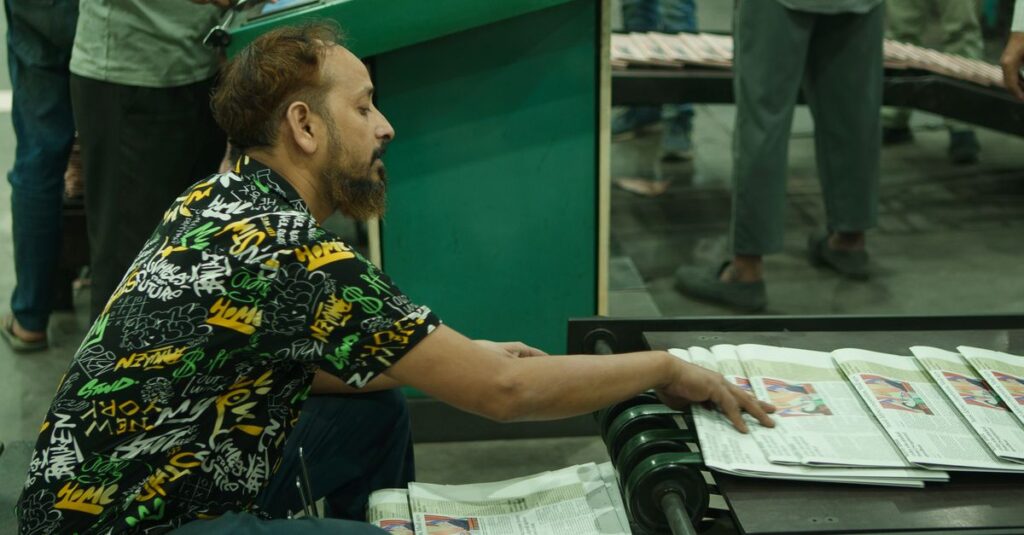
From our factory floor in Rajahmundry, the process for making a single ruled notebook is straightforward but precise. It matters because precision here means reliability for you.
- Paper Selection: We start with the right paper roll — 54 GSM or higher for writing opacity.
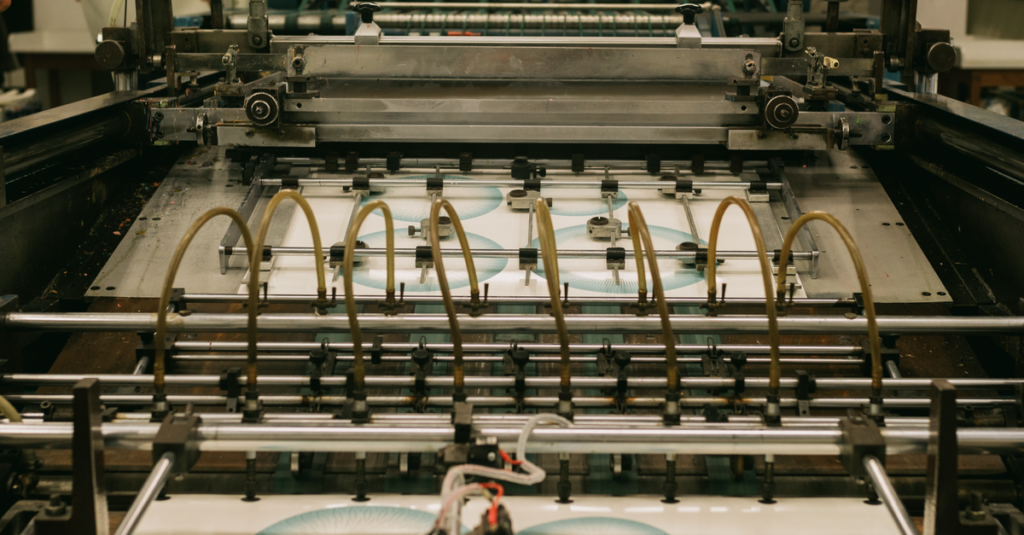
- Offset Printing for Ruling: The single lines are printed using offset machines. This gives sharp, consistent lines across thousands of sheets. Digital printing for ruling? It doesn’t scale or last the same way for bulk.
- Cutting & Collating: Sheets are cut to size (King, Long, Short, Account) and collated into sets of 52, 92, 200 pages — whatever the order specifies.
- Binding: For school and office notebooks, we mostly use stitched binding. It’s durable, cost-effective for bulk, and handles daily use. We can do spiral or perfect binding if the use case demands it.
- Cover Application & Finishing: The cover — plain or custom printed with your logo — is attached. Then it’s trimming, quality check, and packing.
Our daily production capacity is around 30,000 to 40,000 bound notebooks. That scale allows us to offer consistent pricing and timely delivery for large orders. The thing about — okay, let me rephrase. The thing about bulk manufacturing is that consistency is a byproduct of scale and process control. It’s not magic. It’s just doing the same thing right, over and over.
Thinking About Your Next Bulk Order?
If you’re a procurement manager, a school administrator, or a distributor looking at a large notebook order, here are three things I’d suggest you confirm:
- Clarify the Ruling Type: Confirm with your end-users: Single Line? Broad or Standard spacing? This avoids mismatch upon delivery.
- Test the Physical Sample: Always, always get a physical sample from the manufacturer before finalizing a bulk order. Check the line clarity, the paper feel, the binding strength. Don’t just rely on a PDF catalog image.
- Ask About Customization: Even for a standard single ruled notebook, you can often get your logo on the cover, a custom page count, or specific packaging. It adds brand value without changing the core product.
I think the stat was — I can’t remember exactly — something like 70% of bulk notebook orders are for single ruled variants. Don’t quote me on that. But it’s high. Because it’s the foundation.
Frequently Asked Questions
What is the difference between single line and broad ruled notebooks?
Both are single ruled notebooks. The difference is the spacing between the horizontal lines. Broad ruled notebooks have wider spacing (around 8-9mm) for larger handwriting, typically used by younger students. Standard single ruled notebooks have narrower spacing (around 6-7mm) for more lines per page, used by older students and professionals.
Can I get single line notebooks with my company logo printed?
Absolutely. Most manufacturers, including us, offer custom cover printing. You can order bulk single ruled notebooks with your logo, brand colors, or specific text on the cover. The inside pages remain the standard single ruling. It’s a great way to brand standard office supplies.
What is the most common page count for bulk single line notebook orders?
For schools, 92-page and 200-page notebooks are most common, balancing durability with affordability. For corporate offices, 52-page and 92-page notebooks are popular for training programs and meetings. The page count affects the thickness and weight, so consider the end-use.
Which binding is best for school single line notebooks?
Stitched binding is generally the best for school notebooks. It’s durable, cost-effective for bulk production, and withstands the daily handling by students. Spiral binding can be used for specific cases but is more prone to damage in a schoolbag environment.
How long does it take to produce a bulk order of 10,000 single line notebooks?
It depends on the manufacturer’s capacity and order complexity. At our facility, an order of 10,000 standard single ruled notebooks with simple customization can be produced and ready for dispatch within 7-10 working days. More complex custom orders may take longer.
Final Word
The single line notebook is the quiet, reliable baseline of the stationery world. It’s not flashy. It doesn’t need to be. Its job is to be there, consistent, ready for the next idea, the next note, the next lesson. For bulk buyers, that consistency is everything. It’s what lets you place an order for 5,000 units and know they’ll work, without a second thought.
I don’t think there’s one perfect notebook for every need. Probably there isn’t. But if you’ve read this far, you’re likely looking for that baseline reliability for your organization. You’re just figuring out who can provide it, year after year. Maybe that’s a conversation worth having.