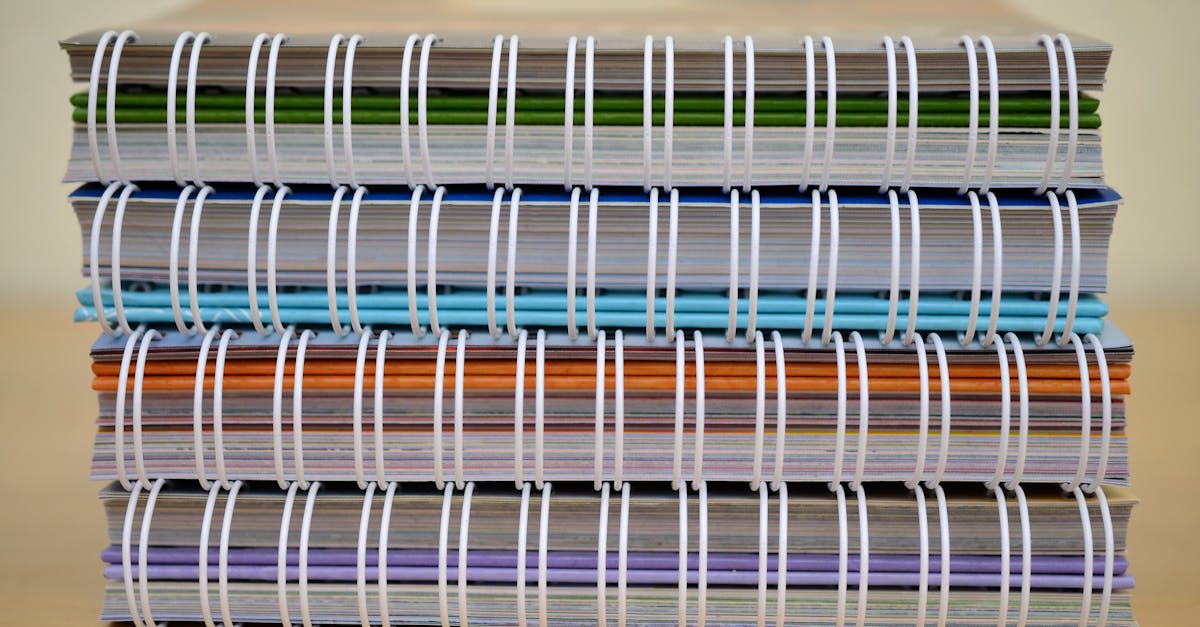
Okay, Let’s Talk About A4 Paper Size
Look. You’re probably sitting there trying to put together an order for a thousand corporate diaries or notebooks for a school term. And the supplier sends you a form asking for the size. A4 is one of the options. Maybe you think you know what it means — something about 210 by something. But you need to be sure. It’s a bulk order, not a trial. You can’t get it wrong.
Here’s the thing — it’s not just a dimension. It’s a whole system that shapes what gets printed, bound, and shipped to your office. I’ve seen procurement managers spend weeks on a tender only to get tripped up on the paper size specification. It’s a headache, honestly. And the mistake is in the binding, the feel, the whole user experience.
Anyway. If you’re ordering notebooks in bulk, understanding this stuff is non-negotiable. Let’s just get into it.
The A4 Paper System — It’s Not Just Numbers
I’ll be direct. The “A” in A4 stands for a German word, “Arbeitsvorlage,” which got standardized. The real magic is the ratio. It’s 1 to the square root of 2. When you fold an A3 sheet in half, you get A4. Fold A4, you get A5. That’s the whole idea — a smart, geometric nesting that cuts paper waste to almost nothing.
Most people think it’s just the size you get from a printer. It’s not. It’s an efficiency engine for the entire printing and manufacturing world. For a manufacturer like us, it means our cutting machines are set up for it. Our binding lines are optimized for it. The paper reels we buy are sized for it. Deviating from it means more waste, more cost, more setup time.
And for you? The buyer? It means predictability. An A4 notebook from us in Rajahmundry will be the exact same dimensions as one from a stationery shop in London or a corporate supplier in Dubai. That’s the point. It’s a global handshake.
What A4 Size Actually Looks Like
Right. The numbers. A4 paper is 210 millimeters by 297 millimeters. In inches, that’s 8.27″ by 11.69″. If you’re more familiar with the common Indian notebook sizes, think about this:
It’s larger than a standard Long Notebook (27.2 x 17.1 cm). It’s significantly bigger than a Short Notebook. It’s closest in height to our Account Book size (33.9 x 21 cm), but a bit narrower and shorter.
I was talking to a school principal last month. He was ordering science record books. He thought A4 was “just a bigger notebook.” It is, but the reason it’s the global standard for reports, official documents, and corporate stationery is because of how it fits in files, binders, and briefcases. It’s the Goldilocks size — not too big to be cumbersome, not too small to feel insignificant.
The question isn’t whether you need to know the size. It’s whether you understand what that size is actually for.
When Should You Actually Order A4 Notebooks?
Here’s the part nobody says out loud: Most businesses order A4 notebooks because they think it’s the “professional” size. Sometimes that’s right. Often, it’s a waste of money and paper.
Let me break it down. Use A4 for:
- Official Reports & Submissions: Think audit reports, project documentation, formal proposals. Things that get filed in standard A4 folders or submitted to authorities who expect that format.
- Corporate Training Manuals: When you’re printing detailed process guides or training materials that need diagrams and wide margins for notes.
- Architectural or Design Sketching (Sometimes): For initial concepts where A3 is too big and A5 is too small.
- Executive Diaries & Planners: For the C-suite folks who want the heft and presence of a larger diary on their desk. It signals importance.
Don’t use A4 for:
- General staff notepads for meetings. A5 is cheaper, more portable, and does the job.
- Student notebooks for daily classwork. It’s overkill. Schools are better served with our standard Long or Short notebooks — they’re cheaper to produce, lighter for kids’ bags, and the paper quality is tuned for everyday writing.
- Quick scribble pads or phone message pads. That’s just burning budget.
I think about this a lot. We get requests for A4 notebooks from companies who then complain about the unit price. Well, yeah. You’re asking for 50% more paper per page than an A5 book. The math is pretty simple.
The Manufacturing Reality of A4 Notebooks
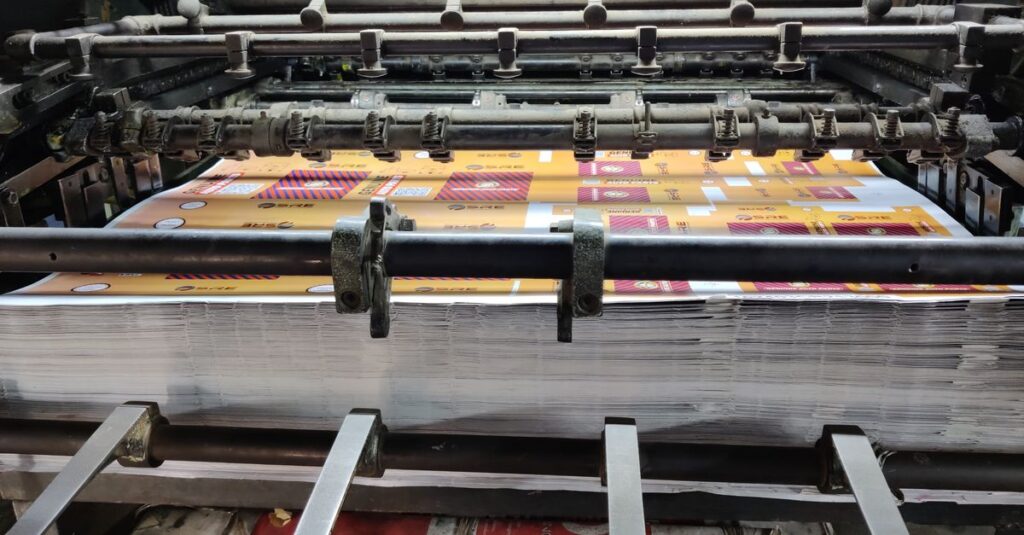
Walk with me through our factory floor in Rajahmundry for a second. The paper arrives in massive reels. For A4 production, those reels are a specific width. When we cut them, the guillotine is programmed for the 210x297mm slice. There’s almost no off-cut waste. It’s clean.
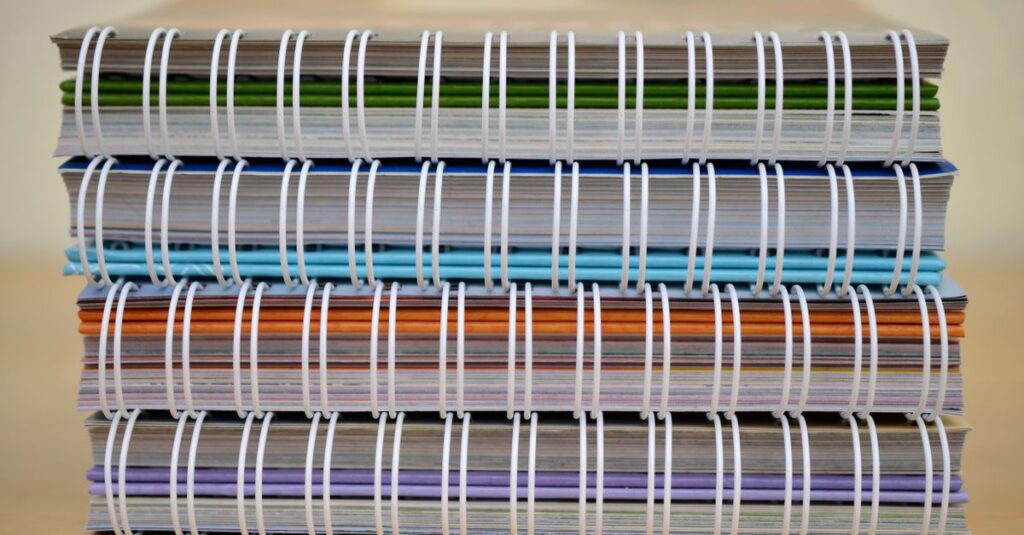
Now, binding. A4 sheets are bigger, so the binding has to be stronger. A simple staple stitch might not hold 200 pages of A4 paper as well as it holds A5. The weight distribution is different. We often recommend perfect binding (that glued spine you see on paperback books) or robust spiral binding for thicker A4 notebooks. It just lasts longer. Stitched binding is great for thinner A4 books, say up to 120 pages.
The covers are a bigger deal, too. A flimsy cover on a big A4 book feels awful. It needs to be a heavier cardstock, often laminated, to provide the necessary support. All of this — the paper, the binding, the cover — adds cost. Not a little. A real, tangible, per-unit cost.
When a corporate buyer comes to me and says, “I need 5000 A4 notebooks, 200 pages, custom logo, and my budget is X,” I can tell within seconds if their budget and their ask are in the same universe. Nine times out of ten, they’re not. They want the prestige of the size without paying for the engineering it requires.
Expert Insight
I was reading something last month from an old paper industry journal. One line stuck with me. It said the global adoption of the A-series paper sizes is probably the most successful example of standardisation nobody ever thinks about. It’s allowed manufacturers, printers, and buyers across continents to work from the same blueprint without a single meeting or contract.
Think about that. A factory in India, a designer in Sweden, and a procurement office in Kenya can all specify “A4” and know, with absolute certainty, what they’re talking about. That level of silent, global understanding is rare. I don’t have a cleaner way to put it than that.
A4 vs. Other Common Notebook Sizes
| Feature | A4 Notebook (210x297mm) | Standard Long Notebook (272x171mm) | Executive A5 (148x210mm) |
|---|---|---|---|
| Primary Use | Formal reports, official documentation, corporate manuals. | Everyday school/college notes, office meeting minutes. | Personal planners, portable journals, manager notepads. |
| Feel & Presence | Substantial, authoritative, desk-oriented. | Familiar, practical, workhorse. | Professional yet portable, discreet. |
| Binding Recommendation | Perfect binding or heavy-duty spiral for page counts over 120. | Stitched binding is standard and highly durable. | Stitched or spiral works well; lighter weight allows more options. |
| Cost Implication | Highest. More paper, sturdier covers and binding required. | Most cost-effective for bulk educational/office orders. | Mid-range. Good balance of quality and price for corporate gifting. |
| Portability | Low. Fits in a briefcase or file, not a small bag. | High. Standard size for school bags and desk drawers. | Very High. Easily fits in most handbags, laptop cases. |
| Customization | Excellent for full-cover branding, looks impressive. | Great for simple logo stamping or school crests. | Perfect for premium finishes (foiling, embossing) on a smaller scale. |
Look at that cost line. That’s the real conversation. Are you paying for utility or for perception? Both are valid, but you need to know which one you’re buying.
Real-Life Order: Getting It Right
Let me give you a real-life scene — not a case study, just something that happened. Priya, 38, a procurement manager for a mid-sized IT firm in Bangalore. She was ordering year-end diaries for 200 managers. She wanted them to feel “premium.” Her first spec was A4, leather-look cover, 240 pages.
We got on a call. I asked what the diaries were for. Daily scheduling, client meeting notes, to-do lists. I asked if the managers travelled. Most did, between offices. I suggested an A5 size with the same page count, but a better-quality, flexible cover that would lie flat and fit in a laptop bag. Told her the unit price would be about 30% lower, or she could put that budget into a nicer paper stock and a debossed logo.
She paused. Said, “But A4 looks more senior.” I said, “An A5 that fits in their life and gets used looks more senior. An A4 that’s left on the desk because it’s bulky looks like a waste.”
She went with the A5. Feedback later was that people actually used them. The order the next year was bigger. The point here isn’t that A4 is bad. It’s that the best size is the one that matches the actual use, not the imagined prestige. Anyway. Where was I.
If you’re evaluating a custom printing job, start with the user’s daily reality, not the brochure.
Bulk Buying A4 Notebooks: The Hidden Details
So you’ve decided you genuinely need A4. Good. Now, the details that separate a good bulk order from a problematic one. The paper GSM (grams per square meter) is critical. For A4, you can’t go too thin. 70-80 GSM is a sweet spot for writing. Below 70, the page feels flimsy and ink might bleed. We use a 54 GSM for many standard school notebooks, but that’s for smaller sizes and pencil use. A4 demands more substance.
Page ruling. Because an A4 page is wider, the ruling style matters more. Single Ruled (SR) is common, but for accounting or technical work, Double Ruled (DR) or Cross Ruled (CR) might be better. The extra space lets those formats breathe.
Packaging. A4 notebooks don’t stack as densely as smaller ones. A pallet of A4 notebooks contains fewer units than a pallet of A5s. That affects shipping volume and, therefore, cost. If you’re importing or moving stock across the country, this logistics detail can hit your bottom line. Don’t let your supplier surprise you with it. Ask about the pack quantity per carton and the cartons per pallet.
It’s these gritty, physical realities of manufacturing and logistics that make the price what it is. It’s not magic. It’s math, machine time, and material.
Frequently Asked Questions
Is A4 the same as Legal Size paper?
No. Not at all. A4 is 210x297mm. Legal size (used in some countries like the US) is 8.5″ x 14″ (about 216x356mm). Legal is longer and narrower. They are not interchangeable in binders or files. This mix-up can derail an entire stationery order.
Can I get A4 notebooks with different numbers of pages?
Absolutely. Standard counts are 92, 120, 200, 240 pages. But for A4, going very high (like 300+) needs that strong perfect binding I mentioned. You can get fewer pages too, but it might feel oddly thin for its size. We tailor it based on the intended use.
Why do some A4 notebooks lie flat and others don’t?
Binding. Spiral and wire-o bindings always lie flat. Perfect binding (glued spine) often needs to be “broken in.” Some high-quality perfect binding uses a technique called “lay-flat” binding, but it’s more expensive. If lying flat is crucial, specify spiral binding.
Is A4 paper size used for all notebook covers?
No. The cover is always cut slightly larger than the internal pages to protect the edges. For an A4 notebook, the cover is usually 2-3mm larger on all sides. So an A4 notebook’s closed dimensions are slightly bigger than 210x297mm.
What’s the most common mistake when ordering bulk A4 notebooks?
Under-specifying the paper weight. People focus on page count and price, then get a floppy, unprofessional-looking notebook. For A4, 70 GSM is the bare minimum for a corporate feel. 80 GSM is better. It’s the foundation everything else is built on.
Wrapping This Up
So, A4 size. It’s 210 by 297. It’s a global standard. It feels important. It costs more. The real takeaway? Don’t order it because it sounds right. Order it because it is right for the specific job it needs to do.
For formal, filed, desk-bound work? Perfect. For everyday, mobile, cost-conscious needs? There are almost certainly better options in our standard range. The trick is matching the tool to the task, not the title.
I don’t think there’s one perfect size for every business. Probably there isn’t. But if you’ve read this far, you’re not just looking for dimensions — you’re figuring out how to make a smart, durable investment in your company’s tools. That’s the whole point of a bulk order.
If you’re weighing up sizes and specs for a big order, it helps to talk it through with someone who’s been making them for 40 years. We can probably save you some headache.