

So, what are you actually buying?
You search for a ‘paper book.’ You need 5,000 notebooks for a school district, or 2,000 branded diaries for a corporate gift pack. You think you’re buying… a book. Which you are. But after 40 years in this business, I can tell you it’s more like buying a car. You don’t just buy ‘a car’ — you look at the engine, the chassis, the interior. Nobody talks about notebooks this way, but they should. Because the difference between a notebook that falls apart in a month and one that lasts a student a whole year isn’t magic. It’s specs. It’s paper weight and binding thread and glue. Let’s be honest — most procurement managers just look at the price per unit and the cover. I get it. Budgets are tight. But the cheapest option often ends up being the most expensive when you’re dealing with complaints, returns, and a reputation for handing out junk.
Anyway. If you’re responsible for buying these things in bulk — for a school, a corporation, a government tender — this is for you. We’re going to strip a notebook down to its bones. Not with jargon, but with the stuff that actually matters when you’re signing the purchase order. If you’ve ever been frustrated by a ‘paper book’ that didn’t hold up, you’re not alone. It usually means someone skipped a step.
It starts with paper. It always does.
The phrase ‘paper book’ is funny because the paper is literally everything. It’s the experience. I’ve seen people get angry — genuinely annoyed — when their pen bleeds through or the paper feels like tissue. That frustration starts with a number: the GSM.
GSM stands for Grams per Square Meter. It’s not thickness, it’s weight. Think of it like the density of the sheet. For a standard student notebook that needs to be affordable but usable, you’re looking at around 54-60 GSM. That’s the sweet spot. It’s thick enough that a ballpoint pen won’t ghost through to the other side, but light enough that a 200-page notebook doesn’t feel like a brick. Go below 50 GSM for a writing notebook and you’re asking for trouble. The paper will be translucent, flimsy. It’ll tear at the staples. For drawing books or premium corporate diaries, you jump to 70-80 GSM or even higher. That paper has a heft. It feels substantial. It tells the user this thing matters.
And then there’s the ruling. This seems small, but it dictates function. Single Ruled (SR) for essays. Four Ruled (FR) for little kids learning the alphabet. Unruled (UR) for sketching or meeting notes. Broad Ruled (BR), Center Broad Ruled (CBR) for accounting. Each one serves a different hand, a different purpose. Choosing the wrong ruling for a bulk order is a classic mistake. You don’t give Four Ruled notebooks to college students.
The thing about paper — okay, let me rephrase that. The headache about paper is that you can’t see most of this from a product photo online. You have to feel it. Or you have to trust the manufacturer’s spec sheet. Most people just trust, and then they’re surprised.
Expert Insight
I was talking to a supplier last month about pulp quality — over the phone, trying to figure out a price hike — and he said something that stuck with me. He said, “You’re not buying paper. You’re buying harvested sunlight.” Sounds poetic, but what he meant was, the fiber length from the tree, the processing, the bleaching… all of it changes how the sheet behaves. A shorter fiber paper is cheaper but it’s dustier, it tears easier. That longer fiber stock? It costs more, but it lays flatter and takes ink cleaner. The more capable the paper is, the harder it is to explain why it costs more. People just see a white sheet.
The binding: where notebooks live or die
Here’s where bulk buyers get lost. The binding is the spine of the operation. Literally. It’s what holds the whole thing together through months of being shoved in bags, dropped on floors, and opened at awkward angles.
- Stitched Binding (Saddle Stitching): This is your classic school notebook. Staples through the fold. It’s cost-effective, it lies flat. Perfect for notebooks up to about 92 pages. Beyond that, the staples strain. We produce thousands of these a day.
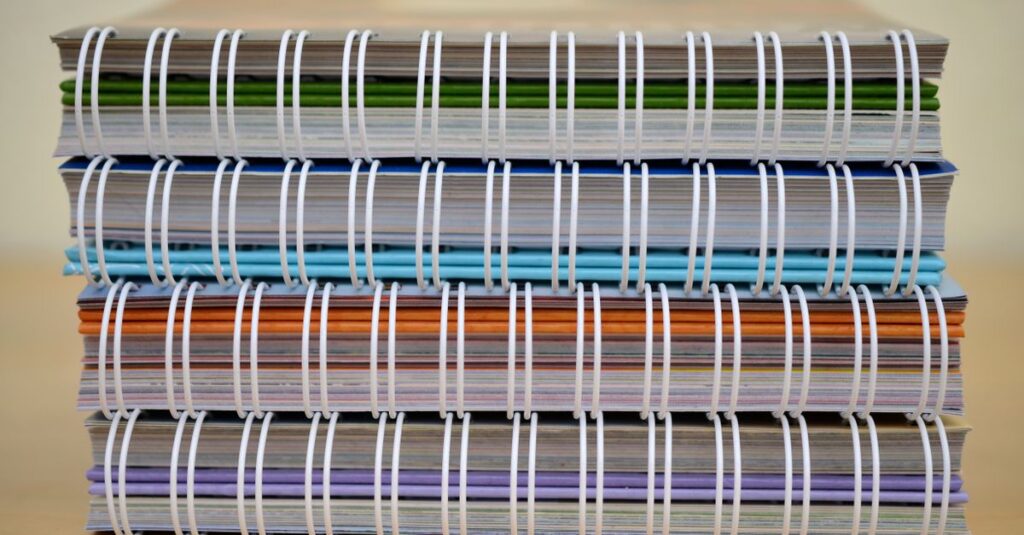
- Spiral Binding (Wire-O or Plastic): The wire or plastic coil winding through punched holes. Lays perfectly flat, 360 degrees. Great for sketchbooks, manuals, or anything that needs to stay open on a desk. The downside? The spirals can get bent in transit if not packed well.
- Perfect Binding: That smooth, glued spine you see on paperback novels and thick corporate diaries. Looks professional, clean. Can handle high page counts (200, 240, 320 pages). The risk? If the glue is cheap or the application is bad, pages fall out in clumps. A nightmare.
I remember a client, a training institute in Hyderabad. They ordered 1,000 perfect-bound manuals for a new course. They went with the lowest bidder. The books arrived, looked great. Two weeks into the course, pages were scattering across the classroom like confetti. The glue had failed. They weren’t just out the money; they looked unprepared. The real cost wasn’t the unit price. It was that.
Binding isn’t just a manufacturing step. It’s a promise. The promise that the thing will stay a thing.
Sizes and formats: it’s not one-size-fits-all
You wouldn’t buy uniforms without knowing the sizes. Same with notebooks. The industry has these names that sound almost royal: King Size, Long, Short, Crown. They’re just codes for dimensions.
| Notebook Size | Dimensions (cm) | Best Use Case |
|---|---|---|
| Short Notebook | 19.5 x 15.5 | Younger students, lightweight, easy to carry. |
| King Size | 23.6 x 17.3 | The standard workhorse for most schools and general writing. |
| Long Notebook | 27.2 x 17.1 | More writing space per page, popular for specific subjects or note-taking. |
| Account Notebook | 33.9 x 21.0 | Ledgers, financial records, large-format data. It’s a desk book. |
Then you layer on page count: 52 pages for a term, 200 pages for a year-long project. This is where customization isn’t a luxury; it’s logistics. A primary school needs 4-subject notebooks with 52 pages each. A university might need single-subject, 200-page ruled books. Getting this right in your bulk order is the difference between smooth distribution and a warehouse headache.
The cover: more than just a pretty face
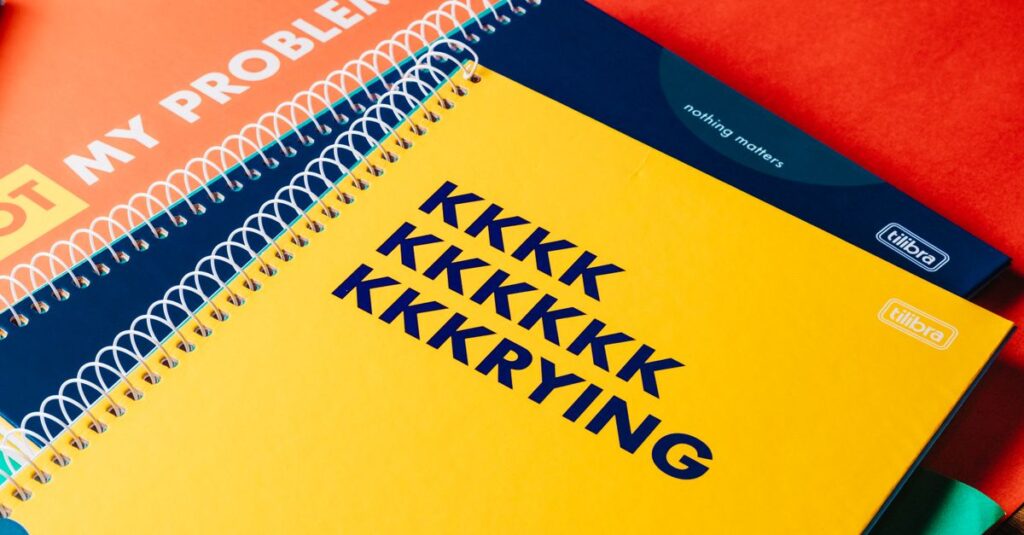
The cover is the first impression. For a generic school notebook, it’s often a simple, brightly colored art paper. But for corporate or custom notebooks, the cover is your brand’s handshake. It’s where printing quality becomes visible.
Offset printing for large runs gives you vibrant, consistent color. Digital printing for smaller batches or personalized runs. Then you have the coating: a lamination layer that protects against scuffs, spills, and the general grind of being in a bag. An uncoated cover feels matte and professional but will show wear faster. A glossy laminated cover is tougher but can feel slick.
I think the most overlooked part of the cover is the inside. The inside front cover is prime real estate. That’s where you put instructions, a calendar, a conversion chart — useful information that makes the notebook stick around. A blank inside cover is a missed opportunity, especially for branded items.
Look, I’ll be direct. A flimsy cover tells the user the contents aren’t valuable. It sets a tone.
For the bulk buyer: what to actually ask for
When you’re talking to a manufacturer or scrolling through a product page, move beyond ‘paper book.’ Have a checklist. It saves everyone time and prevents that sinking feeling when the shipment arrives.
- Paper Spec: “What GSM is the writing paper? Is it wood-free?” (Wood-free means less acidity, longer life).
- Binding: “Is it stitched, spiral, or perfect bound? Can you send me a sample of that specific binding?”
- Page Count & Ruling: “I need 92-page, Single Ruled. Can you do that?” Be exact.
- Cover: “What paper weight is the cover? Is it laminated? What’s the printing method for my logo?”
- Production Lead Time: “From approved design to shipped pallet, what’s the realistic timeline?”
Three things happen when you ask these questions. One, you sound like you know what you’re doing. Two, you filter out suppliers who can’t or won’t give you straight answers. Three, you get the notebook you actually need, not the one they happen to have in stock.
It’s not about being difficult. It’s about being clear. Most misunderstandings in this business aren’t about malice; they’re about assumed specs.
Frequently Asked Questions
What is the standard paper used in school notebooks?
Most standard school notebooks use around 54-60 GSM (Grams per Square Meter) writing paper. It’s a balance — thick enough to prevent ink bleed-through, but light enough to keep the book affordable and portable. It’s designed for daily writing with pens and pencils.
What’s the most durable binding for heavy-use notebooks?
For notebooks that will be opened and closed constantly (like student books), stitched binding (saddle stitching) is incredibly durable and cost-effective. For thicker books (200+ pages) that need to lay flat, like corporate diaries, perfect binding with high-quality glue is the professional standard. Spiral binding is also very durable and lies flat, but the coil can be vulnerable to bending.
Can I get different rulings on different pages in one notebook?
Yes, but it’s a custom job. Standard notebooks have one ruling type throughout (all Single Ruled, all Unruled). For custom orders, you can specify mixed rulings — like the first half graph paper, the second half lined. This requires special planning in the printing and collating stage, so it’s common for bulk custom orders but not for off-the-shelf products.
What’s the difference between a ‘paper book’ and a ‘notebook’?
In everyday language, not much. People use them interchangeably. In the stationery and printing trade, “paper book” is often a broader term that can include exercise books, account books, registers, and pads. “Notebook” tends to refer more specifically to bound books for writing notes. When ordering, it’s always safer to describe exactly what you need — size, page count, ruling, binding — rather than relying on the general term.
How long does it take to manufacture a bulk order of custom notebooks?
It depends on the complexity, but for a standard custom print run of, say, 5,000 notebooks, you should budget 3-4 weeks from final design approval to shipped goods. This includes time for printing, binding, drying, quality checks, and packing. Rush orders are possible but complicate the production line. Always build in a buffer for your project timeline.
Wrapping it up
So a ‘paper book’ is never just a paper book. It’s a set of decisions. Paper weight, binding thread, cover stock, ruling lines. Each one affects the cost, the feel, and the lifespan. For someone ordering ten notebooks, this might not matter. For someone ordering ten thousand, it’s the only thing that matters.
The goal isn’t to become a notebook engineer. It’s to know enough to have a real conversation with your supplier. To look at a sample and know what you’re holding. To avoid that moment of unpacking a shipment and realizing you bought the wrong thing.
I don’t think there’s one perfect notebook. Probably there isn’t. But if you’ve read this far, you already know what you need from it — you’re just figuring out how to ask for it. And that’s the whole game, right there. Sometimes, it helps to talk to people who’ve been making them for decades.