Here’s the thing about grid paper. It’s not just lines.
You know that feeling? A procurement manager staring at a catalog, a school principal trying to allocate a budget, a corporate admin ordering supplies for a new project. You need notebooks. But which ones? The request comes in: “paper grid notebooks.” And suddenly, it’s not a simple purchase. It’s a decision that sits at the intersection of cost, function, and someone else’s actual workday. Get it wrong, and you’re the person who bought the wrong tool for the job. The silence in the supply room has weight.
Most people think a grid notebook is a grid notebook. A page of little squares. But that’s where the headache starts, honestly. Because in the world of institutional buying and manufacturing, the details in those squares matter more than anyone says out loud. They dictate what gets written, drawn, calculated, and ultimately, whether the product you’re sourcing actually works for the people using it. If you’re looking at bulk orders — for a school, an engineering firm, a government office — this isn’t about stationery. It’s about enabling specific kinds of work.
I’ve been in this business for decades, and the conversations always go the same way. Someone calls asking for grid notebooks. The first question I ask back is never about quantity. It’s about the grid itself. Because nine times out of ten, that’s the only thing that matters here. Getting that detail right upfront takes the edge off the entire procurement process.
What a “Grid” Actually Means (And Why It’s Not One Size Fits All)
Look, I’ll be direct. When we say “paper grid notebook,” we’re talking about a page ruled with a pattern of intersecting lines, creating a field of squares or rectangles. But the intent behind the search — what you’re probably trying to solve for — is finding the right structured paper for a specific task. Is it for math students plotting graphs? Architects sketching floorplans? Accountants keeping ledgers? The grid is the tool, and the tool needs to match the job.
In manufacturing, we break it down into ruling types. It’s not marketing fluff; it’s a technical spec that changes how the notebook functions.
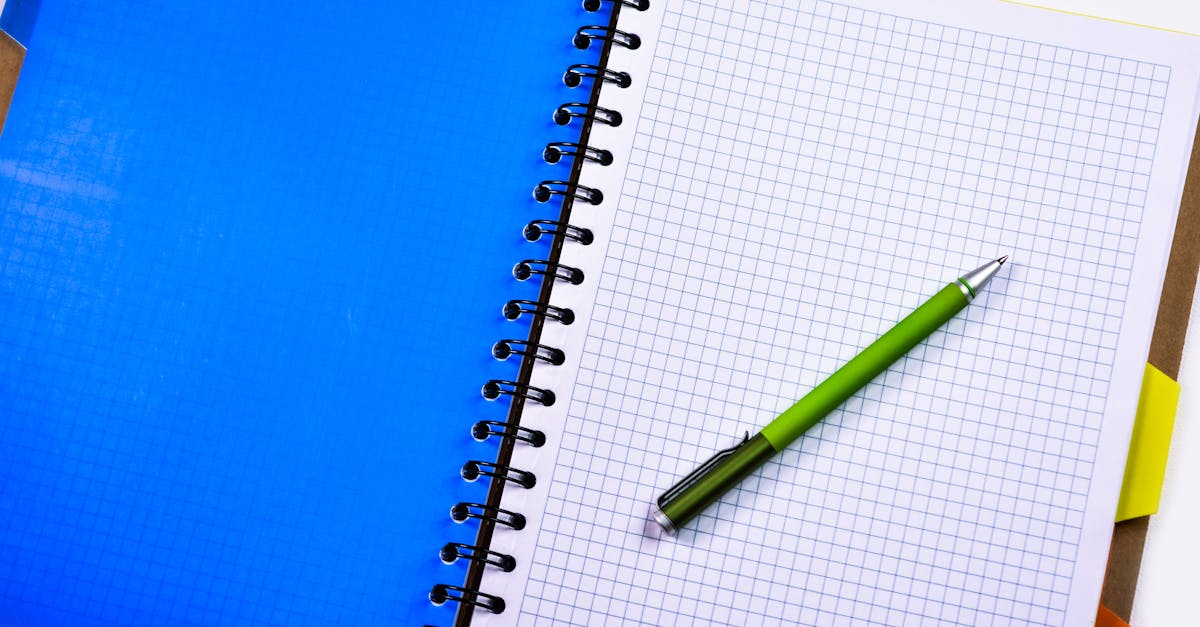
- Cross Ruled (CR): This is the classic. Equal vertical and horizontal lines making perfect squares. It’s the universal grid. Think math homework, chemistry diagrams, simple sketches where proportion matters.
- Four Ruled (FR): Here’s where it gets specific. Four lines grouped together with a margin. It’s for teaching handwriting — usually in regional language notebooks in India. The grid guides letter shape and size. It’s not for graphing; it’s for forming characters.
- Graph Paper: Often used interchangeably with “grid,” but purists (like engineers) will tell you it’s about precision. The lines are finer, the squares are often a standard size (like 5mm or 1/4 inch), and the paper might be a higher GSM to prevent bleed-through from pencils and technical pens.
The mistake I see most often? A school orders a container of “grid books” for their science lab, but they get Four Ruled books meant for language class. The books pile up, unused. The budget’s spent. It’s a quiet, expensive failure. The question isn’t whether you need grid notebooks. It’s whether you know which grid you actually need.
The Real-World Users: Who Needs These and Why?
Let’s talk about Ravi. He’s 28, a junior architect at a firm in Hyderabad. His day starts with coffee, a cluttered desk, and the need to quickly jot down a structural calculation or sketch a site layout concept. He doesn’t reach for a blank sheet. He grabs a graph notebook — the 5mm grid kind. The lines are a silent partner. They give him scale without thinking, keep his diagrams proportional, let him switch between numbers and sketches on the same page. The notebook is less a diary and more a cognitive scaffold. If his firm’s procurement buys the wrong one — squares too big, paper too thin — his workflow stutters. It’s a small thing that isn’t small at all.
Or think about a Class 9 physics teacher in a CBSE school in Rajahmundry. She’s teaching refraction. She needs every student to be able to accurately draw a light ray diagram, measure angles, label parts. A cross-ruled notebook isn’t a preference; it’s part of the lesson plan. The grid provides the coordinate plane. Bulk buying for a school means aligning your order with a syllabus, not just a price list.
And then there’s the corporate side. Data analysts, project managers, UX designers. You see them in coffee shops, sketching wireframes on grid pads. The structure organizes chaos. For a company ordering branded notebooks for its team, offering a quality grid option says you understand how they work. It’s a functional perk.
Expert Insight
I was talking to a supplier for a large engineering college last month. Over the phone, his voice was tired. Not sleepy-tired. Life-tired. He’d just had to return a massive order. The books were technically “grid,” but the ruling was so faint the students couldn’t see it under pencil. The manufacturer had saved ink, and ruined the product’s entire purpose. He said something that stuck with me: “The grid isn’t decoration. It’s data. If the data is weak, the tool is broken.” I don’t have a cleaner way to put it than that. The quality of the print matters as much as the pattern.
Choosing the Right Specs: It’s More Than Just Squares
So you know you need grid paper. Here’s what to look at next — the specs that turn a generic product into the right tool. This is where bulk buyers can get real value (or make real mistakes).
Paper Quality (GSM): This is probably the biggest reason notebooks fail in use. Standard 54 GSM writing paper is fine for ballpoint pens and pencils. But if your users are using fountain pens, markers, or heavy erasing, that paper will ghost, bleed, or tear. For graph paper used in technical drawing, you often need 70-80 GSM. Thicker. More opaque. It costs more, but it prevents the headache of unusable pages. Ask: what’s writing on this?
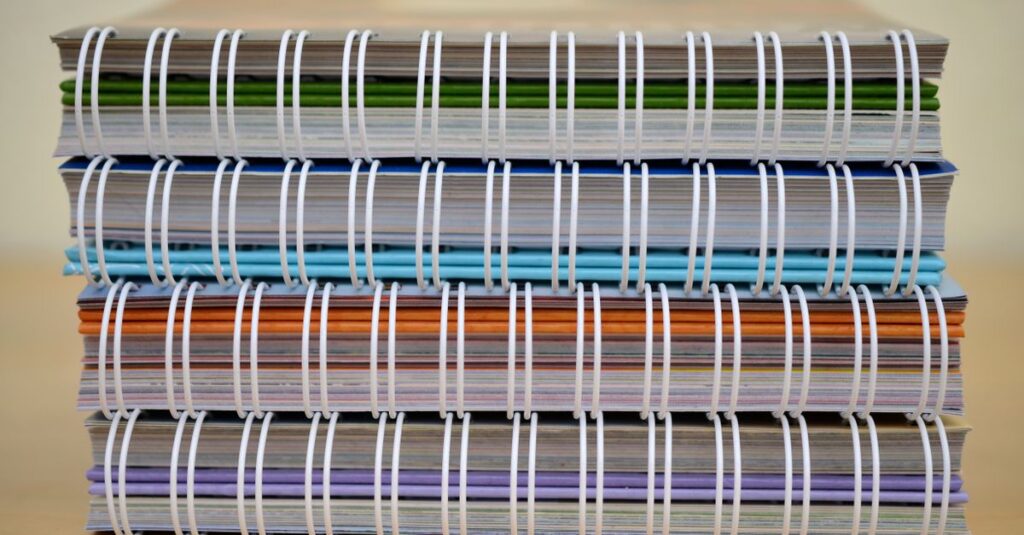
Binding: How does the notebook need to lay flat? A student needs a stitched binding that’s durable for a backpack. An architect might need a spiral binding so the notebook folds completely back on itself for drawing. Perfect binding (glued spine) looks clean for corporate gifts but might crack if forced flat. The binding decides the notebook’s posture.
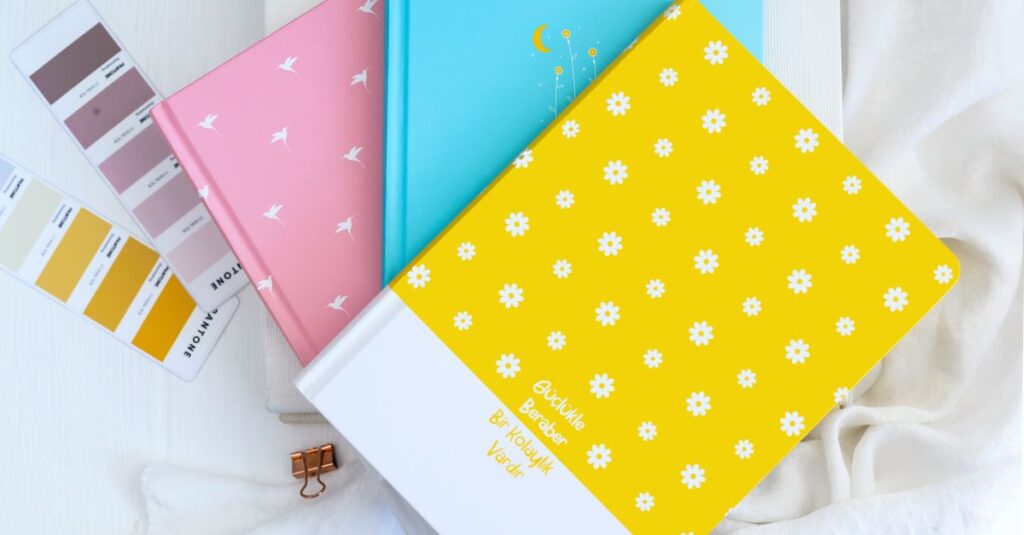
Cover and Customization: For schools, a thick, laminated cover survives a term. For a corporate order, a custom cover with a logo and a professional finish turns a commodity into branded merchandise. This is where working with a manufacturer who does custom printing makes all the difference. You’re not just buying notebooks; you’re creating a physical asset.
And honestly? Most people don’t think about this until they have a warehouse full of notebooks that nobody wants to use. The silence in that warehouse is expensive.
Grid Notebook vs. Other Rulings: A Side-by-Side Look
It helps to see the choice clearly. Here’s how grid paper stacks up against other common rulings when you’re making a bulk decision.
| Feature | Paper Grid Notebook (Cross Ruled) | Single Ruled Notebook | Blank/Unruled Notebook |
|---|---|---|---|
| Primary Use | Mathematics, graphing, diagrams, technical sketches, planning. | General note-taking, essays, long-form writing. | Freehand drawing, brainstorming, mind-mapping. |
| Structure Provided | Two-dimensional guide for both horizontal and vertical alignment. | Linear guide for writing in straight lines. | No guide. Complete freedom of layout. |
| Ideal User | Students (STEM), engineers, architects, designers, data analysts. | Students (humanities), office admins, writers, managers. | Artists, creatives, strategists, anyone needing unstructured space. |
| Bulk Purchase Consideration | Match to specific subjects (maths, science) or technical departments. | General-purpose supply for offices or multi-subject school use. | Specialized order for art departments or creative teams. |
| Customization Tip | Ensure grid print is dark & precise. Consider thicker paper if used for drafting. | Line spacing (broad vs narrow) matters for user age/needs. | Paper texture and weight are the most critical factors. |
This table makes it obvious: you don’t choose a ruling, you choose an outcome. A grid enables a specific kind of precision that lines or blank pages simply can’t.
How to Source Quality Paper Grid Notebooks in Bulk
Right. You’re convinced. You need to place an order. Maybe 5,000 pieces for a school district. Maybe 10,000 for a corporate promotion. What now? The process is less about shopping and more about specification.
First, get samples. Always. Don’t just look at a picture online. Feel the paper. Write on it with the pen your users will use. Try to erase something. Can you see the ghost of the grid after you erase? That’s a dealbreaker for students. Fold the notebook back. Does the binding strain? A good manufacturer will send samples without hesitation. If they don’t, walk away.
Second, be specific in your request. Don’t just say “grid notebooks.” Specify:
- Ruling Type: Cross Ruled (CR) / Four Ruled (FR) / Graph (with mm size).
- Paper GSM: 54 GSM (standard) or higher (premium).
- Page Count: 92 pages? 200 pages? This affects thickness and perceived value.
- Size: Long (27.2×17.1 cm) for desks, or Short (19.5×15.5 cm) for portability?
- Cover: Plain, laminated, or custom printed?
This list turns you from a price-shopper into a professional buyer. It commands respect and gets you a fit-for-purpose product. I think — and I could be wrong — that most procurement frustrations happen right here, in the vagueness of the initial ask.
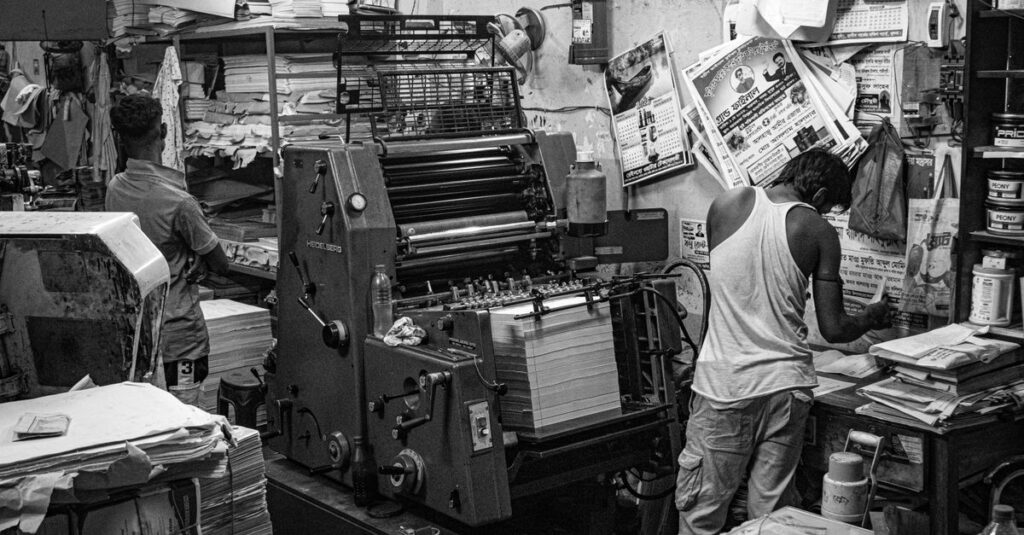
Finally, think about the supply chain. Where are these being made? A local manufacturer like us in Rajahmundry can offer more flexibility on custom runs, faster turnaround, and direct communication. You’re not just getting notebooks; you’re getting a relationship with the factory. For institutional buyers, that reliability is everything. Seeing the full range of what’s possible helps frame your ask.
Anyway. The goal is to move from “I need grid notebooks” to “I need 2,000 short-size, 92-page, cross-ruled notebooks with 70 GSM paper and a spiral bind for our engineering interns.” That’s the shift. That’s when you get what you actually need.
Frequently Asked Questions
What is the difference between graph paper and a paper grid notebook?
They’re often used interchangeably, but there’s a nuance. “Graph paper” usually refers to paper with a very precise, fine grid (often measured in mm or inches) used for technical drawing and engineering. A “grid notebook” is a broader term that can include graph paper but also covers other squared rulings like Cross Ruled (CR) used in schools. For bulk orders, clarify the exact ruling and square size you need.
What GSM paper is best for paper grid notebooks?
It depends on the use. For standard school or office note-taking with pencil or ballpoint pen, 54-60 GSM is perfectly fine and cost-effective. For more demanding uses like technical drawing with pencils that are frequently erased, or using markers/pens that might bleed, go for 70-80 GSM. Thicker paper prevents see-through and tearing, making the grid more functional.
Can I get custom logos printed on grid notebooks?
Absolutely. Most manufacturers, including us, offer private label and custom printing services. You can print your company logo, school emblem, or a specific design on the cover of the grid notebook. This is extremely common for corporate gifts, university merchandise, or branded supplies for events and conferences. It turns a generic product into a branded asset.
What’s the minimum order quantity for custom grid notebooks?
This varies a lot by manufacturer. Some might require a minimum of 500 pieces for a custom print run to be economical, while others specializing in bulk supply might have higher or lower thresholds. It’s always best to discuss your specific volume needs directly. For very large institutional orders (like for a school district), MOQs are usually very flexible.
Are paper grid notebooks good for bullet journaling?
Yes, actually. The grid provides a subtle structure that many bullet journal enthusiasts prefer over dots or lines. It helps create straight lines for layouts, boxes, and trackers without being as imposing as a solid line. If you’re sourcing notebooks for a creative office or as a corporate wellness gift, grid notebooks are an excellent, functional choice for this growing trend.
So, what’s the real takeaway here?
Three things. First, a paper grid notebook is a specific tool for specific tasks. Don’t buy it as a general-purpose item. Second, the devil is in the details — the GSM, the binding, the darkness of the print. Those specs matter more than the brand name. Third, sourcing them well means communicating those details clearly to your manufacturer. It’s a conversation, not just a purchase order.
I don’t think there’s one perfect grid for everyone. Probably there isn’t. But if you’ve read this far, you already know what your users need — you’re just figuring out how to source it reliably, at scale, without the usual procurement headaches. That’s the actual job.
If the idea of working directly with a manufacturer who gets these specifics sounds easier than sifting through generic catalogs, it might be worth starting that conversation. Sometimes the simplest solution is just talking to the people who make the thing.