

What Is a White Notebook? (And Why It’s Not What You Think)
Right off the bat — let’s clear something up. When someone searches “notebook white,” I know exactly what they’re after. They’re not talking about some minimalist, fancy journal with a plain cover. At least, not in my world. In manufacturing, “notebook white” means one thing: the paper inside. It’s about that writing surface. The blank space. The foundation.
Think about it. If you’re ordering 10,000 notebooks for a school district, or给我 5,000 custom branded diaries for your corporate clients, you’re not buying a cover. You’re buying pages. And the whiteness, the texture, the weight — that’s what matters. It’s the difference between a pen gliding smoothly and catching on rough fibers. Between ink bleeding through and staying crisp. I’ve been in this business for over four decades, and I can tell you — nobody cares about the cover until they’ve felt the paper.
You start with the paper. Everything else is just packaging.
Paper Quality: The Heart of the “White”
So, what exactly makes a notebook’s pages “white”? This is where most buyers get confused — and honestly, that’s not their fault. The industry jargon is a headache.
It’s not just a color. It’s a combination of brightness, opacity, and finish. A high-quality white notebook paper has a brightness level (measured on a scale) that reduces eye strain. It has enough opacity so your writing on page one doesn’t ghost through to page two. And it has a finish — smooth, vellum, maybe slightly textured — that suits its purpose. School notebooks for kids? You need a tougher, more forgiving surface. Executive diaries? That silky-smooth finish is non-negotiable.
The paper weight, the GSM, ties directly into this. A standard 54 GSM writing paper — the kind we use for most of our school notebooks — has a specific, functional whiteness. It’s bright enough to be clean, but not so stark it causes glare under classroom lights. When you move to a premium 70 or 80 GSM paper for a corporate diary, the whiteness changes. It becomes richer, more substantial. It feels expensive in your hands. That’s the secret: the “white” is a feeling, not just a look.
A Real Story From the Factory Floor
I remember a procurement manager from a university came to our factory in Rajahmundry last year. He kept holding sheets up to the light, comparing them. He said, “This one feels right.” He couldn’t articulate why, but his fingers knew. The paper had the right tooth, the right brightness. It was a specific 60 GSM wood-free stock we use for exam answer books. It was white, but it was a working white. A confident white. He ordered 50,000 units on the spot.
That’s the thing people miss when they think about bulk orders. You’re not just buying a product. You’re buying a user experience, thousands of times over.
The Manufacturing Process: From Pulp to Perfect Bound
How does that perfect white sheet end up bound in a notebook? Let’s walk through it — the way it happens in a factory like ours, not from a textbook.
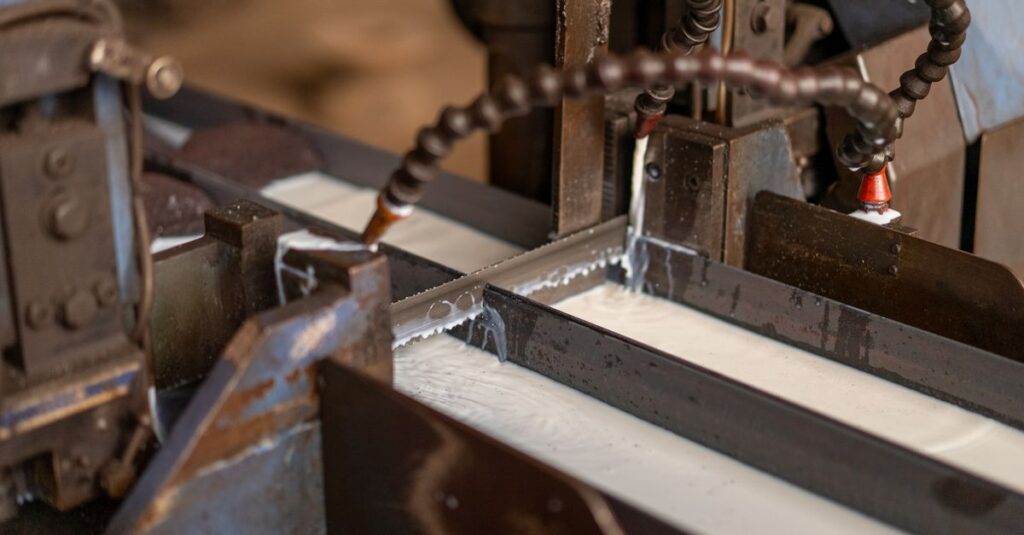
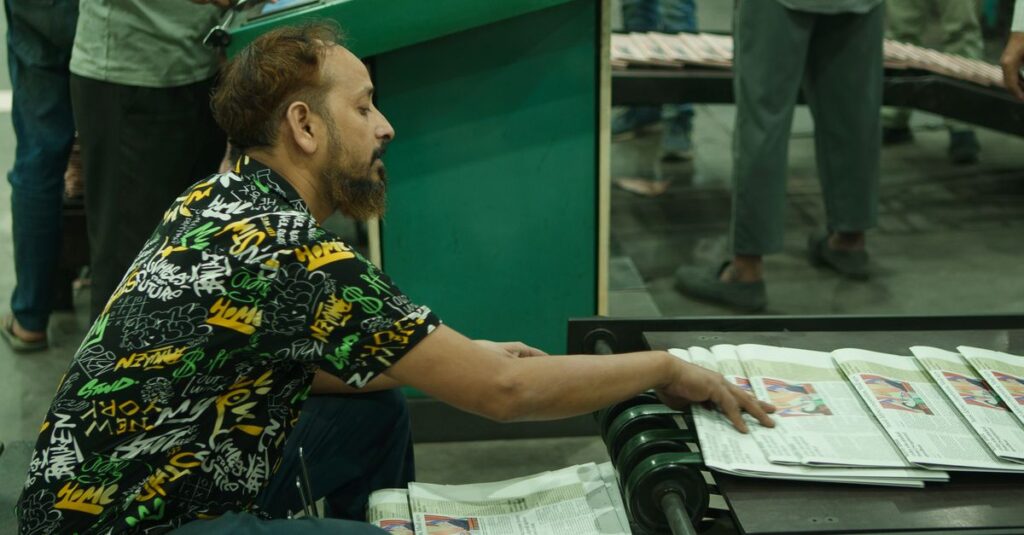
First, you get the paper in massive reels. It’s already been milled, bleached (to that specific white tone), and cut to size. Our job is to convert it. That means printing the ruling lines — single ruled, double ruled, unruled, graph. This is a huge step that defines the notebook’s purpose. A math copy needs a cross grid. An artist’s sketchbook needs that clean, unruled white.
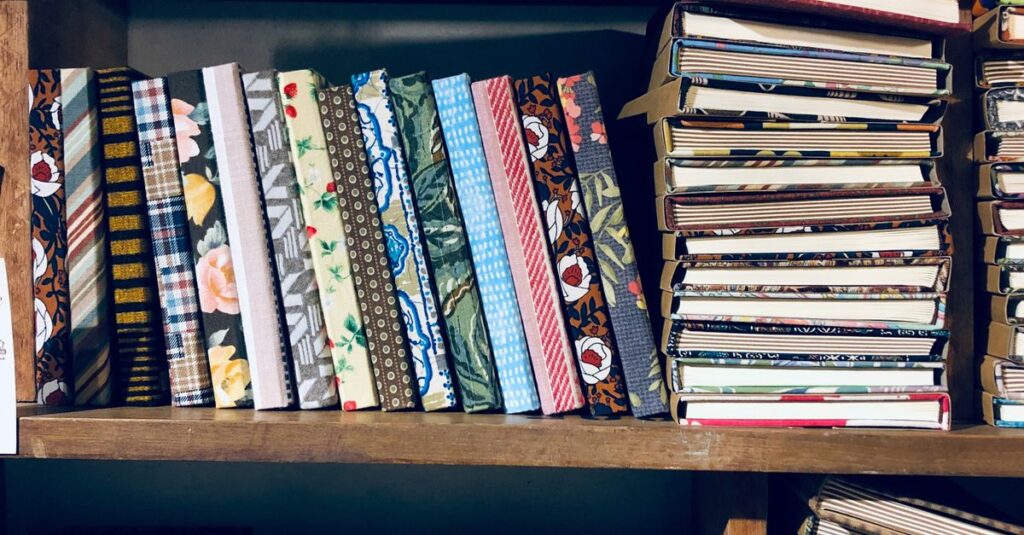
Then, we collate the sheets into sections — called “signatures.” These are folded, gathered, and then sent for binding. This is where the notebook gets its spine. You have options:
- Stitched Binding: The classic, most durable method. Thread is sewn through the folded signatures. It lies flat, lasts for years. This is what you want for textbooks, account books, anything that will see heavy use.
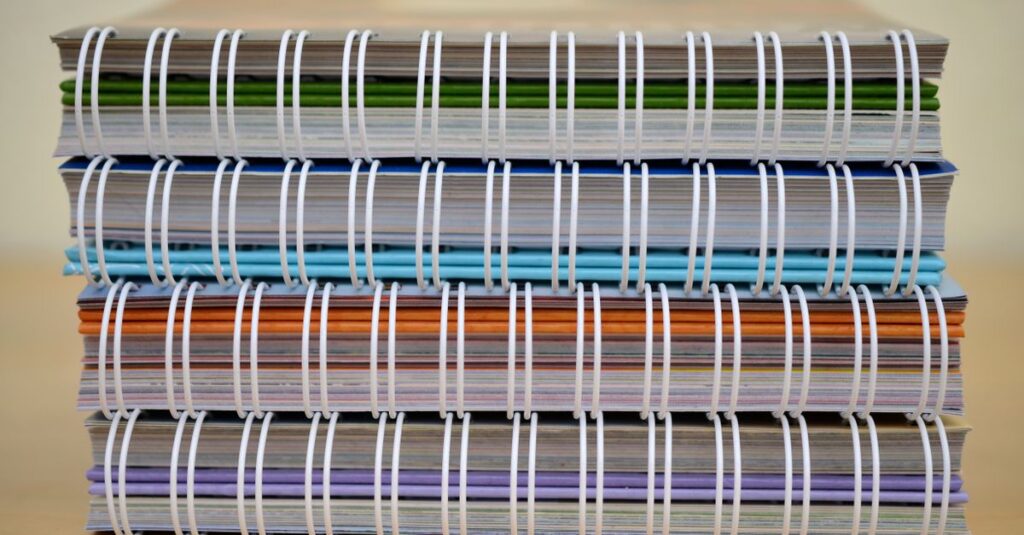
- Spiral Binding: Metal or plastic coil wound through punched holes. Lets the notebook fold back on itself completely. Great for manuals, cookbooks, anything that needs to stay open.
- Perfect Binding: That clean, squared-off spine you see on premium diaries. The pages are glued at the edge. It looks sleek, professional.
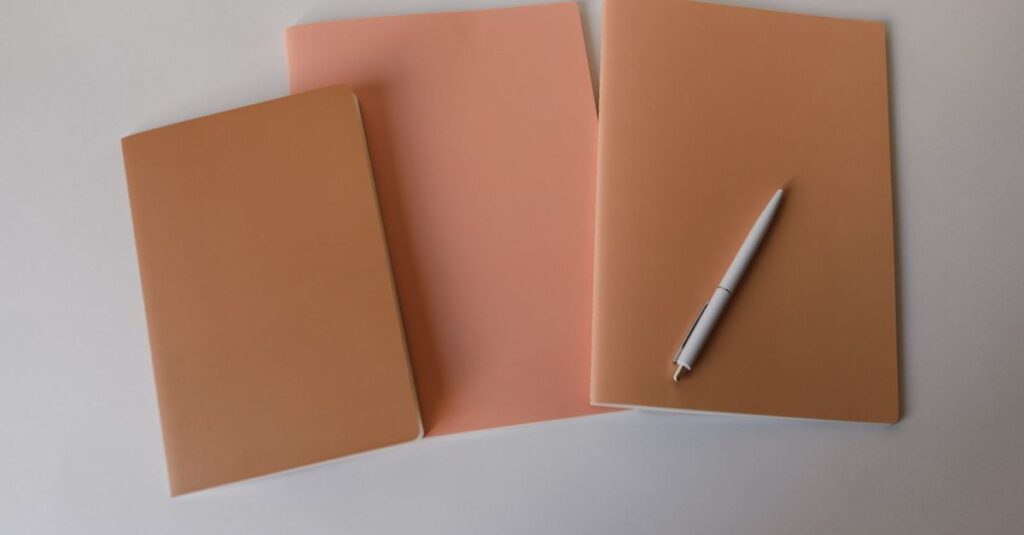
After binding, it gets its cover. This is where customization explodes. A plain white cover? Sure. But more often, it’s a custom printed logo, a school emblem, a vibrant design. The cover is the face. But the paper inside — that white notebook core — is the soul.
Choosing the Right White Notebook for Your Needs
This is probably why you’re reading. You’ve got a bulk order to place, and you’re staring at a catalog or a website, overwhelmed by options. Let me make it simple.
Think about the hand that will hold the pen. Is it a 7-year-old learning cursive, pressing down hard with a pencil? Or a CEO signing letters with a fountain pen? The paper needs to match the pressure, the tool, the intention.
| Feature | School / Student Notebook | Corporate / Premium Diary |
|---|---|---|
| Paper Weight (GSM) | 54 – 70 GSM | 70 – 100+ GSM |
| Paper Brightness | High, but not glaring | High, premium bright white |
| Ruling Type | Single Ruled (SR), Four Ruled (FR), Unruled for drawing | Single Ruled, Unruled, sometimes Center Broad Ruled (CBR) |
| Binding | Stitched (long-lasting), sometimes spiral for art books | Perfect Binding (sleek), Hardcover, sometimes spiral for notepads |
| Customization Focus | School logo, standard sizes (Long, Short, Crown), page count | Full branding, custom cover design, premium finishes, foil stamping |
| Key Priority | Durability, cost-effectiveness, standardization | Brand image, writing experience, perceived value |
The table isn’t just a comparison — it’s a decision tree. Start with the user.
Expert Insight
I was reading a trade magazine last month — Paperworld Today, I think — and there was a quote from a designer that stuck with me. She said, “In a digital age, the physicality of paper is the feature, not the bug.” She was talking about high-end stationery, but it applies everywhere. That “white notebook” you’re sourcing? Its physical feel, the sound of the page turning, the way it accepts ink… that’s the entire point of the product now. It’s a tactile experience you’re manufacturing. I don’t have a cleaner way to put it than that. We’re not just making stacks of paper; we’re making the interface for someone’s thoughts.
Bulk Orders & Customization: What You Need to Know
Okay, let’s talk logistics. Because ordering 500 notebooks is one thing. Ordering 50,000 is a completely different beast.
The first question we always get: “What’s the minimum order quantity (MOQ)?” It depends. For standard, off-the-shelf school notebooks? You can sometimes get away with a few thousand. For fully custom printed notebooks with your unique design, paper specification, and binding? The MOQ is higher — think 5,000 to 10,000 units minimum. The reason is simple: setup costs. Printing plates, binding machine adjustments, custom paper cutting — it all takes time and calibration. Spreading that cost over 100 notebooks makes each one impossibly expensive. Over 10,000? The price per unit drops dramatically.
Here’s a piece of advice I give every new buyer: request physical samples. Always. Don’t just look at a PDF of the cover. Hold the notebook. Write in it. Try the pen you’ll be using. See how the binding behaves. A good manufacturer will send you a ‘dummy’ or a sample batch without hesitation. If they won’t, walk away.
Lead times are the other big factor. Standard items might be ready in 2-3 weeks. A complex, fully custom job from design approval to delivery at your warehouse? Plan for 6-8 weeks, maybe more. This isn’t Amazon Prime. This is physical manufacturing, with drying times, shipping, and quality checks at every stage. Which is… a lot to manage. But that’s where experience counts.
The devil is in the details. Literally. The shade of white on page 5 needs to match page 105. The logo needs to be centered. The spiral binding shouldn’t catch. This is what a 40-year-old factory does: it sweats the details so you don’t have to.
The Future of the (Not So) Simple Notebook
Look, I’ll be direct. The notebook isn’t dying. It’s evolving. The demand for “notebook white” — for that pure, customizable, tangible writing surface — is actually growing in certain sectors. In a world of screens, giving someone a well-made notebook is a statement. It says, “Your thoughts matter enough to be written down properly.”
We’re seeing more interest in sustainable papers, in unique sizes that break the A4/A5 mold, in ruling patterns designed for specific note-taking methods. The basic white page is becoming a specialized tool. And for bulk buyers — schools, corporations, governments — that means your choices matter more than ever. You’re not just fulfilling a stationery quota. You’re choosing the tools for learning, for brainstorming, for record-keeping.
I think about this a lot when I walk through our production floor in Rajahmundry. The sound of the printing presses, the smell of paper and glue, the stacks of pristine white sheets waiting to become something. It’s easy to see it as just commodity manufacturing. But it’s not. Every one of those notebooks is a container for potential. A student’s first poem, a business deal, a scientist’s sketch. It starts with a blank, white page.
And honestly? That’s a pretty good place to start.
Frequently Asked Questions
What does GSM mean for notebook paper?
GSM stands for Grams per Square Meter. It’s the measure of paper weight and thickness. A higher GSM (like 80 or 100) means thicker, more opaque paper that feels sturdier and is less likely to have ink bleed-through. Standard school notebooks often use 54-70 GSM, while premium diaries use 70 GSM and above.
Can I get a completely custom-designed white notebook?
Absolutely. That’s a core service for manufacturers like us. You can customize everything: cover design, paper type & weight (GSM), ruling pattern, page count, binding type, and even packaging. You’re basically creating a private label product. There’s usually a minimum order quantity (MOQ) for such custom jobs to make the setup costs viable.
What’s the difference between stitched and spiral binding?
Stitched binding uses thread to sew the pages together. It’s very durable and gives the notebook a clean spine. Spiral binding uses a metal or plastic coil through punched holes, allowing the notebook to fold back on itself 360 degrees. Stitched is more traditional and robust for heavy use; spiral is more flexible and lies completely flat.
How long does it take to produce a bulk order of custom notebooks?
It depends on the complexity and quantity. For standard items, 2-3 weeks. For a fully custom order from scratch — including design approval, paper sourcing, production, and quality checks — you should plan for 6 to 8 weeks. Always discuss timelines clearly with your manufacturer before placing the order.
Do you export notebooks internationally?
Yes, we do. We regularly supply bulk notebook orders to the Gulf countries, Africa, the USA, UK, Europe, and other regions. International shipping, customs documentation, and ensuring the products meet destination-country standards are all part of the service a seasoned manufacturer provides.
Wrapping It Up
So, “notebook white” isn’t just a color. It’s the starting point. It’s the quality of the paper, the foundation of the product, and the first thing your end-user interacts with. Whether you’re procuring for a school, branding for a corporation, or distributing as a wholesaler, understanding this core element changes how you buy.
You start to ask better questions: What’s the GSM? What’s the brightness? What’s the ruling? How is it bound? The answers determine whether you get a tool that frustrates or facilitates.
I don’t think there’s one perfect notebook for everyone. Probably there isn’t. But if you’ve read this far, you’re not just looking for boxes of paper. You’re looking for a reliable partner to build those boxes — and everything inside them.
If you’re at that point, maybe it’s time to talk to someone who’s been doing it since 1985.