So, What the Heck is Pattern Printing Anyway?
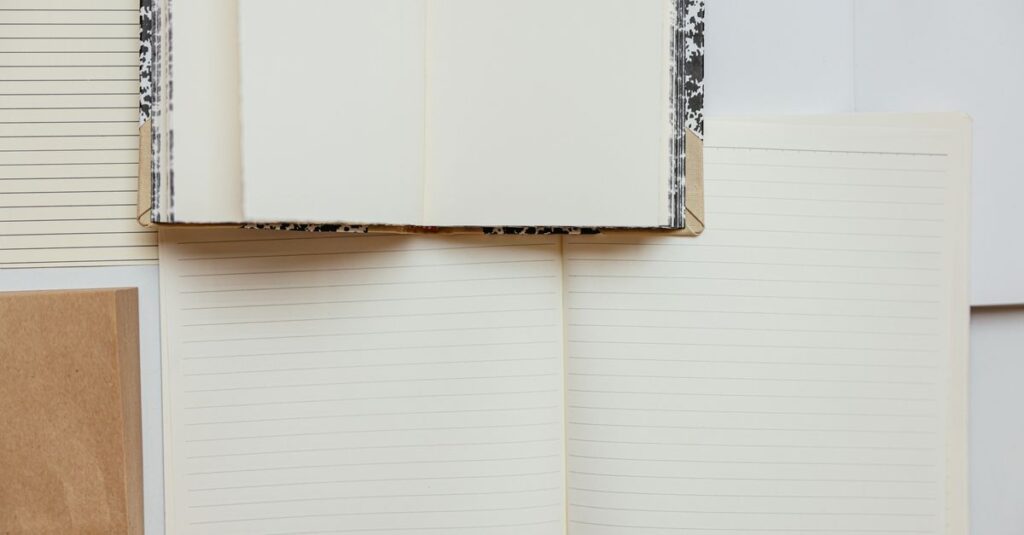
It’s the lines. The grids. The tiny blue margins and the faint grey boxes. It’s the whole invisible skeleton of a notebook that makes it useful before you even write a word.
You know the difference between an account book and a drawing book at a glance. A graph book versus a four-ruled school notebook. That’s pattern printing. It’s not about slapping a fancy logo on the cover – it’s designing the actual page space. It’s the first thing a student, an accountant, or a project manager interacts with when they open the book.
And I think – and I could be wrong – that most people ordering notebooks in bulk, whether for a school district or a corporate training program, don’t think about it enough. They worry about page count and cover thickness. But if the pattern is wrong – if the lines are too close, or the grid is too faint, or the margin is in the wrong place – the whole batch becomes a headache. The stationery guy knows. The user just feels it.
It’s functional art, printed a hundred thousand times on a roll of paper, before it’s ever cut and bound. Right. Enough setup. Let’s talk about what this actually looks like.
Curious about turning your custom layout into a real product? Our printing service page gets into our machinery and process.
It’s Not Just Lines: The Anatomy of a Notebook Page
Look, I’ll be direct. The standard patterns are a language everyone understands. You order a single-ruled notebook, you get exactly that. But the magic happens when you need something else. When the standard pattern just… doesn’t fit.
Think about the pattern as the user’s workspace. A cramped workspace frustrates you. A messy one confuses you. A well-designed one lets you think. Every line, margin, and box has a job.
We once worked with a music college in Hyderabad. They needed a staff notation pattern – the five lines for musical notes – pre-printed on every page. Simple, right? Standard isn’t so standard there.
Here’s the breakdown of what’s actually on the plate:
- The Ruling: Single lines (what you had in school), double lines, four lines (for practicing letter formation).
- The Grids: Cross-ruled or graph patterns for engineers, architects, designers. Different sizes for different levels of detail.
- Margins & Boxes: Red vertical margin lines, header/footer boxes for dates and titles, corner boxes for page numbers.
- Special Fields: Pre-printed columns for ledger entries, checkboxes for tasks, specific areas for signatures or timestamps.
The question isn’t whether you need a pattern. It’s whether the off-the-shelf pattern is costing you efficiency. Probably is.
How It Actually Gets Made (The Factory View)
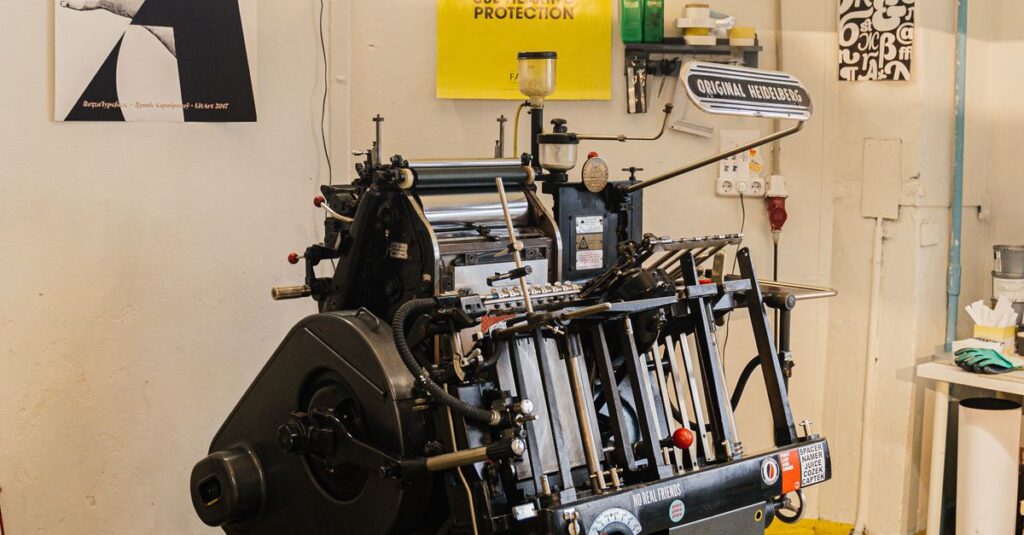
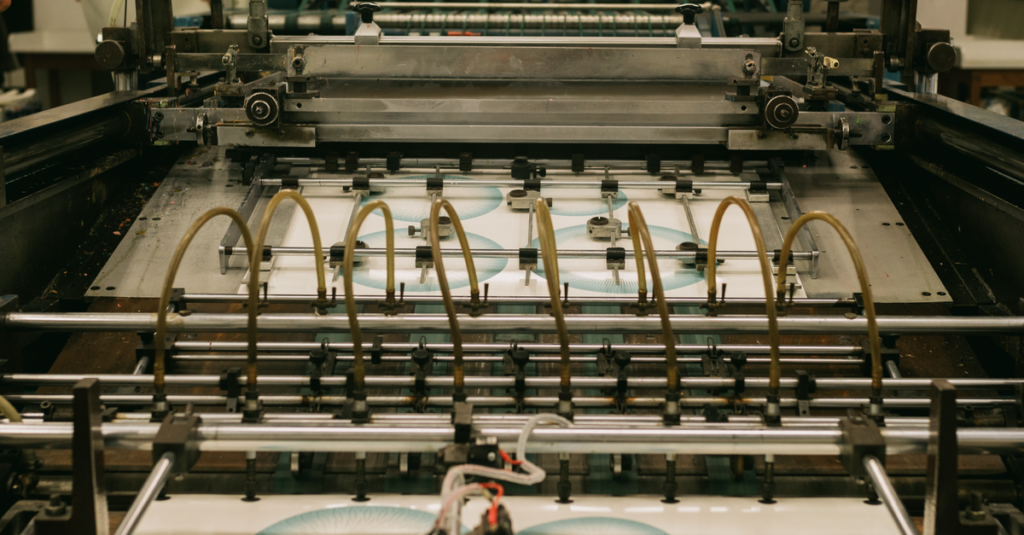
Okay, let me walk you through this. It doesn’t start with a notebook. It starts with a massive roll of paper, maybe a meter wide, spinning on a spindle. This is where the pattern gets printed – on the roll, in continuous reels, before any cutting happens.
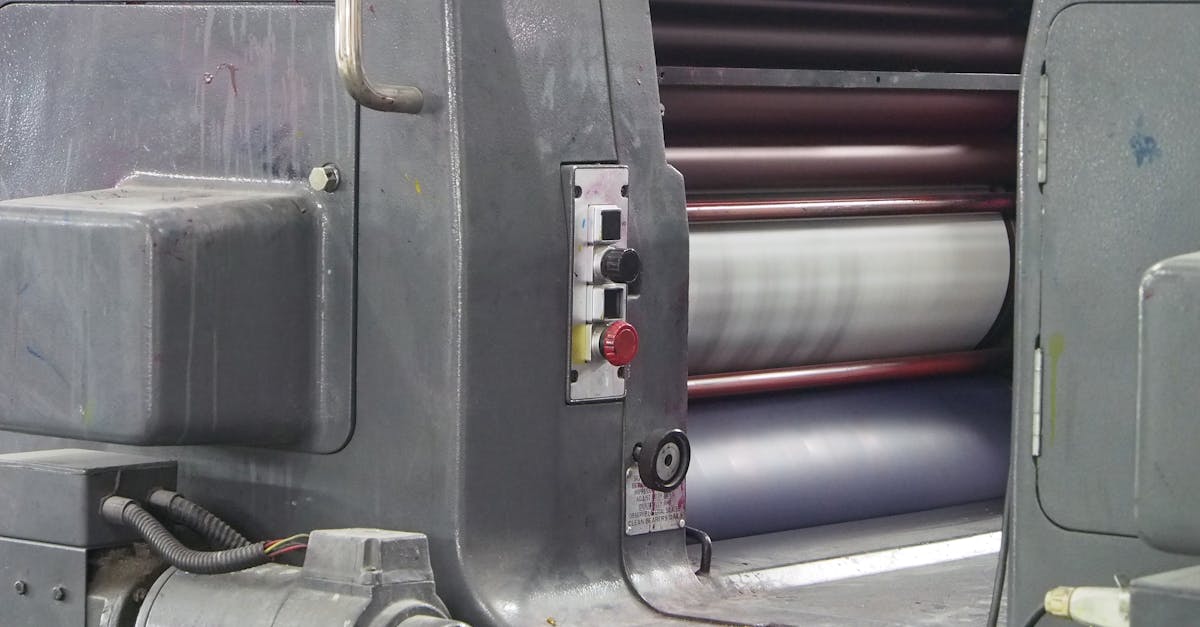
We use offset printing for this almost exclusively. The reason is consistency and cost at volume. A printing plate is made for your specific pattern – one plate might print the pattern across ten notebook pages, side-by-side, down the entire length of the paper roll. The precision needed is insane. A half-millimeter drift over a hundred meters of paper means the lines won’t match up when the sheet is cut and folded.
A headache, honestly, if the press isn’t calibrated right. You get feathering, misalignment. We’ve seen deliveries from other places where the margin line disappears halfway down the page. Feels cheap. Is cheap.
The printed reels then go to the cutting machine. Guillotines slice them into sheets. Those sheets are folded into sections – signatures, they’re called. Then those signatures are gathered and bound. The pattern has to be perfectly positioned so that when you fold and bind, the lines on the left page align with the lines on the right. Open a badly made notebook and the lines jump. It’s jarring.
You’re not just printing lines. You’re engineering a consistent experience across 92, or 200, or 700 pages. And that’s the part nobody says out loud when they ask for a quote.
Expert Insight
I was talking to a procurement manager for a chain of coaching institutes last month – over coffee, actually – and he said something I keep thinking about. He told me they switched to a custom notebook with a very specific two-column layout for note-taking. Marginal cost increase per book? About two rupees. The feedback from the tutors? They said student notes were suddenly more organized, easier to review. The real cost wasn’t in the paper; it was in the wasted instructional time untangling messy notes. I don’t have a cleaner way to put it than that: good pattern printing is a teaching aid. Or a productivity tool. It’s never just stationery.
The Standard Stuff vs. Going Custom
Most of the world runs on standard patterns. SR (Single Ruled). UR (Unruled). CR (Cross Ruled). They’re commodities. You call a supplier, you say “2000 pieces of 92-page SR Long notebooks,” and you get them. It’s fast, it’s cheap, everyone understands it.
But then there’s custom pattern printing. This is where you move from buying a product to manufacturing a tool. A logistics company needs a driver’s logbook with columns for date, route, vehicle ID, start/end mileage, and supervisor sign-off. A publisher needs manuscript paper with a very specific line height and a wide left margin for editor’s marks. A school wants its motto and a behavioral checklist printed at the bottom of every page.
Custom work has a setup cost. You’re making a new printing plate. You’re doing test runs. You’re checking alignment. For a few hundred notebooks, it doesn’t make sense. For a few thousand? It starts to. For tens of thousands? It’s a no-brainer if the pattern improves workflow.
I’ll just say it: the biggest mistake institutional buyers make is assuming their needs fit the standard grid. Nine times out of ten, they’re forcing a square peg into a round hole because they don’t know the round hole can be reshaped. Not easily, but it can.
Pattern Printing in Action: A Real Story
Let me describe a client. Not a case study. Just a story.
Anita, 42, runs procurement for a group of five private schools in Vijayawada. She’s been ordering the same four-ruled notebooks for primary classes for a decade. The teachers kept complaining – the lines were too narrow for the little kids’ big pencils, the spacing was off. She thought it was the paper quality. It wasn’t.
She visited our factory in Rajahmundry on a Tuesday, I think. Maybe Wednesday. She saw the press. We took a standard four-ruled sample and literally measured the space between the lines. Then we mocked up a new plate with 20% more space between the main lines and a dotted midline to guide letter height. We ran a test reel on the spot. She took a sample book back to the schools.
The teachers tried it. They loved it. The feedback was immediate. The change was almost invisible on paper – literally a few millimeters – but in the hands of a six-year-old, it was the difference between frustration and flow. The cost per book went up by less than a rupee.
Anita now orders the custom pattern every year. 15,000 units. The story isn’t about the sale. It’s about the fact that the solution was in the pattern, not the product. Everyone was looking at the notebook. They needed to look at the lines.
Seeing a pattern here? Our main site has more on our full manufacturing capabilities beyond just printing.
Pattern Printing: Off-the-Shelf vs. Custom-Built
| Aspect | Standard Pattern Printing | Custom Pattern Printing |
|---|---|---|
| Cost | Very low per unit. Economies of scale. | Higher initial setup cost, but unit cost drops with volume. |
| Lead Time | Short. Ready for production. | Longer. Requires design, plate making, and test runs. |
| Flexibility | Zero. You choose from a fixed menu (SR, UR, CR, etc.). | Total. Lines, grids, margins, logos, text – you design the page. |
| Best For | General use, large-scale distribution where specific needs vary. | Institutional use, branding, specialized workflows (accounting, design, education). |
| Minimum Order | Can be low (a few hundred pieces). | Typically needs to be high (several thousand) to absorb setup costs. |
| Value | Functional commodity. | Tailored tool that can improve efficiency or learning. |
Anyway. Where was I.
The Questions You Should Be Asking Your Supplier
If you’re sourcing notebooks in bulk, especially for a specific purpose, you need to get past the price-per-piece conversation. Here’s what to ask about pattern printing:
- Can you show me samples of your standard ruling alignment? Open the book in the middle. Do the lines match perfectly left and right?
- What’s the GSM and opacity of the paper? A faint pattern is useless if it disappears under the ink from the other side of the page.
- What’s involved in a custom pattern? Get them to walk you through the steps: file format, proofing process, plate cost, minimum quantity.
- Can you do a test run? A reputable manufacturer will do a small pilot batch for approval before rolling out the full order.
Most people just ask about page count and cover. That’s like buying a car and only asking about the color. The engine – the pattern – matters more for how it drives.
Don’t quote me on this, but I’ve seen too many bulk orders go wrong because this wasn’t specified. The pattern was blurry. Or the wrong one was shipped. Or a custom pattern was approved from a PDF that looked right on screen but scaled wrong on the press sheet. Ask.
The Unspoken Benefit: Branding Beyond the Cover
Everyone gets logo printing on the cover. It’s obvious. But pattern printing lets you brand the experience of using the notebook.
Imagine a corporate diary for a law firm. The cover has the logo. Fine. But every page has a faint, elegant version of the logo in the corner. And the ruling is a subtle, clean single line with a date header. It feels premium. Cohesive. The brand is present in the act of writing.
Or a university’s lab notebook. Every page has the university seal at the top, a “Property of” line, and a witness signature box at the bottom for research validation. It’s not just a book; it’s an official record. The pattern enforces a process.
This is why big corporations and institutions go custom. It’s control. It’s turning a generic consumable into a branded asset. The cost difference, at scale, is marginal. The perceived value? Huge.
Earlier I said pattern printing is about function. That’s not quite fair – it’s more that function, when done really well, becomes a form of branding. The user feels the difference, even if they can’t name it.
Wrapping This Up
Pattern printing is the quiet, technical backbone of the notebook industry. It’s what separates a stack of bound paper from a purposeful tool. For bulk buyers, understanding it is leverage – it’s the difference between accepting what’s available and getting exactly what you need.
For schools, it can aid learning. For businesses, it can streamline data entry. For brands, it can deepen identity.
I don’t think there’s one answer here for what pattern you need. Probably there isn’t. But if you’ve read this far, you’re not just looking for notebooks – you’re looking for a solution to a workflow, a learning curve, a branding gap. The pattern might be where you find it.
The real question: is your current notebook helping, or just sitting there?
If you’re thinking about a custom pattern for your institution or brand, reach out. The first chat is just about what you’re trying to do. No pressure.
Frequently Asked Questions
What is pattern printing in notebook manufacturing?
It’s the process of printing the non-negotiable layout onto the paper before it’s bound into a notebook. This includes all the lines (single-ruled, double-ruled, cross-ruled), margins, grids, and any pre-printed fields like headers or columns. It’s the functional design of the page itself, not the decorative cover printing.
Can I get a custom pattern printed on my notebooks?
Absolutely. That’s a core service for bulk manufacturers like us. You provide the layout (usually as a print-ready PDF), and we create a printing plate for it. There’s a setup cost and a minimum order quantity to make it viable, but for schools, corporates, or specialized uses, custom pattern printing turns a generic notebook into a perfectly tailored tool.
What’s the difference between pattern printing and cover printing?
Completely different stages and purposes. Pattern printing happens on the flat paper reels before the notebook is assembled. It’s about the page layout. Cover printing happens on the cover stock (usually thicker paper or board) after cutting, and it’s primarily for branding, logos, and aesthetics. One is for utility, the other for identity.
What paper is best for clear pattern printing?
You need paper with good opacity and a smooth finish. We mostly use around 54-60 GSM paper for writing. Too thin, and the pattern shows through from the back, creating a visual mess. Too rough, and the lines print fuzzy. A decent GSM with a vellum or smooth finish gives you crisp, clear lines that are easy on the eyes for writing.
How do I ensure the pattern alignment is correct in my order?
Always, always ask for a physical proof or a sample from the production run. A PDF on a screen doesn’t show how the pattern will sit on the trimmed page or align across the spine. A good manufacturer will provide this. Check that the lines match perfectly when the book is open, margins are consistent, and no crucial elements are cut off at the edges.