It’s Not Just a Notebook. It’s a Handshake.
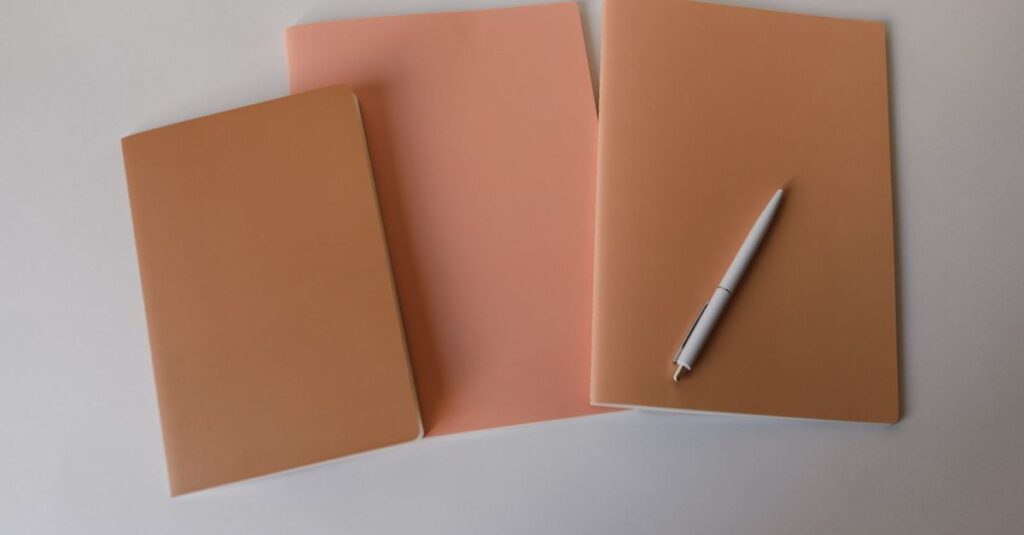
Look, if you’re a procurement manager or run a business, you’ve seen this a million times. Year-end. Company anniversary. Client meeting. Someone slaps a cheap diary on the table with a plastic pen looped through the cover. It feels like an obligation, doesn’t it? Something you’re supposed to do, not something you actually think about.
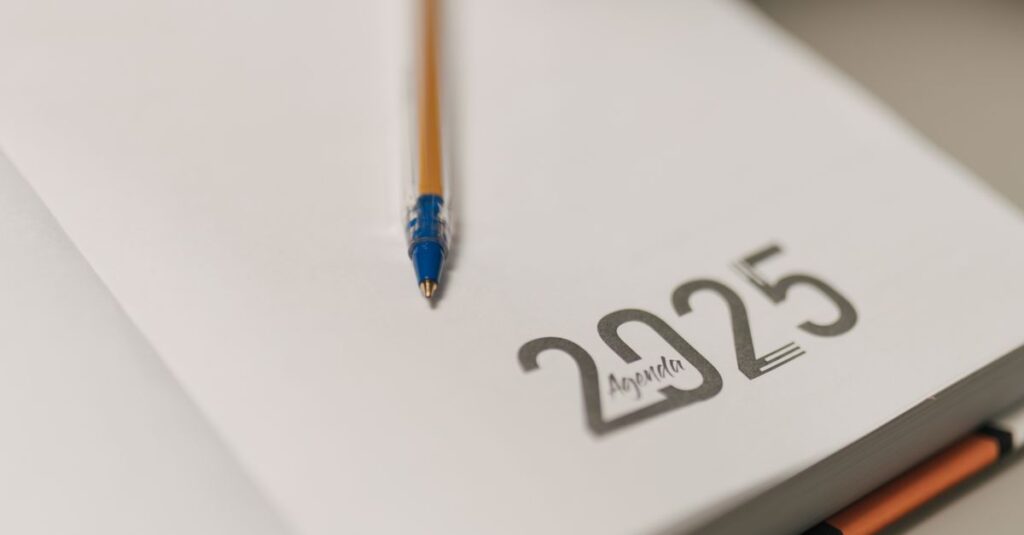
Here’s the thing — I’ve been manufacturing diaries and notebooks for over four decades with Sri Rama Notebooks, and I can tell you this: that pen-and-diary combo is the single most powerful piece of brand real estate you’re probably getting wrong. It sits on someone’s desk for a year. Think about that. 365 days of your logo being looked at. And most people order them like they’re buying office supplies.
They’re not office supplies. They’re a physical, daily reminder of who you are. And if you’re ordering in bulk for your team, your clients, or a government tender, you need to stop thinking ‘cost per unit’ and start thinking ‘impression per day.’ Anyway, if you’re tired of the same old corporate diary routine, understanding how they’re actually made changes everything.
Why The Pen *Actually* Matters (It’s Not What You Think)
Everyone focuses on the diary. The cover material, the page count, the ribbon bookmark. The pen is an afterthought. A $0.50 plastic stick thrown in to ‘add value.’
That’s backwards. The pen is the only part of the gift that gets physically picked up and used. The diary sits there. The pen travels. It goes to meetings. It gets borrowed. It’s clicked absentmindedly during a boring call. It’s the tactile, functional part of your brand. A flimsy pen that skips or runs out of ink in a week? That’s the impression you leave. ‘Oh, right, that company with the terrible pens.’
I was talking to a distributor in Hyderabad last month. He told me he keeps every decent pen from every supplier meeting in a mug on his desk. The bad ones go straight in the bin. He judges the whole company by it. Not fair? Maybe. But that’s how it works. The pen isn’t an accessory. It’s the first test of your quality.
A Real Story (Because Theory is Useless)
Let me tell you about Priya. She’s 38, runs procurement for a mid-sized tech firm in Bangalore. Orders about 500 corporate diaries every New Year. Last year, her usual supplier sent samples. The diaries were fine — standard leatherette, gold foil logo. But the pens? They were those generic, slim ballpoints. The clip snapped when she tested it. The ink blobbed.
She didn’t say a word about the diaries in her feedback email. She just sent a photo of the broken pen clip with a question mark. The supplier’s response? They offered a 2% discount. She found a new manufacturer. That’s it. That’s the whole decision.
The Manufacturing Headache Nobody Talks About
Okay, so you want a nice diary and a decent pen. How do they actually get put together? This is where most bulk buyers get a headache.
You’re dealing with two completely different supply chains. Notebooks are paper, binding, printing. Pens are plastic/metal, ink cartridges, springs, clips. Most notebook manufacturers (like us) don’t make pens. We source them. And that’s the critical fork in the road: do you source the pens yourself and send them to us to assemble? Or do you let the notebook manufacturer handle the entire package?
The first option sounds like you have more control. And you do. But you also have the logistics. Receiving the pens at your warehouse. Quality checking 10,000 units. Storing them. Then shipping them to our factory in Rajahmundry. Paying for that freight. Then hoping the loop on the diary cover actually fits the barrel of the pen you chose. I’ve seen boxes of 5,000 custom pens arrive where the loop is too small. Now what?
Letting the manufacturer handle it? It’s simpler. We have pen suppliers we’ve worked with for years. We know which retractable ballpoints have a clip that won’t fail. Which gel pens write smoothly on our 54 GSM paper without bleeding. We can match the pen’s color to the diary’s foil stamp. The downside? You think you’re paying a markup. You are. But you’re also paying for the guarantee that the finished product, when it lands in your office, actually works as one unit.
Right. So which is better?
| Consideration | You Source the Pen Separately | Manufacturer Provides Full Package |
|---|---|---|
| Control Over Pen Specs | High. You choose exact model, color, ink. | Moderate. You choose from vetted supplier options. |
| Logistics Burden | Heavy. Storage, QC, double shipping. | None. Manufacturer handles everything. |
| Risk of Mismatch | High. Pen must fit loop; color must match. | Low. Manufacturer ensures compatibility. |
| Overall Unit Cost | Seems lower, but add hidden freight/storage. | Clear, all-inclusive price per set. |
| Best For | Massive orders (10,000+) where pen spec is non-negotiable. | Most orders (500-5,000 units) where reliability is key. |
Beyond the Loop: How to Attach the Damn Thing
The loop. That little elastic or ribbon thing. Seems simple. It’s a nightmare if you don’t think it through.
You have three main ways to get the pen onto the diary, and each sends a different message:
- The Classic Elastic Loop: Sewn into the binding. It’s reliable, stretches. But it wears out. After six months of pulling the pen in and out, it gets loose. The pen falls out in a bag. It looks… tired. This is the standard. It says ‘We went with the standard.’
- The Ribbon Loop: More premium feel. A satin ribbon, often with a branded tip. Looks great for gifting. Less functional — harder to get the pen in and out. It’s for show. It says ‘This is a gift, not a tool.’
- The Slip-Case / Pen Slot: A dedicated slot built into the cover or a separate sleeve. Most expensive option. Most secure. Feels intentional. It says ‘We thought about you actually using this.’
Nine times out of ten, corporate buyers choose the elastic loop because it’s on the spec sheet from last year. I’m telling you — look at the slip-case. The cost increase is maybe 10-15%. The perceived value jump is 100%. For a client gift? It’s the only thing that matters here.
Expert Insight
I was reading an article about consumer psychology in gifting last month — can’t remember where, maybe a trade magazine. One line stuck with me. The researcher said the effectiveness of a branded gift isn’t in how often someone sees your logo, but in how they feel when they interact with it. A diary with a pen is a two-part interaction: the visual (logo on desk) and the tactile (writing). If the writing part is frustrating, it actively hurts the brand association the visual part is trying to build. I don’t have a cleaner way to put it than that. You’re not building awareness. You’re building an association. And you can’t control what that association will be.
For Schools & Institutions: A Different Game
If you’re a school principal or a college admin ordering bulk notebooks for students, the ‘pen with diary’ logic flips completely.
Here, it’s purely functional. It’s a start-of-term kit. Durability and cost are king. You’re not building a brand vibe; you’re providing a reliable tool. The pen will be chewed, lost, and used hard. The diary needs to survive a backpack.
So you go basic. A sturdy short notebook or long notebook with a double-stitched binding. A simple, functional ballpoint with a solid clip. The loop? It needs to be strong elastic, sewn in well. Forget ribbon. Forget slip-cases. That’s budget wasted. The goal is that the pen is still attached by mid-term exams. That’s the win.
The mistake I see schools make is ordering diaries that are too fancy for the purpose. Or pens that are too nice and ‘walk away’ faster. Order for the reality of a 15-year-old’s school bag, not for the glossy brochure photo. Practicality always wins in education supply.
The Real Cost Breakdown (What You’re Actually Paying For)
Let’s be direct. When you get a quote for ‘500 corporate diaries with pen,’ what’s in that number?
First, the diary. Paper (54 GSM vs. 70 GSM makes a big difference), page count (240 pages vs. 320), cover material (hardbound leatherette vs. soft-touch laminated), and printing (single-color foil vs. full-color digital print on the cover). Then, the binding. Perfect binding looks clean but can crack. Spiral binding lays flat but looks less formal. Stitched binding is durable but has a visible thread.
Then, the pen. A basic ballpoint in bulk might be Rs. 5-7. A decent retractable gel pen with a metal clip? Rs. 15-20. A branded metal pen? Rs. 50+. Suddenly, the pen can be 30% of your total unit cost.
Then, the assembly. Putting the pen through the loop. Or into the slot. Or into a separate box. That’s manual labor. Then the packaging. Individual poly bags? Gift boxes? Bulk carton?
Most buyers look at the final price and think ‘That’s high for a diary.’ They’re not seeing it. They’re paying for a custom printed notebook, a sourced writing instrument, and the labor to combine them into a single, presentable unit. The value isn’t in the parts. It’s in the finished set landing on your client’s desk, ready to make you look good.
And honestly? Most people know this already. They just don’t want to admit how much a ‘good look’ actually costs.
Frequently Asked Questions
What is the most durable way to attach a pen to a diary?
For heavy daily use (like school notebooks), a wide, heavy-duty elastic loop, double-stitched directly into the binding spine is best. For corporate gifts where presentation matters more, a built-in slip-case or pen slot in the cover is more premium and secure, though it adds to the cost.
Can I provide my own custom pens for you to attach?
Yes, absolutely. We can handle that. But you need to send us sample pens first for fitting tests with the diary cover design. You also take on the responsibility for the pen quality and timely delivery to our factory. For most orders under 5,000 units, it’s simpler to use our vetted pen suppliers.
What is the minimum order quantity for diaries with pens?
It depends on the customization. For standard diaries with a generic pen, MOQ can be as low as 100-200 units. For fully custom diaries with a matched, custom-branded pen, the MOQ is usually 500 units to make the setup and production run worthwhile.
Do you export diaries with pens internationally?
Yes, we regularly export bulk orders to the Gulf, Africa, and other markets. The key is packaging — we ensure pens are securely attached and the entire set is packed to prevent damage during shipping. You need to factor in longer lead times for sea freight.
What paper is best in a diary if I’m including a gel pen?
Gel pens can bleed or show through on thin paper. We recommend a minimum of 70 GSM paper for diaries paired with gel pens. Our standard 54 GSM writing paper works perfectly with ballpoints, but if you’re upgrading the pen, upgrade the paper too. It’s a package deal.
Final Thought: It’s a Choice, Not a Checklist Item
I don’t think there’s one perfect answer here. Probably there isn’t. A pen with a diary can be a thoughtful, daily brand reminder or it can be landfill with your logo on it. The difference isn’t in the budget; it’s in the intention.
Stop ordering it because it’s ‘item 7’ on the corporate gifting list. Start by asking: Who gets this? What will they actually do with it? How do I want them to feel about us when they use it? The answers tell you everything — the paper weight, the pen type, the binding, the loop.
The cheap option is almost always the most expensive in the long run. Because it’s not just a product. It’s a message. And you get to decide what that message says. If you’ve read this far, you’re already thinking about it the right way. You’re just figuring out how to make it happen without the usual headaches. Sometimes, talking to the people who make the things is the fastest way to get there.