Square Grids Aren’t Just For Math Class
You see them in every school supply list. You probably packed dozens into boxes last year for your procurement order. But you’ve never really thought about why — and that’s the thing. The square grid notebook is the quiet, hardworking backbone of a lot more than just geometry homework.
I was talking to a procurement manager at a college in Hyderabad last week. He was ordering notebooks for the incoming semester. He looked at me and said, “We just need the standard ones. Single ruled for some, double ruled for the others, and—oh—the square grid for the science and engineering batch.” And then he paused. “Actually, make sure the grid ones are sturdy. They get used more.”
Right. He knew, instinctively, that the square grid notebooks weren’t just another item on a list. They were a tool. They were for the people who were actually building, planning, sketching, and figuring things out. That’s the part nobody says out loud when they’re ordering 5,000 units. It’s not just about the ruling type. It’s about what that ruling type lets people do. And if you’re ordering notebooks in bulk for a school, a corporate training program, or an institution, getting the right tool matters. If you’re looking at options, it’s worth seeing what’s actually possible.
What Is a Square Grid Notebook, Anyway?
Let’s get straight to it. A square grid notebook, or what we often call ‘cross ruled’ or ‘CR’ in the manufacturing specs, is a notebook where the pages are printed with a grid of small squares. Each square is usually 5mm x 5mm. It creates a precise, uniform field on the page.
It’s not graph paper. Graph paper is heavier, often used for technical drawings. The notebook version uses the same 54 GSM smooth writing paper as your standard single ruled notebook — it’s just the ruling pattern that’s different.
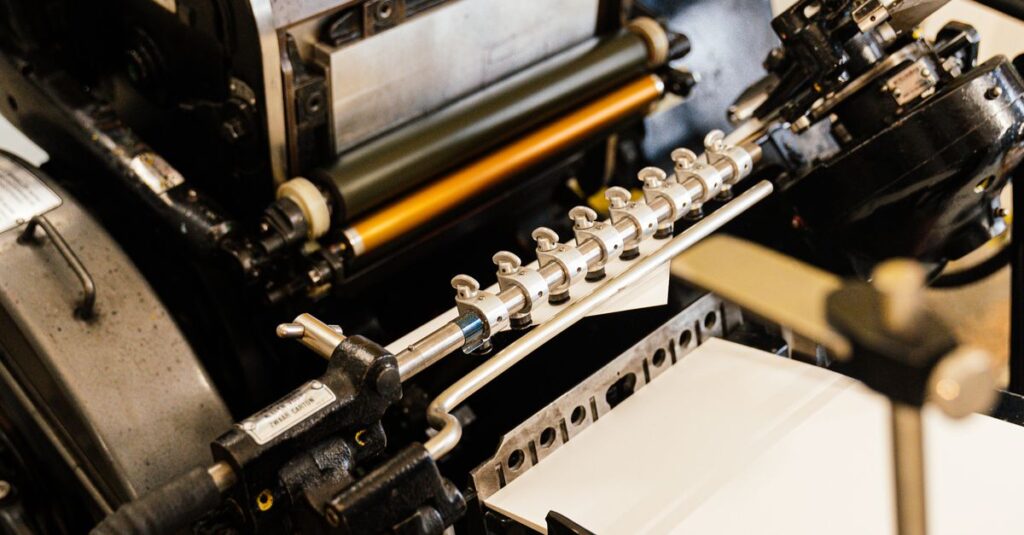
The manufacturing process for it is… a headache, honestly. Printing a perfect grid across 92 or 200 pages, with no misalignment, no blurry lines, requires a calibrated offset press and a lot of attention. If the registration is off by half a millimeter, the squares don’t connect at the corners. The page looks wrong. And for a student trying to plot a graph, that’s useless.
We’ve been making them for 40 years. I can tell you the machines hum a different tune when they’re running a grid job. It’s slower. It needs more checks. Which is why a lot of smaller manufacturers avoid it or charge a premium. But for bulk institutional orders — schools, colleges, engineering firms — it’s a necessity. So you find a supplier who can do it right, consistently.
Who Actually Uses These (And Why)
Most people think: math students. And sure, that’s true. But the list is longer and more practical than you’d guess.
- Engineering Students & Professionals: For sketching circuit diagrams, plotting data, drafting quick schematics. The grid gives them scale and alignment without needing a ruler.
- Architecture & Design Students: Quick floor plan sketches, perspective drawings, scaling exercises. The 5mm grid acts as a built-in measurement guide.
- Science Labs & Researchers: Recording data tables, drawing experimental setups, charting observations. It’s about organization on paper.
- Business & Project Managers: I’ve seen these used in corporate training for Gantt chart sketches, flowchart drafting, and planning sessions. It’s a visual thinking tool.
- Artists & Illustrators: For comic storyboard panels, practicing perspective, structuring compositions. The grid provides a framework.
Three things happen when someone uses a square grid notebook. First, their work gets structured automatically. Second, they can visualize relationships between elements. Third — and this is the big one — it reduces cognitive load. They’re not fighting with blank page anxiety. The framework is already there.
Think about Ravi, a 22-year-old mechanical engineering student in Chennai. He’s got three square grid notebooks on his desk. One for thermodynamics calculations, one for machine drawing practice, one for project planning. He doesn’t use a single ruled notebook for any of that. The grid is his workspace. That’s the difference.
The Manufacturing Challenge: Precision is Everything
Look, I’ll just say it. Printing a clean, consistent square grid is one of the more technically demanding jobs in notebook manufacturing. It’s not like slapping a logo on a cover.
Here’s what goes wrong if you don’t have the right setup:
- Misalignment: The vertical and horizontal lines don’t meet perfectly at the corners. The squares aren’t squares. They’re distorted rectangles. This happens if the printing plates aren’t perfectly registered.
- Inconsistent Line Weight: Some lines are thick, some are faint. It makes the grid visually chaotic and hard to use.
- Paper Stretch: Paper isn’t a rigid medium. It can stretch slightly during printing or binding. If your grid tolerance is too tight, that stretch shows.
- Bleed Through: Using the wrong ink or too much ink can cause the grid lines to show through on the opposite page, especially with standard 54 GSM paper.
At our factory, we run grid jobs on specific offset machines that are calibrated for pattern printing. The operator checks the first ten sheets of every batch visually and with a loupe. It’s old-school, but it works. Because when you’re supplying 10,000 notebooks to a technical institute, you can’t have batch number three coming out with wobbly grids.
Expert Insight
I was reading an old industry manual last month — one from the 90s. And there was a line about precision ruling that stuck with me. It said something like: “The grid is a promise of order. If the printing breaks that promise, the notebook fails its purpose.” I don’t have a cleaner way to put it than that. It’s not just a product spec. It’s a functional guarantee. And that guarantee is harder to keep than anyone outside the print room realizes.
Square Grid vs. Other Ruling Types: A Procurement Guide
When you’re putting together a bulk order for an institution, you’re often choosing between ruling types. Single Ruled (SR), Double Ruled (DR), Unruled (UR), and Square Grid (CR). Each has a different use case, a different cost, and a different manufacturing complexity.
| Ruling Type | Primary Use | Manufacturing Complexity | Typical Bulk Order Context | Paper GSM Consideration |
|---|---|---|---|---|
| Square Grid (CR) | Technical drawing, data plotting, structured notes | High (precision printing required) | Engineering schools, science labs, corporate planning | 54 GSM standard; 70 GSM for heavier use |
| Single Ruled (SR) | General writing, essays, notes | Low (standard line printing) | General school notebooks, office memos | 54 GSM (standard writing paper) |
| Double Ruled (DR) | Language practice, handwriting | Medium (two-line alignment) | Primary schools, language learning centers | 54 GSM |
| Unruled (UR) | Free drawing, sketching, diagrams | Low (no printing) | Art classes, creative workshops, brainstorming | 54 GSM or thicker for drawing |
| Four Ruled (FR) | Early childhood writing guides | Medium (multiple line patterns) | Pre-school, kindergarten | 60-70 GSM (for durability) |
The question isn’t which one is “better.” It’s which one is right for the specific group you’re supplying. A square grid notebook for a general English class is wasted money. Single ruled notebooks for an engineering drafting workshop are a functional failure. Matching the tool to the task is the whole point of specialized procurement.
Customization & Bulk Orders: What You Can Actually Ask For
Okay. So you need 5,000 square grid notebooks for a national STEM camp. Or 2,000 for a corporate innovation workshop. Standard specs might not cut it. What can you actually customize?
A lot. But you need to know what’s possible and what’s… a stretch.
- Grid Size: The standard is 5mm. But you can request 4mm for finer work or 7mm for broader sketching. Changing the grid size means changing the printing plates — it’s a custom job.
- Page Count: Square grid notebooks often come in 92, 200, or 240 pages. For intensive use (like an entire semester), 240-page books are common. Binding needs to be sturdy — usually stitched binding, not spiral.
- Cover Design: You can have the institution logo, camp name, or corporate branding printed on the cover. This is standard custom printing. But remember: the cover printing is separate from the internal grid printing. They are two different processes.
- Paper Quality: Standard is 54 GSM smooth paper. If you anticipate heavy ink or pencil use, you can upgrade to 70 GSM to prevent bleed-through and tearing. This increases cost, but for technical users, it’s often worth it.
- Binding Type: Stitched binding is most common for square grid notebooks because it keeps the pages flat and aligned. Spiral binding can work, but the grid lines need to be printed with a margin to accommodate the spiral holes.
I think the biggest mistake institutional buyers make is assuming everything is interchangeable. It’s not. A square grid notebook is a specialized product. Its customization options are tied to its function. You can’t, for example, easily combine a square grid with a margin printed for header notes — the layout gets too crowded. You have to prioritize.
And honestly? Most people don’t realize that until they get the first sample and it just… doesn’t work for their people. Getting a prototype sample before you lock in a 10,000-unit order is probably the smartest thing you can do.
Why Schools & Businesses Keep Ordering Them
It’s not about tradition. It’s about utility.
Schools order square grid notebooks because they are a prescribed tool for specific subjects. The curriculum mandates them for mathematics, physics, engineering drawing. It’s a procurement requirement, not a choice.
Businesses and corporate training programs order them because they facilitate visual planning. In a brainstorming session, a blank page is intimidating. A grid page is a canvas with structure. It lowers the barrier to ideation. I’ve seen these used in product design sprints, agile planning workshops, and even financial modeling sessions.
The demand is steady. It’s not seasonal like festive diaries. It’s academic and professional. Which means suppliers who can manufacture them reliably become go-to partners for institutional buyers. It’s a relationship product.
We’ve supplied square grid notebooks to technical universities in Andhra Pradesh, Tamil Nadu, and Karnataka for decades. The order comes in every year, a month before the semester starts. The specs are identical. The trust is that the product will be identical. That’s the kind of supply chain reliability that bulk buyers look for.
Anyway. Where was I. The point is, this isn’t a trendy notebook. It’s a workhorse. And if you’re in charge of sourcing workhorses for your institution, you need to know how they’re built.
Frequently Asked Questions
What is the standard square size in a grid notebook?
The industry standard is a 5mm x 5mm square grid. This size provides enough space for writing numbers or small labels within each square while keeping the grid useful for plotting graphs and sketches. Some manufacturers can produce 4mm or 7mm grids upon request for specialized bulk orders.
Can I get a custom logo printed on a square grid notebook?
Yes, absolutely. Cover customization is completely separate from the internal page printing. You can have your institution’s logo, program name, or corporate branding printed on the front cover (and even back cover) while the inside pages retain the precise square grid pattern. This is common for school-branded notebooks or corporate training materials.
Are square grid notebooks more expensive than single ruled ones?
Usually, yes. The printing process requires more precision, more machine calibration, and more quality checks, which adds to the production time and cost. For bulk orders, the price difference is often marginal per unit, but it can be noticeable on large orders. It’s a cost tied to functionality, not just decoration.
What binding is best for a square grid notebook?
Stitched binding is the most common and recommended. It keeps the notebook flat when open, which is crucial for drawing or plotting across two pages. Spiral binding can also work, but the grid printing must account for the spiral margin, and the notebook may not lie perfectly flat.
How many pages should I order for a semester-long course?
For intensive use, like a full semester of engineering drawings or science labs, a 200-page or 240-page notebook is standard. A 92-page book might suffice for a shorter module or workshop. Consider the frequency of use — if students are using it daily, go for the higher page count.
Final Thing
Square grid notebooks are a niche product with a very clear job. They’re for people who need to organize thought visually, with precision. Manufacturing them well requires a specific kind of attention in the print room. And sourcing them for your institution means understanding that they’re not just another notebook — they’re a specialized tool.
If you’re looking at a bulk order requirement for grids, the most important step is to see a physical sample before you commit. Check the alignment. Feel the paper. See if it works for the actual task. Because at the end of the day, it’s not about the notebook. It’s about what the person using it can get done on those pages.
I don’t think there’s one perfect answer for every situation. Probably there isn’t. But if you’ve read this far, you already know what you’re looking for — you’re just figuring out if you can get it made reliably, in bulk, and on time. That’s a conversation worth having with someone who’s been doing it for four decades.