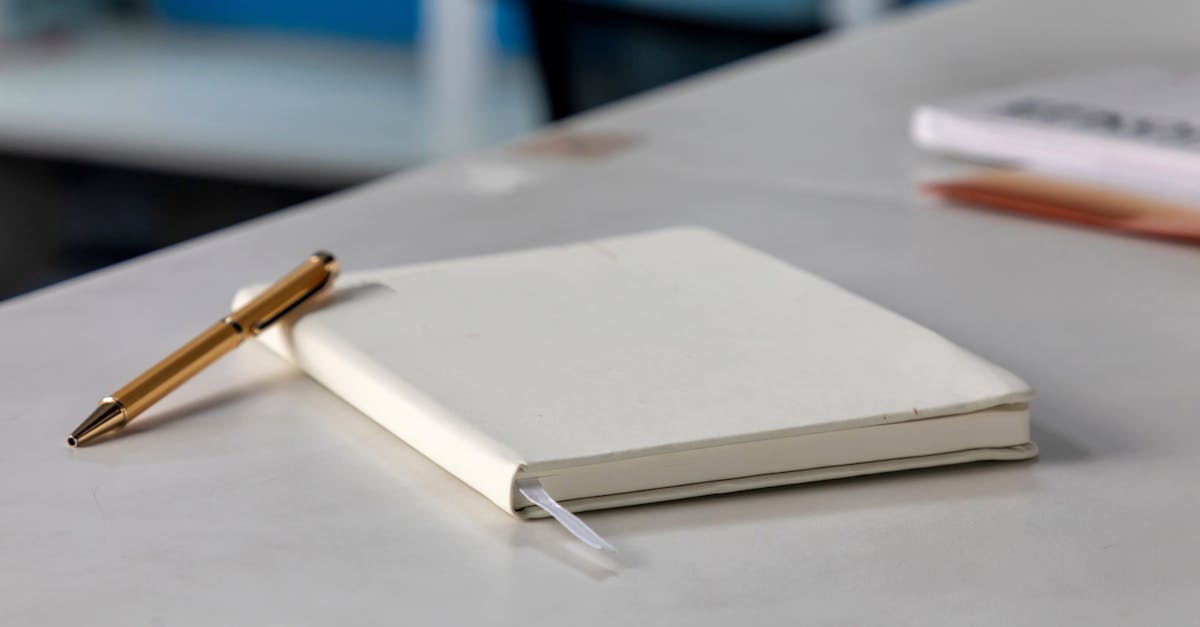
So you need notebooks. A lot of them.
Here’s the thing. When you’re ordering for a whole school, or an office, or a government institution, you aren’t just buying a cute journal. You’re buying a tool that hundreds, maybe thousands of people will rely on. And the phrase “notebook with paper” seems so simple until you’re the one staring at a quote for 10,000 units and you realize you have no idea what you’re actually paying for.
I’ve been in this business for a long time — my family started Sri Rama Notebooks in 1985 — and I can’t tell you how many times a procurement manager calls, voice full of stress, because the last batch of notebooks they bought started falling apart in a month. The pages tore. The covers peeled. The binding gave way. It’s a small thing, until it’s not. Until you’ve got a classroom of frustrated kids or an office of annoyed employees.
This is for anyone whose job is to buy notebooks in bulk and not get it wrong. If that sounds familiar, our guide on notebook specifications might be worth a look.
What does “notebook with paper” even mean?
Let’s get this out of the way first. Every notebook has paper. So when someone searches that, they’re not asking for the obvious. They’re asking, quietly, for reassurance. They’re asking: “Is this notebook going to be good enough?”
They’re looking for the hidden details. The stuff that separates the notebook that lasts a school year from the one that becomes a pile of loose sheets by Diwali. It’s about the specific combination of materials and construction that makes a notebook functional, not just a product.
Right. So, what actually defines it?
The Core Anatomy of a Bulk Notebook
Think of it in three layers, all of which have to work together.
- The Paper Itself (The Writing Surface): This is the heart of the “with paper” part. It’s not just “paper.” It’s about GSM (grams per square meter). For most standard school and office work, you want around 54-60 GSM. Thicker than newspaper, thinner than cardstock. It needs to be smooth enough for writing, but with enough tooth so ink doesn’t bleed everywhere. The ruling – single, double, four-ruled, unruled – that’s part of the paper’s function.
- The Binding (The Spine): This is what holds the paper to the cover. Stitched binding (like with thread) is the classic, durable workhorse for everyday notebooks. Spiral binding lets it lie flat, which is great for artists or left-handed people. Perfect binding (glued spine) is common for thicker, fancier diaries. The binding type dictates the notebook’s lifespan more than anything else.
- The Cover (The Armor): This is the first thing people see and feel. It’s protection. For bulk school notebooks, a 210-250 GSM art card cover is standard – durable, printable, cost-effective. For corporate diaries, you might go for leatherette or hardbound. The cover isn’t just decoration; it’s the first line of defense against backpacks, desk corners, and general life.
These three parts have to be matched. Heavy paper in a weak binding is a disaster. A gorgeous cover with tissue-paper pages is pointless. It’s a system.
The moment you realize you bought the wrong thing.
I was talking to a distributor from Hyderabad last month – over WhatsApp, actually – and he told me a story that stuck with me.
He’d supplied 5,000 notebooks to a large private school. He got them from a new, cheaper supplier. The price was great. The samples looked fine. Two months into the term, the complaints started flooding in. The pages were coming loose from the spiral binding. Not a few. Hundreds. The school wasn’t just annoyed; they were threatening to blacklist him for future tenders. His reputation, built over years, was suddenly tied to a few centimeters of poorly coiled wire.
He said, “I saved five rupees per book. Now I might lose the entire account.”
That’s the real cost. It’s never just the unit price.
This is the part nobody shouts about: the binding and the paper quality are a marriage. If one’s off, the whole thing fails. And in bulk, failure isn’t an anomaly; it’s a crisis.
Notebook Paper: It’s a whole world in itself
Let’s talk about paper, since that’s the keyword here. You can’t see most of what matters by looking at a finished notebook. You have to know what to ask for.
First, GSM. I think about this a lot. 54 GSM is the sweet spot for 90% of bulk needs. It’s opaque enough that writing doesn’t show through, but not so thick it makes the notebook bulky and expensive. Go to 70 GSM and you’re in premium sketchbook territory – wonderful, but your budget doubles. Drop to 40 GSM and the paper feels flimsy, tears easily, and ink ghosts through.
Then there’s finish. Machine-finished (MF) paper is the standard. It’s got a slight texture. Blade-coated or cream wove is smoother, gives a more premium writing feel. For bulk orders, MF is the pragmatic choice. It works with ballpoints, pencils, even fountain pens if the ink is dry enough.
And the ruling? It dictates function. Single-ruled (SR) for general notes. Four-ruled (FR) for early learners to practice letter sizing. Cross-ruled (CR) or graph for math, charts, planning. Unruled (UR) for drawing, mind maps, freedom. Choosing the right ruling is like choosing the right tool for the job. Giving accountants unruled books is just creating frustration.
If you’re sourcing for a specific use – like custom notebooks for a corporate training program – understanding these paper details is the only way to get it right. We build this into every custom printing service quote we do.
Expert Insight
I was reading an old trade journal once, and a line from a paper mill engineer stuck with me. He said the biggest mistake bulk buyers make is confusing weight with quality. A heavy, thick paper made from poor pulp will still feather ink and tear along the grain. A lighter paper from longer, stronger fibers can be more durable and write better. The feel, the way it takes ink, the resistance to tearing – that’s about fiber quality, not just the number on the scale. I don’t have a cleaner way to put it than that: GSM tells you quantity, not character.
Side-by-side: What are you actually comparing?
When you get quotes, they often just say “Notebook, 200 pages.” That tells you almost nothing. Here’s what you should be comparing.
| Specification | Economy Bulk Notebook | Standard/Durable Bulk Notebook |
|---|---|---|
| Paper GSM | 48-50 GSM (thinner, more see-through) | 54-60 GSM (balanced opacity & strength) |
| Binding | Single-staple or weak glue | Stitched (side or center) or robust spiral |
| Cover Weight | 180-200 GSM art card | 210-250 GSM art card |
| Page Count Accuracy | Often +/- 10 pages | Precise (e.g., 200 pages means 100 sheets) |
| Long-term Durability | Likely to fail with daily use | Designed to last a full term/year |
| Best For | Short-term promotions, one-off events | Schools, offices, daily institutional use |
The price difference might be 15-20%. The performance difference is 100%. Buying the cheaper option for a school is almost always a false economy. The replacement costs, the complaints, the administrative headache – they eat the savings immediately.
Why sourcing from a manufacturer changes everything
Look, I’ll be direct. If you’re buying thousands of notebooks, going through three middlemen makes no sense. You lose control, you lose traceability, and you pay for every hand it passes through.
Working directly with a manufacturer – like, you know, us – cuts through that. You’re not just buying a product off a shelf. You’re specifying one. Need a specific shade of blue for your corporate logo on the cover? We can match it. Need a special four-ruled pattern for primary school kids? We have the plates. Need a mix of page counts in one order? We run the production line to do that.
It’s the difference between shopping and building. For institutional buyers, that control is everything. It means when the Principal says “we need notebooks that can survive a 10-year-old’s backpack,” you can talk to the people who actually build the spine and choose the thread. You can’t do that with a general stationery wholesaler.
Our entire setup in Rajahmundry is built for this – for taking your specific need and turning it into a physical, reliable product, in bulk. You can see the scope of what that looks like on our products page.
The real question you should be asking
It’s not “How much per notebook?”
It’s “What is the total cost of ownership for these 5,000 notebooks?”
That includes the unit price. But it also includes the cost of replacements for defective ones. The staff time spent dealing with complaints. The reputation hit if they fail. The logistics of storing and distributing them. A notebook that costs 10% more but has a 90% lower failure rate is radically cheaper in the long run.
And honestly? Most procurement people know this already. They’re just under pressure to show the lowest line-item cost. My advice – always build a brief that includes durability specs. Make the tender ask for the GSM, the binding type, the cover weight. Force the bids to compete on quality parameters, not just price. It changes the whole game.
Frequently Asked Questions
What is the best paper quality (GSM) for school notebooks?
For everyday school use, 54-60 GSM paper is the standard for a reason. It’s thick enough to prevent ink bleed-through from pens on the other side, strong enough to handle erasers, and still economical for bulk purchase. Lighter paper (below 50 GSM) is too flimsy and will tear easily.
How do I choose between spiral bound and stitched notebooks?
It depends on use. Stitched binding (side or center) is more durable for general use — it withstands being thrown in bags better. Spiral binding lets the notebook lie completely flat, which is great for writing or drawing across the gutter. For bulk school orders, stitched is the typical, more robust choice.
What should I look for in the cover of a bulk notebook?
For bulk institutional notebooks, a cover made of 210-250 GSM art card is ideal. It provides good protection, is printable for custom logos or information, and remains cost-effective. Avoid very thin covers (under 180 GSM) for daily use, as they’ll bend and wear quickly.
Can I get different page rulings in the same bulk order?
Yes, a direct manufacturer can easily accommodate this. You might order 2,000 single-ruled and 500 graph-paper notebooks in the same production run. This mix-and-match capability is a key advantage of working directly with a producer instead of a stockist.
What’s the minimum order quantity for custom printed notebooks?
It varies, but for a custom print run (like with your school or company logo), most serious manufacturers will have an MOQ, often starting at 500 to 1,000 pieces. This is because setting up the printing plates and machine alignment has a fixed cost. For standard, non-custom notebooks, MOQs can be lower.
Wrapping this up
A “notebook with paper” is a deceptively simple object. When you’re buying one, it’s just a thing. When you’re buying ten thousand, it’s a logistics, quality, and trust exercise. The details – the GSM, the stitch, the cardstock – stop being technicalities and become the entire foundation of a successful order.
I don’t think there’s one perfect notebook for every need. Probably there isn’t. But if you’ve read this far, you already know the questions to ask. You’re just figuring out who can give you the right, honest answers.
If you’re evaluating suppliers for an upcoming bulk need and want to talk specs directly with the workshop, getting in touch is the simplest next step.