You need more than ink on paper.
Think about the last time you handed out a regular corporate diary. It gets lost on a desk, maybe used for a few weeks. But a notebook with photos? That's different. It has weight. I mean emotional weight. You see a client pick one up, flip through the pages, pause on a picture. That notebook doesn’t just sit there — it gets shown around. The whole point of custom stationery changes when you add photos. It becomes a memory. A token. The problem is, most people think adding photos means expensive, complicated printing. Or that it's only for fancy art journals. Not true. Not even close.
For schools wanting yearbooks, companies launching products, or just someone who needs a physical reminder of why they started — a photo notebook is the single best way to make words matter more. The real question isn't whether you should add photos, it's whether you know how to do it right. And that's what I want to talk about. If you’re sourcing notebooks in bulk and wondering about photo printing, this might be worth a look.
What a “Notebook with Photos” actually is (and isn’t)
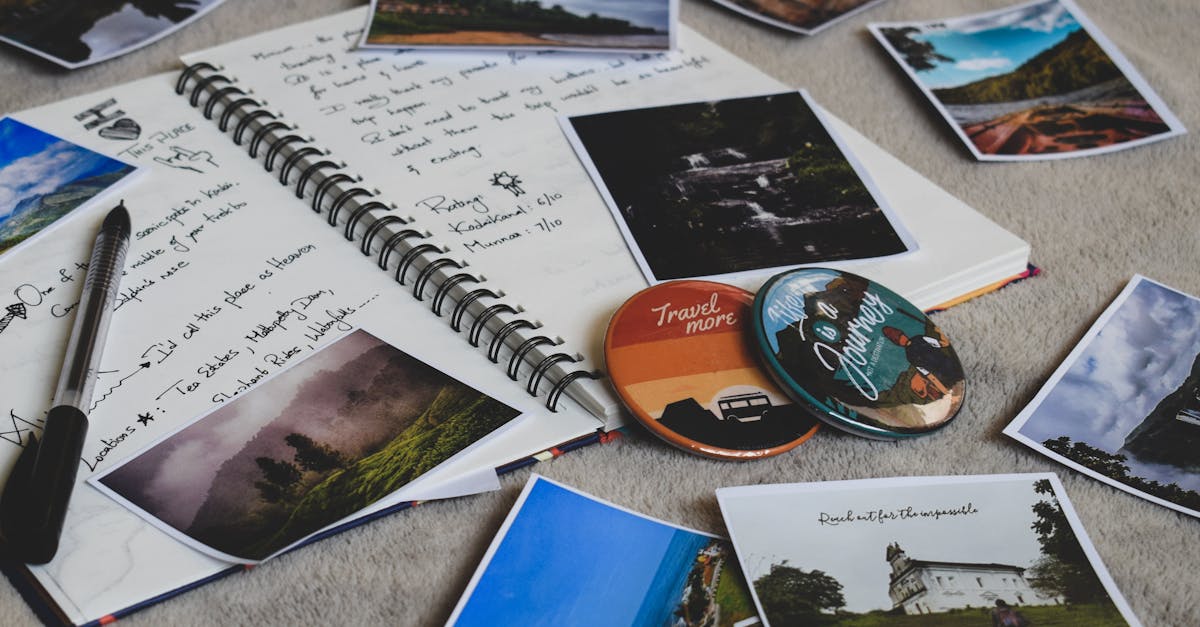
Alright, let's break this down. I've had this conversation too many times. A corporate buyer calls, wants a “photo diary.” What they usually mean is a notebook where the cover has their company logo and maybe a nice background image. That's a start — but it's only the cover. When I talk about a genuine notebook with photos, I'm talking about integrating images throughout the entire product. We're talking about custom photo layouts on specific pages, maybe a full-page bleed photo at the start of each section in a corporate diary, or school logos and class pictures printed right onto the paper stock alongside the ruling.
It's not a photo album. That's the first misconception. The binding has to withstand daily use. The paper has to be thick enough that ink from the photos doesn't ghost through to the other side. And the printing — this is the big one — has to be offset or high-quality digital, not some home printer job. Otherwise, the colors look washed out after a month. The photo becomes a smudge. You lose the whole point.
And honestly? That makes complete sense. Most people don't realize how much the paper GSM matters for photos. You can't just use your standard 52-page notebook paper. You need a coated stock, or at least a smoother finish, otherwise the image soaks in and looks dull. I was working with a university last year on commemorative notebooks for their alumni. They wanted old campus photos on every few pages. The first sample we got back used the wrong paper. The photos looked flat, lifeless. We switched to a 90 GSM coated sheet. The difference wasn't subtle. It was the difference between a keepsake and something you'd throw away. The question isn't if you can print photos. It's whether you're willing to get the details right.
The three real reasons businesses actually order them
Here's the thing — nobody orders a thousand custom photo notebooks just because it looks nice. There's always a deeper reason. A strategy. I've seen three patterns, over and over.
First, brand reinforcement. This is for companies launching a new product line. They'll create a notebook for their sales team with crisp, high-res photos of the product on every other page. The sales rep opens it during a meeting. The client sees the product, not just hears about it. It's a tactile brochure that also functions as a notepad. The photo acts as a constant visual cue. It's smarter than a PDF.
Second, emotional connection. Schools and colleges use this brilliantly. It's not just a school notebook; it's a memory book. The cover has the school emblem, the first few pages have photos of the campus, the principal, maybe last year's championship team. You give that to a new student. It's not stationery anymore — it's an identity. They're more likely to keep it, use it, and by extension, feel connected to the institution. It's subtle. But it works.
Third, internal comms. Bigger corporations will create limited-run notebooks for leadership retreats or anniversary years. Each section has a photo from the company's history. A picture of the first office. The founding team. It becomes a narrative tool. You're literally writing the future on pages that show the past.
I remember talking to a procurement manager from a tech firm in Bangalore. He said something that stuck with me. “We give out pens, diaries, USB drives. They all end up in a drawer. But the notebook we made with photos from our team-building event in Goa? People kept those on their desks. They showed them to visitors.” That's it. That's the whole game. Retention. Visibility. And you can't get that with a blank cover.
If you're running a business and thinking about corporate gifts, you should see what custom products can do beyond just a logo stamp.
How the manufacturing actually works (no fluff)
Okay, let's get technical. But I'll keep it simple. How do you actually make a notebook with photos at scale? It's not one process; it's a chain of decisions. If you get one wrong, the whole thing feels cheap.
Step 1: The Paper Choice
This is non-negotiable. For standard text, 54-70 GSM writing paper is fine. For photos? You need a minimum of 90 GSM. And it needs to be “coated” or “smooth finish.” Uncoated paper absorbs ink like a sponge. The photo loses sharpness. The colors get muted. We usually recommend a wood-free, coated paper. It has a slight sheen, the ink sits on top, and the image pops. This is probably the biggest cost jump, but it's the one that matters most.
Step 2: The Printing Method
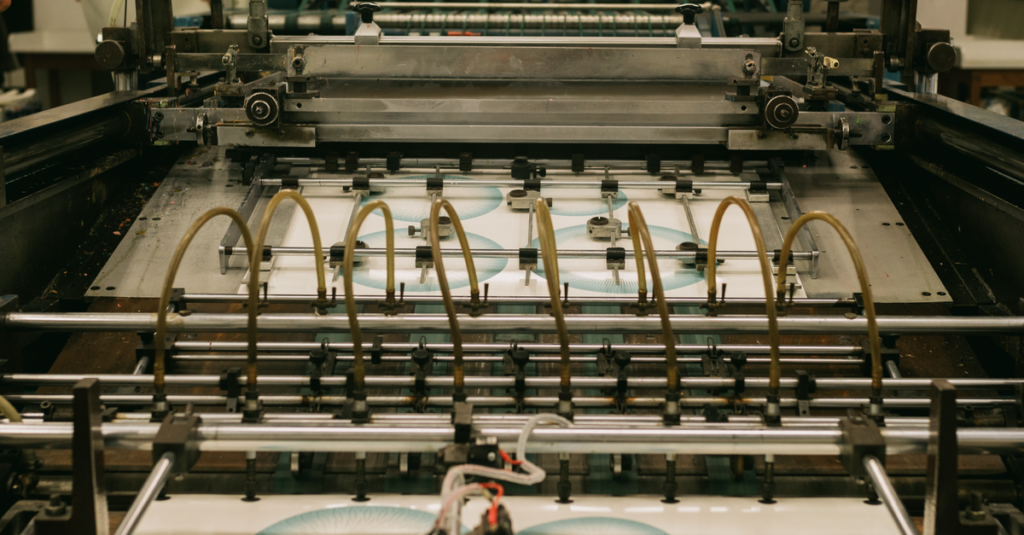
Two main options: Offset and Digital. Offset printing is for bulk. If you're ordering 5,000+ notebooks, offset gives you perfect color consistency across every single page. It uses plates. The setup is longer and more expensive, but the per-unit cost drops like a rock. Digital printing is for shorter runs — say, 200 to 2,000 notebooks. No plates needed. You can literally change the photo on every single notebook if you want (think personalized notebooks for each employee). The color might have very slight variations from batch to batch, but for most purposes, it's brilliant. The trick is to get a sample printed both ways. See the difference. Feel it.
Step 3: The Layout & Design
This is where most projects get messy. You can't just slap a JPEG onto a page template. You have to account for “bleed.” If you want a photo to go edge-to-edge, the image file must extend 3mm beyond the final cut line. Otherwise, you get a thin white border. And the resolution — your photo needs to be at least 300 DPI at the final print size. A small, web-quality image blown up will look pixelated and terrible. I can't tell you how many clients send a 72 DPI logo and wonder why it looks fuzzy. We have to tell them. It's an awkward call.
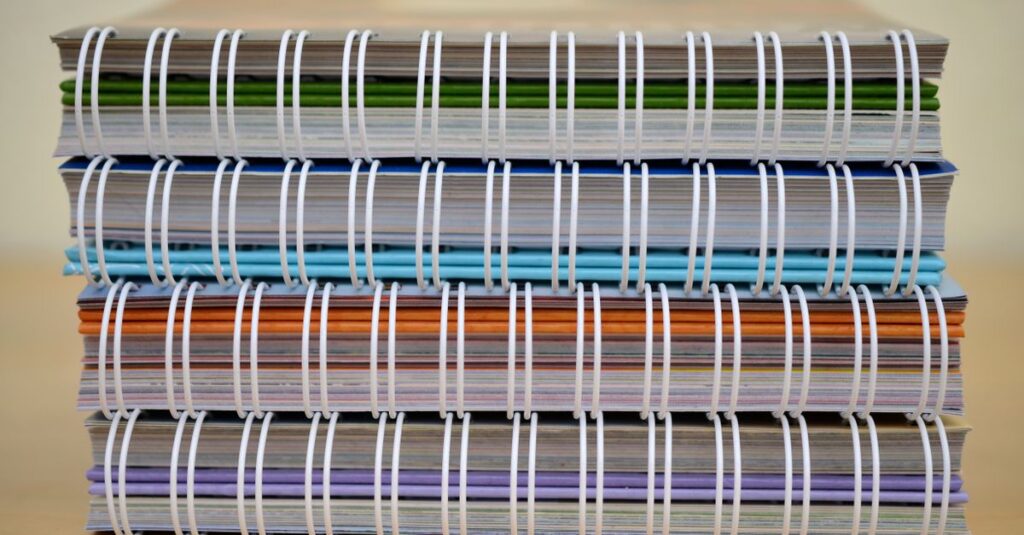
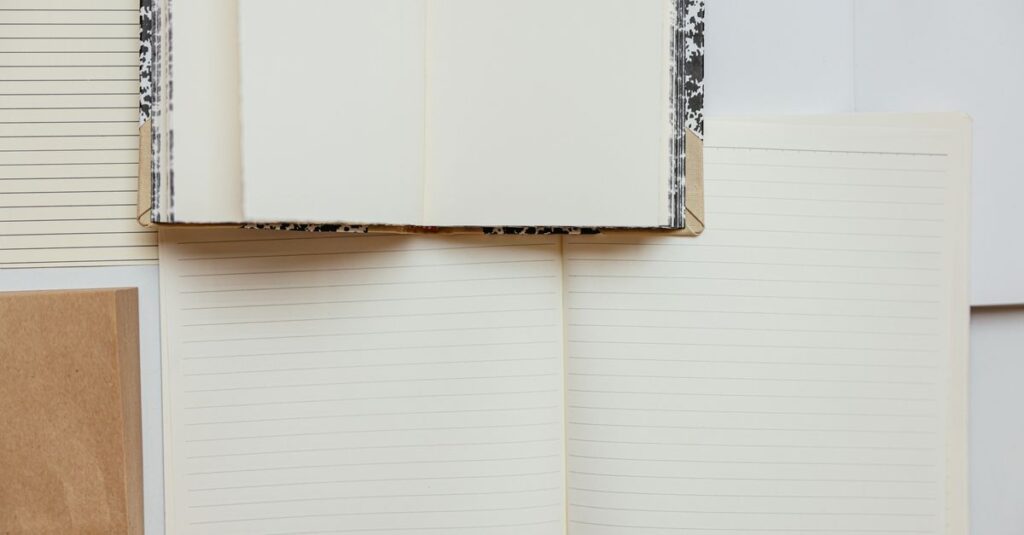
Binding matters too. A perfect binding (like a paperback book) gives you a flat spine you can print on. Great for a title. Spiral binding lets the notebook lay completely flat, which is awesome if the photo spreads across two pages. Stitched binding is the classic, most durable school notebook style. You pick the binding based on how the book will be used, not just cost.
Expert Insight
I was reading an industry journal last month, and one line from a print technician stuck with me. He said something like — the human eye forgives a lot of text imperfections, but it immediately spots a bad photo print. A slightly misaligned rule line? Maybe you don't notice. A photo that's even 5% off in color saturation? It feels wrong. Your brain knows. Our job in manufacturing isn't just to print pictures. It's to make them feel true. To make them feel permanent. And that comes down to calibration, paper chemistry, and honestly, caring about the outcome as much as the client does. I don't have a cleaner way to put it than that.
Photo Notebook vs. Standard Custom Notebook
Let's make this crystal clear. What are you actually paying for? What do you get?
| Aspect | Standard Custom Notebook | Notebook with Photos |
|---|---|---|
| Primary Use | Everyday writing, bulk school supply, basic corporate branding. | Commemorative items, high-impact branding, emotional gifts, visual storytelling. |
| Paper Quality | Standard 54-70 GSM writing paper. Focus on ink absorption for smooth writing. | Premium 90+ GSM coated or smooth paper. Focus on ink holdout for vibrant image reproduction. |
| Printing Complexity | Usually 1-2 colors (like a logo). Simpler, faster setup. | Full-color process (CMYK). Requires precise color matching and higher-resolution file prep. |
| Cost Driver | Quantity, page count, binding type. | Paper quality, color printing, and complex layout design. |
| Lead Time | Shorter. Standardized process. | Longer. Requires proofing, color tests, and often multiple design revisions. |
| Emotional Impact | Functional, professional. | High. Creates a keepsake, not just a tool. |
| Best For | Distributors, schools ordering in bulk, internal office use. | Corporate clients, institutions, promotional campaigns, anniversary editions. |
The table makes it obvious. A photo notebook isn't an upgrade; it's a different product category. You trade some cost-efficiency for massive perceptual value. For the right occasion, it's the only thing that makes sense.
A real person, a real need.
Let me tell you about Anika. She's 38, handles procurement for a chain of private schools in Hyderabad. Last April, she was tasked with finding a “special” notebook for their 25th-anniversary year. The principal wanted something the graduating students would keep. Not a trophy. Something useful. Anika called around, got quotes for embossed logos, foil stamps. It all felt… corporate. Expected.
Then she thought about photos. Old pictures of the school from the 90s. Candid shots of teachers. She found us. We worked on a layout: a historical photo on the cover, a timeline with images on the inner covers, and a different vintage photo at the start of each month's planner section. She was nervous about the paper. We sent her five different paper samples. She spilled coffee on one to see if the ink ran (it didn't). The order was for 1,200 notebooks. When they arrived, she told me later, the principal flipped through one silently for a full minute. Then he just said, “This is it. This is what I wanted.” The students used them all year. I know because some parents called asking if they could buy extras. The notebooks were gone.
That's the shift. From a commodity to a artifact.
What to ask a manufacturer before you order
Look, I'll be direct. If you're sourcing this for your company or school, you need to ask specific questions. Don't just ask for a price per piece. That comes later.
- “Can you provide physical paper samples for photo printing?” Any serious manufacturer will have swatch books. Feel the paper. Do a pen test on it.
- “What is your color matching process?” Do they use Pantone guides? Can they match a specific brand color from your logo in the photo?
- “What file format and resolution do you require?” If they say “any JPEG is fine,” be wary. They should ask for print-ready, high-res PDFs or TIFFs.
- “Do you provide a digital proof and a physical hard copy proof?” The digital proof shows layout. The physical proof shows color, paper, and feel. You need both. There's always a difference between screen and print.
- “What's your policy if the color in the bulk run doesn't match the proof?” This separates the pros from the amateurs. A good manufacturer will have a tolerance level and will reprint if it's outside that range.
Think about it this way. You're not just buying notebooks. You're buying a piece of your brand's visual identity. The stakes are higher. The due diligence has to be deeper. I've heard this enough times now — the clients who ask these questions are the ones who end up thrilled with the result. The ones who don't, often end up with a box of regrets.
Frequently Asked Questions
What is the minimum order quantity for a custom notebook with photos?
It depends heavily on the printing method. For digital printing, you can start as low as 200-250 notebooks, which is great for small businesses or pilot projects. For the more cost-effective offset printing, you usually need to commit to 3,000-5,000 units to make the plate setup costs worthwhile. Always ask your manufacturer which method they recommend for your quantity.
Can I print photos on every page of the notebook?
Technically, yes. But practically, it gets very expensive and can make the notebook bulky. A more common and effective approach is to have photo pages as inserts at key sections — like the start of each chapter, on the covers, or on divider pages. This gives visual impact without overwhelming the budget or making the book too heavy to use daily.
How long does it take to manufacture photo notebooks?
Longer than standard notebooks. Factor in at least 4-6 weeks from final approved design to delivery. This includes time for creating proofs (which you must check carefully), color matching, printing, binding, and quality checks. Rushing this process is the surest way to get a result you're not happy with.
What kind of binding is best for a photo notebook?
There's no single best, it's about purpose. Perfect binding (glued spine) gives a clean, professional look and allows for printing on the spine. Spiral binding (wire-o or plastic coil) lets the book lay perfectly flat, which is ideal if you have images that spread across two pages. Stitched binding is the most durable for heavy use. Discuss the primary use with your manufacturer to choose.
Are photo notebooks suitable for student use?
Absolutely, but with a practical twist. Schools often use them for special editions: graduation yearbooks, subject-specific notebooks (e.g., a biology notebook with diagrams printed in), or school pride items. For everyday, bulk student notebooks, the cost is usually prohibitive. But for that one special book meant to be kept? It's a powerful tool for building connection.
So, is it worth it?
Probably. But not always. If you need 50,000 identical notebooks for a government tender where the lowest price wins, then no. A standard notebook does the job. But if you need 500 notebooks that will be given to your top clients, or 2,000 for a school anniversary, or even 100 as a unique launch gift — then yes. A thousand times yes. The cost per unit is higher, but the value per impression is in a different league.
You're paying for memory. For attention. For something that doesn't get tossed at the end of the quarter. In a world of digital noise, a physical object with meaning has a strange, new power. The question you have to answer is simple: what do you want people to feel when they hold your brand in their hands? If the answer is “something,” then you're already thinking about photos. The rest is just logistics. We can help with that part. Just reach out.
I don't think there's one answer here. Probably there isn't. But if you've read this far, you already know what you're looking for — you're just figuring out if it's okay to want it.