Right. Let’s talk about the one thing that matters for every notebook but gets ignored until it’s wrong: the paper. You’ve been there. You place a bulk order for hundreds of notebooks, they arrive, and someone tries to write in one. The ink bleeds through. The nib catches and snags. A student turns a page and it tears right down the middle.
Silence in the meeting room. That headache, honestly, is almost always about the paper. Not the cover design, not the logo placement, not even the price per unit. It’s that thin sheet inside that everyone takes for granted.
And if you’re a corporate procurement manager or a school administrator buying in bulk, you can’t afford that mistake. A bad writing paper choice costs more than money; it costs trust. Students complain, employees ditch the branded diaries you spent a fortune on, and suddenly you’re managing a stationery crisis instead of your actual job.
So here’s a no-BS look at paper for writing. What it is, why the specs actually matter, and how to not get burned on your next big order. If you’re tired of guessing, this is where you start getting it right.
The Paper Itself: It’s Not Just “Paper”
When most people say “paper,” they mean the stuff you print on. Copier paper. Printer paper. That’s one world. Writing paper is a completely different animal. It’s designed for direct contact—pens, pencils, markers—not just to run through a machine. The difference is in the feel, the finish, and the fundamental purpose.
Think about it this way. Printer paper is optimized to be non-porous, to grab toner and spit it out fast. Writing paper needs to absorb ink just enough so it dries quickly but not so much that it feathers into a blurry mess. It needs a surface smooth enough for a ballpoint to glide, but with enough tooth for a pencil to actually leave a mark. It’s a balancing act most people don’t appreciate until they’re holding the wrong result.
I was talking to a school supplier last month — over a very rushed coffee — and he said something obvious that stuck: “We get complaints about binding maybe once a year. We get complaints about paper quality every single week.” It’s the primary user experience. And there’s no hiding from it.
GSM: The Number That Actually Means Something
GSM. Grams per Square Metre. You’ve seen the number. 70 GSM. 80 GSM. 54 GSM. It’s the weight of the paper, and it’s the closest thing you have to a durability predictor. But here’s what most procurement sheets won’t tell you: it’s not just about thickness. It’s about density and feel.
- Standard Notebook Paper (50-60 GSM): This is your everyday workhorse. Think school exercise books, basic office notepads. At 54 GSM — which is what we use for most of our standard notebooks — it’s light, cost-effective for bulk, and prevents a 200-page book from feeling like a brick. But it needs to be the right *kind* of 54 GSM. A cheap, loose-fibre sheet will be see-through and flimsy. A good quality one holds ink cleanly.
- Premium Writing Paper (70-100 GSM): This is for corporate diaries, executive notebooks, or any situation where impression matters. Heavier, more opaque, a substantial feel. Ink won’t ghost through to the other side. It says “this is important” before anyone writes a word.
- Art & Sketch Paper (100+ GSM): Different beast altogether. Meant for wet media, pencils, heavy shading. Usually has more tooth (texture). You wouldn’t want this for fast note-taking in a meeting.
The question isn’t “what’s the best GSM?”. It’s “what’s the right GSM for the person who has to use this for eight hours a day?”
Ruling Types: More Than Just Lines on a Page
This is where the user’s need smacks right into your manufacturing specs. You’re not just ordering paper; you’re ordering a writing surface engineered for a specific task. Get the ruling wrong, and the paper — even if it’s perfect 80 GSM — becomes useless.
I’ve seen a government tender go sideways because they ordered “ruled notebooks” for an accounting department. They got single-ruled. The accountants needed double-ruled or four-ruled for ledger entries. Thousands of books, utterly unfit for purpose. A paperwork disaster in the most literal sense.
Here’s a quick, real-world breakdown of what those codes mean when you’re looking at an order sheet:
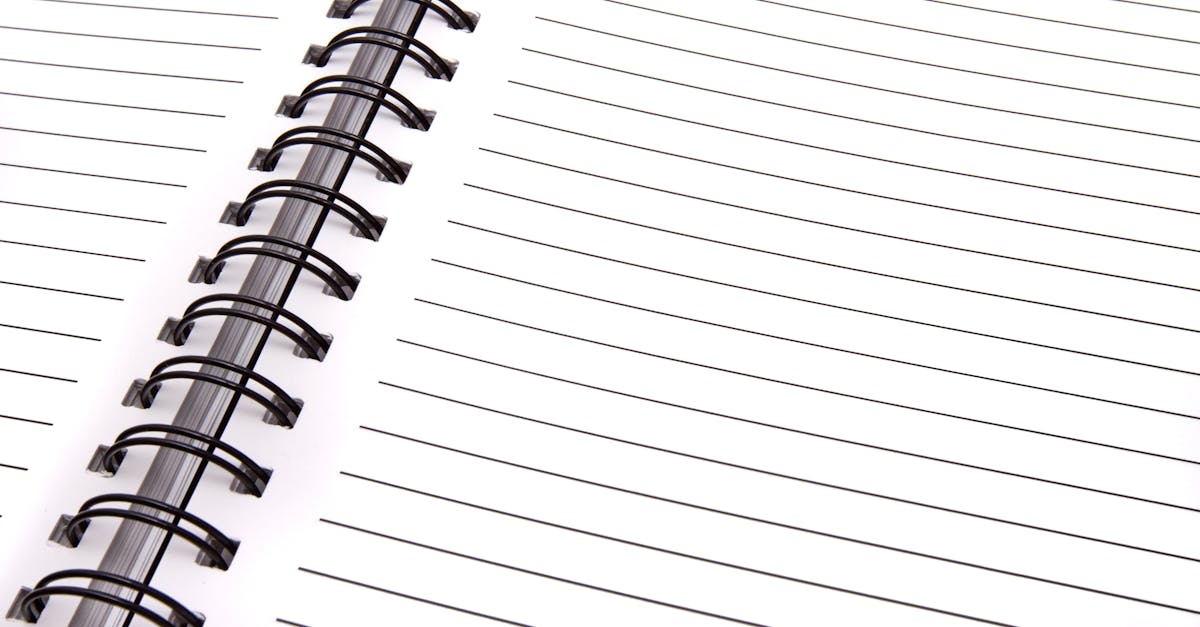
- SR (Single Ruled): One horizontal line. The classic. For general writing, notes, essays. The default for a reason.
- DR (Double Ruled): Two close horizontal lines. Often for younger students learning letter proportion, or for specific ledger formats.
- FR (Four Ruled): Four lines making three corridors. Exclusively for early education, teaching kids how to shape lowercase and uppercase letters.
- UR (Unruled): Blank. For sketching, diagrams, freeform thinking, or anyone who hates being confined by lines.
- CR (Cross Ruled / Graph): A grid of small squares. For technical drawings, charts, math, or bullet journal fanatics.
- BR (Broad Ruled): Wider spaced single lines. Easier on the eyes for some, or for people with larger handwriting.
Matching the ruling to the job is the quiet, unsexy part of procurement that makes everyone’s daily life easier. Or harder, if you guess wrong.
The Manufacturing Angle: Why Your Supplier Matters
Look, I’ll be direct. You can buy paper from a thousand places. You can get a notebook stitched together in a small shop. But when you’re ordering 10,000 units for a national school program or 5,000 custom diaries for a bank, the manufacturer’s process is everything. It’s the difference between paper that performs and paper that just… exists.
At our unit, the paper isn’t just fed into a binder. It’s checked for grain direction — affects how neatly it turns — and for consistency in the coating. A cheap mill run can have variations in sizing (that’s the coating that controls absorbency). One batch is okay, the next bleeds like crazy. We source from specific mills with tight controls because, frankly, we can’t afford the callback. And neither can you.
Expert Insight
I was reading an old trade journal last year — the kind of thing only people in this business see — and a line from a veteran mill manager stuck with me. He said, “Good writing paper isn’t made. It’s *finished*.” He meant the final steps: the calendering (pressing through rollers for smoothness), the sizing application, the humidity-controlled storage before cutting. That’s where the magic happens, or doesn’t. A large-scale manufacturer that controls that finishing process is the one you want. A trader who just buys pre-cut sheets and binds them? That’s a risk. I don’t have a cleaner way to put it than that.
Bond Paper vs. Writing Paper: A Quick Comparison
This confusion comes up all the time, especially with corporate buyers. “We want bond paper notebooks.” Usually, they mean they want something premium. But bond paper is technically a specific, strong, cotton-content paper for legal documents. What they actually need is a high-quality writing paper. Let’s clear this up.
| Feature | Standard Writing Paper | Bond Paper |
|---|---|---|
| Primary Use | Everyday writing, notes, journals | Official documents, legal forms, letterheads |
| Typical GSM | 50-80 GSM | 75-90 GSM (often heavier) |
| Finish | Smooth, can be vellum (slight tooth) or glossy | Rigid, crisp, often watermarked |
| Ink Handling | Designed for quick absorption of pen ink | Designed for sharp printing; can feather with liquid ink |
| Cost | Cost-effective for bulk production | Significantly more expensive |
| Best For | School notebooks, office notepads, diaries | Certificates, contracts, fine stationery |
Nine times out of ten, for bulk notebook orders, you need a good writing paper. Specifying “bond” might get you an unnecessarily expensive product that’s not even optimized for the task. It’s like asking for racing tires on a city delivery van.
The Real-Life Test: A Micro-Story
Anita, 42, procurement manager for a chain of private schools in Hyderabad. She switched suppliers to save 7% on a tender for 20,000 Grade 5 notebooks. The new books arrived. The covers were fine. The stitching was okay. But the paper… it was thin. Not just in GSM, but in substance. A student pressing a little too hard with a math compass would poke through. A gel pen would take three seconds to dry. The teachers’ WhatsApp group lit up with complaints by the end of the first week. Anita spent the next two months managing refunds, replacements, and apologies. The 7% saving cost her about 70% in extra admin, not to mention credibility. She said the worst part was the principal holding up a torn page in a silent staff meeting. No words needed.
Anyway.
What to Actually Ask Your Notebook Manufacturer
So you’re ready to place a bulk order, or you’re evaluating a new supplier for your corporate diaries. Don’t just ask for price and delivery time. Drill down on the paper. Here’s what matters:
- “What is the exact GSM and source mill for the writing paper?” A good supplier knows this. A great one will show you samples from the same batch.
- “Can I get a blank sample sheet to test with our standard pens?” Do the test. Try a ballpoint, a gel pen, a fountain pen if you’re fancy. Check for bleed-through and dry time.
- “How do you control for consistency across large paper batches?” This gets to their quality process. Listen for specifics about mill partnerships, warehouse conditions, and in-house checks.
- “What ruling types do you offer as standard, and what’s the lead time for custom rulings?” This tells you about their flexibility for specialized orders, like the account books or graph books your finance team might need.
Their answers will tell you more about your future partnership than any brochure. This isn’t just a commodity purchase. It’s a tool you’re putting into hundreds or thousands of hands. The paper is the interface. Make sure it’s a good one.
Frequently Asked Questions
What is the best GSM for paper for writing in school notebooks?
For most school notebooks, 54-60 GSM is the standard and practical choice. It’s lightweight enough to keep books from being too heavy, cost-effective for bulk orders, and with good quality control, it prevents ink bleed-through. Heavier paper (70+ GSM) is overkill for daily student use and increases cost and weight significantly.
Why does ink sometimes bleed or feather on notebook paper?
Usually, it’s because the paper lacks proper “sizing”—a coating that controls absorbency. Cheap, unsized paper acts like a sponge, pulling ink along its fibres. It can also be due to overly watery ink (like some fountain pen inks) on too thin a sheet. Good writing paper is engineered to absorb ink at just the right rate.
What’s the difference between unruled and single-ruled paper?
Unruled paper is completely blank, ideal for drawing, diagrams, or freeform note-taking. Single-ruled paper has horizontal lines to guide writing in straight lines, making it the default for most note-taking, essays, and general office work. The choice depends entirely on the end-user’s task.
Can I get custom-branded paper for writing in notebooks?
Yes, absolutely. This is a core part of custom notebook printing. You can have your logo, header, or specific text printed on every sheet (like a corporate diary), or even customise the page layout and ruling. It’s a common request for bulk corporate orders.
Is thicker paper always better for writing?
Not always. Thicker paper (higher GSM) is more opaque and feels premium, but it makes books bulkier, heavier, and more expensive. For fast, everyday writing—like in a classroom or meeting—a smooth, well-finished standard weight paper (54-80 GSM) often provides a better, more practical writing experience.
Wrapping This Up
It boils down to this: paper for writing is the silent partner in every notebook order. You can get every other detail right—the binding, the cover, the delivery—and still fail because the paper was an afterthought.
For procurement teams, the goal isn’t to become paper scientists. It’s to ask the right questions and partner with a manufacturer who treats the paper as the main event, not just filler. It’s about understanding that GSM is a guide, not a guarantee, and that the right ruling type is a functional necessity, not an aesthetic choice.
I don’t think there’s one perfect paper for every single use. Probably there isn’t. But if you’ve read this far, you already know what you’re looking for — you’re just figuring out how to specify it clearly so you get it. That’s the whole game.
Need to test some samples or talk through the specs for an upcoming bulk order? Reach out. Let’s make sure the only thing written on those pages is what the user intends, not a complaint.