The Paper Problem Nobody Talks About
You open a box of new notebooks for your school, office, or distributors. The covers look great. But then you flip one open, run your thumb across the page, and — it’s just wrong. The paper feels flimsy. Ink bleeds through. The lines are faint. And suddenly, a simple purchase turns into a headache.
Most people think a notebook is a notebook. They’re not. The difference between a good bulk order and a costly mistake almost always comes down to the paper. Not the cover, not the branding — the paper. It’s the single most important component, and somehow, it gets the least attention until it’s too late. You end up with frustrated students, grumpy accountants, or a warehouse full of complaints you can’t return.
If you’re buying notebooks in volume, for any reason, this is what you need to cut through the noise. I’ve been in this business for decades, and I can tell you — people get this wrong all the time. It’s why we’re so specific about what goes into ours.
What “Paper Quality” Actually Means (It’s Not Just “Thick”)
Let’s start with the term everyone throws around: “quality.” In the notebook world, quality isn’t one thing. It’s a combination of three things you can see, feel, and test.
1. GSM: The Weight That Matters
GSM stands for Grams per Square Meter. It’s the standard way we measure paper weight. But here’s the thing — higher GSM doesn’t always mean better for writing. It’s about the right weight for the job.
- Standard Writing Paper: Around 54-70 GSM. This is the sweet spot for everyday notebooks. It’s opaque enough to prevent serious show-through from a ballpoint pen, but still light enough to keep the notebook from becoming a brick. This is what we use for most of our school and office notebooks. It works.
- Thicker / Premium Paper: 80-100 GSM. You see this in sketchbooks, high-end journals, or corporate diaries meant to feel substantial. It lays flat better, handles fountain pens or markers with less bleed. But the cost jumps. For bulk school orders? Honestly, overkill.
- Thin Paper (below 50 GSM): It feels cheap. Ink ghosts through to the other side. The page can tear easily if someone erases too hard. You might save a few paise per book, but you’ll pay for it in complaints.
The weight has to match the use. Giving 100 GSM paper to a third-grader is a waste. Giving 45 GSM paper to an architect for sketching is a disaster.
Expert Insight
I was talking to a procurement manager for a chain of coaching institutes last month. He said something obvious that most suppliers ignore. “We don’t need luxury,” he told me. “We need consistency. If I order 10,000 notebooks today and another 10,000 in six months, they have to feel exactly the same in a student’s hand. If the GSM varies, the students notice. They complain to parents. Parents complain to us.” That’s it. For bulk, consistency is a bigger marker of quality than a fancy GSM number.
The Ruling Maze: SR, DR, FR, and What Students Actually Need
This is where bulk buyers for schools and institutions get tripped up. The ruling — the lines on the page — seems simple. It’s not. Pick the wrong one, and the notebook becomes useless for its purpose.
Let me walk you through the common types. We make all of these, and each has a specific user.
- SR (Single Ruled): One line. The classic. For general note-taking, essays, most subjects. The workhorse.
- DR (Double Ruled): Two closely spaced lines. Primarily for early primary school students (Classes 1-3) learning letter formation. The double guide helps them with size and alignment.
- FR (Four Ruled): Four lines to a space. Exclusively for teaching and practicing cursive handwriting in many Indian schools. It’s a non-negotiable spec for younger grades.
- CR (Cross Ruled / Graph): Small squares. For math, science diagrams, engineering notes, accounting columns. It provides a built-in grid for structure.
- UR (Unruled): Blank pages. For drawing, free-form diagrams, sketching, or anyone who hates lines.
I’ve seen schools accidentally order SR when their syllabus requires FR for the entire primary wing. The books show up, and they can’t use them. It’s a total loss. You have to know what the end-user is doing on that page.
A Notebook Isn’t Just Paper: Binding, Covers, and the Real-World Test
The paper can be perfect, but if the notebook falls apart in a backpack or after a month on a desk, you’ve still failed. The construction matters just as much.
Think about a standard school notebook. It gets thrown in a bag, pulled out, opened flat, shoved back in. Every day. For months.
The binding is what survives that abuse. Here are the main types you’ll encounter:
| Binding Type | Best For | Durability Note | Lay-Flat? |
|---|---|---|---|
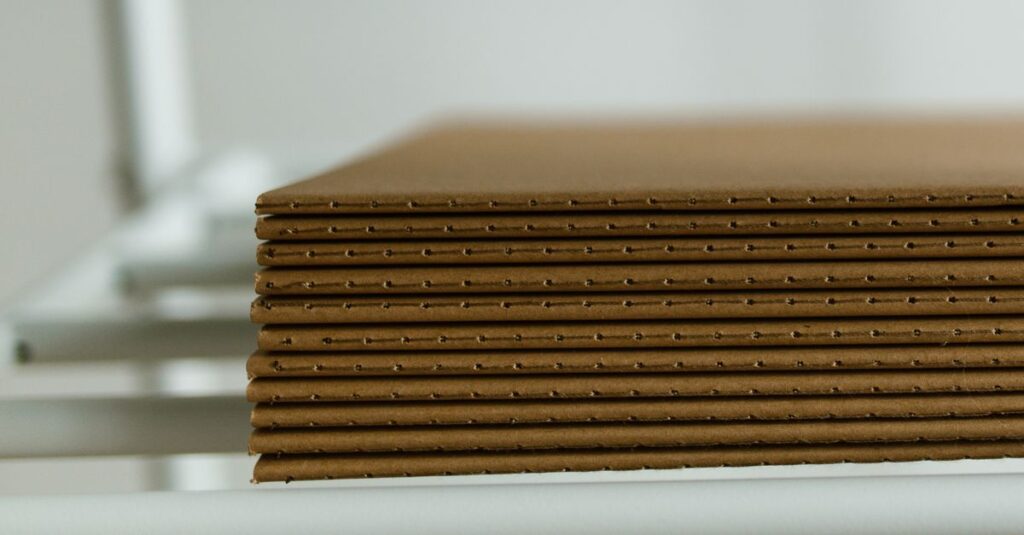
| Stitched (Saddle Stitched) | Standard school notebooks, short diaries (up to 96 pages). | Very durable for its intended use. Pages won’t fall out. | Yes, easily. |
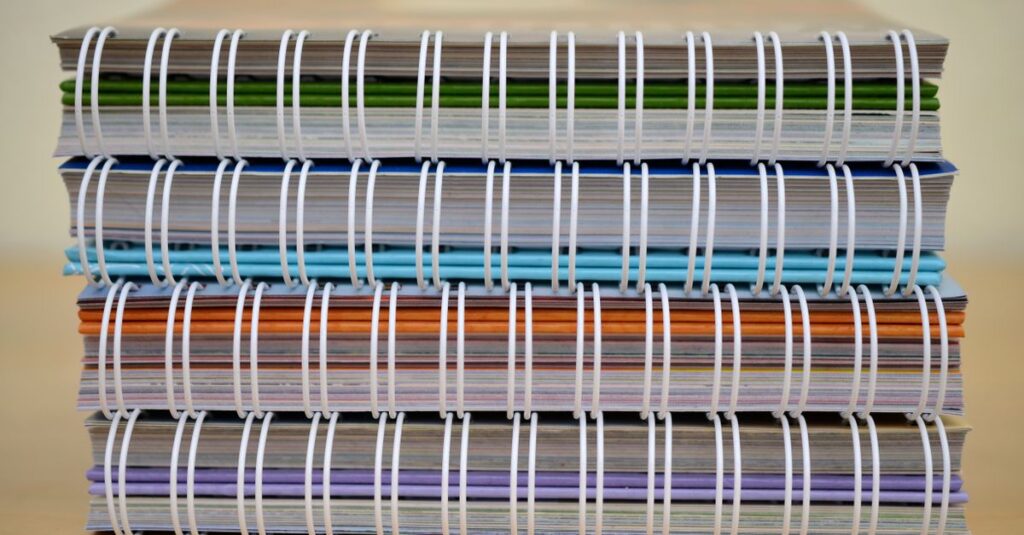
| Spiral / Coil Binding | Notebooks that need to fold back completely, art pads, project notes. | Spiral can get bent in bags, snag on things. But pages are secure. | Perfectly. Flips 360°. |
| Perfect Binding (Glued) | Thicker books, corporate diaries, manuals (200+ pages). | Strong spine, but if the glue fails, the whole block can detach. | Not really. Struggles to stay open. |
| Hardcover Case Binding | Premium record books, master account books, presentation journals. | Most durable option. Built to last years on a shelf. | Can be stiff initially. |
And the cover? A 250 GSM art card cover can take a lot more scuffing and moisture than a thin 160 GSM cover. For a kid’s notebook, that extra durability matters. For an office intern’s notepad, maybe less so.
The real-world test is simple: can it survive its intended life? A student’s notebook has a different life than an accountant’s ledger.
The Bulk Buyer’s Checklist: How to Not Get Screwed on Your Next Order
Right. So you’ve got to place an order for 5,000, 10,000, 50,000 notebooks. What do you actually ask the manufacturer? Don’t just ask for “100-page notebooks.” That’s how you get the cheapest thing they can slap together.
Here’s what you specify. I’m giving you the list I wish every buyer used.
- Paper GSM: “I need 54 GSM white writing paper.” Be exact.
- Paper Type: “Woodfree, uncoated, white offset paper.” This is standard for good writing.
- Ruling Type & Color: “Single Ruled (SR), with light blue lines.” (Dark lines are distracting).
- Page Count: Is it 100 leaves (200 pages) or 100 pages? Big difference. Specify leaves.
- Binding: “Saddle stitched with reinforced endsheets.”
- Cover Spec: “250 GSM art card, laminated matte finish.”
- Sample: ALWAYS request a physical sample before confirming the bulk order. Test it with the pens you use.
This is the boring, granular stuff that separates a professional order from a problem. Most manufacturers will respect you for knowing it. The ones who get vague or push back? Probably not who you want to work with.
I remember a distributor from Hyderabad. He ordered what he thought were “standard long books” from a new supplier. The sample was okay. The shipment that arrived had paper so thin you could read through it. The ruling was a smudgy, dark grey. He was stuck with them. He told me, “It felt like they used a different factory for the sample and the order.” That happens more than you think. The checklist is your defence.
Customization: When It’s Worth It and When It’s Not
This comes up a lot with corporate orders and private label. You want your logo, your colors, your specific layout. It adds value, but it also adds cost and complexity.
When is it worth it?
- Brand Building: Giving clients or employees a beautifully customised diary feels premium. It’s marketing you can write in.
- Functional Need: You need a specific header on each page, a special log sheet at the back, a unique page numbering system. Off-the-shelf won’t work.
- Large Volume: The setup cost for printing custom covers gets amortized over thousands of units.
When should you stick to standard?
- Small Orders (<1000 units): The setup cost per book becomes huge.
- Internal Use with No Brand Need: If it’s just for internal meeting notes, a standard notebook with a stamped logo might be fine.
- Urgent Timeline: Custom takes time for design, plate making, and running.
The middle ground? Semi-customization. Choose from a manufacturer’s existing cover templates and just add your logo and text. Faster, cheaper, still looks professional.
Frequently Asked Questions
What is the best paper GSM for school notebooks?
For most school work, 54-70 GSM paper is the ideal balance. It’s thick enough to prevent significant ink show-through from a ballpoint pen, but not so heavy that it makes the notebook bulky or expensive. It’s durable for erasing and handles daily wear and tear in a school bag.
What’s the difference between ‘pages’ and ‘leaves’ in a notebook?
This is a classic point of confusion. One leaf is one sheet of paper, which has two sides (two pages). So a “100-page” notebook has 50 leaves. A “100-leaf” notebook has 200 pages. Always clarify which one a supplier is quoting you, or you might end up with half the writing space you expected.
How do I prevent ink from bleeding through notebook paper?
Bleeding is caused by low-quality, absorbent paper. Specify “woodfree, uncoated offset paper” with a minimum of 54 GSM. Also, the pen matters. Avoid using broad-tip markers or fountain pens with wet ink on standard notebooks. Test your specific pen on a sample first.
What ruling should I choose for accounting or office work?
For accounting columns, data logging, or any work requiring vertical alignment, Cross Ruled (CR) or graph paper is best. For general office notes and minutes, Single Ruled (SR) is perfectly fine and less visually cluttered.
Can I get a mix of different rulings in one bulk order?
Yes, most manufacturers who do bulk orders, like us, can split an order. You could order 2000 Single Ruled, 2000 Four Ruled, and 1000 Graph notebooks as part of the same purchase. It’s common for schools buying for different grades. Just be clear about the break-up upfront.
The Simple Truth About a Complex Product
At the end of the day, you’re not buying paper bound by glue. You’re buying a tool. A tool for learning, for organizing, for calculating, for creating. If the tool fails, the work gets harder.
The details feel tedious — GSM, ruling codes, binding types. But they’re the language of reliability. Knowing them means you can communicate what you actually need, not just what’s being sold. It means you can spot a bad deal before the boxes land in your warehouse.
I don’t think there’s one perfect notebook for everyone. But there is a right notebook for every specific task. Your job as the buyer is to match the two. And that starts with understanding what you’re really looking at when you flip open a page and feel the paper under your thumb.
If you’re trying to figure out the exact specs for your next institutional order and want to talk it through with someone who’s been making these things since 1985, it might help to have a conversation.