So, what are you actually buying?
You’ve been ordering notebooks for your school, your office, maybe for a corporate giveaway. You look at price per unit, check the cover, get a sample. But here’s what I keep noticing: everyone focuses on the cover and the price, and the notebook page itself — the part you actually use — gets overlooked. Until someone picks up a pen, and then it’s too late.
The paper ghosts. The ink bleeds. The ruled lines are so faint you can’t see them. It feels cheap. And you’re the one who has to hear about it. Look, I’ve been in this business for four decades, and the difference between a good order and a complaint that echoes for months comes down to one thing: understanding the page. It’s the soul of the notebook. And nobody talks about it.
So let’s talk. If you’re buying in bulk, this isn’t just stationery. It’s a tool. And the page is where the work gets done.
The notebook page is not just paper
Right? You’d think it’s simple. It’s a page. But when you’re sourcing thousands of notebooks, that single page is a product of about five different decisions you probably didn’t know you were making. I see it with procurement managers all the time. They send a spec that just says “100-page notebook.” And that’s where the problems start.
Think about it this way. A notebook page has three core components, and each one changes everything about how the book feels and functions. First, the paper itself — the weight, the finish, the fibre. Then, the ruling printed on it — the lines, the margins, the boxes. Finally, how it’s attached to the other pages — the binding. Get one wrong, and the whole thing feels off.
I had a college administrator tell me once, after switching suppliers, that the only feedback he got from students was “the new notebooks are nicer to write in.” They couldn’t say why. It was the 70 GSM paper instead of 50. That extra bit of thickness stopped the show-through. It’s a tiny detail that makes all the difference. The question isn’t whether you need a good page. It’s whether you’re willing to settle for a bad one.
The paper: GSM, finish, and why it matters
Okay, let’s get specific. GSM. Grams per Square Metre. It’s the weight. Most standard school notebooks you’ll find use around 54-60 GSM paper. It’s thin. It’s economical. For a student scribbling with a ballpoint pen, it’s usually fine. But the moment you introduce a gel pen, a fountain pen, or a marker? That’s when you see the ghost of the writing from the other side. It looks messy.
For corporate diaries, account books, or anything where presentation matters, you jump to 70-80 GSM. This is where the page starts to feel substantial. It has a crispness. A confidence. It doesn’t crinkle easily. The writing experience is smooth — no fibres catching the pen tip. The finish matters too. A vellum finish has a slight tooth, great for pencil. A smooth, calendered finish is perfect for ink.
Here’s a thing most people don’t realize: the whiteness. Paper isn’t just white. It has a blue or yellow tone. A brighter, blue-white sheet looks more premium but can be harsh under office lights. A natural, creamier white is easier on the eyes for long writing sessions. We keep both in stock because different clients need different things. A lawyer taking notes all day wants that softer sheet. A designer sketching concepts might want the bright white. It’s not one-size-fits-all.
A quick story about paper weight
I was talking to a procurement head for a chain of coaching institutes in Hyderabad last year. They’d been buying the same 52-page, 54 GSM notebooks for a decade. Cheap. Fine. Then they decided to rebrand, get custom covers with their logo. They came to us. We suggested, just as a test, moving to 70 GSM for the internal pages. The cost increase per book was minimal — we’re talking a few rupees. They tried it. The next order was for triple the quantity. The founder told me, over the phone, “The parents are saying the study material feels more legitimate.” It was the paper. The heft of the page conveyed quality. They weren’t just buying paper; they were buying perceived value. Which, in their business, is everything.
Rulings: It’s not just lines on a page
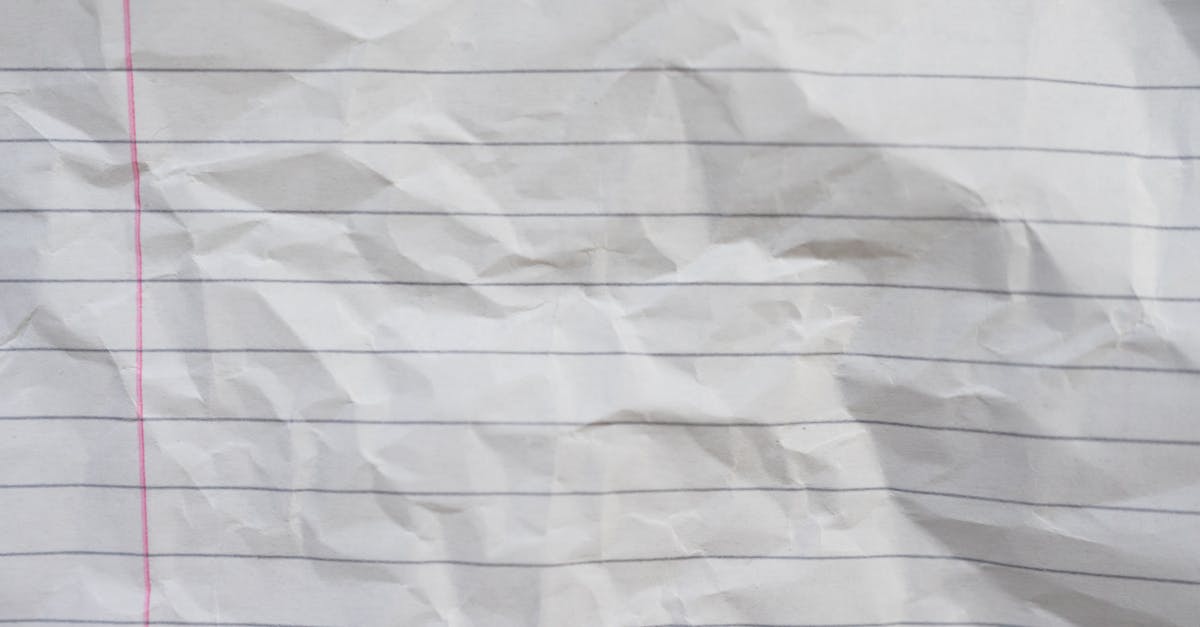
This is where it gets fun. To you, it’s a ruled notebook. To us, it’s a layout. And the layout dictates function. You’ve got your standard Single Ruled (SR) for essays. Broad Ruled (BR) for younger kids or bigger handwriting. But then it gets specific. Double Ruled (DR) with a margin is for subject notes. Four Ruled (FR) is for language practice — you know, for getting those ‘pa’, ‘fa’, ‘la’ letters right.
Cross Ruled (CR) or graph paper? That’s for engineers, architects, accountants. The boxes keep numbers and diagrams in check. Unruled (UR) is for sketching, mind maps, free flow. And then there are custom rulings. We print pages with header spaces for date and subject, with perforated edges for tear-outs, with specific column layouts for inventory or lab records.
The print quality of these rulings is a silent killer. If the lines are wavy, or the blue ink is too light to see, or worse, too dark and aggressive, the page is ruined. The printing has to be sharp, consistent, and perfectly aligned from page one to page two hundred. If it’s not, it looks sloppy. And if the notebook looks sloppy, what does that say about the brand printed on its cover?
Binding: The unsung hero of page durability
You can have the best paper in the world, but if the pages fall out, you’ve got a pile of scrap, not a notebook. Binding is what turns loose pages into a book. And the choice here changes how the book opens, lies flat, and survives daily use.
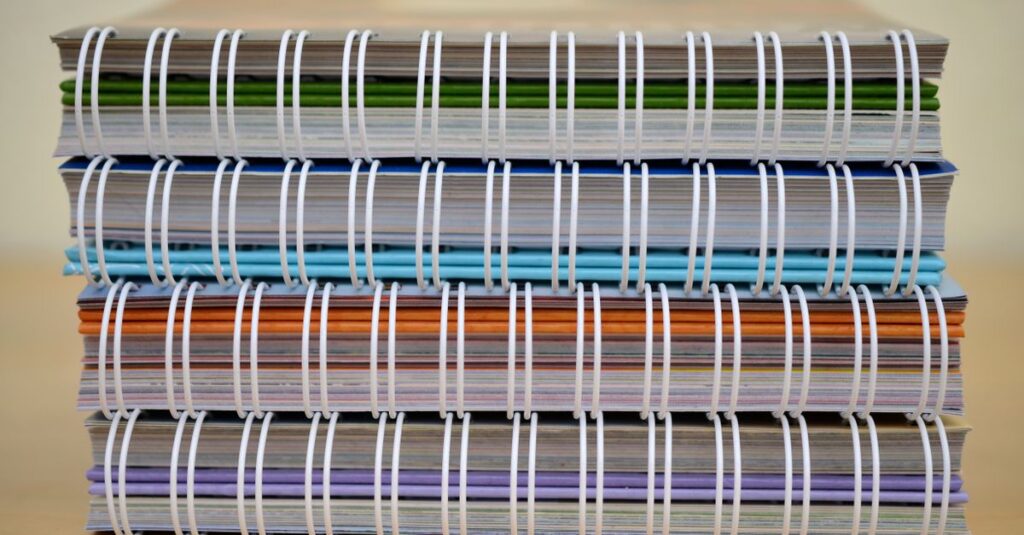
Stitched binding is the classic. Threads sew the folded page sections together, then glued into the spine. It’s durable, lays reasonably flat, and has a professional look. It’s what we use for most of our school notebooks and standard diaries. Then there’s spiral binding (wire-o or plastic coil). The pages are punched and held by a spiral. It lays completely flat, which is brilliant for artists, students, or anyone who needs to use the whole page. But the spirals can get bent.
Perfect binding is what you see on paperback books. The pages are glued at the spine with a strong adhesive. It gives a clean, squared-off edge and allows for printing on the spine. This is the go-to for thick corporate diaries or project reports. The choice depends on thickness, use-case, and honestly, budget. A stitched notebook for 200 pages feels secure. For 700 pages? You need perfect binding.
Customization: Making the page your own
This is where the real conversation starts. Anyone can sell you a notebook. But if you’re a business, a school, an institution, your notebook page is real estate. It’s a touchpoint. Customization isn’t just slapping a logo on the cover. It’s about integrating your identity into the experience of using the product.
We do this all the time. A pharmaceutical company wants their notebooks for medical reps to have a customized header on every page for client details. A software company wants their core values printed as a faint watermark on the bottom corner of every right-hand page. A school wants their motto and a mini calendar on the inside cover page. This is what we mean by printing services.
The process isn’t magic. It’s planning. You provide the design, or we help create it. We set up the printing plates for the interior pages. The key is volume. Because setting up for custom interior pages has a cost, it only makes sense for bulk orders — typically a few thousand units and up. But when you do it, the notebook stops being a commodity. It becomes a part of your toolkit, your culture. It’s a different feeling altogether.
| Feature | Standard Notebook Page | Custom/Branded Notebook Page |
|---|---|---|
| Paper Quality | Usually 54-60 GSM, standard finish. | Can be upgraded (70-80+ GSM), choice of finish & whiteness. |
| Ruling | Standard options only (SR, DR, CR, UR). | Fully customizable layouts, headers, watermarks, perforations. |
| Ink Color | Standard blue or black for rulings. | Can match brand colors for headings or specific elements. |
| Margins & Headers | Fixed, standard layouts. | Designed to your specification (e.g., space for project name, date). |
| Page Numbering | Often absent or standard font. | Custom placement, font, can include chapter or section identifiers. |
| Branding Integration | None on the internal pages. | Logo, motto, or brand elements can be placed as watermarks or footers. |
| Cost Implication | Lowest cost per unit. | Higher setup cost, but marginal increase per unit in large runs. |
| Minimum Order | Can be as low as a few hundred. | Usually starts at a few thousand units to absorb setup costs. |
What to ask when you’re ordering
Look, if you take one thing from this, let it be this list. When you’re talking to a manufacturer or supplier, move beyond “100-page notebook.” Ask these questions. The answers will tell you who you’re dealing with.
- “What is the exact GSM of the writing paper?” Don’t accept “standard.” Get the number.
- “Can I see a sample of the actual page ruling?” Check the line sharpness and color.
- “What binding method do you recommend for this page count?” A good manufacturer will guide you.
- “What is the show-through like with a gel pen?” Test it yourself. Always.
- “What are my customization options for the interior pages?” Even if you don’t need it now, know the possibility.
And honestly? A supplier who hesitates on these answers, or says “all our paper is good,” probably isn’t paying attention to the details that you’ll have to live with. I think the biggest mistake buyers make is being timid. You’re spending the money. You deserve to know what you’re getting on the inside, not just the outside.
Expert Insight
I was reading an article about product design a while back — it was about pens, actually — and the writer said something that stuck with me. He said the best tools are the ones you forget you’re holding. They just work. They become an extension of your intention. A notebook page is the same. When it’s right, the student isn’t thinking about the paper; she’s thinking about the math problem. The executive isn’t annoyed by bleeding ink; he’s capturing the idea. The goal of manufacturing isn’t to make a page that gets noticed. It’s to make a page that disappears, so the work can happen. That’s the quiet part of this job that I really like.
FAQ: Your notebook page questions, answered
Frequently Asked Questions
What is the best GSM for a notebook page?
It depends on the use. For everyday school use with ballpoint pens, 54-60 GSM is standard and cost-effective. For corporate diaries, planners, or any writing with finer tips or markers, 70-80 GSM is better. It feels premium, reduces show-through, and is more durable. We usually advise clients to test a sample with the pens they’ll actually use.
Can I get different rulings on different sections of the same notebook?
Yes, absolutely. This is called “mixed ruling” and it’s a common request. Think a notebook with graph pages for diagrams, then ruled pages for notes. It requires planning during the manufacturing stage to collate the different sections, but it’s very doable for bulk custom orders. It makes a notebook incredibly versatile.
What’s the difference between spiral and stitched binding for page durability?
Stitched binding (saddlestitch or side-stitch) is very strong for its intended use. The pages are sewn in. It’s great for books that will be carried around but not constantly folded back. Spiral binding allows the book to lay perfectly flat and pages can rotate 360 degrees, but the spiral itself can snag or bend if abused. For heavy-duty, daily-use notebooks that need to lie flat (like in a lab), a thick plastic coil is often best.
How many pages can you put in a notebook before the binding fails?
Again, binding type is key. A stitched notebook is solid up to about 96-100 pages (48-50 sheets). For more, we use “section sewing” for thicker books. Perfect binding can handle hundreds of pages — we regularly make 700-page account books with it. Spiral binding has a limit based on the coil diameter; we can go up to 300-400 pages with a large enough coil. The “right” number is a conversation about use and binding method.
What is the minimum order for custom printed interior pages?
There’s no universal minimum, but practically, custom interiors need a print run that justifies the setup cost for the printing plates. For us at Sri Rama, we typically recommend starting at 2,000 to 5,000 units for custom interiors to be economical. For simpler customizations like just a header or footer, the threshold can be lower. It’s always best to just ask with your specific idea.
The real cost isn’t on the invoice
Let’s be direct. When you’re buying notebooks in bulk, the cheapest page often costs you more. It costs you in complaints from students or staff. It costs you in rebranding efforts that fall flat because the product feels flimsy. It costs you in re-orders when books fall apart. The real cost is in the experience.
The notebook page is the interface. It’s where your brand, your institution, meets the user’s hand and mind. Getting it right isn’t about spending a fortune; it’s about asking the right questions and working with a manufacturer who understands that the inside matters as much as the outside. I don’t think there’s one perfect page for everyone. Probably there isn’t. But if you’ve read this far, you’re not just looking for a notebook — you’re looking for the right tool. And the right tool starts with the right page.
The next step is to talk specifics. Bring your use-case, your budget, even your doubts. That’s how we figure it out.