What Do You Actually Call This Thing?
Let me guess. You searched for 'a4 register' because someone handed you one — or asked you to buy a stack of them — and you're not entirely sure what makes it different from any other notebook. I get that. I've been making these things for almost forty years now, and I still see people get confused.
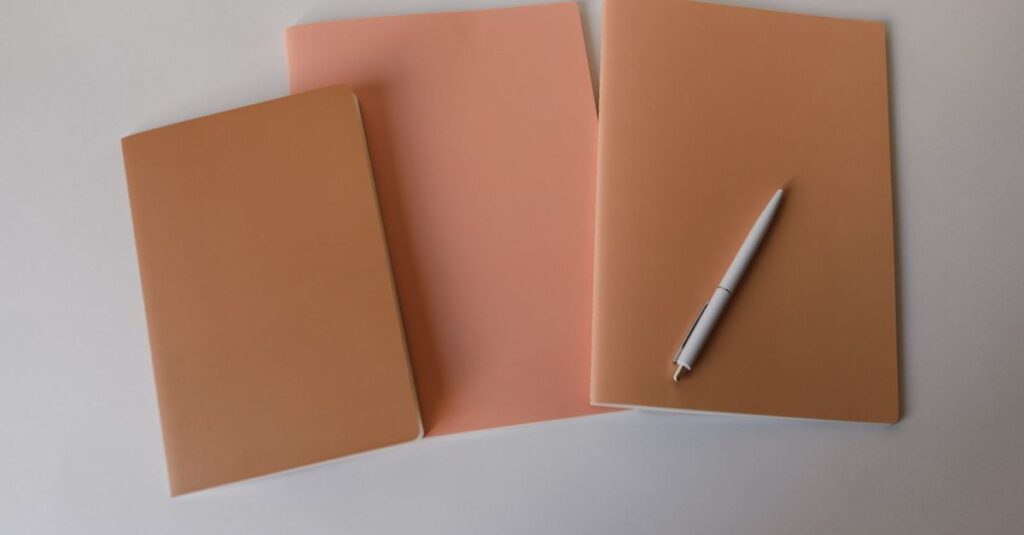
The short version: an A4 register is just a notebook that uses the A4 paper size. 210mm wide, 297mm tall. Same as a standard sheet of printer paper. The binding is usually stitched or spiral, and the covers are thicker than a regular notebook. That's really it. But here's where it gets interesting — because once you start looking, you realize not all A4 registers are built the same. And if you're ordering them for a school or an office, the differences matter a lot more than you'd think.
At Sri Rama Notebooks, we've been manufacturing these for decades. So I wanted to write down everything I know about them — honestly, without the usual sales talk.
Who Actually Uses an A4 Register?
You'd be surprised. I used to think registers were only for school attendance logs and exam records. But the reality is much broader. I've seen them used in ways I never expected.
Schools and Colleges
This is the obvious one. Teachers use them for lesson plans, attendance, and marks. Students sometimes prefer them over smaller notebooks because the larger page gives more space for diagrams and longform writing.
Corporate Offices
Procurement managers order them by the bulk — for meeting minutes, inventory tracking, visitor logs. One buyer from a manufacturing firm in Hyderabad told me they use A4 registers for machine maintenance logs because the large page fits detailed checklists.
Government Institutions
This is where things get strict. Government departments have specific specification sheets. Everything — paper GSM, ruling type, cover thickness — has to match their tender documents. We've supplied registers to state education departments where each page had to have a specific watermark.
Event and Security Firms
Guest lists. Incident reports. Delivery verification. Security guards carry them at entry points. They need something durable that doesn't fall apart when it rains or gets tossed around.
Here's a micro-story for you: Rajesh, 47, a storekeeper at a textile mill in Rajahmundry. He keeps the stock ledger in an A4 register. Every day, he writes down yarn received and dispatched. The register sits on a wooden desk near the window, so the left side of the cover is slightly faded from sunlight. He's been using the same format for eleven years. Won't switch to computer — says paper doesn't crash.
I like that. I don't know why it stuck with me.
What to Look For When Buying Bulk A4 Registers
I'll say something that might sound strange coming from a manufacturer: don't just buy the cheapest one you find. Because the cheap ones will cost you more in the long run. I've heard from enough customers to know.
Here's what I check when we produce A4 registers:
- Paper GSM: 54 GSM is standard for writing. If you need it for both sides, go higher — 70 GSM or above. Lower than 54 GSM and the ink bleeds through.
- Binding type: Stitched binding lasts longer. Spiral is convenient but can break if you're rough with it. Perfect binding is fine for thinner registers but won't hold up in daily use.
- Cover thickness: A 300 GSM cover flexes. 600 GSM or above is what you want for registers that will be carried around. Nobody likes a floppy cover.
- Ruling: Single ruled for general writing. Four ruled for primary school kids who need line guidance. Unruled for technical drawings. I've seen procurement orders get rejected because they ordered the wrong ruling.
One thing I keep noticing: buyers sometimes ignore the grain direction of the paper. If the grain runs the wrong way, the register won't lie flat. You'll fight with it every time you open it. That's not something you'd think about until you actually have to write in one.
A4 Register vs A5 Notebook: Which One Should You Pick?
Honestly? It depends entirely on what you're doing. I keep both in my bag. Different jobs. Let me put this in a table so you can see it clearly.
| Feature | A4 Register | A5 Notebook |
|---|---|---|
| Page size | 210 × 297 mm | 148 × 210 mm |
| Best for | Detailed notes, logs, official records | Quick notes, meetings, personal journaling |
| Portability | Bulkier — needs a bag | Fits in most handbags and pockets |
| Reading space | More room for diagrams and long entries | Limited space per page |
| Typical page count | 120–320 pages | 52–200 pages |
| Durability needed | Higher — often used in rough environments | Moderate — usually desk or bag use |
| Cost per unit (bulk) | Higher — more paper and stronger binding | Lower — smaller size means less material |
I'll give you my honest take: if you're running a classroom or a government office, A4 is the way to go. If you're handing out diaries at a conference, A5 makes more sense. The question isn't which is better. The question is what your people will actually use.
Expert Insight
I was visiting a small stationery shop in Kakinada last year. The owner, an older man named Subba Rao, showed me a stack of returned A4 registers. He said, 'Look at this. They bought the 52-page ones for a school. Within two months, they ran out of space and had to buy new ones. Now they're blaming me.' He wasn't angry. More tired. That moment stuck with me because it's such an easy fix — you just need to think about how many pages you'll really use. Most people don't. They just look at the price.
The Customization Options Nobody Talks About
You can do a lot more with an A4 register than slap a logo on the front. I wish more buyers knew this. It would save everyone a lot of back-and-forth.
Think about what you actually need the register to do. Do you need the cover to have a pocket inside to hold loose papers? Do you need an index page? Do you need the binding to open completely flat — what we call lay-flat binding? These are all things we can do, but most buyers never ask.
Here's a list of what we offer at our factory in Rajahmundry:
- Custom cover design — full color, foil stamping, embossing, or simple one-color print.
- Page customization — printed headers, numbered pages, pre-printed tables, watermarks.
- Binding options — stitched, spiral, perfect bound, or ring bound with custom rings.
- Packaging — shrink wrap, box packing, or loose bulk for distributors.
- Private label — your brand name on the cover, no mention of our factory.
We get orders from companies in Dubai that want foil-stamped corporate diaries, and from local schools that just want their emblem printed in one color on the corner. Both are fine. We treat every order the same way — because quality is quality, no matter the budget.
The only thing I'd say is this: don't rush the specification. If you take the time to write down exactly what you need — paper GSM, ruling, cover type, binding — you'll get exactly what you want. And you won't end up with a hundred registers nobody wants to use.
Why Buying Direct From the Manufacturer Makes Sense
I might be biased here. But let me explain why it matters, and you can decide for yourself.
When you buy from a distributor, the register has passed through at least two hands before reaching you. Each step adds a markup. That's fine if you're buying five pieces. But if you're ordering 500 or 5,000, the markup becomes a real cost.
More importantly — quality control. When you order directly from a manufacturer like Sri Rama Notebooks, we control the entire process. Paper procurement, cutting, printing, binding, packaging. If something goes wrong, I know about it within hours. We fix it before it reaches you.
I talked to a procurement manager in Bangalore last month. He was buying A4 registers from a local stationery wholesaler. He said the paper quality kept changing. One batch would be good, the next would be thin and rough. He couldn't figure out why. The answer: the wholesaler was sourcing from different factories depending on price. That doesn't happen when you buy direct.
Look, I know it's easier to just call your usual supplier and order. But if consistency matters to you — and it should, especially for institutional use — manufacturers give you that. We have to. Our reputation depends on it.
Frequently Asked Questions
Frequently Asked Questions
What is the difference between an A4 register and a regular notebook?
An A4 register uses the A4 paper size (210 × 297 mm) and usually has thicker covers and stronger binding than a regular notebook. It's designed for long-term use in schools, offices, and institutions where durability matters more than portability.
How many pages does a standard A4 register have?
It varies. Common page counts are 120, 200, 240, and 320 pages. Some are as low as 52 pages for simple logs, and others go up to 700 pages for heavy-duty recordkeeping. I'd suggest thinking about how many pages you'll actually fill before choosing.
Can I get customized A4 registers with my company logo?
Yes. Most manufacturers offer logo printing, embossing, foil stamping, and full-color cover design. At Sri Rama Notebooks, we also do private label manufacturing — so your brand appears without any mention of our factory. This works well for corporate gifts and school supplies.
What is the best binding for an A4 register?
For heavy use, go with stitched binding — it lasts the longest. Spiral binding is good for registers that need to lie flat, but it can bend or break in rough conditions. Perfect binding works for thinner registers kept on a desk. It really depends on where the register will be used.
Is it cheaper to buy A4 registers in bulk directly from a manufacturer?
Almost always. When you skip the distributor and buy direct, you cut out the middleman markup. Manufacturers also give better pricing on larger orders. Just make sure you've written down the exact specifications you need before placing the order to avoid mistakes.
One Last Thing
I don't think there's a perfect A4 register. I think there's the right one for your situation. If you're ordering for a school, prioritize paper quality and durability. If it's for a warehouse, focus on binding strength and cover toughness. If it's for a corporate office, look at the finish and brand consistency.
Most people spend five minutes choosing a register. They look at the price and the cover color, and that's it. I think we can do better than that.
If you want to talk through your requirements, I actually mean that. Sri Rama Notebooks — call or email. We've been doing this since 1985, and I don't think we'll stop anytime soon.