Why This Confusion Even Exists
Right. Let’s start here. I get this call at least twice a week. Someone from a big company, or a school committee, asks for a quote on ‘custom journals.’ I send over our diary specs. Then they call back. “No, we meant notebooks. The kind the students use.” Or vice versa. It’s a classic mix-up. And look, I don’t blame anyone — the words get thrown around like they’re the same thing. But if you’re ordering 10,000 pieces for your institution, getting it wrong isn’t a small thing. It’s a costly headache. You need the right tool for the job. So, what is the real difference? It’s more than just the cover.
Here’s the thing. Most people think a journal is just a fancy notebook. It’s not. A notebook is a tool for capture. A journal is a tool for reflection. That difference changes everything — the paper, the ruling, the binding, even the way you hold it. You wouldn’t use a screwdriver to hammer a nail, right?
I was talking to a procurement manager from a tech firm last month. Over a very bad cup of office coffee, by the way. He said they’d ordered ‘premium journals’ for their entire sales team. They got beautiful, leather-bound books with thick, unruled paper. The sales team hated them. They needed to jot quick notes in meetings, sketch diagrams — the paper was too thick, the pages were blank, the book wouldn’t lie flat. They wanted notebooks. He felt terrible. It wasn’t his fault. The supplier didn’t ask the right questions.
The Core Difference: Intent and Design
Think about it this way. What’s the job?
A notebook’s job is to be a workhorse. It’s for taking notes in class, scribbling meeting minutes, working out math problems, drafting lists. It’s functional. It’s about utility and speed. The paper is usually a bit thinner — a smooth 54 GSM that doesn’t bleed, with clear, consistent rulings (single, double, four-ruled) to keep your writing straight. The binding is tough, made to be thrown in a backpack, pulled out, folded back. It’s a disposable tool. You fill it, you archive it, you move to the next one.
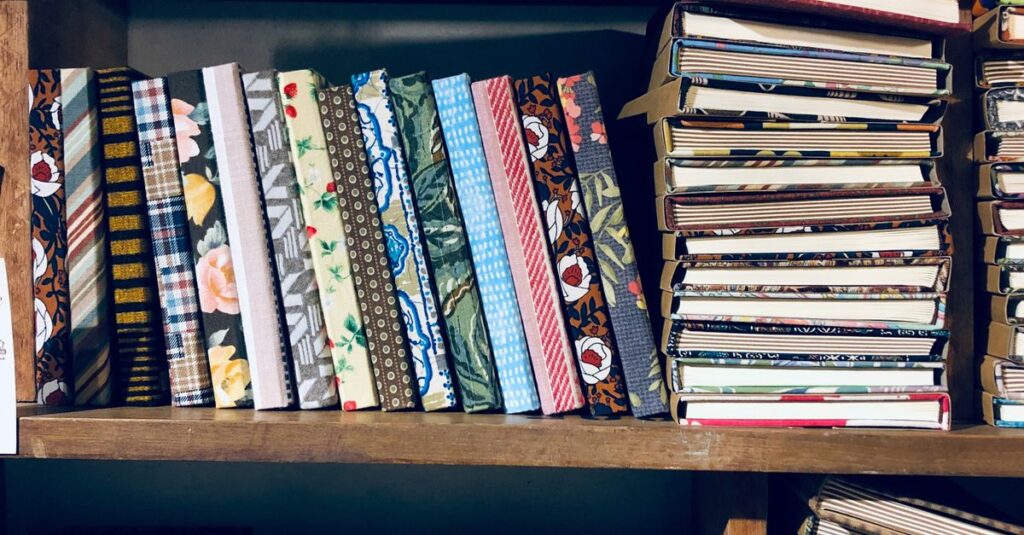
A journal’s job is to be a keeper. It’s for journaling thoughts, planning a year, logging daily events, sketching ideas you want to revisit. It’s about permanence and a better experience. The paper is often heavier — 70 GSM or more — to handle fountain pens or markers without ghosting. It might have a date header, a motivational quote at the bottom, a ribbon bookmark. The binding is more robust, often hardcover, because it’s meant to last on a shelf. It’s not disposable; it’s a record.
And honestly? Most corporate “diaries” we make are actually journals. They have the date, the quotes, the quality paper. Schools almost never ask for journals. They want tough, affordable notebooks. See the pattern?
Expert Insight
I was reading something last month from an old stationery trade journal — yes, they exist — and one line stuck with me. A designer said the difference is in the user’s posture. Notebook users lean forward, actively engaging with the world outside the page. Journal users lean back, engaging with the world inside the page. I don’t have a cleaner way to put it than that. It changes the whole physical product.
A Real-Life Story That Nails It
Let me tell you about Ananya. She’s 28, a project manager at a consultancy in Hyderabad. Her company gave everyone a beautiful, custom-printed journal at the year’s start. Gilded edges, company logo embossed on the cover. It sat on her desk, pristine, for three months. She was afraid to “mess it up.” Meanwhile, she was going through two or three cheap, spiral-bound notebooks a month for her actual work — client notes, to-do lists, project timelines. The journal felt too formal, too final. The notebooks were kinetic, messy, alive. One was for show. The others were for work. Which one do you think her company actually needed to supply?
Paper, Ruling, Binding: The Devil’s in the Details
This is where the rubber meets the road for manufacturers like us. When you place a bulk order, these aren’t abstract choices. They’re concrete specs that affect price, production time, and user satisfaction.
Paper: Notebook paper is typically 50-60 GSM. It’s designed to be cost-effective for high page counts (92, 200, 240 pages) and to prevent ink bleed-through from standard pens. Journal paper starts at 70 GSM and goes up. It feels substantial. It’s for a slower, more deliberate writing experience. But it’s more expensive and limits how many pages you can bind without the book becoming a brick.
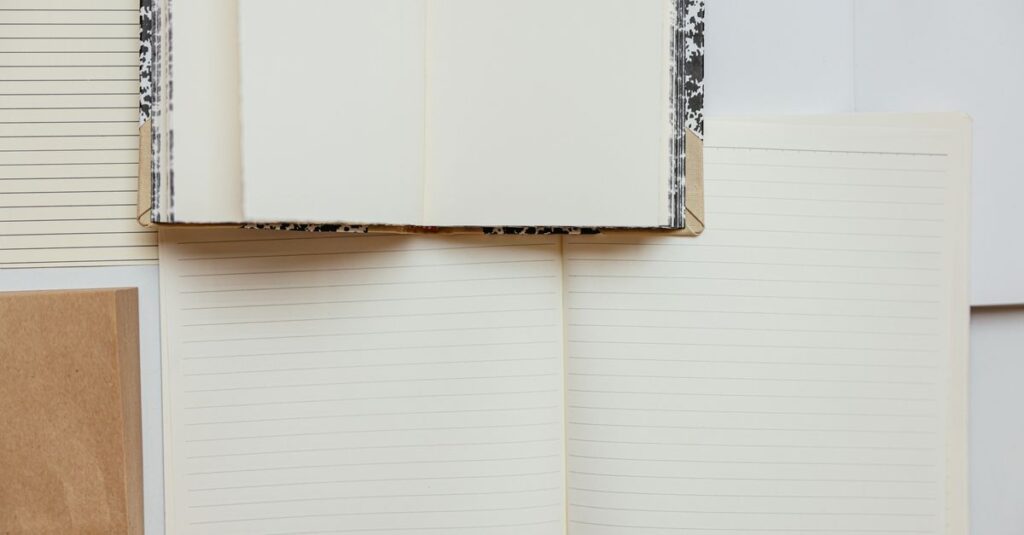
Ruling: This is a huge tell. Notebooks come in everything: Single Ruled (SR), Double Ruled (DR), Four Ruled (FR for kids), Broad Ruled (BR), even Cross Ruled (CR for accounting). Function dictates form. Journals? Most are unruled (UR) or lightly dotted to give freedom. Or they have specific layouts: dated lines, goal-tracking sections, blank pages opposite ruled ones for sketches.
Binding: This might be the most practical difference. Notebooks use durable, flat-laying bindings: spiral/coil binding (perfect for folding right back), or sturdy stitched binding that can take abuse. Journals use bindings that imply longevity: perfect binding (like a paperback book) for a clean look, or sewn signatures for that premium, lay-flat feel. A school notebook needs to survive a kid’s backpack. A corporate journal needs to look professional on a desk for twelve months.
Journal vs. Notebook: The Procurement Manager’s Cheat Sheet
| Feature | Notebook (The Workhorse) | Journal (The Keeper) |
|---|---|---|
| Primary Use | Note-taking, lists, classwork, drafting. | Journaling, reflection, planning, record-keeping. |
| Paper Quality | 50-60 GSM, smooth, bleed-resistant. | 70+ GSM, thicker, often textured. |
| Common Ruling | SR, DR, BR, FR, CR (Highly functional). | Unruled, dotted, or dated layouts. |
| Typical Binding | Spiral, stitched. Made to be rugged. | Perfect binding, hardcover, sewn. Made to last. |
| Page Count | Higher (200, 240, 320+). Meant to be filled quickly. | Moderate (52, 92, 200). Meant for daily entries over time. |
| “Feel” & Posture | Lean forward. Engaged with external task. | Lean back. Engaged with internal thought. |
| Bulk Order Context | Schools, colleges, training workshops, offices for meeting notes. | Corporate gifts, executive diaries, personal development programs. |
THIS IS THE PART PROCUREMENT TEAMS MISS. Matching the spec to the actual daily use is everything. Ordering a journal when you need a notebook isn’t an upgrade. It’s a mistake.
How to Choose for Your Bulk Order (No Nonsense)
Look, I’ll be direct. Ask these three questions before you even get a quote:
- What’s the daily action? Is someone writing in it quickly to capture information (notebook), or are they writing in it thoughtfully to process information (journal)? Fast vs. slow. That’s your first filter.
- Where does it live? In a pencil case, backpack, or on a messy desk (notebook)? Or on a bedside table, a clean desk, or in a briefcase (journal)? Mobility and durability needs change.
- Is it archival or disposable? Will this book be referenced later as a permanent record (journal), or is its value mostly in the act of writing, with the book itself being recycled later (notebook)?
Most people I’ve spoken to in government institutions or large corps have a gut feel for this once they pause for a second. The problem is that the initial request gets too generic. “We need 5,000 books.” Okay. For what?
Nine times out of ten, for schools, training programs, and general office supplies, you’re in the notebook category. For branded corporate gifts, manager-level planners, or wellness program kits, you’re edging into journal territory. Get that right first. The rest is just specifications.
Frequently Asked Questions
Frequently Asked Questions
Can a notebook be used as a journal?
Sure, you can write your personal thoughts in anything. But it won’t feel or function the same. A standard 54 GSM notebook might show ink bleed with nicer pens, and the rulings might feel restrictive for freeform journaling. It’s using a tool outside its design intent — possible, but not optimal.
Which is more cost-effective for bulk school orders: journals or notebooks?
Notebooks, always. The paper, binding, and construction are designed for high-volume, low-cost-per-unit production. A journal uses heavier materials and more complex binding, which drives the price up. For student use where books are consumed quickly, notebooks are the only practical choice.
What ruling is best for a corporate diary/journal?
It depends on the use. For dated daily planning, a simple single ruling or a dotted grid offers flexibility. For note-taking in meetings, a standard single-ruled page is perfect. We often recommend a hybrid: a dated, ruled page for appointments on one side, and a blank or dotted facing page for notes and sketches.
What’s the minimum order quantity for custom printed journals or notebooks?
This varies, but for a manufacturer like us doing proper custom work — not just slapping a sticker on — the MOQ usually starts at 500 pieces for notebooks and 250 for journals due to the setup costs for printing and binding. For truly bespoke designs, it can be higher.
Are there “hybrid” books that are both a journal and a notebook?
Yes, and they’re becoming more popular. Think of a notebook with higher-quality paper and a durable binding, but with functional rulings. Or a journal with a section of plain pages and a section of ruled pages. The key is to define the primary use first, then add the secondary features. We do this all the time for clients.
The Unresolved Bit
I don’t think there’s one perfect answer here. The lines are blurring. Maybe that’s the point. The real question isn’t “journal or notebook?” It’s “what is the human behavior I need to support with this object?”
Get that right, and the specs almost write themselves. Get it wrong, and you’ve got a warehouse of beautiful, unused books. If you’ve read this far, you’re probably trying to avoid that second scenario. You already know what your people need — you’re just figuring out what to call it when you send us the RFQ.
Talking to a manufacturer who asks these questions first can save you a lot of trouble.