You know the feeling. You pick up a notebook, open it, and try to write. The pen drags. It feels scratchy. Or worse — the ink bleeds through the page, making everything on the back side look blurry and messy. It’s irritating for a student. It’s embarrassing for a corporate team handing out branded diaries. And for you, the procurement manager placing that bulk order, it’s a headache you never asked for.
The phrase “notebook with writing” isn’t just a product description. It’s a promise. It’s what separates a stack of paper from something people actually want to use. It’s what your teachers, employees, and customers notice first. The wrong paper choice can turn a big investment into a warehouse full of complaints.
If you’re sourcing notebooks for a school, ordering corporate diaries, or looking for a wholesale partner, you’re not just buying items. You’re buying an experience. And that experience starts — and fails — with how the paper feels under a pen. We see this every day with orders, and it’s the first thing we test in our factory.
What People Actually Mean When They Say “Notebook with Writing”
Most searches for “notebook with writing” aren’t looking for a pen. They’re looking for paper that works. The intent is almost always commercial or professional — a buyer trying to find a supplier who understands that paper quality isn’t an optional extra.
Think about it. A school principal needs notebooks that won’t frustrate young students. A corporate manager wants diaries that feel premium when executives write in them. A distributor needs a product that won’t get returned because the pages are too thin. The search is about reliability. It’s about avoiding the hidden cost of bad paper.
Three things happen when the writing experience is wrong:
- Usage drops. People just stop using the notebooks.
- Perception shifts. Your brand looks cheap.
- Repeat orders vanish. That bulk deal becomes a one-time mistake.
And honestly? Most manufacturers know this. But they cut costs on paper GSM because it’s the easiest place to save money. The question isn’t whether you need good paper. It’s whether your supplier thinks it’s important.
The Unseen Engine: Paper GSM and Surface Finish
Let’s get technical, but keep it simple. The “writing” quality of a notebook lives in two places: the GSM (grams per square meter) of the paper, and the surface finish.
Standard school notebooks often use around 54 GSM paper. That’s a good, practical weight. It’s thick enough to prevent easy tearing, thin enough to keep the notebook light and cost-effective. But 54 GSM isn’t a magic number. It’s the baseline. The real trick is in the finish — how smooth the surface is made during manufacturing.
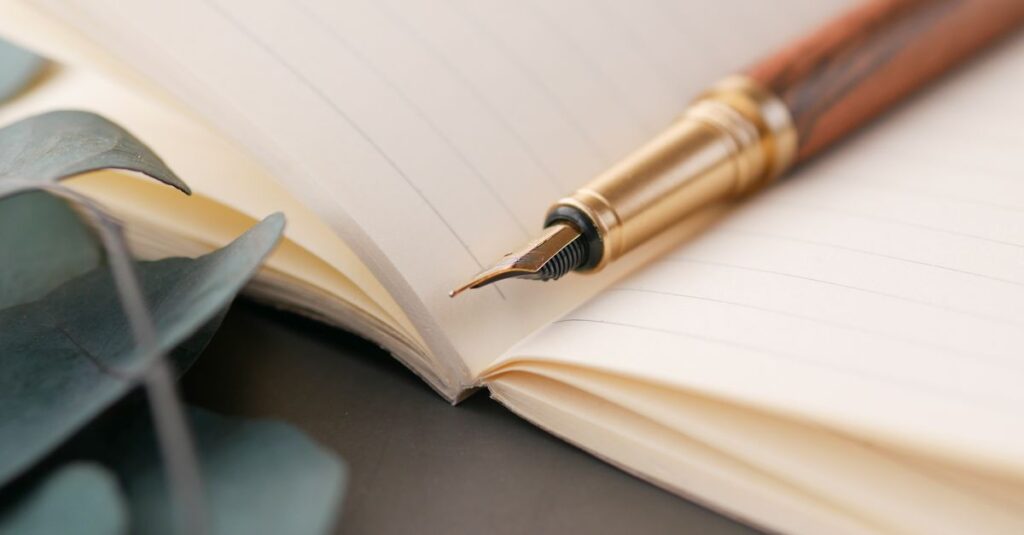
A rough finish makes pens drag. A too-smooth finish (like some art papers) can cause ink to smear before it dries. The sweet spot is a slightly matte, smooth-but-not-glassy surface that accepts ink cleanly and lets the pen glide. This is achieved during the calendaring process in the paper mill — but it’s verified in the notebook factory when we test every batch.
I was talking to a procurement manager from a Hyderabad college last week. He said their previous supplier sent notebooks where the paper felt “fuzzy.” The students complained their pens would catch little fibers. It sounds minor, but it’s a daily annoyance. That’s the level of detail that defines a “notebook with writing.”
Expert Insight
I remember reading a quality manual from a European stationery brand years ago. They had a whole section on “pen acceptance.” They’d test with ballpoint pens, fountain pens, even gel pens. The line that stuck with me was something like: “The paper should feel obedient.” Not demanding. Not resistant. Just ready. That’s the goal. And it’s not about fancy materials; it’s about consistent, controlled manufacturing. Most bulk suppliers skip these tests because they’re time-consuming. Which is why so many bulk notebooks feel… unpredictable.
A Real-Life Moment
Anita, 38, procurement officer for a network of private schools in Bangalore. She’s placing her annual order for 15,000 notebooks. The samples arrive. She opens one, takes a pen from her desk — a regular blue ballpoint. She writes “test” on the first page. The ink flows evenly. She flips the page. No ghosting. She writes on the back. Still clear. She does the same with a gel pen, checks for bleeding. None. She closes the notebook. That’s it. The entire evaluation takes 90 seconds. The supplier gets the order. The one who sent fuzzy paper last year doesn’t even get a call back.
Not Just Paper: How Binding and Layout Affect Writing
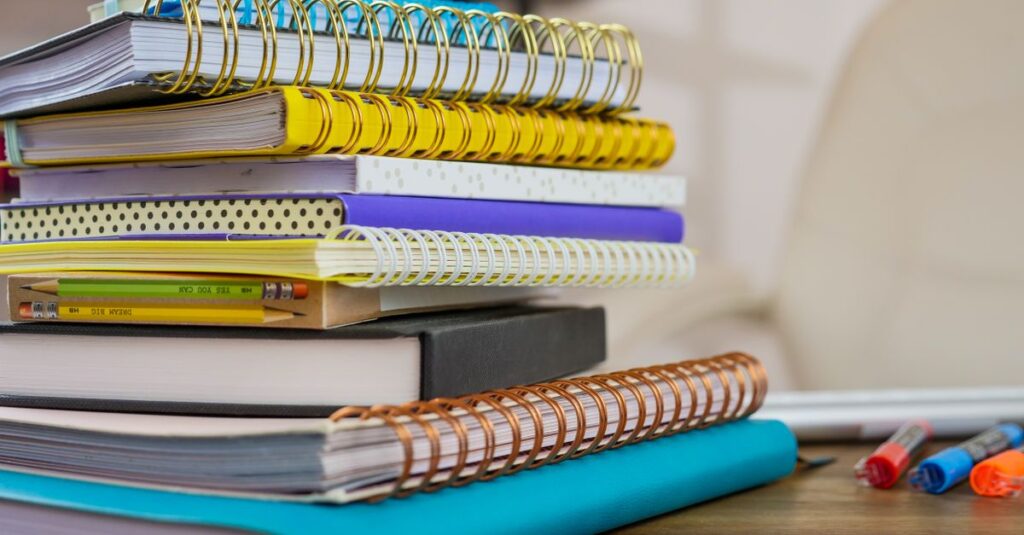
Here’s something most people don’t consider. The binding type changes how you write. A spiral-bound notebook lets you fold pages flat, which is great for writing comfort. A stitched binding might make the notebook more rigid, but it’s more durable for students throwing it in bags. Perfect binding (like a paperback book) looks sleek for corporate diaries but can make it harder to write near the inner margin.
Then there’s ruling. Single ruled (SR) is the standard for most writing. Double ruled (DR) is for accounting. Unruled (UR) for drawing or freeform notes. But the spacing of the lines, the clarity of the print — if the lines are blurry or too faint, it messes with the writing experience. The notebook isn’t just a container. It’s a guide. A bad guide frustrates the user.
And honestly? I think this is where customization matters most. A school might need broad ruled (BR) for younger kids. An office might need a subtle, lighter grey ruling for a premium look. It’s not just a choice. It’s a functional requirement that changes how people use the product. If you’re ordering custom printed notebooks, this is the conversation you need to have with your manufacturer.
Spotting a Good Manufacturer vs. Just a Supplier
Right. This is the practical part. If you’re buying in bulk, you’re probably dealing with a supplier. But are they just a reseller, or do they actually control the manufacturing? The difference shows up in the writing quality.
| Good Manufacturer (Controls Process) | Just a Supplier (Buys & Resells) |
|---|---|
| Can specify paper GSM and finish from the mill | Accepts whatever paper the wholesaler provides |
| Tests every batch with multiple pen types | Maybe checks for obvious tears, not writing feel |
| Offers customization of ruling and layout | Offers only standard catalog products |
| Knows the binding method’s impact on use | Focuses only on binding durability, not writing comfort |
| Will provide samples you can actually test | Sends photos or generic samples |
The table makes it obvious. A manufacturer has a direct line to the paper source and the production line. They can stop a batch if the paper feels wrong. A supplier is often locked into what they’ve already purchased. Your risk is higher.
Look, I’ll be direct. If you’re placing an order for 5,000 notebooks or more, you need to talk to a manufacturer. Not a middleman. The cost might look similar on paper. The failure cost — in reputation, in wasted inventory — is completely different.
Why This Even Matters for Export Orders
If you’re an international buyer sourcing from India — maybe for the Gulf, Africa, or Europe — the paper quality is your first checkpoint. Different markets have different humidity levels, different common pen types (ballpoint vs. fountain pen cultures), even different expectations for how “rough” or “smooth” paper should feel.
A manufacturer who exports regularly knows this. They’ll ask you about the primary pen type used in your region. They’ll adjust the paper finish slightly to match. They’ll maybe even increase the GSM if the local preference is for thicker, more opaque pages. A supplier just ships the same product everywhere. Which is why some export orders get rejected upon arrival.
I think about this a lot. We’ve sent notebooks to the UAE where the preference is for a very smooth, almost silky finish because gel pens are dominant. And to parts of Africa where ballpoints are standard and a more matte, absorbent surface is better. It’s a tiny adjustment. It matters.
The Simple Test You Can Do Before Ordering
Anyway. Where was I. Before you commit to a bulk order, do this. It takes five minutes.
- Get a physical sample. Always.
- Use three pens: a standard ballpoint (like a Reynolds), a gel pen (any brand), and a fountain pen if that’s relevant to your users.
- Write on the front. Check the glide. Is it scratchy?
- Flip the page immediately. See if the ink bleeds through (“ghosting”).
- Write on the back side. Is it still clear?
- Check the inner margin near the binding. Can you write there comfortably?
- Feel the paper edge. Is it consistently cut, or are there rough bits?
That’s it. If the sample passes, you’re probably safe. If it fails, the entire batch will fail. Don’t assume it’ll get better.
Frequently Asked Questions
What GSM paper is best for a notebook with good writing experience?
For most writing purposes — schools, offices, general use — 54 GSM to 70 GSM is the sweet spot. It’s thick enough to prevent bleed-through, thin enough to keep costs practical. The finish is more important than the exact number. A smooth, matte finish will make writing easier than a rough, higher GSM paper.
Does binding type affect how easy it is to write in a notebook?
Yes, absolutely. Spiral binding lets you fold pages flat, giving a completely even surface. Stitched binding is more rigid but often more durable. Perfect binding (like a book) can make writing near the inner margin difficult. For heavy writing, spiral is often the most comfortable.
Can I request a specific paper type for my custom notebook order?
If you’re working directly with a manufacturer, yes. You can specify GSM, finish, and even source. If you’re working with a supplier who doesn’t control production, your options are limited. Always ask: “Can you control the paper specifications?” before placing a custom order.
Why do some notebooks make my pen feel scratchy?
Usually, it’s the paper surface finish. Rough or unevenly calendared paper has tiny fibers that catch the pen tip. It can also be low-quality paper pulp that isn’t uniformly compacted. This is a manufacturing quality issue, not just a “paper type” issue.
Is “writing quality” different for export markets?
Often, yes. Humidity, common pen types, and local preferences change the ideal paper finish. A manufacturer experienced in exports will ask about your market and adjust. A generic supplier will ship the same product everywhere, which can lead to complaints.
Look, at the end of all this, the idea is simple. A “notebook with writing” isn’t a feature. It’s the whole point of the product. If the writing experience is bad, the notebook fails. For a student, it’s frustration. For a corporate team, it’s a poor brand reflection. For you, the buyer, it’s a logistical and financial headache.
The takeaway? Test the paper with a pen. Talk to a manufacturer, not just a supplier. And understand that the smallest detail — the feel of ink on paper — is the biggest measure of quality. I don’t think there’s one universal “best” paper. But there’s definitely a wrong one for your specific need. You probably already know what you’re looking for. You’re just figuring out who can deliver it consistently. Seeing how we handle that might help.