How Commercial Printing Machines Work in Large Factories – A Look Inside
I remember walking into our press room for the first time. The noise hits you. Not loud – a deep rumble. Like something alive. That's what a commercial printing machine sounds like when it's running at full speed. And it's not just noise. It's thousands of sheets moving through rollers, ink transferring at precise moments, paper folding itself into signatures. Most people don't think about how their notebook got made. But if you're here because you order notebooks in bulk – for your school, your company, your client – you should know. Because the process matters. It decides quality, cost, and whether your logo looks sharp or blurry. I'll walk you through exactly how commercial printing machines work in large factories, the way we do it at Sri Rama Notebooks. No fluff. Just what happens inside.
Step One: From File to Plate – The Prepress Hustle
Before any machine touches paper, there's a whole quiet process that happens in a dark room. We take your design – say, a custom cover with your school name and logo – and separate it into four colours: cyan, magenta, yellow, black. That's CMYK. Each colour gets its own aluminium plate. These plates are thin, light, and covered with a photosensitive coating. We expose them using a laser. The laser burns the image onto the plate. The parts that get exposed become water-repellent and attract ink. The rest stays wet and repels ink. That's the science part.
But here's what most people don't realise: the plate is fragile. A fingerprint can ruin it. Dust kills sharpness. So we handle them with gloves. Every time. I've seen new operators try to save time by skipping that step. The result – muddy text, uneven solids. You notice it on the finished notebook. I think the best factories are the ones that care about this invisible work. The prepress room tells you everything about how a factory treats quality.
Offset Printing: Why It's Still the King for Notebooks
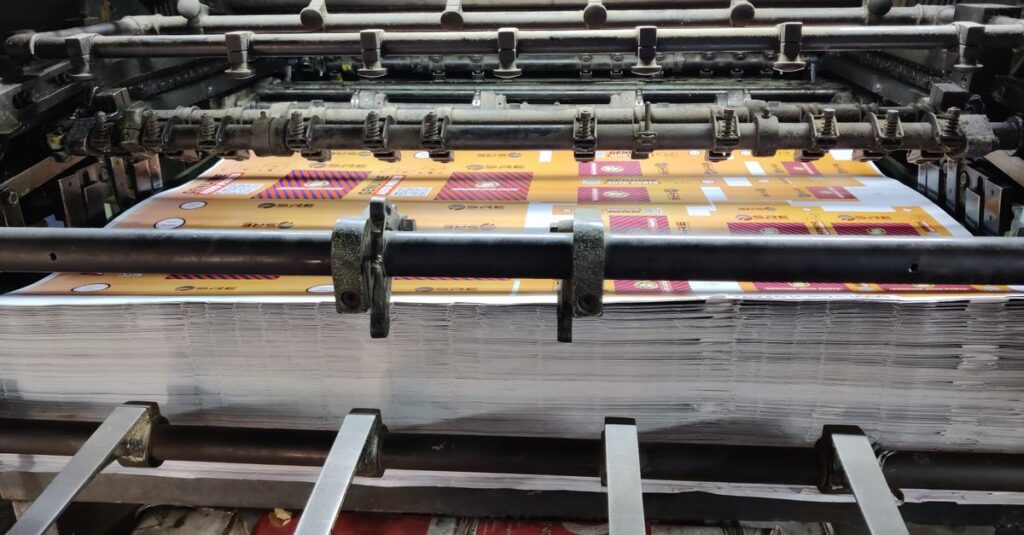
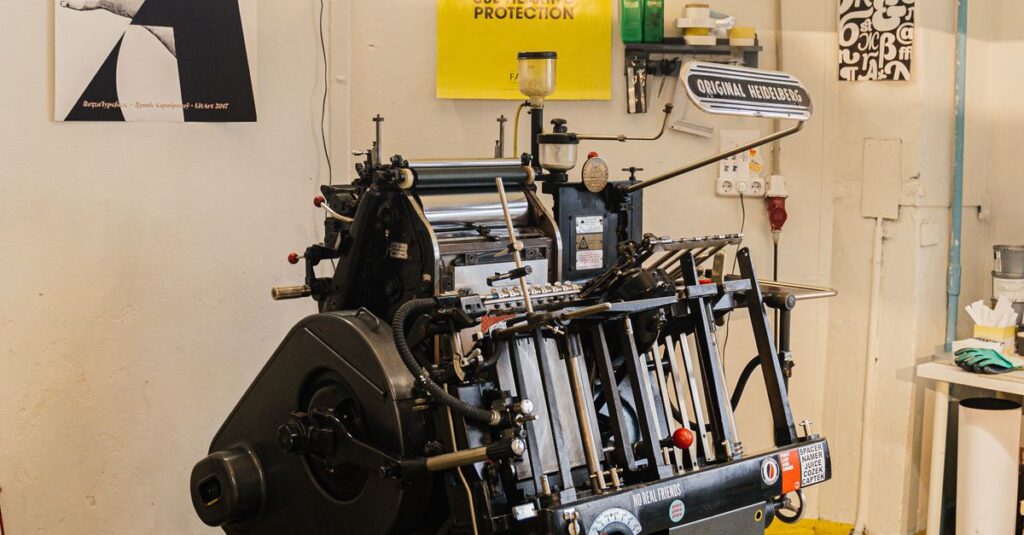
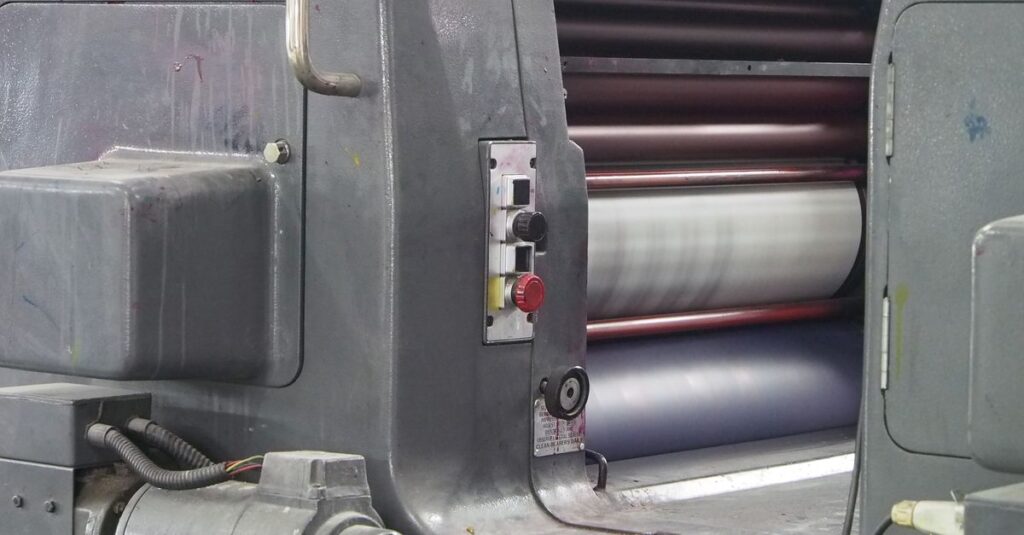
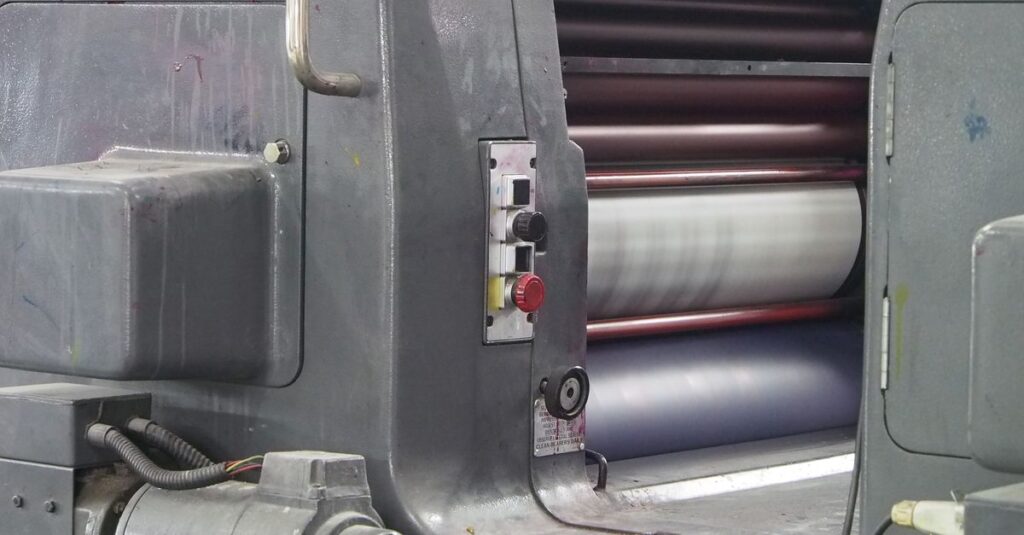
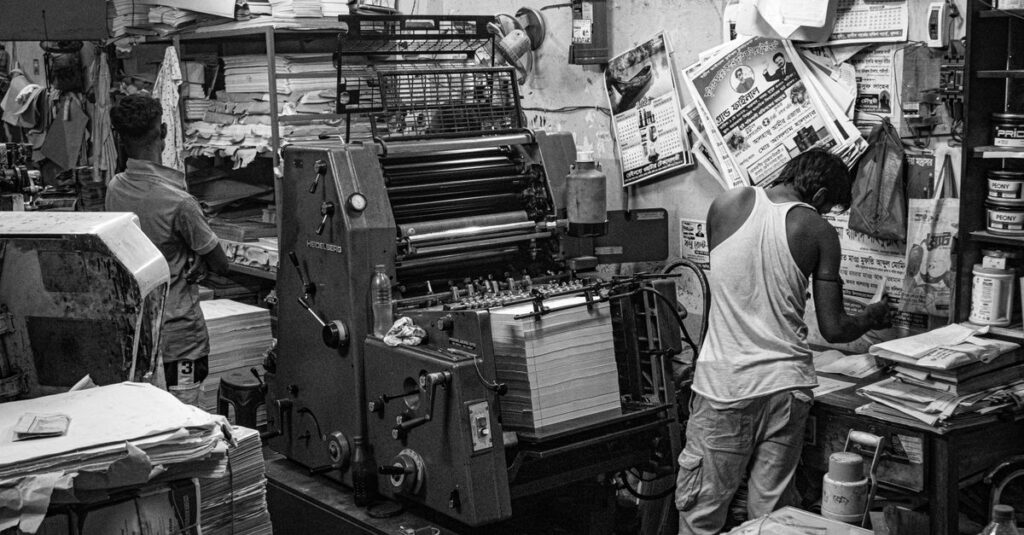
Right. Once the plates are ready, they go onto the press. Most large factories use offset lithography. Not digital. Offset printing is the workhorse. Here's why: it's fast, consistent, and the inks are high-quality. The machine has a series of cylinders. The plate cylinder holds the plate. The blanket cylinder takes the ink from the plate and transfers it to the paper. The impression cylinder pushes the paper against the blanket. That's the kiss – the moment ink meets paper. It's not a hard smash. It's a gentle pressure. The paper comes out wet but controlled. In our factory, we use both sheet-fed and web presses. And that brings me to the next question.
Web vs Sheet-Fed Offset Printing
Not all commercial printing machines work the same. The most common difference: does the paper come in sheets or in a continuous roll? For notebooks, we use both. Here's a quick comparison that might help when you're talking to a supplier.
| Feature | Sheet-Fed Offset | Web Offset |
|---|---|---|
| Paper input | Individual sheets (pre-cut) | Continuous roll (like a giant toilet paper) |
| Speed | Moderate – up to 15,000 sheets/hr | Very fast – up to 50,000 impressions/hr |
| Best for | Short runs, custom sizes, thick paper | Long runs, thin paper (newsprint, notebook interiors) |
| Setup time | Short | Longer – but worth it for volume |
| Color accuracy | Excellent – more control per sheet | Good – but less forgiving |
| Typical use at our factory | Custom covers, small batch diaries | Bulk notebook inner pages (32,000+ sheets) |
So which one is better? Depends. If you need 5,000 notebooks with a full-colour cover and some custom pages, sheet-fed gives you more flexibility. If you're ordering 50,000 account books with just ruled lines? Web press. No question. The cost difference is real.
Drying, Cutting, and Folding – The Less Glamorous Part
Ink comes off the press wet. You can't stack sheets on top of each other right away. They'd stick together. Smudge. Ruin the job. So the paper goes through a drying tunnel. Some machines use hot air, some use infrared, some use a combination. Drying time depends on the ink and paper. Thicker coated paper takes longer. Thin uncoated paper dries almost instantly.
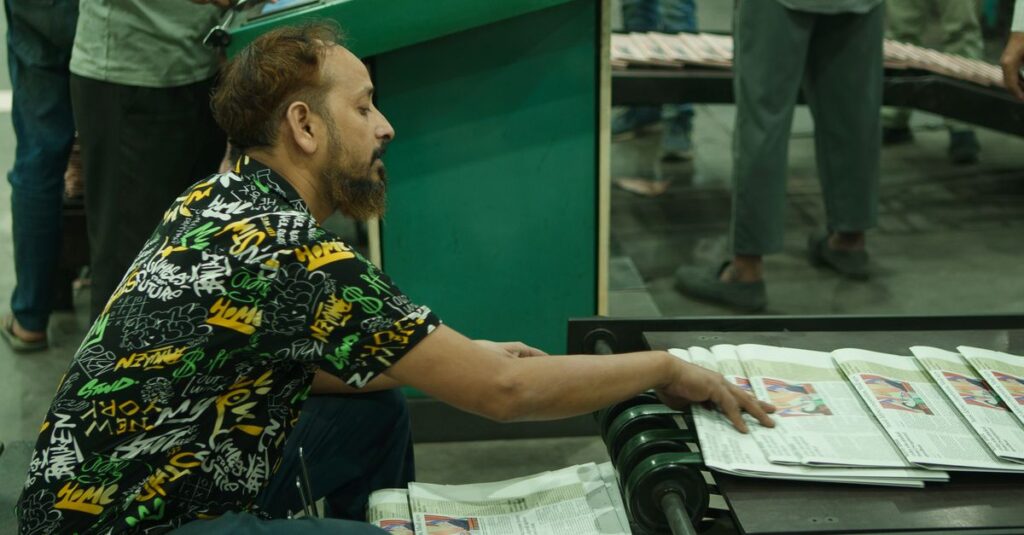
Then the printed sheets go to the cutting and folding department. For notebooks, we cut the big printed sheets into smaller sections. We fold them into signatures – a group of pages that will become the inner book block. Each signature is typically 16 or 32 pages. Then we gather them in order. This is where things can go wrong if the machine is misaligned. One skipped fold and you have a notebook with pages out of order. I've seen it happen. The operator catches it, resets the feeder, and we check the previous stack. But it costs time. That's why we run a test every time we change the job. Slows things down but saves headaches later.
Expert Insight
I was talking to our press supervisor last month – Ramesh, who's been running these machines since 1993. He told me something I keep thinking about. He said, “The machine only does what you set it to. But every job has a personality. Some papers behave. Some fight you. You learn to read the vibration.” I don't think that's poetic. I think it's true. The best press operators feel when something is off before anyone sees it. It's a real skill that no automation can replace.
Quality Control: Catching Mistakes Before They Multiply
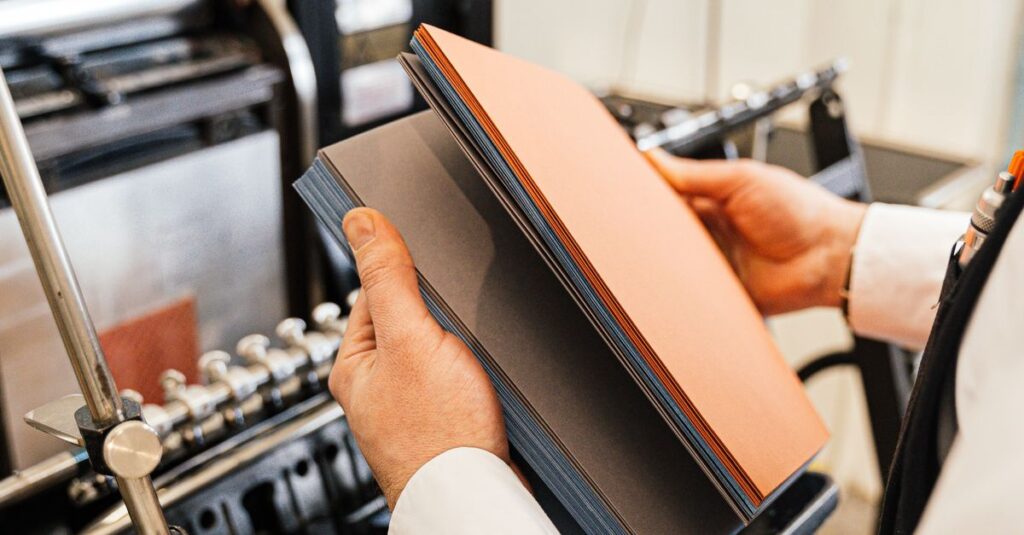
Here's a micro-story. Sunil, 42, quality inspector at our factory in Rajahmundry. He's been here 19 years. Every morning he walks the same route: from the paper storage to the press room to the binding line. He doesn't wear gloves – he likes to touch the paper. He says you can feel the difference between 54 GSM and 60 GSM. I believe him. One Wednesday two months ago, he stopped a run of 10,000 sheets because the magenta looked slightly pink. Not wrong, just off. He made the operator adjust the ink setting by 2%. Nobody else noticed. That's the kind of mistake that becomes a problem only when the notebook is in someone's hand. And by then, it's too late.
So how do we prevent that? We check the first sheet out of every plate change. We measure colour with a spectrophotometer. We compare it to the approved proof. If it's within tolerance, we go ahead. If not, we adjust. And we pull random samples from the stack during the run. Every 500 sheets. Not every 1000. I know that adds time. But it's worth it. Because a bad print job doesn't just waste paper – it breaks trust. And for a company like ours that's been printing notebooks since 1985, trust is everything.
Why Custom Printing for Notebooks Is Different
Commercial printing is used for everything – magazines, brochures, packaging. But notebooks are their own beast. The paper has to take ink well but also be good for writing with a pen later. The covers need to withstand bending. The inside pages need to lie flat when the notebook is open. That requires specific tension during the printing and binding. A magazine folds once and gets stapled. A notebook gets stitched and glued. The printing machine has to account for the extra thickness during folding.
And when you add custom elements like foil stamping, embossing, or a full-bleed logo, it gets even more complicated. We run those jobs on separate machines but the coordination has to be perfect. Trust me – a foil stamp that's 2mm off centre looks like a mistake. And you don't want that on your branded diaries.
But if you're thinking of ordering custom notebooks, don't be afraid to ask your printer about their process. A good factory will talk you through it. At Sri Rama Notebooks, we show visitors the press room. Because how the machine works tells you everything about how seriously they take quality.
Frequently Asked Questions
How fast do commercial printing machines run?
Sheet-fed offset presses typically run 10,000 to 15,000 sheets per hour. Web offset presses can reach 50,000 or more. Speed depends on paper thickness, ink coverage, and finishing steps.
What's the difference between offset and digital printing for large factories?
Offset uses plates and is best for high volume – lower per-unit cost above 1,000 copies. Digital doesn't need plates and works well for short runs or variable data. For notebooks, offset is standard for bulk orders.
How do printing machines handle different paper sizes?
Sheet-fed presses have adjustable guides and grippers to handle sizes from A5 to SRA1. Web presses use fixed roll widths but different cut-off lengths. Factories set up the machine per job.
Can commercial printing machines print on both sides at once?
Yes – most modern sheet-fed and web presses have a perfecting unit that flips the sheet or uses two blanket cylinders to print both sides in one pass. That saves time and improves registration.
How do factories ensure colour consistency during long runs?
They use colour measurement systems that scan the printed sheet and compare to the approved proof. Press operators make real-time adjustments to ink flow. Good maintenance of rollers and plates is crucial.
Wrapping Up – What You Should Take Away
Two things. First, how commercial printing machines work in large factories isn't just technical trivia – it affects the cost, quality, and turnaround of your notebook order. Second, the machine is only as good as the people running it and the protocols they follow. I've seen expensive presses produce bad work because the team cut corners. And I've seen older machines run flawlessly because the operators cared. So when you choose a supplier, ask about their process. Visit if you can. Or at least ask them to explain how they handle prepress and colour control. I don't have a clean answer for which printing technology is always best. It depends on your job. But if you want to see how we do it – at a factory that's been doing this since 1985 – feel free to get in touch via our site.