What Is a 4 Ruled Notebook?
You've seen them. Those notebooks with four lines instead of the usual one or two. They look a bit strange at first — like someone overcomplicated a simple thing. But they're not weird. They're deliberate.
A 4 ruled notebook is exactly what it sounds like: a notebook where each horizontal line has four parallel lines running across the page. The space between them is narrow. And it's almost always used by one specific group of people: children who are learning to write.
I remember the first time I saw one of these. I was at a school exhibition in Rajahmundry, maybe ten years ago. A teacher was explaining to a parent why her son's handwriting looked messy. She pulled out a 4 ruled notebook and said, “This is what he needs.” And the parent nodded like it made sense. Honestly, I didn't get it at first. But I do now.
The concept is simple — the bottom two lines are solid, the top two are dotted. Each letter has a specific zone it sits in. Ascenders go up to the top line. Descenders drop below the baseline. The middle dotted line tells you where small letters stop. It's a guide. Training wheels for your hand.
If you're buying notebooks for a school or a young child, this matters. You can check out Sri Rama Notebooks for bulk orders.
Who Actually Uses a 4 Ruled Notebook?
Short answer: kids. Mostly between the ages of 5 and 8. But that's not the whole story.
Schools and Teachers
Government schools in India — especially in Andhra Pradesh — have been prescribing this ruling for decades. I've spoken to teachers in Kakinada, Visakhapatnam, and even some smaller towns near Rajahmundry. They all say the same thing: a 4 ruled notebook is the only way to teach lowercase English letters properly.
The reason is simple. When a child writes the letter 'b', the stem has to touch the top dotted line. The bowl stays between the middle and bottom lines. Without those visual cues, kids end up writing letters that look like random shapes. The 4 ruled notebook gives them a map.
Parents at Home
Here's a micro-story. Kavitha, 34, lives in Rajahmundry with her husband and two kids. Her son Arjun is six. Last year, his handwriting was all over the place. She tried everything — tracing books, YouTube videos, even those expensive handwriting apps. Nothing worked. Then her sister, who teaches at a school in Kakinada, told her to switch to a 4 ruled notebook. Within two months, Arjun's letters were legible. Not perfect, but readable. Kavitha told me, “I never knew a notebook could make that much difference.” And honestly, most people don't.
Coaching Centers and Tutorials
I've seen them used in handwriting improvement classes too. Adults, believe it or not. I once met a college student who picked up a 4 ruled notebook to fix his own handwriting before job interviews. He said it felt embarrassing at first, but it worked. That says something.
The user base is broader than you'd think. But the core remains the same: anyone who needs to build or fix handwriting fundamentals.
4 Ruled Notebook vs. Other Rulings
Let's get into the comparison. Because not all rulings are the same, and picking the wrong one can cause problems.
| Ruling Type | Lines Per Set | Primary User | Purpose |
|---|---|---|---|
| Single Ruled (SR) | One solid line | College students, adults | General writing, notes |
| Double Ruled (DR) | Two lines (solid + dotted) | Early writers, age 4–5 | Basic letter size control |
| 4 Ruled (FR) | Four lines (2 solid + 2 dotted) | Ages 5–8, handwriting practice | Ascender/descender control |
| Broad Ruled (BR) | One solid line, wider spacing | Beginners, large handwriting | Space for big letters |
| Cross Ruled (CR) | Vertical + horizontal grid | Math, engineering, graphs | Charts, equations, diagrams |
The 4 ruled notebook sits in a specific spot. It's not for everyone. But for the people who need it, nothing else works the same.
One thing I've noticed — schools sometimes try to skip from double ruled straight to single ruled. That's a mistake. Kids need the intermediate step. Four lines give them a structure they can internalize until they don't need it anymore. It's like training wheels. You wouldn't take them off before the child is ready.
At least in my experience, teachers who push kids too fast into single ruled notebooks end up with messy handwriting that takes years to correct. If that sounds like a problem you're dealing with, consider switching to 4 ruled for a term. See what happens.
What to Look for When Buying a 4 Ruled Notebook in Bulk
If you're a school administrator, a distributor, or a procurement manager, here's what I've learned from working with institutions over the years.
Paper Quality
Don't go below 54 GSM for writing paper. I've seen thinner paper used in some cheap notebooks — the ink bleeds through so badly you can't use the back of the page. A 4 ruled notebook is meant for practice, and practice means writing on both sides.
Binding Strength
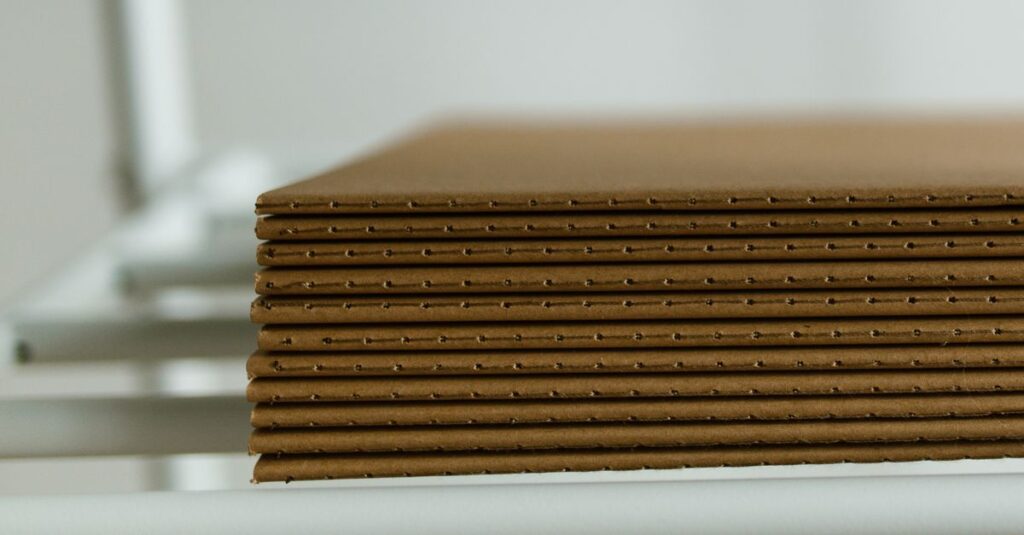
Kids are rough with notebooks. They drop them, shove them in bags, fold them in half. A stitched binding holds up better than spiral or perfect binding for this age group. I've seen spiral bindings get pulled apart in a month. Stitched lasts the whole year.
Cover Durability
Thick covers — 250 GSM or more. Kids don't use bookmarks. The cover takes the abuse.
Ruling Clarity
This is the biggest one. The four lines need to be printed clearly enough that the child can see them, but not so dark that they distract from the writing. Some manufacturers print them too faintly. That defeats the purpose.
I once visited a school where the kids were using 4 ruled notebooks from three different suppliers. The difference in line visibility was shocking. Two of them were practically useless. The third one was from a local printer who knew what he was doing. That printer? Not us, unfortunately. But we learned from that visit.
Now at Sri Rama Notebooks, we make sure the ruling is consistent across every page. It sounds basic, but you'd be surprised how many manufacturers get it wrong.
Expert Insight
I was talking to a retired headmaster from a government school near Rajahmundry. He told me something I haven't forgotten. He said the 4 ruled notebook isn't just about handwriting. It's about discipline. When a child learns to keep letters inside the lines, they're learning to follow a structure. He said, “The notebook teaches them that rules exist for a reason.” I don't know if I'd go that far. But I think about it every time I see a stack of these notebooks.
Common Mistakes People Make with 4 Ruled Notebooks
I've been around long enough to see patterns. Here are the three biggest mistakes I've observed.
- Using them too late. Some schools introduce 4 ruled notebooks in class 2 or 3. By then, the child has already developed bad handwriting habits. The right time is class 1 — age 5 or 6.
- Assuming the child will figure it out. A 4 ruled notebook needs to be explained. The teacher or parent needs to show the child what each line means. Otherwise it's just confusing lines on a page.
- Switching to single ruled too early. I've seen kids moved to single ruled after just one term. It takes at least two terms — sometimes a full year — for the muscle memory to stick.
There's a fourth one, but I'm not sure it counts as a mistake. Some schools don't use them at all. They jump straight to single ruled and hope for the best. It works for some kids. But the ones who struggle — they fall through the cracks. And a 4 ruled notebook could have helped.
Anyway. That's a separate conversation.
Frequently Asked Questions
Frequently Asked Questions
What age group is a 4 ruled notebook for?
Generally ages 5 to 8, or classes 1 to 3. Some older children with handwriting difficulties also use them. The notebook helps teach correct letter formation and size consistency.
How is a 4 ruled notebook different from a double ruled notebook?
A double ruled notebook has two lines — one solid and one dotted. A 4 ruled notebook has four lines — two solid and two dotted. The extra lines help children control ascenders and descenders in lowercase letters.
Can adults use a 4 ruled notebook for handwriting improvement?
Yes. While it's primarily designed for children, adults who want to improve their handwriting often use 4 ruled notebooks. The structure helps rebuild muscle memory for proper letter formation.
What paper GSM is best for a 4 ruled notebook?
At least 54 GSM. Thinner paper causes ink bleed-through, which makes the back of the page unusable. For a practice notebook, both sides matter. We recommend 54 to 60 GSM for the best balance.
Where can I buy 4 ruled notebooks in bulk for my school?
You can order directly from manufacturers like Sri Rama Notebooks. We've been manufacturing notebooks since 1985 and supply schools, distributors, and institutions across India and internationally. Call us at +91-8522818651 for bulk pricing.
Conclusion
A 4 ruled notebook isn't complicated. It's four lines on a page. But those four lines make a real difference for young writers who are still learning to control their hands. If you're buying for a school or a child, it's worth getting the right one — clear ruling, good paper, strong binding. That's really all there is to it.
I don't think every child needs one forever. But at the right age, with the right guidance, a 4 ruled notebook can turn frustration into progress. And that's not a small thing.
If you're looking to place a bulk order or want to know more, check out Sri Rama Notebooks. We've been at this since 1985, and we know what works.