You're probably thinking it should be easier than this.
You need notebooks. Branded ones. Or maybe just a specific size and ruling for your school. And you typed in ‘print books online’ expecting a quick click, upload, and order. Right? Then you get hit with a dozen different terms: GSM, binding types, MOQs, lead times. It feels less like shopping and more like learning a new language. I get it. You're not a printer. You're a procurement manager, a school administrator, a business owner. You just need the thing. If this sounds familiar, this might be worth a look.
What ‘Print Books Online’ Really Means (It’s Not What You Think)
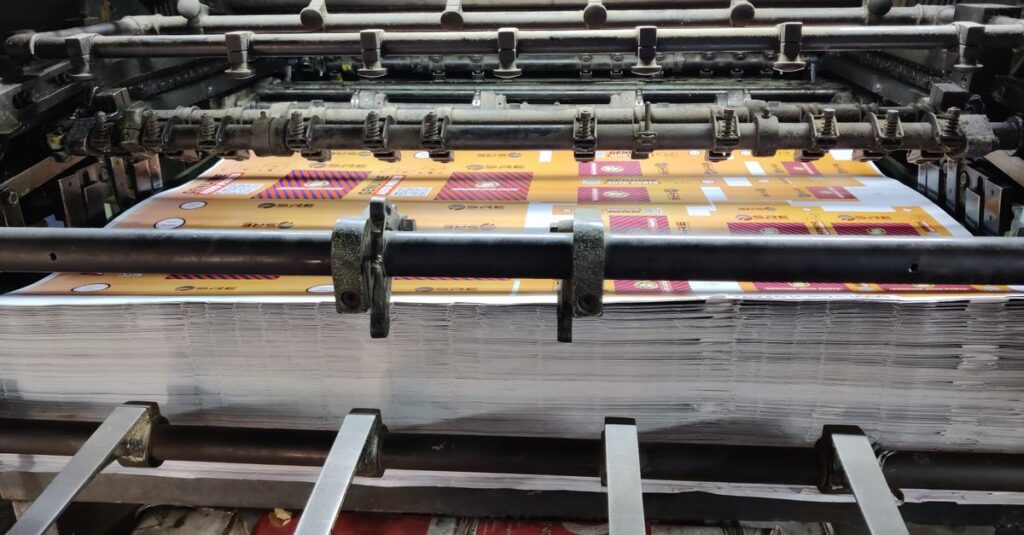
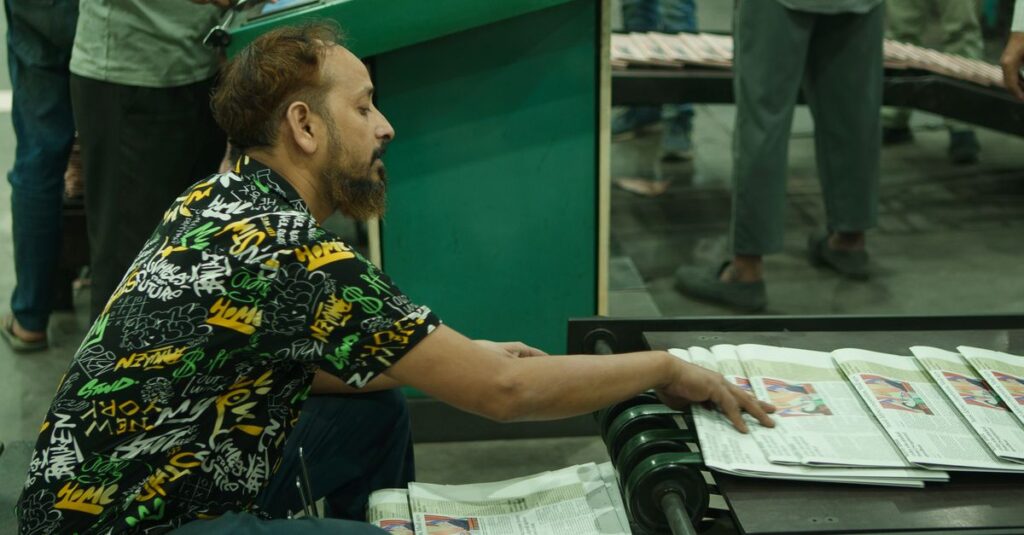
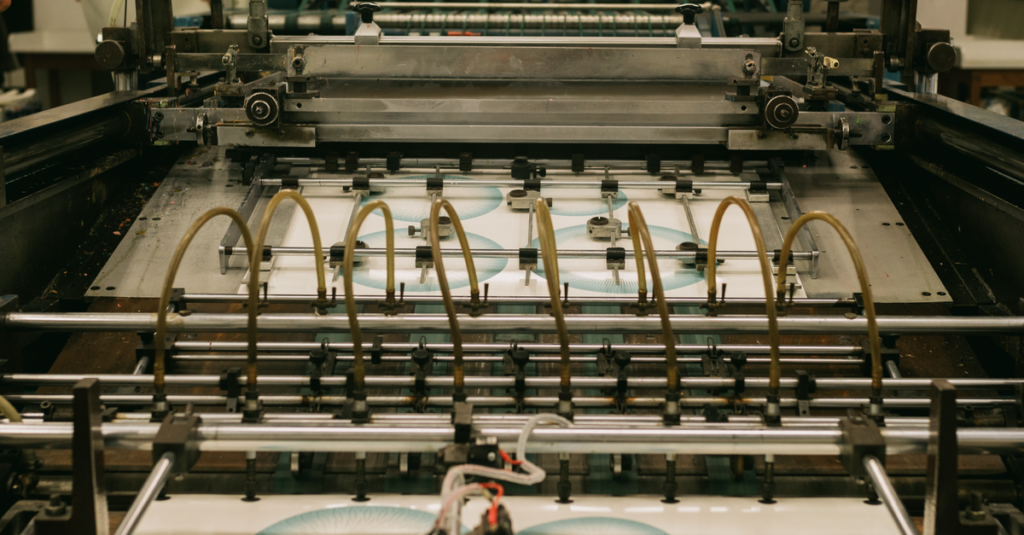
Here's the thing. When you search that phrase, you're not looking for Amazon. You're looking for a manufacturer. The process isn't digital printing a PDF. It's commercial, bulk production. You're dealing with paper rolls, binding machines, and shipping pallets. The ‘online’ part is just the start — the quote request, the spec sheet upload, the back-and-forth emails to get everything exactly right before it hits the factory floor. Most people don't realize the gap between their mental image and the industrial reality. Which leads to the first big headache: specs that don't match expectations.
Expert Insight
I was talking to a client last week — a university admin from Hyderabad — and she said something that stuck with me. She'd ordered ‘A4 notebooks’ from a different supplier and got loose-leaf pads. The supplier wasn't wrong, technically. But in her world, ‘A4 notebook’ meant bound, stitched, ready for students. The more capable someone is at their job, the harder it becomes to remember that the other side might be speaking a completely different technical language. I don't have a cleaner way to put it than that.
The Real-Life Decision: Custom vs. Stock
Let's say you're Priya, 42, a procurement manager for a mid-sized tech firm in Bangalore. You need 5000 branded notebooks for a quarterly conference. You have the logo. You have a budget. And you have two weeks. The immediate thought is to find a stock notebook and slap the logo on it. Faster, cheaper. But then you get the samples — the cover material feels flimsy, the company blue isn't quite your company blue, and the pages are too thin for the fancy pens you're giving out. The compromise starts to feel like a mistake. You stare at the sample on your desk next to your coffee mug. It just looks… cheap. And you know the attendees will notice.
That moment — the sample on the desk — is where most orders either get signed off with regret or get sent back to the drawing board. The cost of ‘fast and easy’ isn't in the invoice. It's in the silent judgment of the people who actually use the thing. Which brings us to the core of it all: paper.
Paper Weight (GSM) Isn't Just a Number. It's a Feeling.
You'll see 54 GSM, 70 GSM, 100 GSM. It sounds technical. It is. But translate it: 54 GSM is your standard school notebook paper. It works. It's practical. 70 GSM starts to feel substantial — no bleed-through with a ballpoint, a nice crisp turn of the page. 100 GSM? That's premium. That's the notebook you give to a keynote speaker or a top client. The choice here isn't about quality levels. It's about intention. What are you trying to say with this object? ‘We saved 15% on stationery’ or ‘We pay attention to the details you touch’? I think you know the answer. Most corporate buyers do. They just need permission to go for the thicker paper.
Binding: The Hinge That Makes or Breaks Everything
This is the part nobody talks about until it fails. A notebook can have beautiful paper and a stunning cover, but if the binding gives out after a month, the whole thing is trash. There are three main types you need to know:
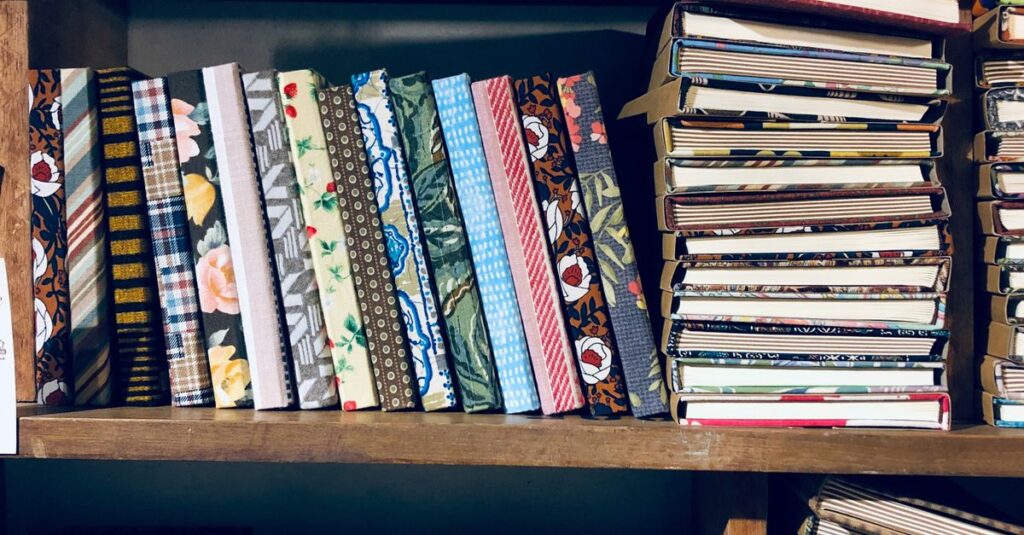
- Stitched Binding: The classic. Thread-sewn signatures. Lies flat. Durable as hell. This is what you want for heavy-use notebooks — account books, student workbooks, daily journals. It feels permanent.
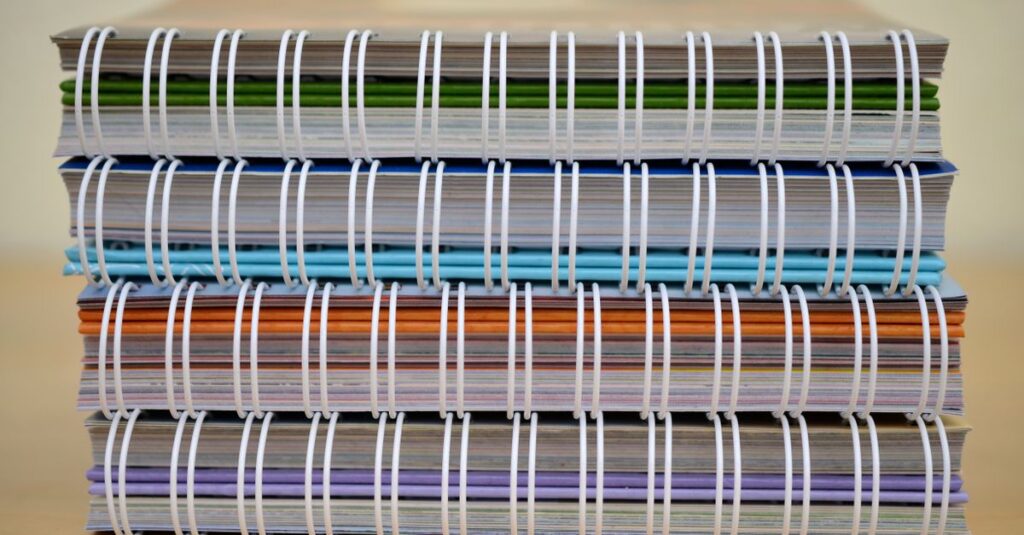
- Spiral Binding: The metal or plastic coil. Flips all the way around. Great for manuals, sketchbooks, anything that needs to lay completely flat. The downside? It can get bent in transit if not packed right.
- Perfect Binding: That glued spine you see on paperback books. Clean, professional look. Excellent for corporate diaries or presentation notebooks. Not meant for brutal, daily abuse, but for a boardroom table? Perfect.
The choice isn't about good or bad. It's about life expectancy. How many times does this need to open and close before its job is done?
| Feature | Stitched Binding | Spiral Binding |
|---|---|---|
| Best For | Heavy daily use (student notebooks, logbooks) | Laying completely flat (manuals, art books) |
| Durability | Very High – withstands frequent handling | Moderate – coils can bend, pages can tear at holes |
| Cost | Generally lower for high-volume runs | Slightly higher due to coil & punching step |
| Professional Look | Traditional, trusted | Functional, sometimes perceived as less formal |
| Customization | Easy to print on spine and cover | Cover only; spine not visible |
Navigating the Quote: MOQs, Lead Times, and The Fine Print
Okay, let's be direct. You're going to get a quote. And three numbers will jump out: the price per unit, the Minimum Order Quantity (MOQ), and the production lead time. Here's what they don't always say clearly. The MOQ isn't a arbitrary rule. For a truly custom job — custom size, custom paper, custom ruling — the machine setup time is the same whether you make 1000 or 5000. The unit price drops sharply after the MOQ because you're spreading that fixed cost. Asking for 500 units at a 5000-unit MOQ price isn't haggling. It's asking the factory to lose money. And lead time? That clock starts after final artwork approval, not the day you first email. That approval lag is where most delays happen. Clients tweak, committees review, logos get updated. The factory floor is waiting. Anyway.
If you want to understand the full scope of what's possible, seeing the standard product range can give you a solid baseline to build your custom idea from.
The Unspoken Rule of Custom Manufacturing: Trust Your Sample
Never, ever, skip the physical sample stage. Ever. Colors on your screen are lies. Paper feel is a myth until you touch it. The sample is your one chance to catch the ‘almost right’ before it becomes 10,000 ‘wrongs’ sitting in your warehouse. Pay for the expedited sample shipping if you have to. Hold it. Write in it. Throw it in your bag for a day. Does the cover scuff immediately? Does the binding crack when you force it? This isn't a quality check. It's a reality check. And honestly? A good manufacturer wants you to do this. It saves everyone the nightmare of a rejected shipment. It builds the trust that lets you place the second, bigger order without a second thought.
Frequently Asked Questions
What is the minimum order quantity for printing custom notebooks?
It varies wildly. For a simple logo print on a standard notebook, MOQs can start at 500-1000 pieces. For fully custom notebooks (size, paper, ruling, cover), expect MOQs of 3000-5000 units. The more unique your specs, the higher the MOQ tends to be to make the production run viable for the manufacturer.
How long does it take to print and ship custom notebooks?
From final artwork approval, allow 4-6 weeks for production and sea freight for international orders. Domestic shipping within India can be 2-3 weeks. Rush jobs are possible but expensive — you're paying to jump the queue and often for air freight, which can triple shipping costs.
Can you match a specific brand color on the notebook cover?
Yes, but you need to provide the Pantone (PMS) code. Saying “corporate blue” isn't enough. Different printing methods (offset vs. digital) and materials (paper vs. leatherette) will show color slightly differently. A physical proof on the actual cover material is the only way to be sure.
What file format do you need for printing logos?
Vector files are king. Send .AI, .EPS, or high-resolution .PDF files. A .JPG from your website header will look pixelated and blurry when printed. If you only have a low-res logo, any good printer will tell you upfront and may charge for a designer to recreate it as a vector.
Do you handle all the shipping and customs for exports?
A full-service manufacturer should. They arrange the freight, prepare the commercial invoice, packing list, and certificate of origin. You handle the import clearance and duties at your port. Always clarify who is responsible for what under Incoterms like FOB (Free on Board) or CIF (Cost, Insurance, and Freight).
Look, you already know what you need.
The process of learning how to print books online isn't about finding a website with an ‘Add to Cart’ button. It's about finding a partner who translates your needs — a durable product, a professional look, a smooth handover — into physical objects, consistently. The details matter because they're the only thing the end-user will ever see. I don't think there's one perfect manufacturer out there. Probably there isn't. But if you've read this far, you're not just price-shopping. You're looking for someone who gets it. The question isn't whether you need custom notebooks. It's whether you're ready to work with someone who builds them like they matter.
If you want to cut through the jargon and talk specs directly, you can start that conversation here.