Let's Get Real About the Money
Okay. Here's the thing — every buyer looking up the price for printing notebooks online is thinking the same question. Why is the number I get from one company so wildly different from another? And the quote you just got on WhatsApp, is that the real price or just the starting point? If you're a procurement manager trying to budget for next semester's school notebooks, or an office admin sourcing branded corporate diaries, you know this headache. You need a real, solid number that doesn't turn into a 'plus taxes, plus this, plus that' surprise later. I've been in this business for a long time, and the biggest complaint I hear isn't about quality. It's about the guessing game with the final bill. If that sounds like you, it's worth taking a different approach.
The Four Pillars That Decide Your Price for Printing
Right. Let's break it down. When you ask for a quote, there are four main things we (and any decent manufacturer) look at immediately. Forget the mystery. These are the real levers that move the cost up or down. And they all talk to each other. You can't change one without affecting another — which is where the price variations come from.
Paper: The Foundation
This is the single biggest chunk of your total cost. The price for printing a notebook isn't really about the ink — it's about the paper you put it on. Three things matter here: Weight, Whiteness, and Origin. Most standard notebooks use 54 GSM paper. It works. It's smooth enough, and it won't bleed through. Want thicker, more premium-feeling pages? Jump to 70 GSM or 80 GSM. The price jumps too, obviously. Then there's whiteness. Brighter, whiter paper gives better contrast for print, but it costs more. And where it's sourced from — domestic mills versus imported stock — adds another layer. So when you get a suspiciously low quote, the first question should be: What GSM paper is this based on?
Quantity: The Volume Game
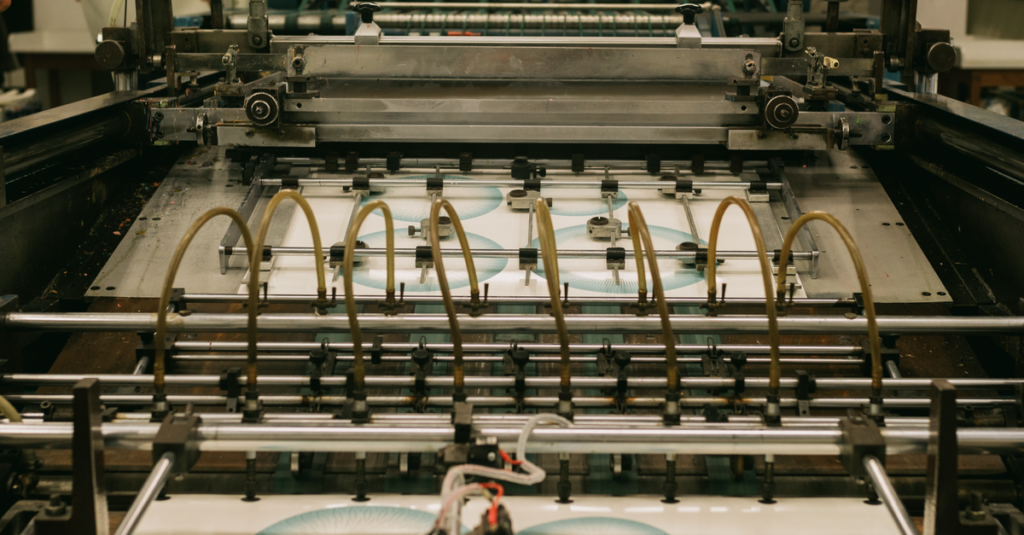
Look, I'll be direct. The price for printing 500 custom notebooks versus printing 50,000 is a completely different conversation. At low volumes, the setup cost — preparing the printing plates, aligning the machines for your specific design — is spread over fewer items. The unit cost is high. At high volumes, that setup cost gets diluted into nothing. The machines run for longer without stopping, the paper is bought in truckloads, and the binding line is optimized. That's where the real savings kick in. This is why bulk orders for schools or corporate giveaways get the best rates. The machine is already humming. Adding another ten thousand just makes the hum more efficient.
Anyway. Where was I.
Customization: Your Brand on the Page
This is where it gets interesting. A plain, single-color cover is cheap to print. Your full-color logo with a complex design, a unique spot UV coating, or foil stamping? That's a different machine, different setup, different skill. Every extra color, every special finish, every deviation from a standard layout adds to the price for printing. But — and this is the crucial part — it also adds perceived value. A cheap-looking notebook with your company logo does more damage than good. The goal is to find the sweet spot: customization that looks premium without blowing the budget on gimmicks you don't need. Simple, clean, and professional often costs less than you think.
Binding & Finishing: The Final Touch
The notebook has to hold together. Stitched binding is the classic, durable workhorse. Spiral binding lets it lie flat, perfect for artists or meeting notes. Perfect binding gives that sleek, book-like feel for corporate annual reports. Each has a different cost. Stitching is generally the most cost-effective for bulk. Spiral adds the cost of the coil and the punching process. Perfect binding needs more precise trimming and glue. Then there's finishing: rounded corners, special edge painting, ribbon markers. These are the 'extras' that turn a functional item into a branded gift. They cost more, but sometimes, they're the whole point.
The Hidden Costs Most People Forget
Here's what doesn't show up in the initial 'per notebook' quote, but will definitely show up on your final invoice if you're not careful. I see companies get tripped up by this all the time.
- Plate Charges: For offset printing (the best quality for large runs), you need a physical metal plate for each color. If your design has four colors (CMYK), that's four plates. That's a one-time cost, but if your order is small, it hurts.
- Proofing: You want to see a sample before we print 20,000 units, right? Good. That sample costs money and time to produce. A digital proof is cheaper. A physical, hand-bound dummy notebook is more expensive but saves you from a catastrophic misprint.
- Packaging: Are the notebooks shipped loose in a carton? Or individually shrink-wrapped? Or in boxes of ten? Each layer of packaging adds cost, but also protects your investment during shipping.
- Delivery & Logistics: This is the big one. Rajahmundry to Delhi is a different price than Rajahmundry to Hyderabad. Export to the Gulf or Africa adds customs, documentation, and sea freight into the mix. The price for printing is one thing. The price to get it to your warehouse is another.
I was talking to a procurement manager from a Bangalore tech firm last month — over a terrible Zoom connection, actually — and he said his last supplier had 'forgotten' to include palletizing charges. Added 12% to the bill at the last minute. Don't let that be you. Ask for an all-inclusive quote.
Bulk vs. Custom: A Quick Cost Comparison
Let's make this visual. Say you need notebooks for a nationwide school program versus a luxury conference gift. How do the costs stack up? Here's a rough breakdown to show where the money goes. These aren't exact quotes — every project is unique — but it shows the relationship.
| Cost Factor | Bulk School Notebooks (50,000 units) | Custom Branded Diaries (1,000 units) |
|---|---|---|
| Paper (per unit) | Low (Standard 54 GSM) | High (Premium 80+ GSM) |
| Printing (per unit) | Very Low (High-volume offset) | Moderate to High (Lower volume, more colors) |
| Setup/Plate Charges | Negligible (Amortized over huge quantity) | Significant (Major portion of unit cost) |
| Binding (per unit) | Low (Stitched) | Higher (Spiral or Perfect bound) |
| Customization | Minimal (Maybe school crest) | High (Full-color logo, special finishes) |
| Primary Cost Driver | Pure Quantity | Complexity & Setup |
See the pattern? For bulk, you're buying efficiency. For custom, you're buying flexibility and brand expression. One isn't better than the other — you just need to know which game you're playing. And if you're stuck between the two, talking to someone who does both can help you find a middle path.
A Real-Life Snapshot: How a Quote Comes Together
Let me give you a micro-story. Not a case study — just a real snapshot. Meet Arjun, 38, procurement lead for a chain of coaching institutes across Tamil Nadu. He needs 15,000 notebooks for the new academic year. Standard A4 size, 200 pages, single-ruled. But he also wants the institute's logo and motto on the cover. Two colors. That's it. He emailed five suppliers. The quotes ranged from ₹18 to ₹32 per notebook. Wild, right?
The ₹18 quote? 52 GSM paper, not 200 pages. The ₹32 quote? Included fancy lamination he didn't ask for. The quote he went with was ₹22.50. It broke down like this: 200 pages of 60 GSM paper (a slight upgrade for durability), two-color offset printing on a sturdy card cover, stitched binding, packed in cartons of 100, delivered to his central warehouse in Chennai. No hidden fees. The supplier asked the right questions upfront: How are they being used? (Students, daily writing.) How are they being distributed? (Bundled with course materials.) That context matters. It changes the paper spec, the binding strength. It changes the price for printing into a price for a solution.
Expert Insight
I was reading an industry report last year — one of those dry, PDF things — and one line stuck with me. It said something like, in manufacturing, the cheapest initial price is almost always the most expensive long-term choice. Because what you save on paper, you lose in notebooks that fall apart in a month. What you save on a vague quote, you pay double for in last-minute 'essential' add-ons. The real skill in this job isn't just running machines. It's listening to what the buyer actually needs, not just what they initially ask for. And then being honest about what that will really cost. I don't have a cleaner way to put it than that.
How to Get an Accurate Quote (Without the Runaround)
So you're ready to get a real number. Don't just send an email saying "Quote for 5,000 notebooks." You'll get a useless reply. Give the manufacturer a fighting chance to give you a good price. Be specific.
- Know Your Specs: Size (A4, A5, Long, Short?), Page count (92, 200, 240?), Paper type (Ruled? Unruled? GSM?).
- Define Customization: How many colors on the cover? Do you have a print-ready design file? Any special finishes (gloss, matte, foil)?
- Clarify Quantity: Is 5,000 the final number? Is there potential for repeat orders? (This affects how they calculate setup costs.)
- Specify Delivery: Where does it need to go? By when? Do you need special packaging?
The more detail you provide, the less "assumption tax" gets baked into the quote. A good manufacturer will ask you these questions anyway. If they don't, be wary. They're either guessing or planning to hit you with changes later.
Frequently Asked Questions
What is the typical price for printing a basic school notebook?
For a standard, bulk-order school notebook (like a 92-page, single-ruled, stitched long notebook), the price can range from ₹10 to ₹18 per notebook, depending heavily on the quantity (10,000 vs 100,000), paper quality (54 GSM vs 60 GSM), and whether you include simple branding. The biggest single factor is always the order volume.
Why is custom notebook printing so much more expensive per unit?
Because the fixed costs are huge. Creating printing plates, setting up the machine for your unique design, and making physical proofs — these costs are the same whether you print 500 or 5,000. With a small custom run, that setup cost is divided by a small number, making each notebook carry a heavier burden. For bulk, that cost disappears into pennies per unit.
Does paper quality really make a big difference in the final price for printing?
Yes. It's the number one material cost. Upgrading from standard 54 GSM to a thicker 70 GSM writing paper can increase your base cost by 20-30%. It feels more premium and is more durable, but you pay for it. It's the first trade-off to consider when budgeting.
Can I get a lower price if I supply my own paper?
Sometimes, but it's often more trouble than it's worth. Manufacturers buy paper in massive volumes at discounted rates. Unless you have a specific, unique paper stock they don't normally use, their bulk price will likely be better than yours. Plus, if there's a quality issue with 'customer-supplied material,' it creates a liability nightmare. It's usually simpler to let them source it.
What's the minimum order quantity (MOQ) for custom printed notebooks?
It varies. For digital printing (good for very short runs), MOQs can be as low as 100-200 notebooks. For offset printing (better quality/price for larger runs), MOQs typically start around 1,000 to 2,000 units to make the plate costs worthwhile. Always ask what printing method they're quoting for.
The Bottom Line
Look. The price for printing notebooks isn't a secret. It's just math. Paper + Print + Bind + Customize + Deliver. The variability comes from the quality and quantity you choose for each of those parts. The trap is focusing only on the bottom-line number without understanding what's behind it. A low price built on thin paper and vague specs will cost you more in reputation and replacements later.
The goal isn't to find the cheapest printer. It's to find the most transparent partner who can give you the right quality for your specific need at a fair price. Someone who explains the why behind the cost, not just the what. I don't think there's one universal answer for what a notebook should cost. Probably there isn't. But if you've read this far, you're not just looking for a random quote — you're looking for a reliable supply chain. That starts with a conversation, not just a price list. When you're ready to have that talk, we know how to listen.