What Exactly Is a Commercial Printing Machine?
Let me be direct with you. A commercial printing machine is not your office printer. It’s not the thing sitting in the corner of your admin block that jams every time someone tries to print 50 pages. Not even close.
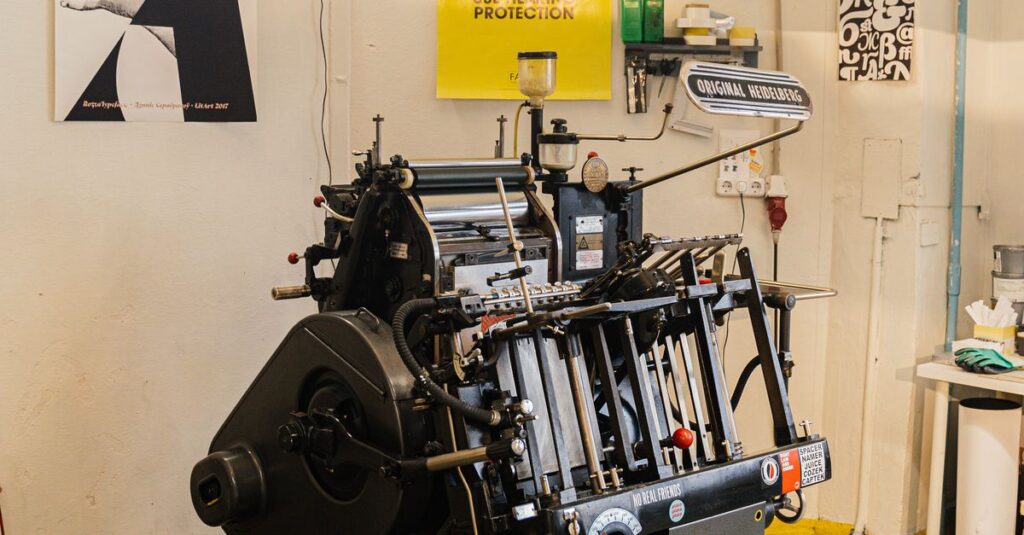
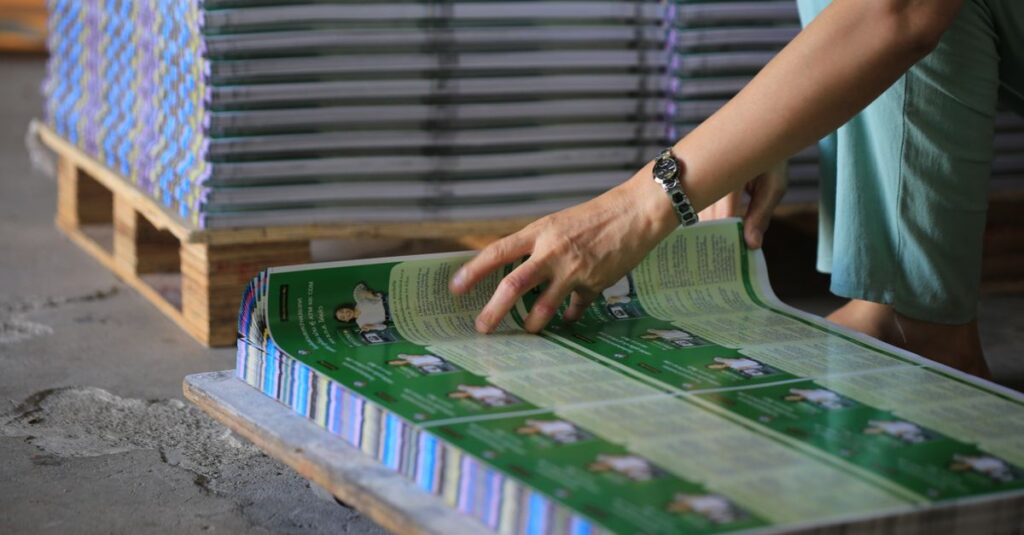
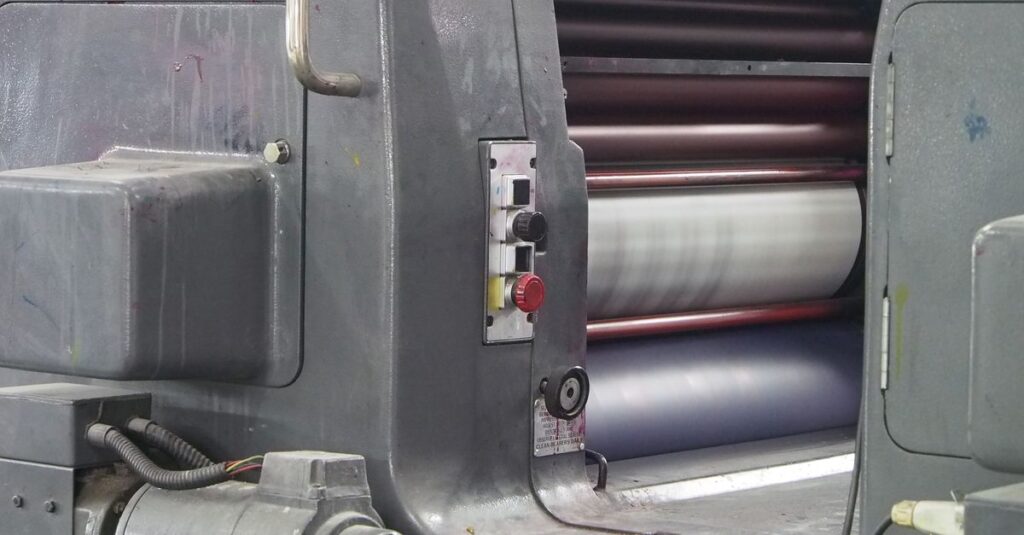
These machines are industrial-scale beasts. They run offset printing or digital printing at speeds that would make your office printer cry. We’re talking thousands of sheets per hour. And I mean proper sheets, not the flimsy 70 GSM stuff you use for internal memos.
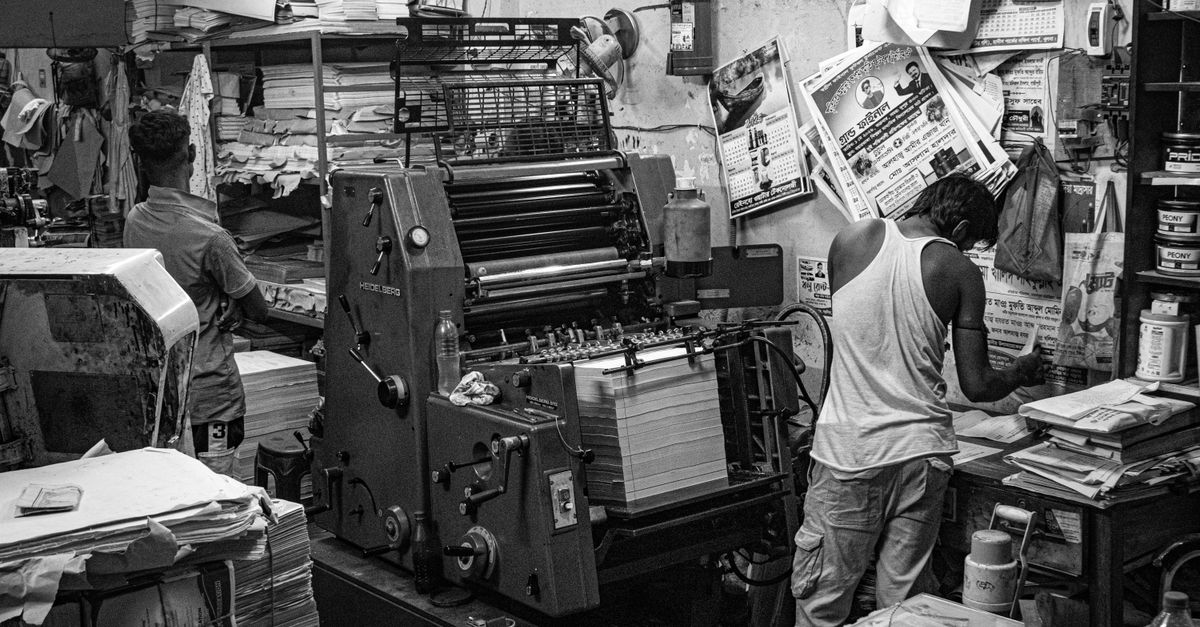
At Sri Rama Notebooks, we’ve been running these machines since 1985. I’ve seen them evolve from clunky mechanical monsters to precise computer-controlled systems. But the core idea hasn’t changed: take a blank sheet, put ink on it accurately, repeat thousands of times. That’s it. That’s the whole game.
The thing is — most people think all printing machines are the same. They’re not. A commercial printing machine is built for volume, consistency, and speed. If you’re ordering notebooks in bulk, this is the only thing that matters. Because without the right machine, your order is going to look bad. Period.
How Commercial Printing Machines Actually Work
I could bore you with technical specs. But let me tell you how it really works on the factory floor. Because I’ve been standing next to these machines for decades.
The process breaks down into four steps:
- Plate making — the design gets transferred to a metal plate
- Ink application — rollers transfer ink to the plate
- Printing — the plate presses ink onto paper
- Drying and cutting — ink sets, sheets get trimmed
That sounds simple. But here’s where things get real. The pressure needs to be exactly right. Too much pressure, and the image bleeds. Too little, and it’s faint. The ink-water balance? That’s a whole other headache. (I’ve seen experienced operators take twenty minutes just to get it perfect.)
The difference between a good print and a bad print isn’t the machine. It’s the person running it. And I’m not saying that to sound wise. I’m saying it because I’ve watched new operators struggle while veterans make it look effortless.
Which brings me to something most buyers don’t think about.
The Hidden Variable Nobody Talks About
Paper quality changes everything. A commercial printing machine calibrated for one paper weight needs to be adjusted for another. That 54 GSM paper we use for notebooks? Different settings than 100 GSM cover stock. And if the operator doesn’t know this, you get misregistration. Wasted sheets. Late orders.
I think — and I could be wrong — that about 40% of printing issues come from this one thing. Not the machine. Not the ink. The paper-machine mismatch.
Types of Commercial Printing Machines: Which One Matters for Notebooks?
Look, I’ll just say it. Not all commercial printing machines are built for notebooks. Some are great for flyers. Some handle brochures beautifully. But notebooks? That’s a different animal.
Here’s a quick comparison of the main types you’ll encounter:
| Machine Type | Best For | Speed | Cost Per Unit | Notebook Suitability |
|---|---|---|---|---|
| Offset Printing (Sheet-fed) | Notebooks, books, long runs | 10,000-15,000 sheets/hour | Low (for bulk) | Excellent |
| Offset Printing (Web-fed) | Magazines, newspapers | 40,000+ sheets/hour | Very low | Good for simple notebooks |
| Digital Printing | Short runs, custom jobs | 2,000-5,000 sheets/hour | Higher per unit | Good for small orders, variable data |
| Flexographic | Packaging, labels | 500-1,000 feet/minute | Low (for large volumes) | Not suitable for notebooks |
The machine we run most at our Rajahmundry factory is sheet-fed offset. That’s because notebooks need crisp lines on both sides. Ruled pages need consistent spacing. And when you’re doing 30,000 notebooks a day, every millimeter matters.
Digital is useful for small runs — maybe 500 custom diaries with logos. But for bulk orders? Offset wins every time. The cost per unit drops dramatically once you go past a few thousand copies.
Expert Insight: What I Learned the Hard Way
I remember a conversation from maybe five years ago. A buyer from a school board called me. He was frustrated because his previous supplier kept delivering notebooks with misaligned rulings. The lines were running off the page. He thought he needed better machines.
I told him — actually, no. What he needed was someone who understood paper grain direction. When paper is cut against the grain, it curls. The machine can’t register properly on curled paper. It’s not the machine’s fault. It’s physics.
He switched suppliers after that. Not because we had fancier machines. Because we knew the stuff that doesn’t come in the manual.
What to Look for When Choosing a Manufacturer with the Right Machine
Here’s where I get a little opinionated. Sorry. Not sorry.
Most buyers walk into a factory and ask: “How many machines do you have?” Wrong question. The question should be: “What condition are your machines in?” A well-maintained older machine will outperform a new machine that nobody cleans.
What you actually want to check:
- Register accuracy — take a printed sheet and hold it up to light. Are the front and back aligned?
- Ink consistency — look at the first page and the last. Same color? Or has it drifted?
- Operator experience — how long has the person running it been doing this? Years matter.
- Maintenance logs — do they clean rollers daily? Weekly? When things break, do they fix them properly?
I’ve walked into factories where the machines look shiny but the operators don’t know how to set the registration. I’ve seen “modern” factories produce garbage prints because nobody checked the basics.
A commercial printing machine is only as good as its operator. And the production manager. And the quality control person who actually bothers to check.
Which is… a lot to sit with if you’re a buyer trying to trust someone with your order.
But that’s the truth. I don’t have a cleaner way to put it than that.
Real-Life Example: How a School Principal Almost Lost Her Budget
Let me tell you about Kavita. She’s 52. Runs procurement for a chain of 12 schools in Visakhapatnam. Been doing it for eight years. She called me almost frantic last year.
Her previous supplier had promised 20,000 notebooks for the new academic year. Delivery date came. Nothing. She called. They said “machine breakdown.” She waited another week. Still nothing. By week three, she was calculating how to explain to four principals that students would start without notebooks.
I asked her: “Did you ever visit their factory?” She hadn’t. She’d seen photos. Clean looking. The sales guy was smooth. But nobody checked whether they actually had a commercial printing machine that could handle that volume. They had one old machine. It broke. No backup.
We delivered her order in 12 days. Not because we’re miracle workers. Because we run multiple machines. If one goes down, production shifts. That’s the difference between a factory and a garage operation with a fancy website.
She told me later: “I’ll never order without visiting again.” I think about that conversation whenever someone emails asking for a quote without asking about our machines.
The Cost Question: Is a Commercial Printing Machine Worth the Investment?
I’ve heard this question from dozens of new stationery businesses. They want to buy their own commercial printing machine. They think it’ll save money.
Maybe. Probably not. Here’s the math nobody tells you.
A decent sheet-fed offset press runs anywhere from 15 lakh to 2 crore depending on age and condition. Then you need a guillotine cutter (2-5 lakh). Binding machines (3-10 lakh). Space. Electricity. Skilled labor.
And then the machine sits idle for weeks because you don’t have enough orders to justify running it round the clock. Meanwhile, the bank loan is ticking.
I’m not saying don’t buy one. I’m saying most people underestimate what it takes to keep a commercial printing machine profitable. It’s not just the purchase price. It’s the consumables — plates, chemicals, blankets, rollers, ink. It’s the downtime when something breaks at 2 AM on a Friday.
Earlier I said the operator matters more than the machine. That’s not quite fair — it’s more that both matter, but bad operators destroy good machines faster than good operators can fix bad ones. So unless you have trained staff ready, maybe think twice before buying.
At least in my experience, companies that do 50,000+ notebooks per month benefit from owning their own machine. Everyone else is better off working with an established manufacturer.
Frequently Asked Questions
Frequently Asked Questions
What is the difference between a commercial printing machine and a regular printer?
A commercial printing machine is built for high-volume industrial printing — thousands of sheets per hour with consistent quality. A regular office printer handles small batches. Commercial machines use offset or advanced digital technology, not the toner-based system in your office.
Can a commercial printing machine print on notebook paper?
Yes, but the paper needs to be compatible. Notebook paper is typically 54-70 GSM. The machine must be calibrated for that weight. Thinner paper can jam or misregister. A good operator knows how to adjust settings for different paper types.
How much does a commercial printing machine cost in India?
Prices vary wildly. A used Heidelberg offset press can start around 15-20 lakh rupees. A new one costs several crores. Digital commercial printers range from 10-50 lakh. The real cost includes installation, training, and maintenance — not just the machine.
Which commercial printing machine is best for notebook manufacturing?
Sheet-fed offset printing machines are the industry standard for notebooks. They handle ruled pages with precision and maintain consistency across long runs. Digital machines work for small custom orders, but offset is better for bulk production of 5,000+ units.
How do I check if a manufacturer has good commercial printing equipment?
Visit the factory in person. Ask to see the machine running, not just photos. Check print quality on the first and last sheet of a run. Ask about maintenance schedules. Talk to the operator, not just the sales team. That tells you more than any brochure.
Final Thoughts: What This Means for Your Next Order
Three things stand out after all these years. One: a commercial printing machine is only as good as the person running it. Two: paper quality and machine settings need to match — you can’t ignore this. Three: visit the factory before you order. Always.
I don’t think there’s one perfect machine for every job. Probably there isn’t. But if you’re ordering notebooks in bulk, you need a manufacturer who understands what their machines can and can’t do. Someone who’ll tell you honestly, not just take your money.
If that’s what you’re looking for, Sri Rama Notebooks has been doing this since 1985. We’re in Rajahmundry. Our machines run every day. You’re welcome to come see them.