Let’s get this out of the way
You’re here because you have to order notebooks. Lots of them. For a school, a corporation, a government tender. And someone, somewhere, mentioned “A4 size.” Now you’re Googling, probably with a dozen other tabs open, trying to figure out if that’s what you actually need.
Sound familiar? I talk to people in your spot every week. They’re not stationery hobbyists. They’re procurement managers, school administrators, corporate buyers who need stuff that works, in bulk, without any fuss.
So here’s the thing — the A4 size is one of those universal standards that seems simple but gets tangled up in jargon. Let’s untangle it. Because choosing the right size isn’t just about paper; it’s about workflow, cost, and whether the person using it will actually want to pick it up. If you’re looking for clarity on what an A4 book is and whether it’s right for your order, this is where we can help.
What an A4 size book really means (no jargon, I promise)
Strip away all the technical stuff. An A4 size book is a notebook where each page is the size of a standard office printer paper. You know the one. That’s it.
The official dimensions are 210mm x 297mm, or 8.27 inches by 11.69 inches. But you don’t need to remember that. Just picture that stack of paper by the copier. That’s the footprint. It’s a professional, spacious format. It’s not a pocket notebook you scribble a shopping list on. It’s for proper work — reports, client notes, detailed plans, architectural sketches, meeting minutes that have to look official.
And honestly? In the notebook manufacturing world, A4 is a specific beast. It’s not our most common school order — that’s usually the Long or Short size. A4 is for a different crowd. It signals a certain need for space and formality. When someone asks us for A4, nine times out of ten, it’s for a corporate office, a university, a legal firm, or an architect. The people who need room to think on paper.
Why does that matter to you? Because the size you choose dictates everything else: the paper weight we recommend, the binding that will hold up, and ultimately, the cost per unit. Pick the wrong size, and you’ve got a warehouse of notebooks nobody wants to use.
The people who actually use A4 books (it’s not students)
This is where intent gets real. You don’t just buy a size; you buy it for a person in a specific job.
Let me give you a picture. I was on a call last month with a procurement manager from a Hyderabad-based tech firm. Let’s call him Vikram. He needed branded notebooks for their new hires. His first thought was A5 — smaller, cheaper. But then he thought about what the new developers and project managers actually *did*. They sketched system architectures, wrote long-form code planning notes. A5 felt cramped. “It’s not about saving fifty rupees per book,” he said. “It’s about giving them a tool that doesn’t get in the way.” They went with A4. The weight of the notebook in the welcome pack, he told me later, sent a message: your ideas here have space to grow.
That’s the shift. It’s not a stationery item; it’s a tool. Here’s who typically needs that specific tool:
- Corporate Offices & Banks: For formal record-keeping, board meeting minutes, HR documentation. An A4 page fits a printed header, a table, a signature line.
- Architects, Engineers & Designers: That 11.69-inch height is crucial for sketches, floor plans, and technical drawings that need a decent scale, even in a bound book.
- University Students & Researchers: Especially in post-grad studies, law, or sciences. The margin space is perfect for annotations, and it fits neatly alongside standard research papers and textbooks.
- Government Departments: Tendering processes and official documentation often mandate A4 size for standardization and archiving. It files perfectly.
- Legal & Accounting Firms: Case notes, client ledgers, audit trails. It’s about permanence and clarity, and A4 provides the real estate.
See the pattern? It’s about authority. A certain gravity. A pocket-sized memo pad says “quick thought.” An A4 book says “this matters.”
A4 vs. The other guys: A sizing showdown
Okay, so A4 is the office paper. But you’ll hear other terms thrown around. “Legal size,” “Ledger,” “A3,” “A5.” Let’s clear the air. Most of your bulk buying will come down to A4 versus two others: A5 and the Indian “Long” notebook.
| Feature | A4 Size Notebook | A5 Size Notebook (Half of A4) | Indian ‘Long’ Notebook |
|---|---|---|---|
| Dimensions (approx.) | 8.3″ x 11.7″ | 5.8″ x 8.3″ | 10.7″ x 6.7″ (27.2cm x 17.1cm) |
| The Vibe | Formal, official, spacious | Portable, casual, efficient | The classic Indian school & workhorse |
| Primary Use Case | Corporate reports, technical drawings, official minutes | Personal journals, field notes, to-do lists, sales reps | Schoolwork, general office notes, wholesale staple |
| Binding Consideration | Needs robust binding (spiral/perfect) for heavy use | Works with simpler binding (stitched) | Almost always center-stitched |
| Bulk Cost Implication | Higher (more paper, stronger binding) | Lower | Most cost-effective for mass distribution |
Look, if you’re supplying a sales team that’s always on the road, A5 is probably smarter. Lighter, fits in a laptop bag. But if it’s for a department that files its notes or works at a desk with monitors, A4 is the move. The “Long” notebook? That’s the undisputed king of the Indian classroom and general trade. It’s a different shape — taller and narrower than A4. Familiar, durable, affordable. But it doesn’t have that global-standard, file-friendly compatibility.
The question isn’t which is “better.” It’s: Where will this notebook live, and what job does it need to do?
Expert Insight
I was reading an old industry journal once — the kind printed on paper so thin you’re scared to turn the page — and a production manager from a German mill said something that stuck. He said, “Paper size is a language. A4 is the language of business agreements. A5 is the language of personal memos.” I think about that a lot when we get a customization request. The first thing we ask isn’t about page count or color. It’s, “What’s the primary action this notebook will see?” Are people signing, sketching, commuting, or filing? The answer tells you the size. Every time.
What to think about when you’re ordering A4 books in bulk
Alright, so you’ve decided A4 is your match. Good. Now, the real decisions start. Ordering 5000 notebooks is different from ordering 50. The margins for error? Slimmer.
Here’s what we’ve learned from 40 years of making these things. The three big levers you control are Paper, Binding, and Customization. Mess up any one, and your perfect-size notebook becomes a headache.
1. Paper Weight (GSM): This is thickness. Standard 70-80 GSM paper is fine for ballpoint pens. But if your users are architects using markers or fountain pen enthusiasts (yes, they exist in corporates too), you need 90-100 GSM to prevent bleed-through. Thinner paper means more pages per thickness, which can feel like value. Until someone writes on both sides and it’s a mess. For most corporate A4 work, 75-80 GSM is the sweet spot — durable enough, professional feel, cost-effective.
2. Binding: This is how it holds together. For an A4 book, flimsy is not an option.
- Spiral Binding (Wire-O): Lets the book lie completely flat. Perfect for artists, trainers, anyone who needs both pages seamless. Downside? It snags in bags if the spiral isn’t quality.
- Perfect Binding (Like a paperback): Gives a clean, square spine. Looks fantastic with a printed title or logo. The professional choice. But it won’t lay flat without some force.
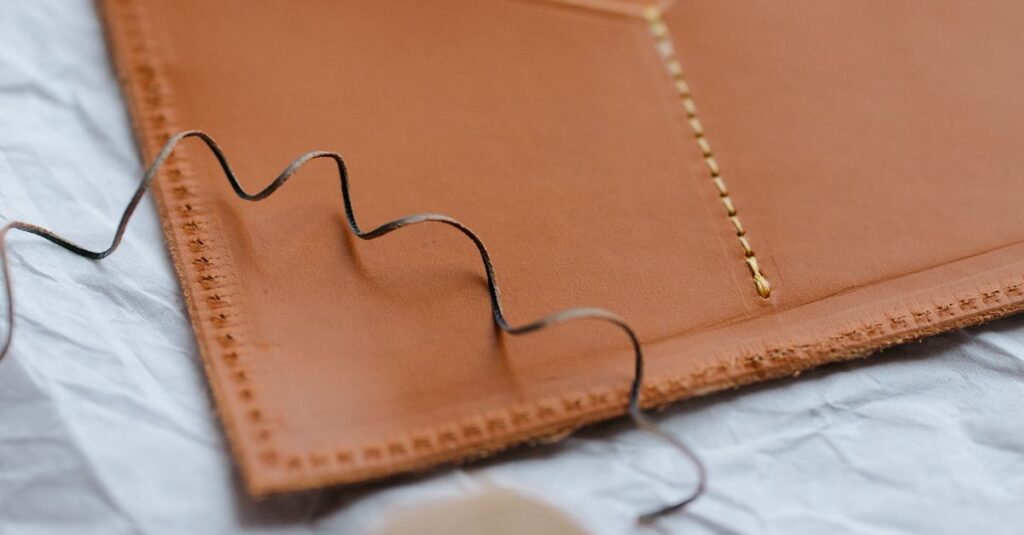
- Stitched Binding: The classic, most durable method. The pages are physically sewn in signatures. It’s how we make our toughest account books. For an A4 book that will be referenced for years, this is it.
3. Customization: This is where your notebook becomes yours. A4 offers a great canvas.
- Cover: You can print anything. Your corporate logo, a safety manual, an inspirational mural for a university. Lamination adds durability.
- Inside Pages: Don’t just get ruled lines. Think about the user. Do they need a header printed on each page for project name and date? A footer with your company values? A specific grid for engineers? This is where working with a manufacturer who gets it pays off. We can build that in. See what’s possible here.
And one more thing — packaging. Are these being shipped internationally? Individual polybagging might be needed. Sending them to 100 different school districts? Bulk carton strength matters. These aren’t afterthoughts; they’re part of the product.
The simple truth about sourcing & finding the right partner
Let’s be direct. You can find a hundred suppliers online who say they make A4 notebooks. The price difference between the cheapest and the reasonable can be shocking.
Here’s what that price often hides: paper from inconsistent batches that yellows in six months, binding glue that fails in humidity, printing that’s off-center or smudged. For a bulk order, that failure isn’t a 50-rupee loss. It’s a reputation loss. It’s dealing with complaints from an entire office or school.
A manufacturer like us — and I’m not just saying this because it’s us — thinks in decades, not orders. The machine that does our perfect binding is older than some of our staff. We know how to make it sing. We test paper for opacity. We check spiral wire for coating so it doesn’t rust. This isn’t magic. It’s just not cutting corners.
When you’re evaluating, ask:
- Can I see physical samples of your A4 work?
- What’s your standard paper GSM for this size, and why?
- What’s the lead time for 10,000 custom units? (If they say “next week,” run.)
- Do you handle export documentation if I need it?
The right partner becomes an extension of your procurement team. They save you from problems you didn’t know to look for. And look, in our 40 years, we’ve shipped A4 books to places with 90% humidity and places with desert-dry air. The notebook has to work in the real world. That’s the only test that matters.
Wrapping this up
So, an A4 size book. It’s the formal workhorse. The standard. It’s for when the notes inside need to feel as important as the meeting where they were taken.
Choosing it means you’re thinking about the end-user’s experience, not just the line item on a purchase order. It means considering paper that feels good to write on, binding that survives a year in a briefcase, and maybe a custom cover that makes someone proud to pull it out in a client meeting.
I don’t think there’s one perfect notebook for everyone. But if your need skews towards official, spacious, and durable, A4 is probably your answer. The rest is just details — but as anyone in procurement knows, the details are where the real job is.
If you’ve got a specific project in mind and want to talk through those details — paper, binding, print runs — that’s a conversation we have every day. It’s easier to start there.
Frequently Asked Questions
Is A4 the same as a normal long notebook?
No, they’re different shapes. An A4 book is wider and based on the international ISO standard (like printer paper). An Indian “Long” notebook is taller and narrower. They serve different purposes and aren’t interchangeable for filing with standard documents.
What is the best binding for an A4 notebook?
It depends on use. For lay-flat convenience (art, training manuals), choose spiral binding. For a professional look with a printed spine, perfect binding is best. For maximum durability over years, stitched binding is unbeatable. There’s no single “best,” only what’s best for the job.
Can I get custom logos printed on A4 size books?
Absolutely. In fact, custom printing is one of the main reasons businesses order A4 books. You can print your logo, brand colors, and even custom-designed inner page layouts (like headers/footers) on the cover. It’s a key service for corporate branding.
What paper GSM is recommended for A4 notebooks?
For general office use with ballpoint pens, 75-80 GSM paper is the standard sweet spot—good quality, no bleed-through, cost-effective. For markers, heavy ink, or a more premium feel, go for 90-100 GSM. Thinner paper risks transparency and feels cheap.
Do you manufacture and export A4 size books internationally?
Yes. We regularly produce bulk A4 notebooks for export to markets in the Gulf, Africa, Europe, and beyond. We handle the full process from manufacturing to packaging and necessary export documentation. International shipping is a core part of our business.