Here’s a thought that hits you in the middle of a busy week: you need to order a thousand notebooks, and you’ve just been handed a spec sheet that says ‘A5’. You nod, like you know. Of course. A5. But then you stop for a second. You picture a pad. You picture a book. Is that A4? A6? The exact dimensions slide around in your head. You’re not an artist or a designer, you’re a procurement manager, or a school administrator, or someone trying to brand a product line. And suddenly you’re googling paper sizes.
That moment of quiet panic — that’s why I’m writing this. It’s not about the technical definition. It’s about what happens when you actually have to buy the damn things, in bulk, with your logo on them, and make sure they feel right in the hand and don’t fall apart.
If that sounds familiar, maybe a look at what a real manufacturer actually makes can help clear the fog.
The No-BS Breakdown: What Is an A5 Notebook?
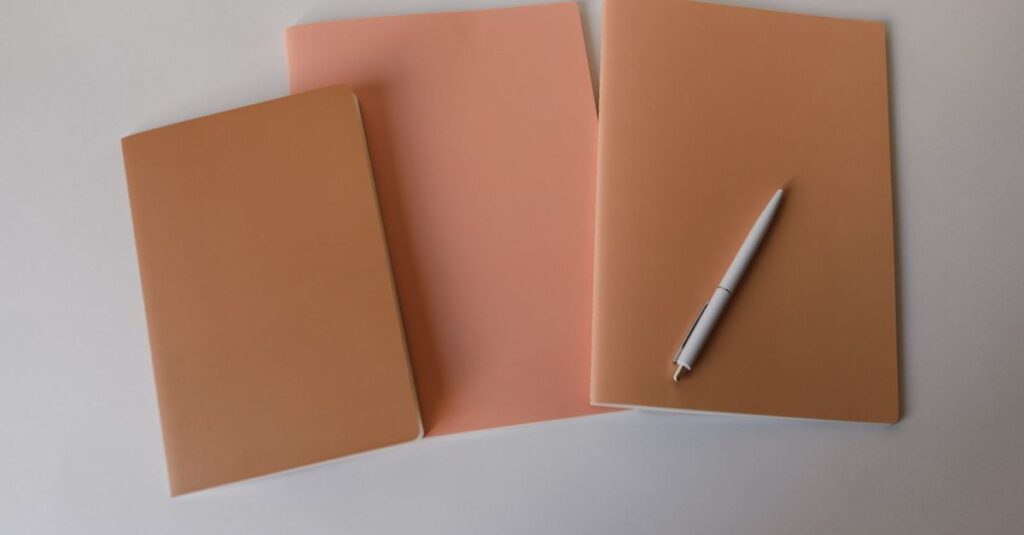
Ok, let’s get the numbers out of the way first. An A5 notebook is 148mm by 210mm. That’s about 5.8 inches by 8.3 inches. There. Done. But nobody ever ordered 5,000 notebooks because of a decimal point. They ordered them because of everything that size means.
It’s the sweet spot. That’s the only way I can put it. Think about it. A4 — that’s your standard printer paper, the big report. It’s formal. A6 — that’s tiny, a pocket memo pad. The A5 sits right between them, which is why it’s become the go-to for so many uses. It’s big enough to feel substantial, to let you scribble a meeting agenda or sketch a diagram, but small enough to slip into a laptop bag or a purse without feeling like you’re carrying a textbook.
Why This Size Works in Bulk
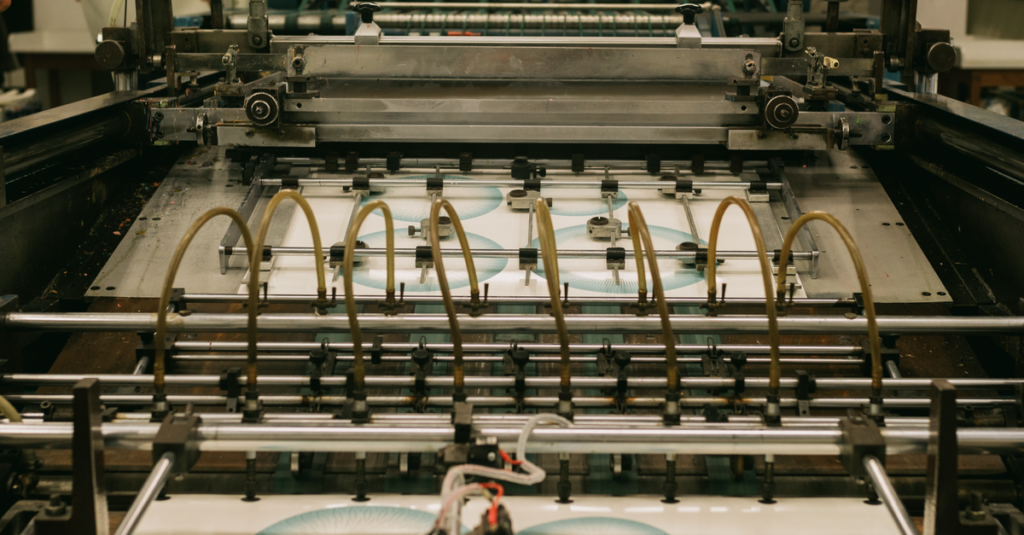
From my chair, seeing the pallets go out, the A5 is a logistics dream. For a manufacturing and printing company like ours, its standardized size makes everything — from cutting the paper to designing the cover to packing the boxes — efficient. That efficiency translates directly into two things for you: cost and consistency.
Cost, because we’re not wrestling with an odd-sized sheet that creates weird off-cuts and waste. And consistency, because when you’re ordering for 500 employees or 2,000 students, you need every single notebook in that batch to be exactly the same. No surprises. The A5’s place in the ISO standard series (you halve an A4 sheet to get an A5) means machines are built for it. That’s the boring, beautiful truth that keeps your project on budget.
Now, let me tell you about Priya. She’s a 34-year-old operations manager for a tech consultancy in Hyderabad. Last quarter, she was tasked with sourcing branded notebooks for a company-wide strategy offsite. Her brief: “Something professional but not stiff, useful for both notes and doodles, and portable.” She went through a dozen samples. Too big, too small, too cheap-looking. She told me later, over email, “The A5 was the only one that didn’t get complaints. The developers liked that it wasn’t a giant ledger, the consultants could fit it in their folios. It just… worked.” She didn’t care about the millimeter. She cared about the feel. And she ordered 750 of them.
The Real Choice Isn’t Just Size: It’s Build
You’ve nailed the size. Good. Now the real questions start. This is where you separate a flimsy giveaway from a tool people will actually use and remember your brand by.
Paper Weight (GSM) – What It Actually Feels Like
I see a lot of specs that just say “good paper.” That’s meaningless. In notebooks, “good” usually comes down to GSM — grams per square meter. For an A5 notebook that’ll see daily use, you’re typically looking at 70-80 GSM as a sweet spot for writing. It’s thick enough that a bold pen won’t bleed through to the other side, but not so card-stock thick that the notebook feels bulky and overpriced.
Our standard line uses a 54 GSM writing paper engineered for smoothness. It’s the kind of spec we landed on after years of feedback from schools and offices — it balances quality with the realities of bulk pricing. But if you’re doing custom, that’s the conversation we have. Marker artists? We go thicker. Budget-conscious student batches? We have options. The point is, it’s a real choice that changes the product.
Binding: The Lifespan of the Notebook
This is the hinge, literally and metaphorically. Get this wrong and pages start falling out after a week, and your brand looks shoddy. For A5 notebooks, you’re usually choosing between:
- Spiral Binding (Wire-O/Coil): The notebook lies perfectly flat. It’s great for sketching, writing, anything where you need full access to the page. The downside? Spirals can get bent in a bag.
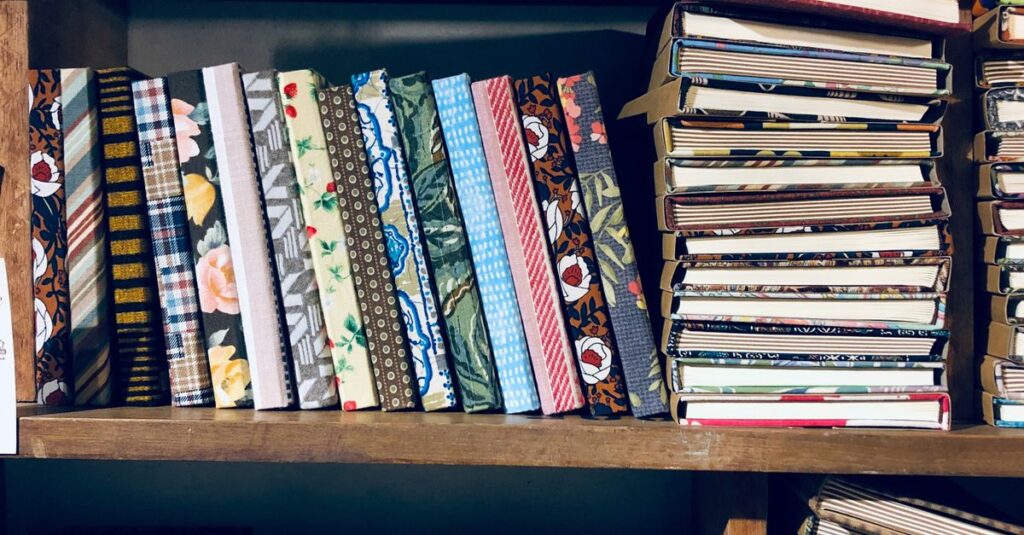
- Perfect Binding (Glued): That clean, squared-off spine you see on paperback books. Looks super professional for corporate gifts. Doesn’t lay flat as easily.
- Stitched Binding (Saddle Stitched): Stapled through the spine. It’s the classic, ultra-durable, no-nonsense binding for standard school or office notebooks. It’s what we use for tens of thousands of our bulk education orders. It just lasts.
Each one tells a different story about how the notebook should be used. A creative agency might love the flat-lay of a spiral. A law firm might want the refined look of perfect binding.
Anyway. Where was I. Right — choosing.
A5 vs. The World: A Procurement Manager’s Cheat Sheet
Look, sometimes you just need to see it side-by-side. Here’s how the A5 stacks up against the other common players when you’re thinking in bulk quantities.
| Feature / Size | A5 Notebook (148x210mm) | A4 Notebook (210x297mm) |
|---|---|---|
| Primary Use Case | Daily carry, meetings, project notes, branded corporate gifts | Formal reports, extensive note-taking, academic work |
| Portability | Excellent. Fits in most bags easily. | Low. Requires a larger bag or folio. |
| Perception | Modern, efficient, practical | Traditional, formal, academic |
| Bulk Production Cost | Generally lower than A4 (less paper, efficient cuts) | Higher (more material per unit) |
| Customization Impact | High. Cover design has great visibility. | High, but can be more expensive to print. |
| Common Page Counts (for us) | 92, 120, 200 pages | 120, 200, 240 pages |
Expert Insight
I was reading an industry report last month — one of those dry, expensive ones — and a line stuck with me. The analyst said something like: “The shift to A5 in corporate and premium segments isn’t an aesthetic trend. It’s a signal of mobile, task-focused work patterns replacing stationary, document-focused ones.” I think about that a lot on the factory floor. We’re not just binding paper. We’re binding a way of working. The A5 is the notebook for the person who moves. And honestly, who isn’t moving these days?
When to Think Custom A5 Notebooks (And When Not To)
Here’s the thing: custom printing is awesome, but it’s not always the answer. If you need 50,000 generic notebooks for a government tender with tight margins, you go with a standard, off-the-shelf ruling and cover. Done. But if you’re building a brand, or want a product that creates a genuine impression, that’s where you start talking to a manufacturer who does custom work seriously.
Think about:
- Corporate Onboarding Kits: A beautifully branded A5 notebook with the company values on the inside cover. It says “we thought about this.”
- Conference Swag: Something better than another plastic trinket. A useful notebook with the event theme.
- High-End Retail: Private label notebooks for boutique stationery shops. The A5 size is a retail bestseller.
- School Branding: Custom covers with the school crest and house systems for senior students. Builds identity.
It comes down to intent. Is the notebook a commodity, or is it a touchpoint?
Navigating a Bulk Order: The Unspoken Questions
So you’re convinced. Now what? Placing a large order can feel like stepping into a black box. Let me pull back the curtain a bit, based on what I see go wrong — and right — most often.
First, lead times. A standard bulk order of, say, 10,000 A5 notebooks might take us 3-4 weeks from final sign-off. Custom designs? Add a week or two for sampling and approvals. That’s the reality. Rush jobs are possible, but they cost. And they stress everyone out. The smartest buyers I work with plan their notebook orders like they plan any other key inventory — they don’t wait until the week before the big conference.
Second, sampling. Always, always get a physical sample. Don’t just approve a PDF. The feel of the cover material, the exact color of the ink, the way the binding opens — you can’t judge that on a screen. We send samples for this exact reason. It’s the only way to be sure.
And third — and I feel like I can’t say this loudly enough — communication. Tell your manufacturer what the notebooks are for. “For our sales team” is ok. “For our sales team to carry in their blazers during client pitches” is gold. That changes the conversation about paper weight, binding, and even the finish on the cover instantly.
Anyway. You get the idea.
Frequently Asked Questions
What is an A5 notebook best used for?
It’s the all-rounder. Daily to-do lists, meeting notes, journaling, sketching, and as a branded corporate gift. Its portable-yet-spacious size makes it the most versatile notebook on the market, which is why bulk buyers love it.
How many pages is a standard A5 notebook?
There’s no single “standard,” but common bulk configurations from manufacturers like us are 92 pages (46 sheets), 120 pages, or 200 pages. It depends on if you want a slim, lightweight notebook or a thicker, longer-lasting one.
Can I get custom A5 notebooks with my company logo?
Absolutely. That’s one of the most common requests we handle. Custom printing covers (and even inside pages) for A5 notebooks is a core service. It’s a straightforward process: you provide the artwork, we provide a proof, and then run the order.
Is A5 bigger or smaller than A4?
Smaller. An A5 sheet is exactly half the size of an A4 sheet. If you fold a standard piece of printer paper (A4) in half widthwise, you’ve got the approximate size of an A5 notebook.
What’s the minimum order quantity (MOQ) for custom A5 notebooks?
This varies hugely by manufacturer. For true custom work (unique cover design), our MOQ typically starts around 500 pieces. For very large bulk orders of standardized designs, we can talk in the tens or hundreds of thousands. It’s always best to just ask.
The Takeaway: It’s About Utility, Not Just Units
Look, by the end of this, I hope the number 148x210mm fades into the background. Because the point of an A5 notebook — especially when you’re ordering a thousand of them — isn’t the millimeter. It’s the handshake. It’s the tool that doesn’t get in the way. It’s the piece of branded material that someone might actually keep on their desk for a year, instead of tossing in a drawer.
It’s a small thing. But in bulk, small things add up. They add up to a perception of quality, to a consideration of user needs, to a smarter use of your budget. The A5, more than any other size, has just figured out how to be useful without shouting about it. For a procurement manager, that’s not just a nice-to-have. That’s the whole job.
I don’t think there’s one perfect notebook for everyone. Probably there isn’t. But if you’ve read this far, you’re not just looking for dimensions — you’re looking for a solution that fits a real need. And that’s the right place to start.
If figuring out that solution feels like the next step, starting a conversation is free. We can talk specs, samples, or just what you’re trying to achieve.