So, How Does a Notebook Factory Actually Work?
You've got a pile of paper, a bunch of glue or wire, and a machine. That's basically it. Right? Not really. The thing is, if you're ordering 10,000 notebooks for a school district or 5,000 branded diaries for your company, you're not just buying a product — you're buying a promise. That promise says these things won't fall apart after a month, the ink won't smudge, and the pages won't tear out when a kid pulls on them too hard. And that promise comes from a process that looks simple on paper but gets really, really detailed in real life. I've been around this for a while — talking to procurement managers who just want a reliable supplier, and watching boxes come off the line day after day. It's not magic. It's just a series of decisions, most of them made before the cutting even starts. If you're looking for a notebook manufacturer, you need to know what those decisions are.
The First Choice: Paper Isn't Just Paper
Most people think paper is just… paper. But the choice here dictates everything else. A notebook manufacturer starts here because the GSM, the texture, the ruling — it all locks you into a specific kind of book. 54 GSM writing paper is the standard for school notebooks because it's smooth enough for pencils and pens, but not so thick that it becomes expensive. But if you want a premium corporate diary? That's 70 GSM or higher. And then the ruling — single ruled, double ruled, four ruled for accounting, unruled for drawing. It sounds basic, but picking the wrong one means the entire batch is useless for the user. I've seen schools reject a whole order because they got broad ruled instead of single ruled. The lesson? The specs matter more than you think.
A Real-Life Micro-Story
Anita, 45, procurement manager for a chain of private schools in Hyderabad. She ordered 15,000 notebooks for the new term last July. The manufacturer sent her a sample — the cover was great, the binding looked tight. But she took a pen and wrote on the inside page. The ink bled. Just a little, but enough that a student's handwriting would look fuzzy. She called back and said no. The manufacturer argued — the price was good, the delivery was fast. She told them the paper was wrong. They switched it to a higher-grade sheet, and she approved. The kids got clean, crisp pages. The manufacturer learned that the sample isn't just for looks.
Binding: The Thing That Makes or Breaks a Notebook
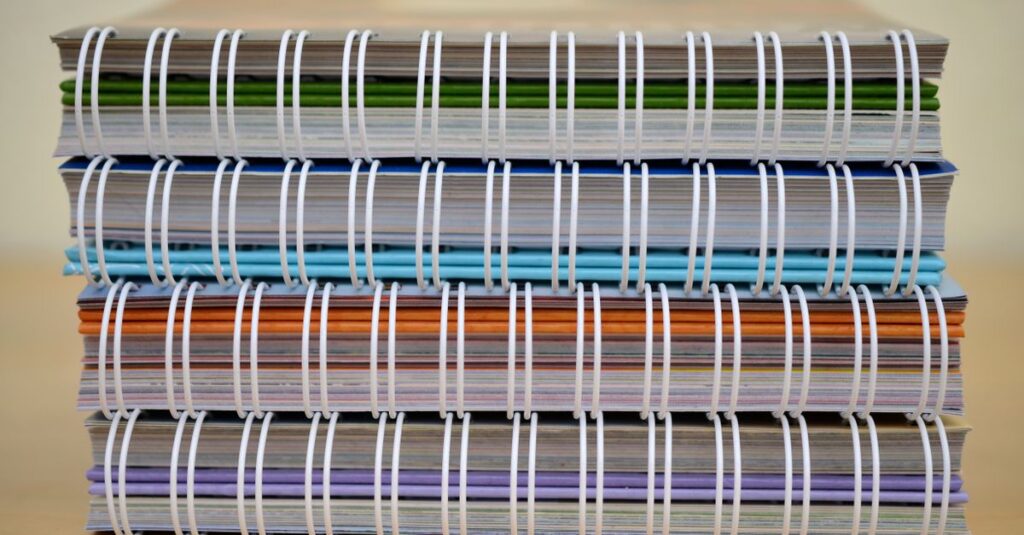
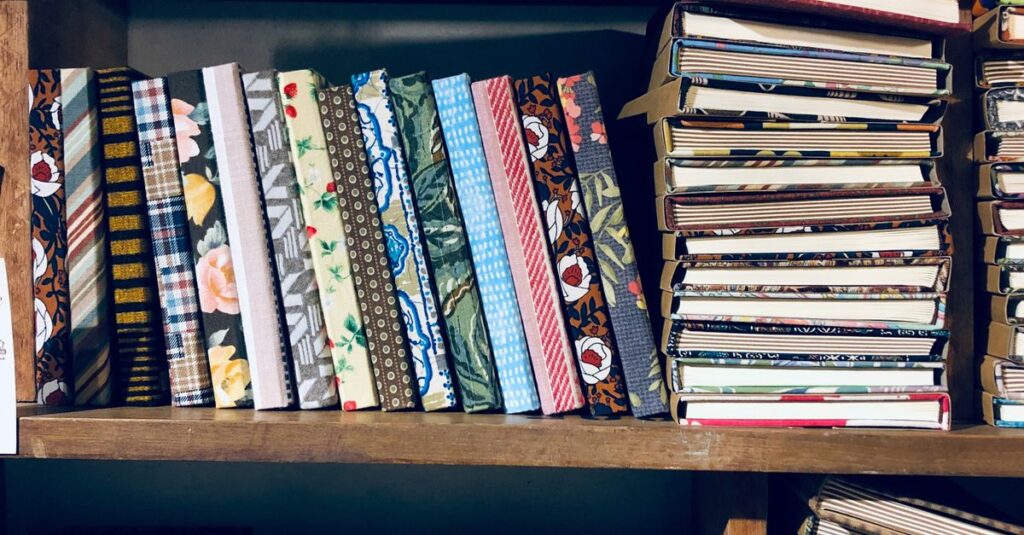
This is probably the most misunderstood part. Stitched binding, spiral binding, perfect binding — they're not just different looks. They're different lifespans. Stitched binding (where the pages are sewn together) is the classic school notebook style. It's durable for everyday use, cost-effective for bulk orders. Spiral binding is for things that need to lay flat — like art books or manuals. Perfect binding (where pages are glued at the spine) gives that clean, book-like look for corporate diaries. The choice here decides how the notebook will be used, and more importantly, how long it will last. A bad glue job in perfect binding means pages start falling out after a few opens. A weak spiral wire bends and snags. It's the part you don't think about until it fails.
And honestly? Most manufacturers will push you toward the cheapest option unless you specify. You have to know what you need. A printing service that also does binding needs to get this right from the start.
The Printing Stage: Where Your Brand Shows Up
Custom printing isn't just slapping a logo on a cover. It's about alignment, color matching, and material. Offset printing for large, bulk runs gives consistent color. Digital printing for smaller, customized batches where each book might have a different name or department. The cover material matters too — a laminated paper cover for school notebooks withstands rain and rough handling; a soft-touch matte finish for a corporate diary feels premium. This is where a notebook manufacturer shows they're not just a factory, but a partner. A misaligned logo, a color that's off by a shade — it looks sloppy. It makes your brand look sloppy.
Expert Insight
I was talking to a production manager last year — over coffee in the factory office, actually — and he said something that stuck. He said the biggest cost in notebook manufacturing isn't the paper or the machine time. It's the reprint. When a customer rejects a batch because the printing is wrong, you have to start over. All that paper, all that binding, wasted. His whole job, he said, is to make sure the first proof is so accurate that the customer says 'yes' immediately. It's a pressure you don't see from the outside. The good manufacturers live by that proof. The bad ones hope you won't notice.
Scale: The Daily Grind of a Bulk Order
Let's talk numbers. A factory like ours can produce 30,000 to 40,000 bound notebooks per day. That sounds like a lot — and it is. But when a government institution orders 500,000 notebooks for a statewide distribution, that's two weeks of non-stop production. The logistics shift from 'making notebooks' to 'making, packing, palletizing, and shipping notebooks'. Packaging alone becomes a separate operation. Are you using shrink wrap for each dozen? Cardboard boxes for each hundred? Who's loading the trucks? This is the part most buyers don't see — and honestly, they shouldn't have to. A reliable manufacturer handles this invisibly. The order just arrives, on time, in the right condition. But if the scale isn't managed, you get partial shipments, delayed batches, and mixed-up SKUs. Chaos.
Customization vs. Standard Product: A Real Choice
Here's the thing — most notebook manufacturers have a catalog of standard products. King size, long size, short size, account size. 52 pages, 92 pages, 200 pages. That's their bread and butter. But when you come with a custom request — a specific cover design, a unique page layout, a private label for your brand — you're asking them to step out of their routine. This is where you see if they're flexible or rigid. Some will say yes to everything and then struggle to deliver. Others will be honest about what's possible. The good ones have a process for custom jobs: design approval, material selection, a separate production line. They treat it like a project, not an exception.
| Factor | Standard Notebook Manufacturing | Custom Notebook Manufacturing |
|---|---|---|
| Lead Time | Short (7-10 days) | Longer (20-30 days) |
| Cost per Unit | Lower | Higher |
| Flexibility | Fixed sizes, rulings, pages | Tailored to your specs |
| Production Run | Mass, continuous | Batch, project-based |
| Key Challenge | Maintaining consistent quality at scale | Accurate translation of your design into product |
| Best For | Schools, bulk resellers, general supply | Corporate branding, private label, special events |
What Separates a Good Manufacturer from a Bad One?
Three things. Actually, maybe four. First, they ask questions. They don't just take your order; they ask about the use case, the environment, the expected lifespan of the notebook. Second, they provide a physical sample before production starts — not a digital mockup, a real book you can write in and test. Third, they have clear lines of communication during production. If something goes off-spec, they tell you immediately, not after the batch is done. And fourth — this is the one most people miss — they understand their own limits. They won't promise a 5-day turnaround on a custom order if they know it takes 10. That honesty saves everyone a headache later.
I think a lot of procurement managers assume the manufacturer's job is to say yes. But a good manufacturer's job is to say 'yes, and here's how we'll do it right'. Sometimes that means saying 'no' to an unrealistic request. That's not a bad thing. It's a professional thing.
The Export Game: Shipping Notebooks Across Borders
This is a whole other layer. Making notebooks for the local market is one thing. Making them for the Gulf, Africa, the US, Europe — that's different. The packaging needs to withstand longer transit, possibly humidity changes. The labeling needs to meet international standards. The paperwork — invoices, customs declarations, shipping manifests — becomes critical. A notebook manufacturer that exports regularly has this system baked in. One that doesn't will find it overwhelming. If you're an international buyer looking for a supplier, you need to ask about their export experience directly. Not just 'can you ship?', but 'how do you handle a container load to Dubai?'.
Frequently Asked Questions
What should I ask a notebook manufacturer before placing a bulk order?
Ask about paper GSM and ruling confirmation, binding method durability, production timeline for your quantity, and their process for providing a pre-production sample. Also ask about packaging and shipping logistics — will they deliver to multiple locations if needed? These questions reveal their attention to detail.
How long does it typically take to manufacture 10,000 custom notebooks?
For a fully custom design (new cover, specific page layout), expect 20 to 30 days from final design approval to shipped goods. For a simpler custom job (just your logo on a standard notebook), it can be 10-15 days. Always get a written timeline breakdown before committing.
What's the difference between stitched binding and spiral binding?
Stitched binding sews the pages together along the spine — it's strong, cost-effective, and common for school notebooks. Spiral binding uses a metal or plastic coil through holes along the edge — it allows the notebook to lay flat completely, ideal for art or technical use. The choice depends entirely on how the notebook will be used.
Can a notebook manufacturer handle both school notebooks and corporate diaries?
Yes, many do. The machines and processes overlap. But the paper quality, cover finish, and binding might differ. A good manufacturer will have separate lines or adjust settings for each product type. It's about flexibility, not just capability.
Is it cheaper to order standard notebooks or custom printed ones?
Standard notebooks are always cheaper per unit because they're produced continuously in large volumes. Custom printing involves setup time, design work, and often a separate production batch, which adds cost. But for branding purposes, the custom option is worth the investment.
Final Thoughts
Choosing a notebook manufacturer isn't just about price and delivery date. It's about knowing that the details — the paper feel, the binding strength, the print clarity — will hold up when thousands of people are using your product. It's a quiet reliability. You don't think about it until it's missing. And when it's there, it just works. The notebooks arrive, they look right, they last. That's the whole goal. I don't think there's one perfect manufacturer for everyone. But there are manufacturers who get this, and ones who don't. The difference is in the questions they ask before you even order.
If you're looking for a partner who starts with those questions, you can start the conversation here. It's worth getting the specifics right from the beginning.