What Makes a Notebook Diary Actually Good?
I'll be honest — most people don't think about their notebook diary until they get a bad one. You know the feeling. You open a fresh page, put pen to paper, and the ink bleeds through to the other side. Or the binding cracks after a week. Or the cover curls up like it's trying to escape.
And if you're ordering these for a school or a company? That frustration multiplies. You're not just dealing with one bad notebook. You're dealing with a hundred. Or a thousand. And someone — a teacher, a manager, a client — is going to notice.
So when people ask me about the best notebook diary, I don't start with brands. I start with what holds up. Because a good-looking diary that falls apart in two months isn't good. It's just expensive disappointment.
If you're ordering in bulk — for a school, a company, or a client — you need something that survives daily use. And that starts with understanding what you're actually buying. Sri Rama Notebooks has been making these for forty years, so I've seen what works and what doesn't.
Paper Quality — The Thing Nobody Checks Until It's Too Late
Here's a truth that sounds obvious but isn't: the paper is the notebook. Everything else — the cover, the binding, the design — is secondary. Because if the paper is bad, nothing else matters.
I've seen bulk orders where the paper was so thin you could read the next page through the writing. And the buyer didn't realize until they'd handed out five hundred diaries to employees. That's a bad day.
For a best notebook diary, you want paper that's at least 54 GSM. That's the sweet spot for writing without bleed-through. If you're using fountain pens or markers, you might want 60 GSM or higher. But 54 is the baseline. Anything below that and you're gambling.
And here's something I've noticed over the years — people assume all paper is the same. It's not. The pulp quality, the finish, the way it takes ink — these things vary wildly between manufacturers. You can't tell from a photo online. You have to hold it.
That's why I always tell buyers to ask for a sample before placing a bulk order. Not a digital proof. A physical one. Write on it. Scratch it. See how it feels.
Because once you've ordered ten thousand diaries, there's no sending them back.
Binding That Doesn't Quit
I was talking to a procurement manager from a school in Visakhapatnam last month — let's call him Ravi. He ordered five thousand diaries for the academic year. Three months in, the bindings started failing. Pages falling out. Covers separating. He had to hear about it from fifteen different parents.
He told me: "I thought a diary was a diary. How different could they be?"
Pretty different, actually.
There are three main binding types you'll see in a best notebook diary:
- Stitched binding — thread-sewn sections. Holds up the longest. Pages lie flat. This is what you want for a diary that'll be used daily for a year.
- Perfect binding — glued spine. Looks clean. Works fine for notebooks that won't be opened flat repeatedly. But it can crack over time.
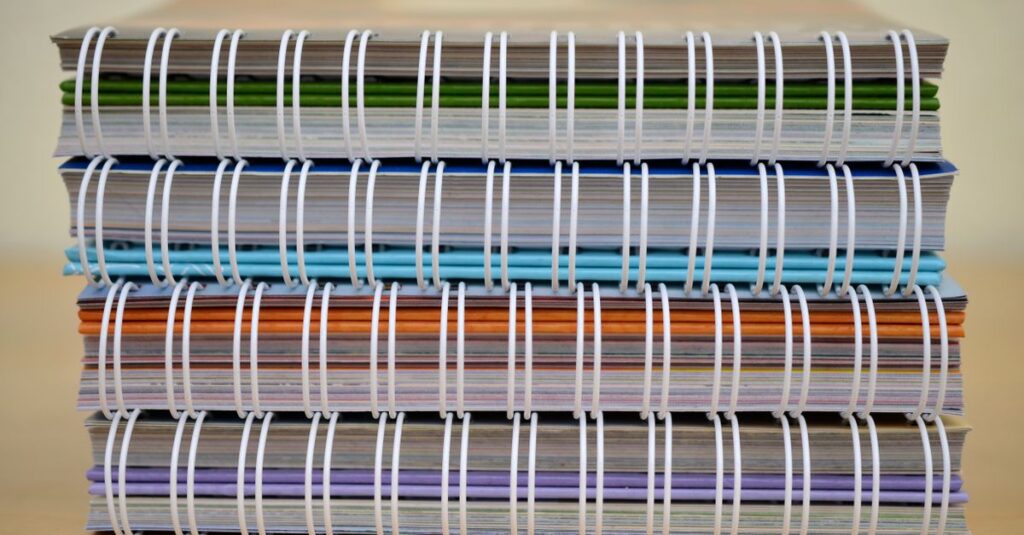
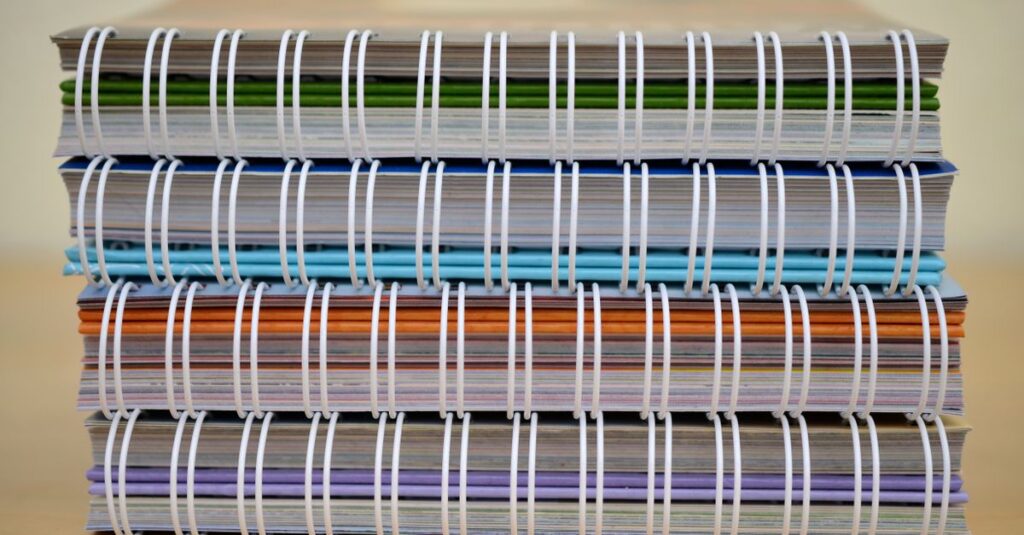
- Spiral binding — lies completely flat. Great for desk use. But the coils can bend if tossed in a bag.
For a best notebook diary, I lean toward stitched binding. It's more expensive, yes. But if you're ordering for a full year of daily use, it's the only one I'd trust. The others will work — for a while. Then they won't.
And you don't want to be the person explaining to a client why their company diary fell apart in March.
Customization — What Actually Matters for Corporate Diaries
If you're ordering diaries for your company, you probably want your logo on them. That's the obvious part. But there's more to customization than slapping a logo on the cover.
I've worked with companies that wanted foil stamping on the cover. Others wanted embossing — the raised kind you can feel. Some wanted a simple screen print. And honestly? The right choice depends on how the diary will be used.
Foil stamping looks premium. It's what you want for a corporate gift. Embossing feels expensive — it's subtle but people notice it. Screen printing is cheaper and works fine for internal use.
But here's what most people don't think about: the inside pages. You can customize those too. Add your company calendar. Print your mission statement on the first page. Include a branded bookmark ribbon. These are small things, but they make the diary feel intentional.
I remember a client from Hyderabad — a tech company — who ordered custom diaries with their product roadmap printed in the back. Their team used them as planning tools. That's not just a diary anymore. That's a work tool.
If you're looking for the best notebook diary for your organization, think beyond the cover. Think about how it'll actually be used. Our printing services can handle most custom requests, from foil stamping to full-color inside pages.
Size and Format — Why It Matters More Than You Think
I'll admit something. I used to think size was a minor detail. Pick A5, move on. But after years of watching people use diaries, I've changed my mind.
The size of your best notebook diary determines whether it actually gets used. A diary that's too big won't leave the desk. Too small and it gets lost in a bag. There's a Goldilocks problem here that most people don't consider until they've already ordered.
Here's a quick breakdown of common sizes:
| Size | Dimensions | Best For |
|---|---|---|
| A5 | 21 cm x 14.8 cm | Everyday carry, meetings, students |
| Long | 27.2 cm x 17.1 cm | Office desks, detailed notes |
| Short | 19.5 cm x 15.5 cm | Pocket carry, quick notes |
| King | 23.6 cm x 17.3 cm | Classrooms, lecture notes |
| A4 | 29.7 cm x 21 cm | Professional reports, planning |
For corporate diaries, A5 is the most common choice. It fits in a briefcase. It's not too heavy. But if you're ordering for a school, King size or Long size gives students more room to write. Think about who's using it and where.
I was talking to a distributor from Vijayawada once. He said his biggest complaint from schools was that the diaries were too small for kids to write properly. He switched to a larger size the next year. Orders went up. Simple fix, but it took a year of complaints to figure it out.
Expert Insight
I remember visiting a paper mill near Rajahmundry about ten years ago. The owner showed me two rolls of paper — same GSM, same color. One felt smooth. The other felt rough. He said most buyers couldn't tell the difference until they wrote on it. And he was right. I've seen bulk orders where the paper looked fine but felt terrible. The thing is, you can't test that through a website. You have to hold it. That's why I always tell people to get a physical sample before committing to a large order. It sounds obvious, but you'd be surprised how many skip this step.
Customization Options — What's Actually Worth It
Let me be direct about something. Not every customization option is worth the money. Some are. Some aren't. And the difference depends on who's using the diary.
For corporate diaries, the things that matter most are:
- Logo printing on the cover — foil stamping or embossing for premium feel
- Branded bookmark ribbon — small detail, but people notice
- Custom inside pages — calendars, contact pages, company info
- Pen loop — surprisingly useful, often overlooked
For school notebooks, the priorities shift. You want durable covers that survive being shoved in bags. You want paper that can handle pencil erasers without tearing. And you want the ruling to be clear — not too faint, not too dark.
I think — and I could be wrong — that the single most underrated feature in a diary is the paper color. Off-white paper is easier on the eyes than bright white. It sounds like a small thing. But if someone's writing in it for hours, it makes a difference.
Anyway. That's a separate topic.
The point is: customization isn't just about looking good. It's about making the diary work for the person using it. And that requires thinking about who they are, not just what the cover looks like.
Why Bulk Buyers Keep Coming Back to the Same Manufacturer
I've been in this industry long enough to notice a pattern. The buyers who order once and never return — they usually went with the cheapest option. The buyers who come back year after year — they went with reliability.
And reliability in a best notebook diary means three things: consistent paper quality, binding that doesn't fail, and delivery that shows up on time.
It sounds simple. But you'd be surprised how many manufacturers mess up at least one of these. I've heard stories of bulk orders arriving with mismatched paper shades. Or covers that were printed slightly off-center. Or deliveries that showed up two weeks late.
When you're ordering for a school year or a corporate event, late delivery isn't an inconvenience. It's a disaster. You can't tell students to wait another two weeks for their notebooks. You can't tell a client that their branded diaries will arrive after the new year.
This is why consistency matters more than flashy features. A simple diary that arrives on time and works well is better than a fancy one that causes headaches.
I think about this a lot when I see companies offering ultra-cheap rates. There's always a catch. Maybe the paper is thinner. Maybe the binding is glued instead of stitched. Maybe the delivery date is "flexible." And that flexibility usually means late.
If you're looking for a best notebook diary supplier, ask them about their production capacity. Can they handle your order size? Do they have buffer stock? What happens if a machine breaks down? These questions separate serious manufacturers from middlemen.
How to Choose Between a Notebook and a Diary
This might sound like a strange section in an article about the best notebook diary. But hear me out. A lot of people use these terms interchangeably, and they're not the same thing.
A notebook is blank or ruled pages. You write whatever you want. A diary usually has dated pages — daily, weekly, or monthly spreads. It's structured. It tells you where to write and when.
So when someone searches for "best notebook diary," they might want either one. Or they might not know the difference.
Here's how I think about it:
- Notebook — flexible. For ideas, notes, sketches. No dates. No pressure.
- Diary — structured. For planning, appointments, daily logs. Has dates.
- Notebook diary — a hybrid. Ruled pages but with some structure. Maybe a calendar section in the front. This is what most corporate buyers actually want.
The hybrid is interesting because it gives people flexibility without the blank-page anxiety. You can use it as a planner or a journal. It doesn't force you into one role.
I think that's why the "notebook diary" category has grown so much. People want structure, but they also want freedom. They want to be told what to do, but not too much. It's a weird balance, and the best notebook diary manufacturers understand that.
If you're ordering for a team, ask yourself: do they need dated pages? Or just ruled pages with some organizational sections? The answer changes what you order.
What Bulk Buyers Actually Get Wrong
Look, I'll be direct. Most mistakes in bulk diary buying come from the same place: rushing. Someone needs five thousand diaries in three weeks. They find the cheapest option. They place the order. And then they cross their fingers.
That's not a strategy. That's hoping.
Here are the most common mistakes I've seen:
- Not checking the paper weight. 54 GSM is the minimum. Anything less and you'll see ink bleed.
- Skipping the sample. You wouldn't buy a car without test-driving it. But people order thousands of diaries without seeing one in person.
- Ignoring binding type. Perfect binding looks clean but fails faster than stitched. Know the difference.
- Forgetting about delivery timelines. A manufacturer's "standard delivery" might be six weeks. Ask upfront.
- Not checking the ruling. Single ruled, double ruled, four ruled — they're not interchangeable. Know what your users need.
I've made some of these mistakes myself, honestly. Early in my career, I ordered two thousand diaries with a binding that looked great but started shedding pages within months. I learned the hard way.
The question isn't whether you'll make a mistake. It's whether you'll make one that costs you a client.
Comparison: Stitched vs Perfect Binding for Diaries
Let me put this in a table because it's easier to see the difference.
| Feature | Stitched Binding | Perfect Binding |
|---|---|---|
| Durability | High — lasts years with daily use | Medium — can crack over time |
| Pages lie flat | Yes, naturally | No, needs to be broken in |
| Cost | Higher | Lower |
| Best for | Daily diaries, year-long use | Notebooks, short-term use |
| Repairability | Can be re-sewn | Cannot be repaired |
| Appearance | Visible thread on spine | Clean, seamless spine |
I'm not saying perfect binding is bad. It's not. It works well for notebooks that won't be opened and closed a hundred times. But for a diary that someone carries everywhere? Stitched is the safer bet.
And here's something I've noticed: people who buy stitched-bound diaries once rarely go back to perfect binding. They feel the difference. The pages lie flat without pressing down. The spine doesn't crack. It just works.
I don't have a scientific study for this. Just years of watching what people choose the second time around.
Why Local Manufacturing Still Matters
I know the global supply chain is a thing. You can order diaries from anywhere. But there's something to be said for working with a manufacturer who's close enough to visit.
We're based in Rajahmundry — a city in Andhra Pradesh that's been a hub for paper and printing for decades. There's a reason for that. The infrastructure here supports it. The raw materials are accessible. And the knowledge has been passed down through generations.
When you work with a local manufacturer like Sri Rama Notebooks, you get things you don't get from an overseas supplier. You can visit the factory. You can see the paper before it's cut. You can talk to the person who'll actually print your covers.
That matters more than people think. Because when something goes wrong — and something always goes wrong at some point — you want to call someone who knows your order. Not a customer service chatbot.
I've seen international orders get stuck in customs for weeks. I've seen shipments arrive with water damage. I've seen colors that were completely wrong because the buyer approved a digital proof instead of a physical one.
These problems don't disappear with a local supplier. But they're easier to fix when you can pick up the phone and talk to the person who made your order.
That's not nostalgia. That's logistics.
Frequently Asked Questions
Frequently Asked Questions
What is the best notebook diary for daily office use?
For daily office use, look for an A5 or Long size diary with stitched binding and at least 54 GSM paper. A pen loop and bookmark ribbon are useful extras. The best notebook diary for you depends on how much you write and where you carry it.
How much does a custom printed diary cost in bulk?
Bulk diary prices vary based on size, paper quality, binding type, and customization. A standard A5 diary with basic logo printing might cost less than a premium stitched diary with foil stamping. Request a quote from the manufacturer with your exact specifications.
What's the minimum order quantity for custom diaries?
Most manufacturers have a minimum order quantity of 500 to 1000 units for custom printing. Some may accept smaller orders for an additional setup fee. Always confirm the MOQ before requesting a design. Larger orders usually get better per-unit pricing.
Can I get a sample before placing a bulk order?
Yes, reputable manufacturers will send physical samples before you commit to a bulk order. This is the only way to check paper quality, binding strength, and print accuracy. Never rely solely on digital proofs for a large order.
What's the difference between a notebook and a diary?
A notebook has blank or ruled pages for free writing. A diary has dated pages for planning and scheduling. A notebook diary combines both — ruled pages with some structured sections like calendars. This hybrid is popular for corporate and school use.
Final Thoughts — What I'd Tell a Friend Ordering Diaries
If a friend called me tomorrow and said they needed to order diaries for their company, here's what I'd say:
First, get a sample. Not next week. Tomorrow. Write in it. Carry it around for a few days. See if it holds up.
Second, don't compromise on binding. Stitched or nothing. You'll thank yourself in six months.
Third, think about who's using it. A diary for a CEO is different from a diary for a student. Size, paper, and design should match the user, not just the company logo.
I don't think there's one perfect answer for everyone. The best notebook diary depends on your specific needs — who's using it, how often, and for what purpose. But if you start with good paper and solid binding, you're already ahead of most options out there.
If you're planning a bulk order and want to talk through the details, Sri Rama Notebooks has been doing this long enough to help you get it right.