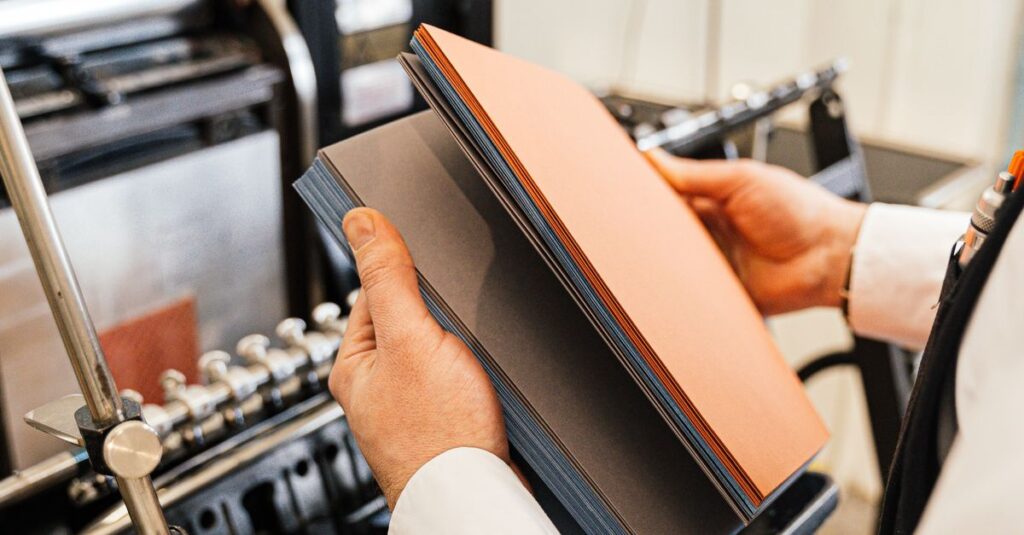
Why You’re Probably Thinking About Rough Notebooks All Wrong
Okay, let’s be honest. The first thing you think when you hear "rough notebook" is… scrap. Something half-done, not real, the paper equivalent of a practice run. I get it. For years, even in this business, that’s how I saw them.
But then I started actually talking to the people ordering them — procurement managers, school principals, warehouse supervisors. And I realized something. The rough notebook isn’t the final draft. It’s the backbone.
Think about it. Your factory floor needs a place for machine logs that’s going to get oily. Your construction site needs something for the foreman’s notes that might survive a rain shower. The school’s art class needs cheap, abundant paper where a toddler can go absolutely wild with a crayon. That’s where the strategic value is. The rough notebook doesn’t have to be pretty. It has to be there. And it has to not matter when it gets destroyed.
It’s a tool for capturing ideas before they’re ideas, data before it’s data. Anyway. If you’re looking at these for your business or institution, you’re on the right track.
if this sounds like what you’re dealing with, our production floor might have a few thoughts
What a Rough Notebook REALLY Is (It’s Not Just Scrap Paper)
Right. Let’s get clear on the definition, because this is where most people get tripped up. A rough notebook — at least in the context of bulk manufacturing — isn’t a "bad" notebook. It’s a purpose-built one.
It’s manufactured with a different mindset. The goal isn’t presentation. It’s pure utility. Here’s what that actually translates to:
- Paper: Usually a lower GSM (think 40-50 GSM). Feels thinner. It’s not meant for archival quality or fountain pens. It’s for pencils, ballpoints, markers that need to bleed through fast.
- Binding: Often simpler. A basic stitched side-binding or a saddle stitch. The cover might be a single, lighter cardstock. Sometimes it’s just the outer sheet of the notebook itself folded over. No laminated covers, no foil stamping at this stage.
- Printing: The ruling (the lines on the page) is there, but it might be a standard, light-blue single rule. No custom headers, no branding on every page. The cover might be blank or have a simple, generic print run.
The whole point is cost-effectiveness and volume. You’re buying function, not form. You’re paying for the "capture" mechanism, not the "display" case. And for huge swaths of institutional and industrial work, that’s exactly what’s needed.
You’re not buying a diary. You’re buying a sponge.
The Real-World Jobs of a Rough Notebook (Spoiler: It’s Not Just Writing)
I was on a call with a procurement guy from a mid-sized auto parts factory in Chennai last month. Third coffee of the day. He wasn’t ordering fancy ledgers. He was ordering 5,000 short-size rough notebooks for the assembly line. Every workstation had one. Every shift change, notes went in. Every quality check, a tick mark. Every machine hiccup, a scribble with a grease-pencil.
That notebook lived a hard life. And it was replaced every six weeks. That’s the use case.
Let me give you a few more concrete examples from people who actually order them:
- Schools & Colleges: Rough notebooks are the workhorse for practice sessions, draft work, and art classes. A student needs three drafts of an essay? That’s three rough books. A math class does daily problem sets? That’s a rough book per term. The cost per unit is so low it becomes disposable, which frees the student to actually use it without fear of "wasting" a good book.
- Warehouses & Logistics: Pick lists, temporary inventory counts, driver logs, forklift inspection check-offs. These notes have a lifespan of maybe 48 hours before the data is entered into a system and the paper is recycled. Durability matters, but permanence doesn’t.
- Construction & Fieldwork: Site diagrams, material delivery tallies, daily crew assignments, safety observations. These books get rained on, stuffed in pockets with nuts and bolts, and covered in dust. A perfect-bound fancy notebook would fall apart. A cheap, stitched rough book? It survives just long enough.
- Restaurants & Cafes: Kitchen prep lists, shift-change notes, daily specials brainstorming, inventory counts. Again – transient, critical information that needs a physical, central, cheap place to live for a day.
See the pattern? It’s about temporary capture in a non-temporary format. A whiteboard is temporary. A sticky note is too small. A rough notebook is the Goldilocks zone for operational scribbles.
Expert Insight
I was reading something last month from an operations researcher — can’t remember the name, honestly — and one line stuck with me. They said the most effective process documentation often happens on the cheapest paper available. The theory was that expensive, formal stationery creates a psychological barrier to noting down small, "imperfect" observations. But the small stuff is where the big failures (and fixes) hide. The rough notebook, by being inherently "rough," gives permission to document the messy, real workflow. I don’t have a cleaner way to put it than that.
Rough vs. Standard: What You Actually Get (And Pay For)
Look, if you’re buying for a business or a school, you need to know what you’re allocating budget for. This isn’t about good vs. bad. It’s about right tool, right job.
Let’s say you’re procuring notebooks for a corporate training program. You might get both: a standard, nice notebook for the final take-home materials, and a stack of rough notebooks for the group exercises and table brainstorming. Here’s how they break down:
| Feature | Rough Notebook (Bulk/Operational) | Standard/Corporate Notebook |
|---|---|---|
| Primary Use | Drafting, practice, temporary logs, disposable notes | Final notes, presentations, client meetings, archival records |
| Paper Quality | Lower GSM (40-54), thinner, more translucent | Higher GSM (70-100), thicker, minimal bleed-through |
| Binding | Basic side-stitch or saddle stitch; functional | Spiral, perfect binding, or premium stitching; durable |
| Cover | Light cardstock or self-cover; often blank/generic | Heavy cardstock, laminated, often custom-printed with logo |
| Printing & Customization | Standard ruled lines only; low customization | Fully customizable: headers, footers, logos, page layouts |
| Cost Per Unit (Bulk) | Very Low – designed for high-volume, low-cost | Higher – reflects materials & customization |
| Psychological Effect | "Use it up, it’s okay." Encourages free flow. | "This is important." Encourages neatness & polish. |
The point of this isn’t to say one is better. It’s to show they’re for different things. If you try to use a corporate notebook for a factory floor log, you’re wasting money. If you try to give a rough notebook to a client as a branded gift… well, don’t.
How Bulk Manufacturers Like Us Think About "Rough" Orders
Here’s the inside baseball. When someone like you — a school, a corporate buyer, a distributor — calls us for a quote on 10,000 rough notebooks, our entire setup shifts. It’s a different machine, literally and figuratively.
We’re not pulling out the heavy, glossy cover stock. We’re loading the lighter reels of paper. The binding line is set for speed, not intricate finishing. The printing press might run a simple, one-color rule pattern for hours. Efficiency is everything.
The real question we’re answering for you isn’t "How beautiful can we make this?" It’s "How reliably and cheaply can we produce a unit that performs its one job perfectly?" That job is to be written in, filled up, and replaced.
We optimize for:
- Run length: The longer the run, the cheaper the per-unit cost. This is the heart of bulk.
- Material consistency: The paper needs to be uniform so it runs through binders and printers without jams. Speed depends on this.
- Packaging for logistics: These aren’t packed in gift boxes. They’re bundled in 50s or 100s, shrink-wrapped on pallets, ready to be forklifted into a warehouse or storeroom.
It’s a pure B2B mindset. You’re not buying a product; you’re buying a consumable supply. And our job is to be the most reliable, consistent faucet for that supply you can find. Think about it this way: if your operations rely on these, an interruption in supply is an interruption in your data flow. That’s the real cost.
Why Getting This Right Matters More Than You Think
This isn’t just stationery procurement. It’s a small but real piece of operational infrastructure.
I remember talking to the administrator of a large coaching institute in Hyderabad. They’d switched from buying standard notebooks for practice tests to ordering custom-printed rough notebooks with their logo and a simple header. The cost per book dropped by over 60%. But more importantly, she said the students used them more freely. Before, they’d try to conserve pages in their "good" books. Now, they filled up book after book with mock answers. The rough book, by virtue of being designated as such, removed a mental barrier to practice.
That’s the hidden ROI.
For a business, the right rough notebook means your team logs things they otherwise wouldn’t. It means ideas in a meeting get captured on paper quickly, without someone worrying about "messing up" the shared, expensive notepad. It means a culture that values the process — the messy, iterative, rough-draft process — enough to give it a dedicated, physical place.
And look, from my side of the fence — the manufacturing side — filling these orders is what keeps the lights on. It’s the steady, recurring business that allows us to invest in the machines that also do the fancy, custom diary printing. The rough notebook trade is honest work. It’s straightforward. You need X units by Y date. We make it happen. No drama.
It’s the foundation. Everything else is the finish.
Frequently Asked Questions
What is the typical paper GSM for a rough notebook?
Most rough notebooks meant for bulk business or school use are in the 40 to 54 GSM range. It’s thin enough to be cost-effective but still holds up to everyday writing with a ballpoint pen or pencil. It’s not for heavy ink or markers.
Can rough notebooks be customized with our logo?
Yes, absolutely — but the customization is usually minimalist to keep costs down. Think a single-color logo print on the cover. We don’t recommend full-color laminated covers for true "rough" use, as that defeats the cost-saving purpose. The goal is branded functionality, not a premium gift.
What’s the minimum order quantity for bulk rough notebooks?
It varies by manufacturer, but for a dedicated "rough" production run, you’re typically looking at a minimum of 2,000 to 5,000 units to make the setup and material sourcing worthwhile. For truly massive institutional supply (like statewide school orders), it scales into the lakhs.
Are rough notebooks only available in one ruling style?
Not at all. While single-ruled (SR) is the most common and cheapest, you can get them in broad ruled (BR), unruled (UR), or even four-ruled (FR) for younger students. The key is specifying it upfront for the print run. More variety can slightly increase cost, but it’s usually marginal in bulk.
How do rough notebooks compare to scribble pads?
Great question. A scribble pad is usually a stack of sheets glued at the top, meant for ultra-short notes. A rough notebook is bound (stitched or spiral), has a cover, and is meant for sequential, chapter-like use. It’s more organized and durable. The notebook is for a series of notes; the pad is for a single note.
Let’s Wrap This Up
So, the rough notebook. It’s not the star of the show. It’s the stagehand — essential, unseen, making sure the performance happens without a hitch.
If you’re procuring for an institution or a business, understanding this category isn’t about finding the cheapest paper. It’s about strategically deploying the right tool to reduce friction in your daily work. It’s about giving people permission to think messily, log casually, and practice freely. The value isn’t in the object itself. It’s in what the object allows to happen.
I don’t think there’s one universal answer for what the "best" rough notebook is. Probably there isn’t. It depends entirely on whether it disappears into the workflow, doing its job silently. If you’ve read this far, you already know if you need them — you’re just figuring out who can supply them consistently, year after year, pallet after pallet.
When you’re ready to talk about that kind of supply, you know where to find us.