

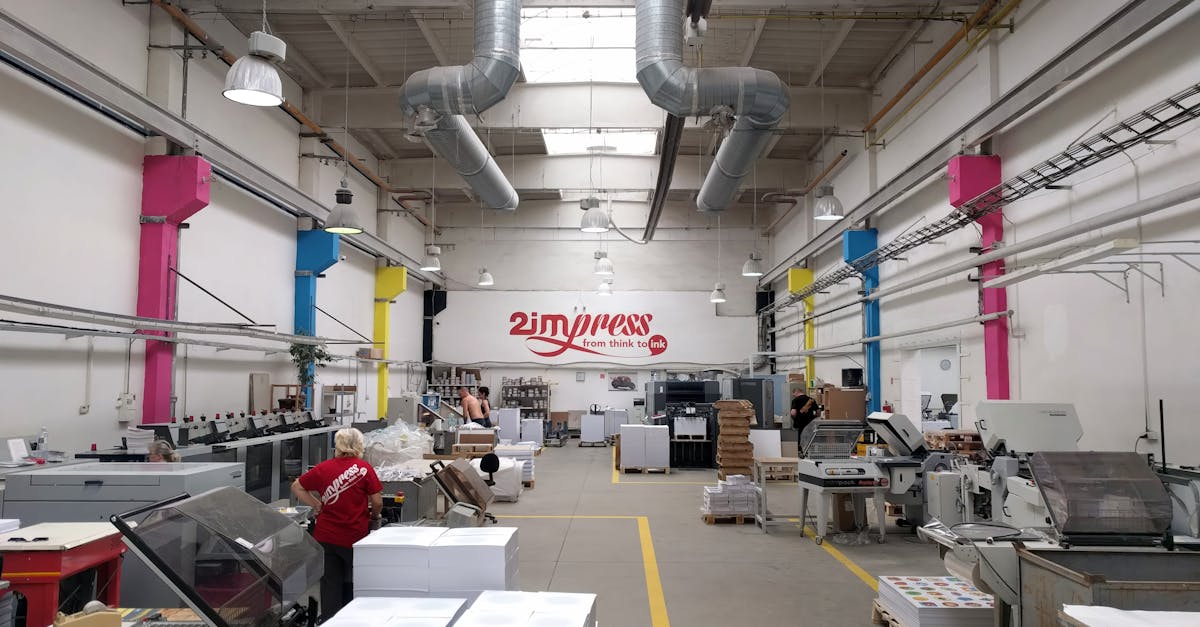
Searching for “Xeroxing Near Me”? You’re Looking for Something Bigger.
Let me guess. You’ve got a huge pile of documents that need to be identical. Maybe it’s training manuals. Or course modules for a new semester. Or branded journals for a company event. And your first thought is to find a local Xerox shop.
I’ve talked to dozens of procurement managers, school principals, even government office clerks who start exactly there. You type “xeroxing near me” into Google, hoping for a quick, cheap solution to a big problem. The thing is — and I say this from 40 years of watching this exact scenario play out — that search is almost always a sign that you’re about to do this the hard way.
Here’s why. Local copy shops are built for ones and twos. A stack of 50, maybe 100. They’re not built for ordering a thousand bound, stitched, custom-designed notebooks with your logo on the cover. That’s manufacturing. It’s a completely different world. And if your job involves keeping an institution supplied with paper, you probably already feel the stress of that difference. You need consistency. You need durability. You need it by next month. And you definitely don’t need to spend three days driving between five different shops for printing, binding, and cutting.
If that sounds like the headache you’re trying to solve, this whole conversation about what notebook printing actually involves might be worth a look.
The Real Need Behind “Xeroxing Near Me”
Think about it this way. Nobody genuinely wants thousands of loose, stapled sheets. What you want is a finished product. Something that holds together, looks professional, and gets the job done. But our brains default to “copy shop” because it’s the most visible, local solution. It feels immediate.
But that feeling is a trap. Because the need behind the search is almost never about copying. It’s about reproduction at scale. It’s about standardization. Let me give you a real example from last month.
I was on a call with a procurement manager for a chain of coaching centers. He needed 5,000 question-and-answer booklets for a new batch of students. He’d already spent two weeks getting quotes from local printers who would print the pages, then he had to find another guy for spiral binding, and someone else for the covers. The quality was all over the place. Some booklets had misaligned pages. Others used flimsy paper. He was frustrated, and his deadline was blowing up. He told me, “I just kept googling ‘xeroxing near me’ hoping a better option would magically appear.”
That’s the moment. When you realize the local solution is creating more problems than it solves. The actual need was for a single, reliable source to handle the entire job: printing, binding, paper sourcing, and delivery. Not ten different vendors.
Micro-Story: The School Principal’s Dilemma
Anita, 47, runs a private school in Vijayawada. Every June, the chaos begins. She needs 8,000 notebooks for the new academic year — custom covers with the school emblem, different rulings for different grades. For years, she’d send a peon with the design to a local press. They’d print the covers. Then another shop would do the inside pages. A third would stitch them. The notebooks would arrive in batches over two weeks, and every batch was slightly different. Last year, the Senior KG drawing books arrived with unruled paper instead of blank. She had to reorder. She spent more time managing the mess than she did on teacher training. She told me, “I thought I was saving money. I was just buying myself a second job.”
Her search history? You guessed it. “best xeroxing near me”.
Custom Notebook Manufacturing vs. Local Xeroxing: What Actually Changes?
Okay, so what’s the real difference? It’s not just about volume. It’s about intent and capability.
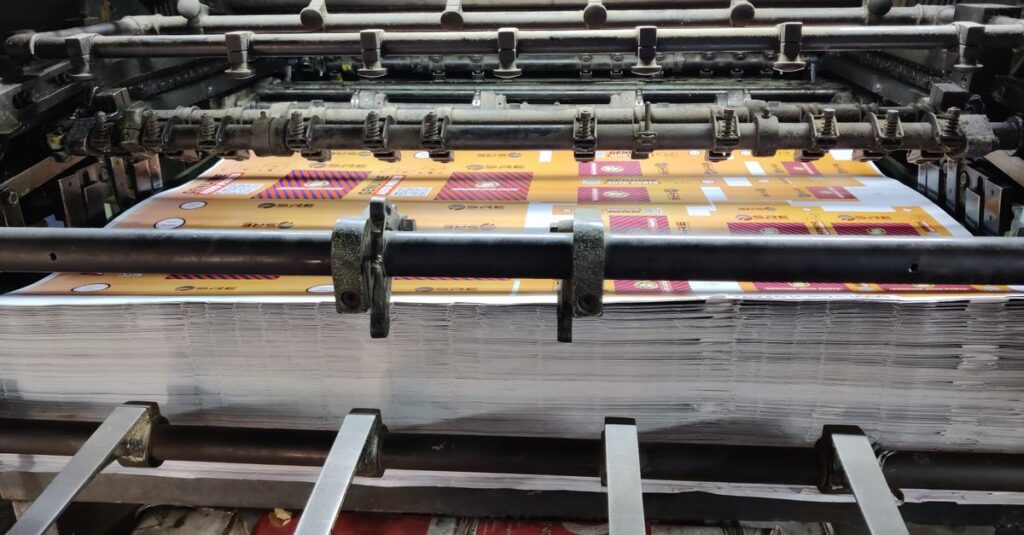
A local Xerox shop is reactionary. You bring them a master copy, they duplicate it. That’s it. A notebook manufacturer is proactive. We start with your need, not your master copy. We ask: Who is using this? How long does it need to last? What’s the budget? Do you need different sections? Then we build it from the ground up.
The capabilities aren’t even in the same league. Let’s break it down.
| Aspect | Local Xerox/Print Shop | Bulk Notebook Manufacturer |
|---|---|---|
| Order Volume | Low (1-100 copies) | High (1,000 – 100,000+ units) |
| Paper & Material Sourcing | Limited, often whatever’s in stock | Bulk sourcing of specific GSM (like our standard 54gsm), various rulings, colors |
| Binding Options | Usually just stapling or cheap spiral | Stitched, perfect binding, durable spiral, thread sealing |
| Customization | Basic printing on provided cover | Full cover design, custom layouts, logo printing, private label, OEM production |
| Production Time | A few days for small jobs | Planned schedules (e.g., 2-3 weeks for 10,000 notebooks) |
| Consistency & QC | Variable, depends on the day | Standardized process, batch quality checks, uniform output |
| End Product | A stack of copied sheets | A finished, branded, durable notebook ready for distribution |
See what I mean? It’s like comparing a roadside juice stall to a fruit processing plant. One makes you a glass. The other supplies a supermarket chain.
Expert Insight
I was reading an industry report last quarter — one of those dry PDFs full of graphs — and one line stuck with me. It said something like: The defining shift in institutional procurement isn’t digitalization. It’s the move from buying separate components to buying integrated solutions. A school doesn’t want paper, ink, and binding glue. It wants a notebook that works. I don’t have a cleaner way to put it than that. For 40 years, we’ve been watching this shift happen in slow motion. The businesses that get it don’t search for parts. They search for partners who deliver the whole.
When “Near Me” Doesn’t Matter (And When It Does)
Here’s a controversial opinion. For bulk orders, geographic proximity is often the least important factor. Right?
Think about it. If you’re ordering 20,000 custom diaries for your corporate clients, does it matter if the factory is 5 km away or 500 km away? Not really. What matters is the supply chain reliability. The truck arrives on Tuesday whether it’s coming from across the city or from Rajahmundry. The notebooks are packed on pallets, shipped via logistics partners, and delivered to your doorstep or warehouse. The “near me” anxiety is about control. You want to be able to drive over and yell at someone if things go wrong. I get that.
But with a real manufacturer, things shouldn’t go wrong in a way that requires yelling. The process is trackable. You get proofs. You get updates. You get a single point of contact. The factory’s physical location becomes irrelevant because the system is designed for remote coordination. We’ve supplied notebooks to schools in Kerala, corporates in Bangalore, and distributors in Dubai from our base in Andhra Pradesh for decades. The question isn’t “are you near me?” It’s “can you deliver to me?”
Now, for truly local needs — a 50-page report needed tomorrow — yes, find your local guy. But recognize that need for what it is: a tiny, urgent fire. Don’t use the same strategy to fight a forest fire.
How to Actually Get What You Need (A Realistic Process)
So you’ve stopped searching “xeroxing near me” and you’re ready to talk to a manufacturer. What happens next? Let’s walk through it, without the sales fluff. This is based on how hundreds of our orders actually go.
- First Contact & Specs: You’ll email or call with your basic need. “We need 5,000 A4 notebooks for a training program.” We’ll ask a bunch of questions you might not have considered: Page count? Ruling? Binding type? Cover finish? It’s okay if you don’t know. That’s our job to guide you.
- Sample & Proof: We’ll make a physical sample based on your specs. This is crucial. You need to feel the paper, test the binding, see the print quality. We’ll also send a digital proof of the cover for approval. Don’t skip this step. Ever.
- Production Schedule: Once you approve, we slot you into the production line. Our factory can run 30,000-40,000 bound notebooks a day, but your order is planned. This isn’t a chaotic print shop. It’s a flow.
- Quality Check & Dispatch: Batches are checked during and after production. Then they’re packed according to your instructions — in cartons, on pallets, shrink-wrapped. Then they’re handed to a logistics partner with tracking.
- Delivery & Follow-up: They arrive. You check them. That’s it. The whole process, from final approval to delivery, can be as quick as 10-12 days for a standard order.
The point is, it’s a managed process. Not a scramble. Your role shifts from project manager to approver. And that’s the only way to scale.
By the way, if you’re starting to think about specs, looking at the range of notebook products we make can help ground your ideas in what’s actually possible.
The Hidden Cost of the “Local Xerox” Shortcut
Let’s talk money. Because everyone thinks the local guy is cheaper. And on a per-page basis, he might be. But that’s a terrible way to calculate cost for a bulk order.
You have to factor in:
- Your time: Coordinating between vendors. Fixing mistakes. Following up.
- Inconsistency: The cost of having 10% of your order be unusable or look shoddy.
- Delay: What does a week’s delay cost your program or event?
- Reputation: Giving attendees or employees a poorly-made booklet reflects on your brand.
When you add it up, the “cheaper” option often has a much higher true cost. A manufacturer builds all that management, quality control, and reliability into a single price. You’re not paying for copies. You’re paying for the absence of headache.
I was talking to a stationery distributor from Hyderabad about this last week — over the phone, actually — and he said something I keep thinking about. He said, “My biggest competitor isn’t the other distributor. It’s my own customer’s belief that they can do it themselves cheaper with a local printer.” He spends half his time educating buyers about total cost, not unit cost.
Conclusion: What Your Search Should Really Be For
Look. I’m not saying there’s never a reason to visit a local copy shop. There is. For that one-off, urgent, small job. But if you’re searching “xeroxing near me” with a number in your head that has more than three zeros, you’re using the wrong tool for the job.
The shift is mental. You’re not ordering copies. You’re commissioning a product. You’re not a customer at a shop. You’re a client of a factory. The relationship, the process, the outcome — all of it changes.
I don’t think there’s one perfect answer for every organization. Probably there isn’t. But if you’ve read this far, you already know the local Xerox path isn’t working. You’re just figuring out if it’s okay to want something simpler, more reliable, and honestly, more professional.
If you’re ready to talk about what that looks like for your next notebook or diary order, the conversation starts with a sample. Get in touch here.
Frequently Asked Questions
What is the minimum order quantity for custom printed notebooks?
It varies by manufacturer, but for a standard custom job like logo-printed school notebooks or corporate diaries, a realistic minimum is usually around 1,000 pieces. This allows for efficient setup of the printing plates and binding process. For simpler jobs or private label, some might go lower, but the per-unit cost will be higher.
How long does it take to get bulk notebooks manufactured?
From final approval of your design and specs, allow 10-15 working days for production and another 3-5 days for shipping within India, depending on location. Larger orders (50,000+) or complex binding might take 3-4 weeks. Always ask for a production schedule upfront — a good manufacturer will give you one.
Can I get different page rulings in the same notebook order?
Absolutely. This is a common need for schools or training institutes. You can order batches with single-ruled, double-ruled, unruled, or even graph pages within the same overall order. The key is clear communication. You’ll specify the quantity of each type, and they’ll be produced as separate batches but delivered together.
What’s the difference between spiral binding and stitched binding?
Spiral binding uses a plastic or metal coil threaded through holes. It lets the notebook lay completely flat, which is great for drawing books or manuals. Stitched binding (also called saddle-stitching) uses thread to sew the pages together at the spine. It’s more durable for long-term use and has a cleaner, more professional edge. The choice depends on use and budget.
Do you export notebooks outside of India?
Yes, many Indian notebook manufacturers, including us, regularly export to markets like the Gulf, Africa, the USA, and Europe. The process involves understanding your local standards (like paper size), ensuring packaging is robust for sea freight, and handling export documentation. If you’re an international buyer, start the conversation early to navigate these details.