You type it in. You hit enter. “Printing store near me.” You need notebooks, a few hundred of them, and you need them yesterday. Or maybe you’re planning for next quarter – corporate diaries, branded notepads, school supplies for an entire district. You want someone close by. Someone you can drive to, yell at if things go wrong, pick up a sample from. It feels like the right thing to do.
Here’s the thing. That search? It’s not really about location. Not for what you’re actually trying to do. It’s a safety blanket. You’re looking for trust, for reliability, for someone who won’t ghost you after you’ve handed over the artwork for 5,000 custom notebooks. The “near me” part is just the closest, easiest way your brain tries to solve for that. I’ve talked to enough procurement managers and school administrators to know the look when they realize the local print shop quoted them three times the price and a six-week lead time. It’s a specific kind of headache.
Because let’s be honest – when you’re ordering in bulk, the game changes completely. It’s not about walking in with a USB stick. It’s about paper specs, binding durability, shipping logistics, and whether the company you’re talking to has actually run a 40,000-notebook order for a state university before. The search for a local printer is often the first step down a path that leads you somewhere else entirely. If this is the rabbit hole you’re going down, it’s worth knowing what you’re actually looking for.
Why “Near Me” Stops Mattering After a Certain Quantity
Think about your last big order. The one that made you sweat a little. You probably didn’t care if the factory was a 15-minute drive or a 15-hour flight away. You cared if the notebooks would show up on time, if the print quality would be sharp, and if the binding would hold up through a full school year. That’s it.
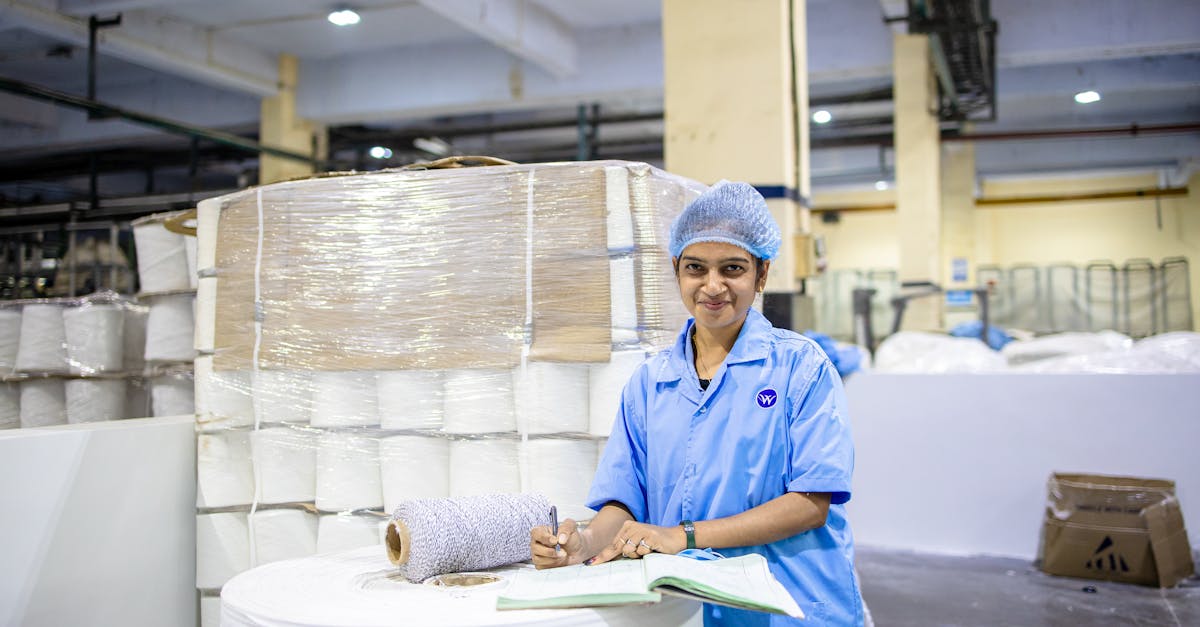
The local print shop is fantastic for business cards and flyers. For a run of 500 custom notebooks? Maybe. But when your needs scale – and I mean really scale – the geography flips. Suddenly, you’re not looking for a storefront; you’re looking for a production line. You need a place that has the machinery to stitch 40,000 books a day, the warehouse space to store 20 tons of paper, and the logistical know-how to palletize and ship everything across the country (or across an ocean). That doesn’t exist on every street corner. It can’t.
The Real-Life Math of Buying Notebooks
Let’s get specific. Say you’re ordering 10,000 A4 notebooks for a corporate event.
A local printer might:
– Source paper in small, expensive batches.
– Outsource the binding, adding cost and time.
– Struggle with consistent color matching across the run.
– Have no experience with export packaging if you’re shipping overseas.
A dedicated manufacturer – even if they’re not “near you” – will:
– Buy paper by the truckload, lowering your unit cost.
– Control the entire process under one roof.
– Have standard operating procedures for bulk quality checks.
– Know exactly how to crate 10,000 notebooks for sea freight.
The difference isn’t just price. It’s risk.
I was on a call with a procurement manager from a tech company in Bangalore last month. He’d been burned by a “local vendor” who promised the moon on a rush order for branded journals. The shipment arrived two weeks late, the logos were pixelated, and half the spiral bindings were already twisted. “Never again,” he said. He wasn’t angry; he was just tired. Now he works with two dedicated manufacturers, one in the north and one in the south of India, and he hasn’t had a problem since. The distance became irrelevant.
What You’re Actually Searching For (And Not Finding)
Okay, let’s break this down. When you type “printing store near me,” your brain is asking for a solution to a problem. But the words you’re using might not match the problem you have.
You might be looking for:
1. Quick turnaround: “I need this fast.”
2. Personal service: “I want to talk to a human.”
3. Sampling ability: “I need to touch the paper before I commit.”
4. Problem-solving: “If something goes wrong, I need them to fix it.”
All perfectly reasonable needs. The assumption is that physical proximity solves them. But in the world of bulk manufacturing, it often doesn’t. A local store might be just as slow because they’re waiting on materials from someone else. The person you talk to might be a sales rep with no power on the production floor. And let’s be real – how often do you actually drive over to pick up a sample? Most of the time, you ask for it to be couriered anyway.
The real solution lives in a different set of questions. Can they handle your volume? Do they understand GSM, ruling types, and binding strength? Will they provide DTP proofs before going to press? Are they used to working with institutional purchase orders? That’s the stuff that matters. That’s what keeps you from lying awake at night wondering if the order will arrive.
Expert Insight
I was reading something last month – an industry report on stationery sourcing – and one line stuck with me. It said that for bulk buyers, the single biggest point of failure isn’t the printer; it’s the mismatch between expectations and capabilities. A local shop might say “yes” to anything to get the business, even if they have to subcontract 80% of the work. A factory might say “no” to a last-minute change because they know it’ll break the entire production schedule. One looks bad in the moment but saves the project. The other feels good right up until everything falls apart. I don’t have a cleaner way to put it than that.
A Side-by-Side Look: Local Printer vs. Dedicated Manufacturer
This isn’t about saying one is good and the other is bad. It’s about fit. For a 50-unit order for a local workshop? Sure, hit up the printer down the street. For 5,000 notebooks for a university? The math – and the risk profile – changes completely.
| Factor | Local Printing Store | Dedicated Notebook Manufacturer |
|---|---|---|
| Core Business | Short-run printing, marketing collateral, business cards | Manufacturing notebooks, diaries, and bound stationery at scale |
| Typical Order Size | 10 – 500 units | 1,000 – 100,000+ units |
| Paper Sourcing | Buys pre-cut sheets from distributors, higher cost per sheet | Sources paper directly from mills in bulk rolls, cuts in-house |
| Binding Capability | Often outsourced; limited to simple staples or cheap spiral | In-house stitching, perfect binding, spiral; focus on durability |
| Customization Depth | Usually print-on-cover only; limited paper/rule options | Full customization: cover material, paper GSM, ruling, page count, binding |
| Quality Control | Spot-checking; inconsistent across large runs | Systematic QC at each stage: printing, binding, packing |
| Scalability | Limited by machine size and outsourcing partners | Designed for scale (e.g., 30,000-40,000 notebooks/day) |
| Shipping & Logistics | Courier services for small parcels; no palletized shipping | Full container load (FCL) and less container load (LCL) expertise, domestic trucking |
The table makes it obvious, right? It’s not about who’s better. It’s about who’s built for the job you’re hiring them to do. Trying to force a local printer to act like a factory is a fast track to disappointment. And paying factory prices for a 100-notebook order is just burning money. Knowing which one you actually need is half the battle.
The Real Questions to Ask (Instead of “How Far Are You?”)
So, if “near me” isn’t the right filter, what is? What should you be asking when you’re vetting a supplier for a big notebook order?
First, ask about capacity. Not in vague terms, but concretely. “How many bound notebooks can you produce in a single shift?” If they hesitate, that’s your first red flag. A real manufacturer knows their numbers cold.
Second, ask for references for a similar job. Not just testimonials, but a contact at a school or business who ordered something of a similar scale and complexity. Anyone can show you a beautiful sample they made once. You want to see the consistent quality they deliver on Tuesday at 3 PM when the machine’s been running for six hours straight.
Third, dig into the prepress and proofing process. How do they handle your artwork? Do they have a dedicated DTP team that will check for bleeds and safe zones? Will they send you a physical mock-up or a digital proof? This step is where most delays and errors happen, and most local shops are just not equipped for the technical details of bulk print production.
And fourth – this is the big one – ask about their own suppliers. Where do they get their paper? Their binding wire? Their glue? A manufacturer that has strong, long-term relationships with raw material suppliers is a manufacturer that won’t get caught in a supply crunch that delays your order. A printer buying sheets off the shelf has zero control over that.
When “Local” Actually Makes Sense (And When It Doesn’t)
Let’s not throw the baby out with the bathwater. There are times when finding a printing store near you is absolutely the right move.
When it makes sense:
– You need a small batch of custom notebooks for a workshop or event (under 200).
– Your design is incredibly complex and requires a lot of back-and-forth, hands-on proofing.
– You’re on a super tight deadline and can literally wait in their lobby for the job to come off the machine.
– You value the ability to walk in and have a face-to-face conversation above all else.
When it starts to fall apart:
– Your order runs into the thousands.
– You need specific, non-standard paper (like high GSM for watercolor or tear-resistant paper).
– Durability is critical (think textbooks or field notebooks).
– You’re dealing with institutional procurement rules that require certain certifications or quality guarantees.
In those second scenarios, the manufacturer three states away starts looking a lot more “local” in the ways that count. Their expertise is closer to your problem. Their capacity is closer to your need. Their reliability is closer to your peace of mind.
FAQ
Frequently Asked Questions
I need custom notebooks fast. Won’t a local printing store be quicker?
Often, no. For custom notebooks, speed depends on their binding and paper inventory. A local shop might have to wait weeks for materials. A large manufacturer keeps huge stocks of standard papers and binding materials ready for production, so they can often turn around a bulk order faster, even with shipping time.
How can I trust a notebook manufacturer I can’t visit in person?
You look for proof, not proximity. Ask for video of their factory floor, detailed photos of past projects, and client references you can call. Any reputable manufacturer expects this and will provide it readily. It’s standard practice in B2B. A physical visit is nice, but digital verification is the norm.
What’s the minimum order quantity for a custom notebook from a manufacturer?
It varies, but most dedicated notebook manufacturers have MOQs starting around 500 to 1,000 pieces. This is because the setup for custom printing and binding is significant. For smaller quantities, a local print shop might be your only option, but your per-unit cost will be much higher.
Doesn’t shipping from far away add too much cost and complexity?
It can, but for bulk orders, it’s usually factored into a landed cost quote. A professional manufacturer will handle all the logistics – palletizing, documentation, freight – as part of the service. For large orders, the savings from their scale often far outweigh the shipping cost, making the total price lower than a local quote.
I’m a school procurement officer. What should be my top priority?
Durability and consistent supply. You’re not buying for one year; you’re establishing a supplier for the next five. Look for a manufacturer with a track record of supplying educational institutions. They’ll understand your need for sturdy binding that survives a backpack, predictable lead times for each academic year, and the ability to handle large, repetitive orders.
Wrapping This Up
Look, I get it. “Printing store near me” feels safe. It feels controllable. But the truth is, for the kind of orders that keep procurement managers and business owners up at night – the big, important, can’t-fail orders – control doesn’t come from driving distance. It comes from capability. From a factory that knows how to run 24/7 to hit a deadline. From a team that’s done this ten thousand times before.
The search isn’t wrong. The intent behind it – to find a reliable partner – is 100% right. You just have to make sure you’re looking in the right place for the scale of problem you’re trying to solve. Sometimes the right partner isn’t the closest one on the map. They’re the one whose entire business is built to do the one thing you need, perfectly, every single time.
I don’t think there’s one answer here. Probably there isn’t. But if you’ve read this far, you already know what you’re looking for – you’re just figuring out if it’s okay to want the reliability of a factory, even if it’s not down the street. Sometimes, the right conversation is just an email or a call away, regardless of the miles.