Right. Let’s talk about A4 paper.
Because I’ve had this exact conversation about twenty times in the last month. A procurement manager will email me, asking for a quote on custom A4 notebooks. I’ll send it. Then, a day later, they’ll call. “Wait,” they’ll say. “The A4 sheet size in cm on your site is different from what Google says.” And I’ll have to explain — again — that Google is giving you the flat sheet size. Not the size of the notebook in your hands.
It’s not their fault. This stuff is confusing if you don’t live in a factory. You’re ordering notebooks for a thousand employees or an entire school district. The last thing you need is a sizing mix-up that blows your budget or delivery schedule. You need the real-world numbers, not just the ISO standard. So, if you’re trying to figure out what an A4 sheet size in cm actually means for your bulk order, this is probably what you’re looking for.
What Everyone Gets Wrong About A4 Size
The official, international A4 paper size is 21.0 cm by 29.7 cm. That’s the perfect, pristine, uncut dimension. I can say that in my sleep. But here’s where the headache starts — that’s the size of the flat paper before it becomes a notebook. That dimension is for the parent sheet, the big roll or sheet that gets trimmed, cut, folded, and bound.
Think about it this way. When you bind paper — whether it’s stitched, spiral, or perfect-bound — you lose a few millimeters on the binding edge. The pages need to be gripped. They need to be trimmed after binding to get that clean, flush look. The final, usable page in your A4 notebook? It’s almost always a hair smaller. Maybe 20.8 cm by 29.5 cm. Sometimes 20.9 by 29.6. It depends on the binding machine, the paper grain, the skill of the guy running the cutter that Tuesday morning.
Most people don’t realize that. They see the spec and assume the product matches it exactly. In manufacturing, nothing matches exactly. Tolerances exist. And that tiny difference — a few millimeters — is the difference between a notebook that feels premium and one that feels cheap. It’s also the first thing a sharp-eyed corporate buyer or a principal will notice.
You can’t just order by the standard. You have to order by the final, delivered product spec.
The Real-World Math of Paper and Notebooks
Okay, let’s get practical. You’re not just buying paper; you’re buying a physical object that has to survive being thrown in a backpack, stacked in a warehouse, and shipped across the country.
When we manufacture an A4 notebook, we start with a larger sheet of paper — often called a parent sheet or a stock sheet. This sheet is bigger than A4. We print multiple pages on it (this is called imposition), then we fold it, cut it, and bind it. The cutting process, called trimming or guillotining, is where we get to the final A4 sheet size in cm.
Here’s a simple breakdown of the journey from paper to product:
- Parent Sheet: Comes in large reels or sheets (e.g., 70 cm x 100 cm).
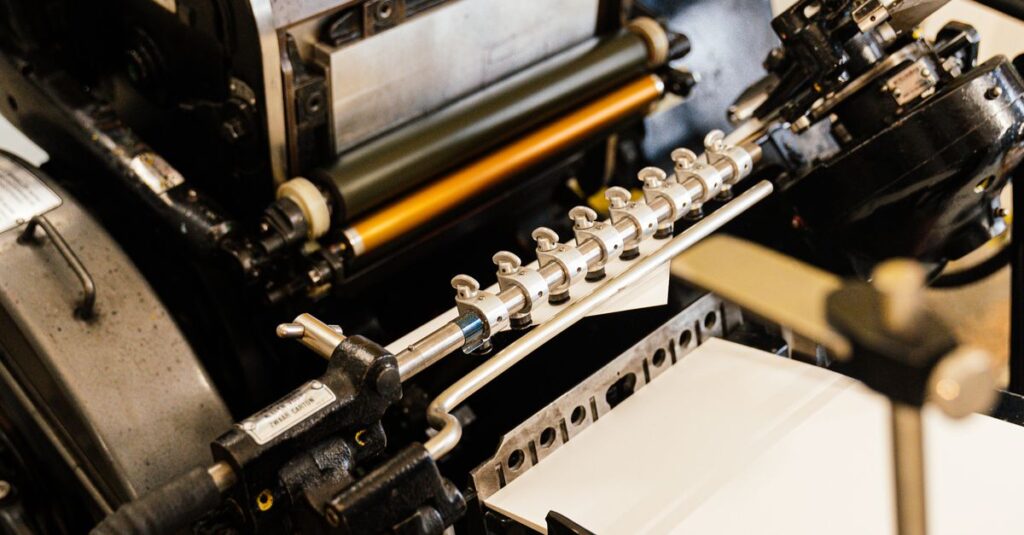
- Printing & Imposition: Multiple notebook pages are printed on one big sheet to save paper and cost.
- Folding: The big sheet is folded down into sections, called signatures.
- Binding: Signatures are stitched or glued together at the spine.
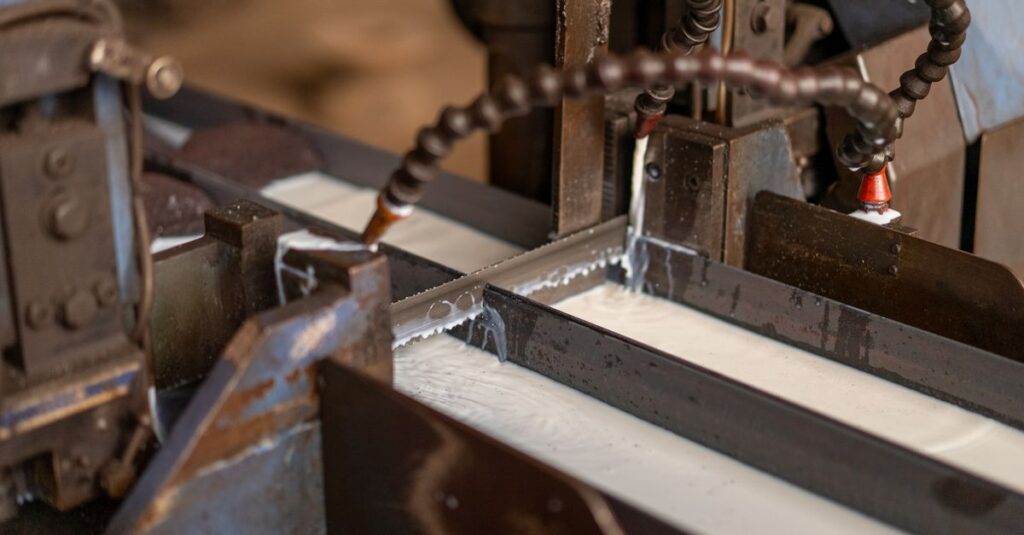
- Face Trimming: The three open edges are cut clean, revealing the final page size.
The final trim is the moment of truth. A blunt blade or a rushed job can give you a slightly ragged edge, making the notebook seem smaller. A sharp blade and a careful operator gives you that crisp, satisfying edge that makes the 21.0 x 29.7 cm feel real. This is where 40 years of experience isn’t just a line on a website — it’s the guy who knows his machine’s quirks and adjusts the cut by half a millimeter before the run starts.
I was talking to a supplier last week — about paper quality, actually — and he said something obvious that stuck with me. “You can buy the best paper in the world,” he said, “but if your finishing is sloppy, it all feels cheap.” He was right. The size is the first thing you see. The precision of the cut is the first thing you feel.
A4 Notebook vs. Loose A4 Paper: The Buyer’s Table
Look, I’ll be direct. When you’re procuring in bulk, you need to compare apples to apples, not apples to “almost apples.” Here’s the real difference between ordering loose A4 paper and ordering bound A4 notebooks, from a manufacturing and cost perspective.
| Consideration | Loose A4 Paper (Ream) | Bound A4 Notebook |
|---|---|---|
| Final Delivered Size | Exactly 21.0 cm x 29.7 cm | Approx. 20.8-20.9 cm x 29.5-29.6 cm |
| Primary Cost Driver | Paper quality (GSM), brand | Paper + Binding + Cover + Labor + Cutting |
| Wastage Factor | Low (just edge trim from parent sheets) | Higher (trim from sheets + spine loss + cover cuts) |
| Customization | Usually just logo on wrapper | Full cover print, inside covers, header/footer prints |
| Unit of Measure | Sheets per ream (e.g., 500 sheets) | Number of pages (e.g., 100 pages = 50 sheets) |
| Bulk Storage | Flat, dense stacks. Efficient. | Bulky, needs more care to avoid spine damage. |
| User Perception | Utility. Disposable. | Branded asset. Meant to be kept and used. |
The table makes it pretty clear — you’re buying two different products with two different cost structures. A notebook isn’t just paper held together. It’s a manufactured good. The binding type you choose (stitched, spiral, perfect) changes the spine width, which changes how much of the page is truly usable near the center. Spiral binding gives you the full flat page, but the sheets can tear out. Stitched binding is durable, but you lose that deep margin. It’s a trade-off.
And that trade-off is where most bulk buyers get stuck. They want the durability of stitching but the flat-lay of a spiral. You can’t have both. Not without inventing a new kind of binding. So you pick the priority.
Why the “Standard” Size Doesn’t Always Fit
Here’s the thing — the ISO A4 standard is brilliant for interchangeability. Printers, folders, filing cabinets are built for it. But schools in Andhra Pradesh, corporate offices in Bangalore, and government tenders all have their own… let’s call them “inherited preferences.”
We’ve supplied notebooks to a government college for a decade. Their “A4” lab record book specification, written into the tender, is 21.5 cm x 28 cm. It’s not A4. It’s not even a standard size. But it’s what their existing shelves and lab desks are built for. If we delivered true 29.7 cm tall books, they wouldn’t fit in the storage racks. So we make the paper 21.5 x 28. We call it “A4” in the quote because that’s the category it falls under in their minds. But we manufacture to their actual needed size.
This happens more than you’d think. A company wants a custom A4 diary. But they also want a thick, luxurious leather cover. Add 3mm for that cover on each side, and suddenly the whole book is too wide for their standard-issue desk drawers. The project stalls. The lesson? Always, always confirm the finished product dimensions, not just the page size. Ask for a dummy or a sample. It saves everyone a massive headache.
Expert Insight
I was reading an old industry journal last month — one of those physical ones that still gets mailed — and there was a quote from a German paper engineer. He said something like, “Paper is a living material. It breathes. It expands and contracts with humidity. Your perfect 29.7 cm in a dry Rajasthan warehouse becomes 29.8 cm in a humid Chennai office.” I don’t have a cleaner way to put it than that. We design for this. We leave micro-tolerances in the cutting dies, we store paper in climate-controlled sections before binding. The goal isn’t robotic perfection. It’s consistency within a human environment. That’s the real craft.
The GSM Connection: How Weight Tricks Your Eye
This part is subtle, but it matters. The weight of the paper — its GSM — directly impacts how you perceive the A4 sheet size in cm. Seriously.
Take a sheet of flimsy 50 GSM paper. Hold it by one corner. It droops. It feels insubstantial. Now take a sheet of thick 120 GSM paper. It’s rigid. It holds its shape. The rigid sheet feels larger, more substantial, even though both are cut to exactly 21.0 x 29.7 cm. Your brain associates floppiness with smallness and cheapness. Rigidity with premium quality and size.
So when you’re evaluating a quote, the quoted A4 sheet size in cm is just one number. The GSM is the secret second number that defines the user’s experience. For standard writing, 70-80 GSM is the sweet spot — sturdy enough not to bleed, light enough to keep the book from being a brick. For corporate diaries, we often go to 100 GSM for that premium feel. For a school notebook that needs to be cost-effective and survive a year in a kid’s bag? 54-60 GSM does the job. The size is the promise. The GSM is the promise kept.
And if you’re thinking about printing on it — like for custom branded notebooks — that’s a whole other layer. Heavier paper (higher GSM) handles ink better, lies flatter, and makes your logo look more impressive. It’s not just a notebook; it’s a brand ambassador. That’s where the real customization magic happens.
Wrapping It Up: What You Actually Need to Know
Let’s be honest. You came here for a number. 21.0 cm x 29.7 cm. You have it. But I hope you’re leaving with the context around that number.
Ordering bulk notebooks isn’t a spreadsheet exercise. It’s a translation exercise. You’re translating a user need (“notebooks for our sales team”) into a set of physical specifications (size, weight, binding, cover) that a factory can execute, within a budget, on a timeline. The A4 sheet size in cm is the anchor point. Everything else — the usable page size, the GSM, the binding tolerance, the cover overhang — swings around that anchor.
I don’t think there’s one perfect formula for every order. Probably there isn’t. Some projects need ruthless cost efficiency. Others need undeniable premium feel. But if you’ve read this far, you already know that the number on Wikipedia isn’t the number that lands on your loading dock. You’re just figuring out how to specify the difference.
Frequently Asked Questions
Is A4 the same as Legal or Letter size?
No, completely different. A4 is the international standard (21.0 x 29.7 cm). US Letter size is 21.6 x 27.9 cm, and Legal is 21.6 x 35.6 cm. If you’re supplying to international markets, confirming the correct standard is the first step. Mixing them up is a classic, expensive error.
Why is my A4 notebook slightly smaller than 21×29.7 cm?
Almost certainly due to the final trim after binding. To get clean, flush edges on all three sides, a few millimeters are cut off. This is standard practice. A high-quality manufacturer will minimize this loss and keep it consistent across every book in your order.
How does A4 sheet size affect my bulk order pricing?
It’s foundational. The size determines how many pages we can print on a single parent sheet of paper (the imposition). More pages per sheet means less paper waste and lower cost. A4 is highly efficient for this. Odd, custom sizes create more waste, which increases your per-unit cost.
Can I get a true-to-size A4 notebook with no trimming loss?
You can, but it will look and feel unprofessional. The edges will be slightly uneven (called a “rough trim”) from the folding and binding process. For a polished product, face trimming is non-negotiable. The loss is minimal and worth it for quality.
What’s the next size down from A4?
That’s A5. It’s exactly half the area of an A4 sheet, measuring 14.8 cm x 21.0 cm. It’s a popular size for smaller notebooks, diaries, and notepads. We manufacture tons of them. The same principles apply — the final book size will be a hair smaller than the flat sheet spec.