


So, what’s the deal with a 300 page notebook?
Here’s something you’ve probably felt if you buy notebooks in bulk: the page count anxiety. You get a 200-page book, and halfway through the year it’s bursting. You get a 700-page monster, and it feels like carrying a brick — plus, half of it goes to waste. Right in that frustrating middle is the 300-page notebook.
It’s not one of the standard, easy numbers. 52 pages, 92, 240, 320 — those are the usual suspects. 300 pages? That’s a specific choice. A statement. It says, “I have a lot to say, but I also want to close this chapter.”
In my experience working with schools and corporations for over four decades, this is the notebook for the person or institution that knows their volume. It’s not a guess. It’s a calculation. And if you’re looking at ordering these in bulk, you’re already thinking differently. Which, honestly, is where the real conversation starts.
Who really uses a notebook with 300 pages?
It’s not for everyone. A student grabbing a single book for class? They’ll pick the 200-page. The 300-pager is for systems. For processes that have been mapped out.
- Graduate Researchers & PhD Students: That thesis chapter won’t draft itself. The 300-page count gives enough runway for literature notes, draft outlines, and raw data logging without needing to switch books mid-stream.
- Architects & Engineers: Think sketches, site measurements, revision notes, client meeting scribbles. It’s a project book. One major project, one book. Start to finish.
- Corporate Training Departments: This is a big one. A 5-day intensive training program? You can pre-package a 300-page notebook for every attendee with the course agenda pre-printed on the first few pages. It lasts the whole program, feels substantial, and doesn’t leave half a book unused.
- Legal Firms for Case Files: A single, complex case. All notes, timelines, and witness summaries in one sequential, bound place. The heft of it feels right — like the case matters.
I was talking to a procurement manager from a tech college in Hyderabad last month. He said they switched to 300-page lab notebooks for their final-year engineering students. Why? The 240-page ones ran out two weeks before finals. The 320-page ones? Students felt overwhelmed on day one. The 300 was the sweet spot. It’s always a sweet spot, not a standard.
The Anatomy: How a 300-page book is actually made
Okay, let’s get into the weeds. This is where my 40 years in a factory in Rajahmundry actually means something. A 300-page notebook isn’t just a 200-page book with extra signatures slapped on.
The Binding Headache: 300 pages is 150 sheets (front and back, remember?). That’s a thick stack. A standard staple binding? Forget it. It won’t hold. You’re looking at spiral binding with a thick, durable coil, or perfect binding (where the pages are glued at the spine with a strong flexible adhesive). The cover has to be significantly more rigid — usually a thick, laminated board — or the whole thing sags.
The Paper Choice: You can’t use flimsy paper here. At 54 GSM, which is our standard writing grade, 300 pages have a certain weight and dignity. Go cheaper, and the book feels bloated and cheap. Go to 70 GSM premium, and you’ve got a doorstop. The balance is everything.
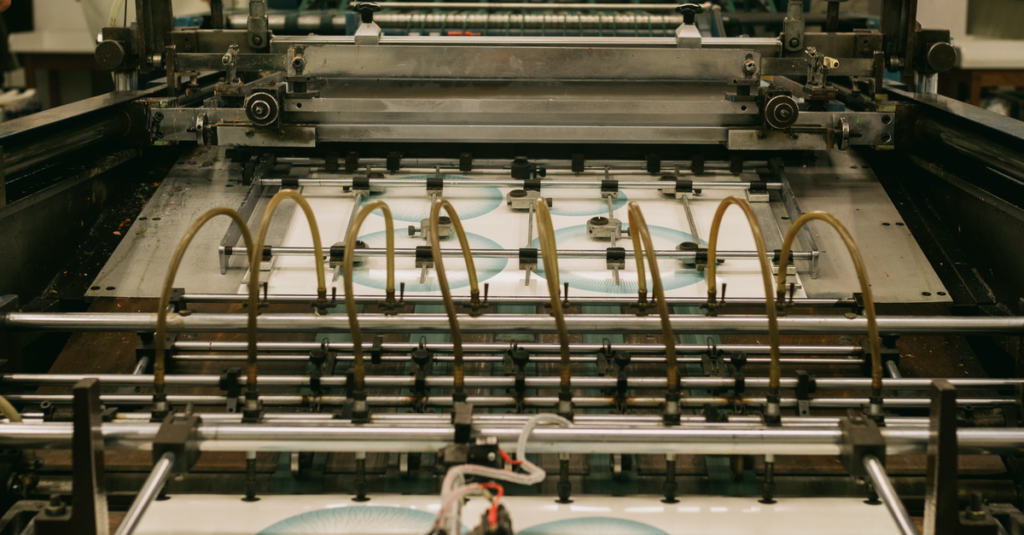
The manufacturing line has to be adjusted. The stitchers need different settings. The perfect binding glue needs more time to cure. It’s a different beast. Most small shops can’t do it consistently. I’ll just say it — if you’re getting a quote for a custom 300-page notebook that seems too good to be true, ask about the binding. It’s the first corner they cut.
300 Pages vs. The Usual Suspects
| Feature / Consideration | 300 Page Notebook | 240 Page Notebook | 320 Page Notebook |
|---|---|---|---|
| Best For | Defined, long-term projects; full academic terms; professional training programs. | Standard school year subjects; general office meeting notes; daily journals for 6-8 months. | Archival records; multi-year project logs; ultimate “all-in-one” notebooks. |
| Weight & Portability | Substantial but manageable. You know you’re carrying something important. | Light and easy. The everyday workhorse. | Heavy. Often stays on a desk. Not a daily carry. |
| Psychological Feel | “I have ample space, but an end is in sight.” Motivating. | “This will get the job done.” Practical and familiar. | “This is a monumental task.” Can be intimidating to start. |
| Bulk Order Cost | Higher per unit than 240-page due to specialized binding & materials. | Most cost-effective. Standardized production = lowest cost per page. | Highest cost. Maximum material and binding strength required. |
| Customization Ease | High, but requires factory precision. Great for branded corporate gifts. | Very High. The simplest to print and bind in custom runs. | Moderate. Thickness can challenge some printing and embossing methods. |
The Customization Game: Making 300 pages your own
This is where it gets interesting for a buyer. A generic 300-page notebook from a store is one thing. A custom 300-page notebook is a tool, a brand ambassador, a unified system.
Expert Insight
I remember a client, a large consultancy firm from Bangalore. They wanted a 300-page notebook for their new hires. The first 20 pages were pre-printed with company values, mentorship guidelines, and a 100-day plan. The last 10 pages had perforated, pre-formatted feedback sheets. The 270 pages in the middle? All theirs. They weren’t just buying notebooks; they were onboarding. The researcher I spoke to there said something that stuck with me — “The notebook’s heft matched the weight of the opportunity we were giving them.” I don’t have a cleaner way to put it than that.
We can do that. We can section it with different rulings — graph paper for the first 50 pages, lined for the next 200, blank for sketching at the end. We can put tabbed divider pages. We can duplex print headers on every page. When you control the manufacturing from the paper up, a 300-page notebook is a canvas. The question becomes what you want to paint on it.
A Real-Life Notebook Story
Priya, 28, a project manager at an infrastructure firm in Vizag. Her company ordered custom 300-page notebooks for the new highway project. Each book had the project codename embossed on the cover, the map of the stretch on the inside cover, and the first 30 pages were pre-ruled as checklists for compliance audits. The rest was her domain. She told me she filled three of them over 18 months. She didn’t have to search across five different notepads for a meeting note from month two. It was all there, in sequence. She still has them on her shelf. “They’re not just notes,” she said. “They’re the story of the project.” The books cost the company maybe 150 rupees each. The value? Not quantifiable.
So, should you go for 300 pages?
Look, I’ll be direct. Don’t order 10,000 of these because it sounds good. The 300-page notebook is a precision instrument. It solves a specific problem of volume and timeframe.
Ask yourself: Is this for a defined process that has a clear beginning, middle, and end? Is uniformity across a team or student batch crucial? Are you willing to invest a bit more per unit for a binding that won’t fail? If you said yes, then you’re not just buying stationery. You’re buying a system. And that’s a smarter way to buy.
If you’re just looking for general-purpose bulk notebooks, stick with the 200 or 240-page. Seriously. You’ll save money and they’ll do the job perfectly. The 300-pager is for when the notebook itself is part of the job.
Frequently Asked Questions
Is a 300 page notebook spiral bound or stitched?
It depends on quality. A high-quality 300-page notebook is almost always spiral bound with a thick metal or plastic coil, or perfect bound. Simple stitching won’t hold that many pages securely over time. Always ask your manufacturer about the binding type for page counts this high.
How thick is a standard 300 page notebook?
Using standard 54-60 GSM paper, a 300-page notebook (150 sheets) will be roughly 18-22mm thick at the spine. It feels substantial — about the thickness of a decent paperback novel — but isn’t unmanageable. The cover adds another few millimeters.
Can I get a 300 page notebook with mixed paper types?
Absolutely, but this is a true custom job. A good manufacturer can collate different paper types — like graph, lined, and blank — into a single 300-page book. This is ideal for technical or creative projects. It needs planning and affects the binding, so discuss it early in the quoting process.
Are 300 page notebooks good for students?
For most school students, a 200 or 240-page book is perfect for an academic year. However, for university students in heavy writing disciplines (law, literature, history) or for a specific, year-long thesis project, a 300-page notebook can be an excellent, dedicated tool that lasts the entire effort.
What’s the minimum order quantity for custom 300 page notebooks?
This varies. For a fully custom design with unique page layout and binding, most manufacturers (including us) need a minimum order of 500-1000 units to make the setup worthwhile. For simpler custom printing on a standard 300-page format, MOQs can be lower. Always ask.
Final thoughts
The 300-page notebook occupies a niche. It’s for the serious note-taker, the organized institution, the project that demands a single source of truth. It’s a commitment to depth.
In a world of disposable pads and digital notes, there’s something quietly powerful about filling a book of that size. It represents a completed journey. As a manufacturer, I see the care that goes into making them hold together. As a user, you feel that solidity in your hands. I don’t think there’s one perfect page count for everyone. Probably there isn’t.
But if you’ve read this far, you already know if 300 pages is a solution or just a number. You’re just figuring out how to get them made right. Sometimes, that’s the only question left to ask.