Look, I Know Why You’re Searching This
You typed “print shop in near me” because you need something physical, tangible, and ready by yesterday. It’s not a casual search. It’s urgent. A school needs 5000 notebooks for the new term. Your company wants 2000 branded diaries for the annual conference. A distributor is breathing down your neck for a restock. The clock is ticking, and the first page of Google is showing you a lot of… Kinko’s.
That’s the real headache, right? You’re not looking for 50 color copies of a presentation. You’re looking for a manufacturing partner. Someone who can take a raw idea — a logo, a page count, a specific ruling — and turn it into a pallet of perfectly bound, custom-printed products. And all the local “print shops” seem built for one-off flyers.
Three things happen when you find the wrong kind of shop. First, you waste a week explaining your needs to someone who doesn’t speak your language. Second, you get a quote that makes your finance manager laugh (or cry). Third, you realize too late that they can’t handle the volume or the binding you actually need. I’ve seen this play out more times than I can count.
If this sounds familiar, our guide to commercial printing services might be worth a look.
The Problem With Your “Near Me” Search
Here’s the thing — the algorithm doesn’t know you’re a procurement manager. It hears “print” and shows you places with big, colorful storefronts and self-service machines. It’s optimized for retail, not for B2B manufacturing. You get cafés with printers, not factories with perfect-binding lines.
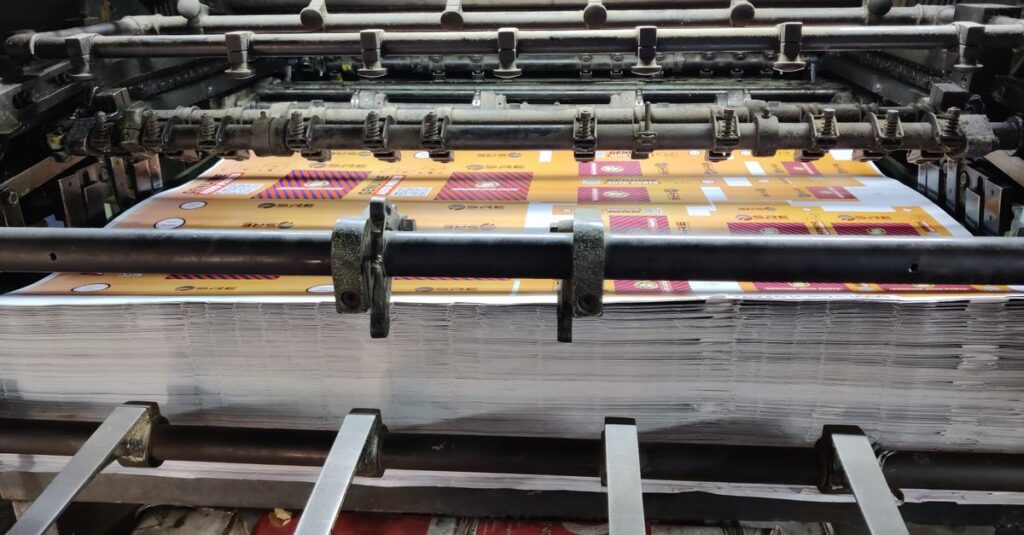
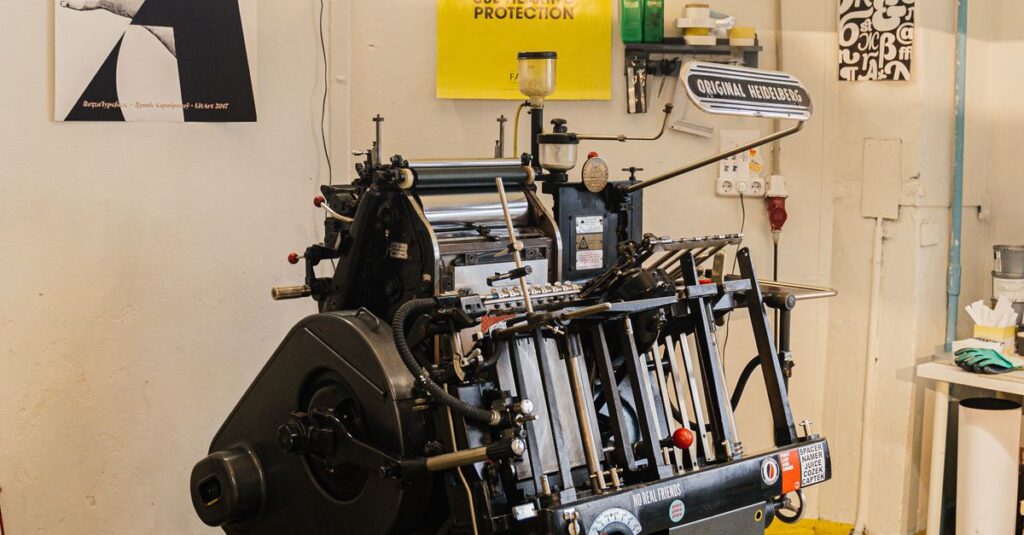
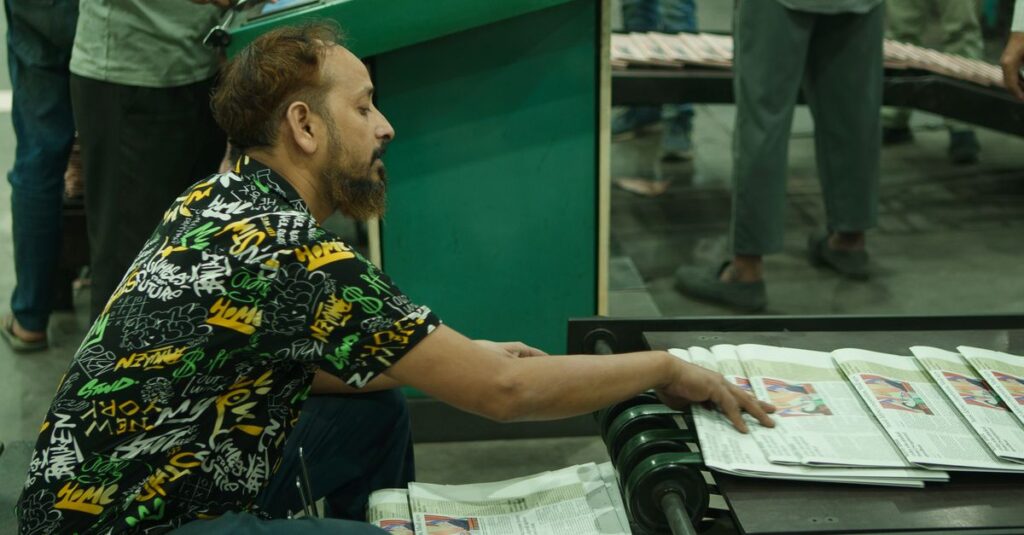
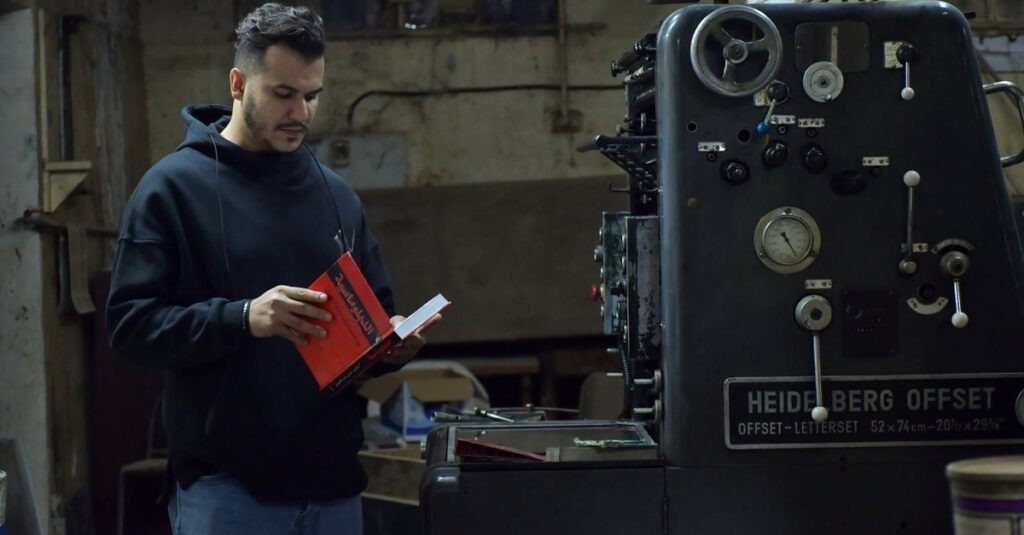
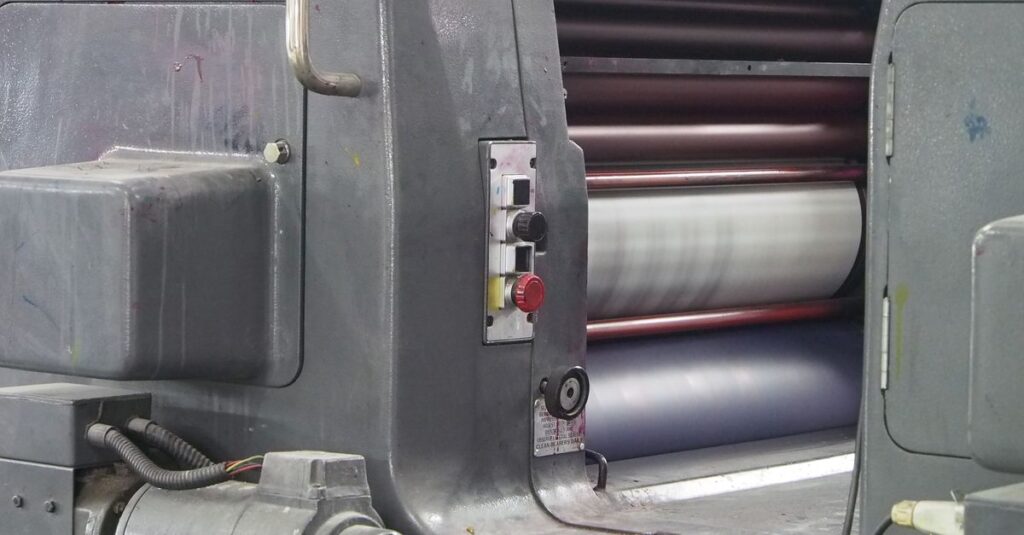
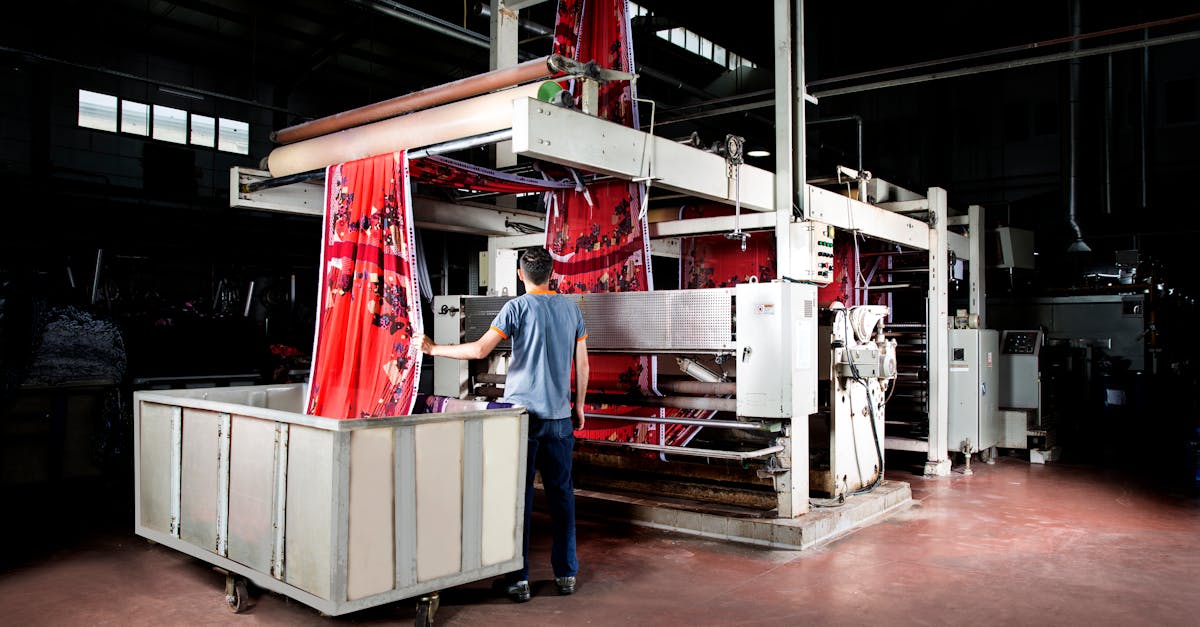
What you’re probably picturing is a commercial notebook printing facility. A place with industrial guillotines, high-speed offset presses, and rows of workers stitching and gluing. That doesn’t show up on a generic map. It’s in an industrial estate, not next to a supermarket. The search intent is broken before you even start.
Think about it this way. You wouldn’t search “car factory near me” when you need to buy a fleet of company vehicles. You’d search for “automotive manufacturers” or “fleet suppliers.” The same logic applies. Your need is upstream.
So, What Actually IS a Print Shop For You?
Forget the retail definition. In your world — the world of bulk stationery, corporate diaries, and school supplies — a print shop is a production hub. It’s the link between paper reels and the finished notebook in a student’s hands.
It’s where these things happen:
- Mass Printing: Running thousands of sheets with your custom cover design, page headers, or internal branding. Not on a desktop printer. On a machine that consumes paper by the mile.
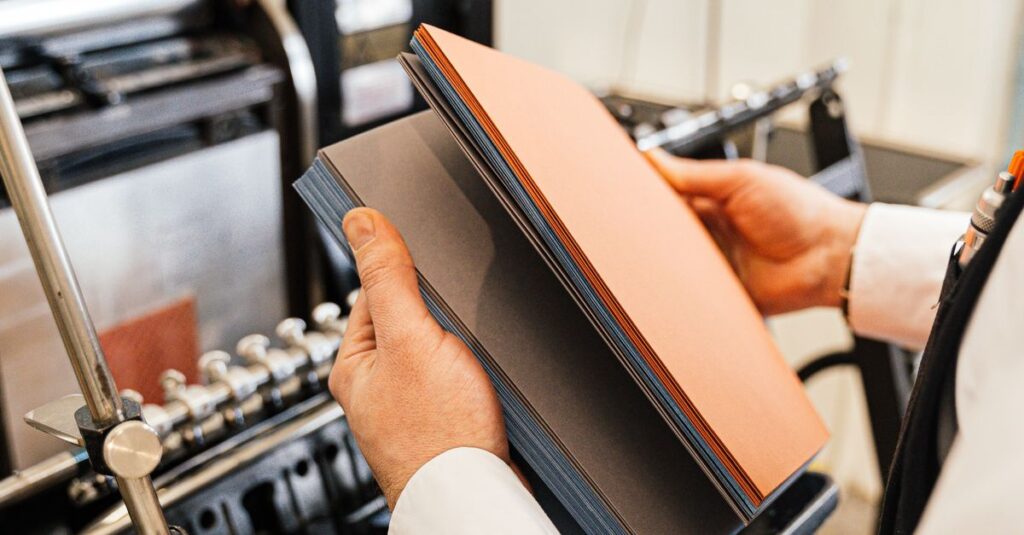
- Binding & Finishing: This is the real magic. Taking those printed sheets and turning them into a usable product. Spiral binding for art pads. Perfect binding for sleek corporate diaries. Stitched binding for school notebooks that survive a backpack.
- Customization at Scale: It’s not about adding a name to one diary. It’s about ensuring every single one of 10,000 notebooks has your school’s crest in the exact same spot, with the same color fidelity.
The shop itself is less important than the capability. You need a partner who gets the job done, not one you can drive to in ten minutes. Because what’s “near” you geographically might be miles away from understanding your business.
A Quick, Real Story
I was on a call last month with a guy named Rohan. He’s 42, procurement head for a chain of coaching institutes in Hyderabad. He needed 25,000 custom workbooks in six weeks. He’d spent two weeks calling every “print shop” his assistant found. He was getting quotes for digital printing — beautiful quality, but at a price that would have sunk his budget. And the timelines were impossible.
He was frustrated, tired. He said, “I just need someone who does this all day, every day.” That’s the line. That’s the whole search, right there. He didn’t need a printer; he needed a manufacturer. We shifted the conversation from “pages” to “paper reels,” from “copies” to “print runs.” The relief in his voice was audible. He wasn’t crazy; the search was.
Anyway.
How to Actually Evaluate a Printing Partner
Stop looking for proximity. Start looking for these signs. Ask these questions instead of checking distance.
Expert Insight
I was talking to our production head, Venkat, about this last week. He’s been in this factory since the 90s. He said something that stuck with me: “The first question isn’t ‘Can you print this?’ Any shop can print. The first question is ‘How do you bind 10,000 of these by next Friday?’ That answer tells you everything.” He’s right. Capacity and process tell the real story. A retail shop will hesitate. A manufacturer will start talking about shift schedules and wire-O machines.
Here’s what to ask:
- What’s your daily binding capacity? (If they don’t have a number ready, red flag.)
- Do you source paper directly, or are you a middleman? (Direct sourcing = better control, fewer delays.)
- Walk me through a recent bulk order for a school. (Listen for details about logistics, QC, packaging.)
- What’s the minimum economical order for custom cover printing? (This separates hobbyists from professionals.)
Look, I’ll be direct. Your biggest risk isn’t distance. It’s a supplier who over-promises on capability because they want the order. The fallout from a missed delivery to 200 schools is a career moment you don’t want.
Sometimes, finding the right partner means looking at a company’s history more than their location.
Print Shop vs. Notebook Manufacturer: The Real Difference
Let’s make this crystal clear. This is where most of the confusion — and the wasted time — happens.
| Factor | Local Retail Print Shop | Commercial Notebook Manufacturer | |
|---|---|---|---|
| Primary Job | Short-run copying, photo printing, banners | Mass production of bound stationery products | |
| Order Volume | 1 – 500 units | 1,000 – 100,000+ units | |
| Paper & Materials | Buys pre-cut sheets retail | Sources paper in reels direct from mills | |
| Binding Capability | Maybe spiral/comb binding for small jobs | Industrial stitching, perfect binding, wire-o | |
| Cost Structure | High per-unit cost, setup fees for each job | Low per-unit cost, economies of scale | |
| Best For | Prototypes, small samples, office stationery | Bulk school orders, corporate diaries, wholesale supply |
See the gap? It’s not that one is better. They’re for completely different problems. You’re searching for a solution in the wrong aisle.
What to Do When You Need Something “Now”
Okay, practical advice. The deadline is real. I get it. Here’s a playbook, based on what I’ve seen work for other procurement managers.
First, stop using “print shop” in your search. Try these instead:
- “bulk notebook manufacturer India”
- “custom diary printing supplier”
- “school notebook printing company”
The results will change. Drastically. You’ll start seeing websites that talk about production lines and GSM paper, not laminating services.
Second, be ready to share specs, not just a picture. Have this info ready:
- Exact size (King Size? Long? Give dimensions.)
- Page count (52, 92, 200?)
- Ruling type (Single Ruled? Four Ruled? Unruled?)
- Paper GSM (If you know it. If not, ask for samples.)
- Binding type (Stitched? Spiral? Perfect bound?)
- Quantity (Be honest about the range.)
- Delivery deadline (The real one, not the aspirational one.)
Having this ready cuts the back-and-forth from days to hours. It signals you’re a serious buyer, not a tire-kicker. It moves you to the front of their priority queue.
And honestly? Most manufacturers have seen every rush job in the book. If your specs are clear, they can tell you in minutes if it’s possible. The ambiguity is what kills timelines.
Frequently Asked Questions
What should I look for in a print shop for bulk notebooks?
Don’t look for a “print shop” — look for a manufacturer. Focus on binding capacity, paper sourcing, and experience with institutional orders. Ask for client references from schools or corporations. The right partner will have a production process, not just a printing service.
How many notebooks is considered a “bulk” order?
In our industry, “bulk” typically starts at 1,000 units for a standard product. For custom printing with unique covers or branding, the minimum economical run is usually 2,500 to 5,000 notebooks. This is where per-unit costs drop significantly compared to retail printing.
Can I get custom-branded notebooks quickly?
It depends on the manufacturer’s schedule and your specs. For an existing notebook style with just a logo stamp, maybe 3-4 weeks. For a fully custom design from scratch, including paper sourcing, allow 6-8 weeks minimum. Always ask for a realistic timeline based on their current queue.
What’s the difference between spiral binding and stitched binding?
Spiral binding uses a plastic or metal coil through punched holes — lays flat, great for sketchbooks. Stitched binding uses thread to sew sheets together at the spine — more durable, classic for school notebooks. The choice depends on use. A manufacturer should guide you.
Do I need to provide artwork for custom notebooks?
Yes, you typically provide a print-ready PDF of your cover and any internal branded pages. A good manufacturer will have a design team that can help finalize files or even create designs from your concepts, but that adds time. Have your logo and brand colors ready.
Finding What You Actually Need
At the end of all this, your search for a “print shop near me” is really a search for reliability. For a partner who doesn’t flinch at a 50,000-unit order. Who understands that a delayed notebook shipment means 5,000 students on Monday morning without their books.
The geography barely matters. A reliable supplier 500 miles away is infinitely better than an unreliable one across the street. Your job is to de-risk the supply chain, not minimize the drive time.
I don’t think there’s one perfect answer for every buyer. Probably there isn’t. But if you’ve read this far, you already know the local copy shop isn’t it. You’re just figuring out how to find the industrial partner your project actually requires. And that’s a much better search to be running.
If you’re evaluating suppliers and want to see the kind of specs and processes a 40-year manufacturer works with, you can explore our product range and capabilities here.