That “Local Printer” Search You’re Doing? Let’s Talk About It.
You’ve got the search bar open. You type in “printer near by me.” Your screen fills with copy shops, digital print centers, and maybe a few bookbinders. And something in your gut says it’s not quite right. Because you’re not looking to print 20 brochures or laminate a poster. You’re looking for thousands of notebooks. For the whole school. For the entire sales team. For the next quarter’s corporate diaries.
The problem isn’t that you’re searching the wrong words. It’s that the internet hasn’t quite caught up to the difference between printing a menu and manufacturing a product. The gap between a local printer and a notebook manufacturer is huge. And if you’re responsible for procurement, that gap costs you time, money, and a lot of headaches.
I’ve been in this business for decades — talking to procurement managers, school administrators, distributors who’ve walked this same road. They start with “printer,” realize they need a factory, and then spend weeks trying to figure out who actually makes the thing from scratch. If you’re nodding right now, maybe understanding what we actually do is a better starting point.
What A “Printer” Really Does (And Why It’s Not Enough)
Right. Let’s get specific. When most people search “printer near me,” they’re picturing a service. You bring them a design file, they put it on paper, maybe they staple or bind it. It’s transactional. It’s for small batches. The paper? They buy it from someone else. The binding wire or glue? Also from someone else. Their job is to put ink on a surface you provide.
Now, think about a notebook. A single 92-page, spiral-bound notebook for a student. It needs: specific paper (54 GSM, smooth, no bleed-through), precise ruling (single, double, four-ruled for accounts), a durable cover, spiral wire that won’t snap, and consistent printing on every page. And you need 10,000 of them. Identical.
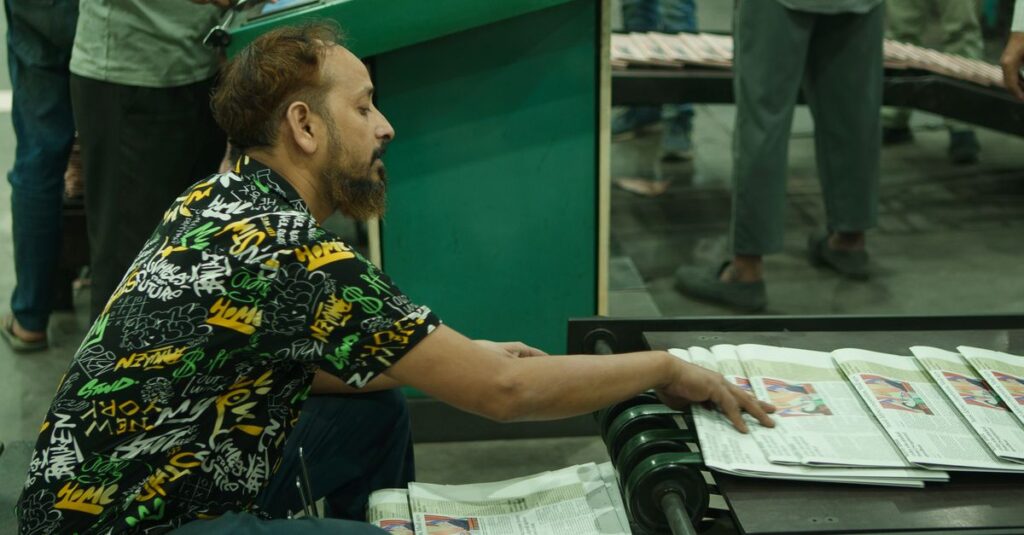
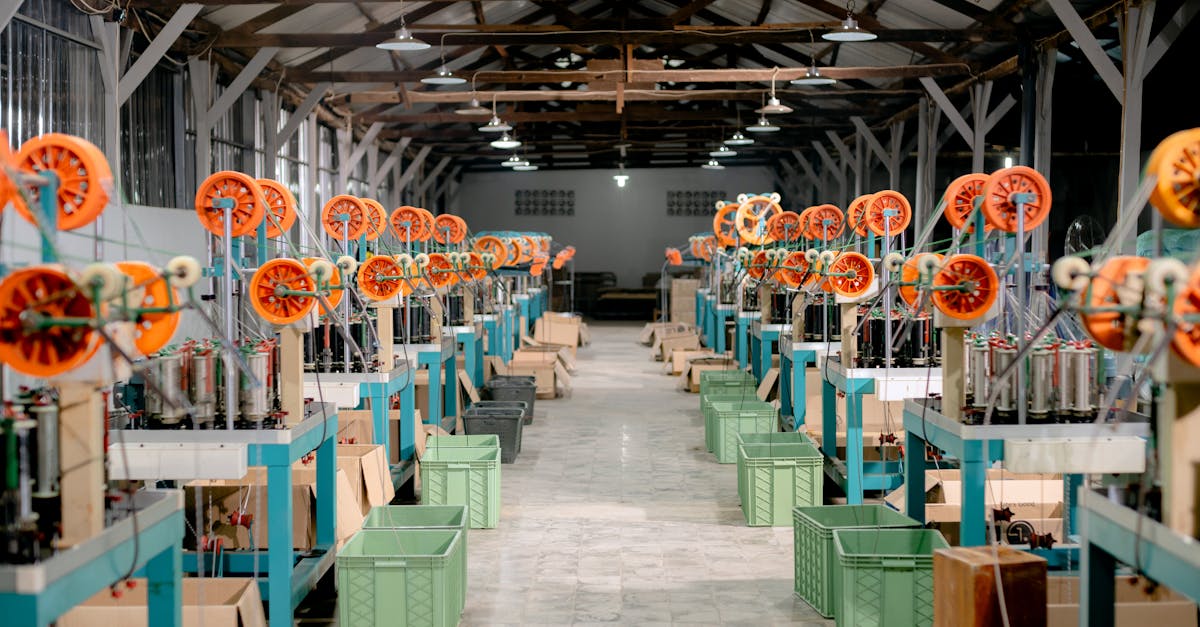
A local print shop simply cannot do that. They don’t have the paper sourcing for that volume. They don’t have the giant ruling machines that draw perfect lines on reams of paper at high speed. They don’t have the automated binding lines that can punch and spin wire through 40,000 notebooks a day. The machinery, the raw material supply chain, the quality control for bulk — it’s a different world.
It’s like needing a commercial bakery to feed a city and searching for “home baker near me.” The intention is right. The scale is wrong.
The Real Process: How Bulk Notebooks Are Actually Made
Okay, so if a printer isn’t the answer, what is? Let me walk you through what happens in our factory when an order comes in. It’s not one machine; it’s a chain.
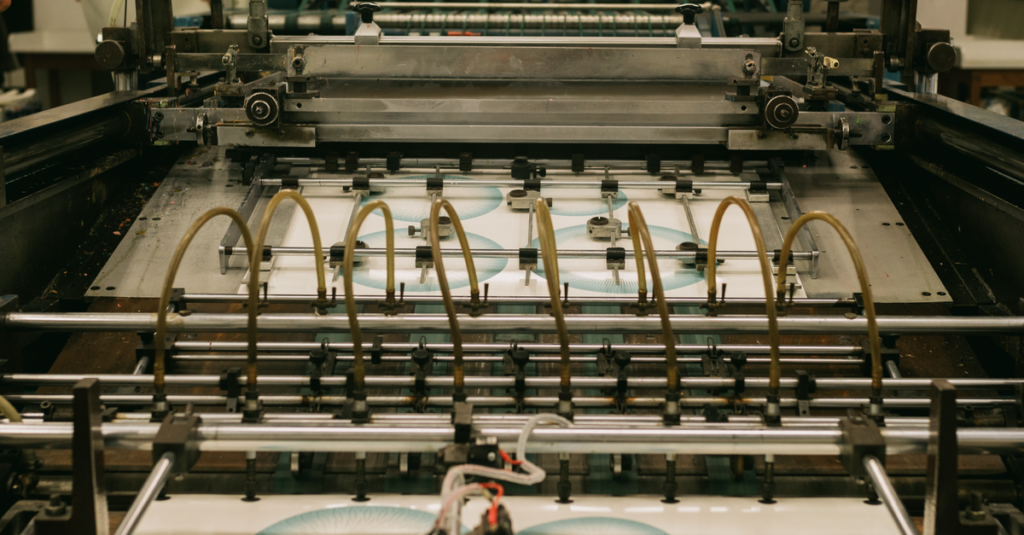
First, paper. We source large rolls or sheets of specific writing paper — the GSM (thickness) matters. This isn’t photocopy paper. It’s made for writing, with a specific finish so ink doesn’t feather. That paper gets loaded into a ruling machine. This machine prints the lines — single ruled for essays, four-ruled for accounting, graph paper for engineers. It’s not printing your logo yet; it’s creating the functional page.
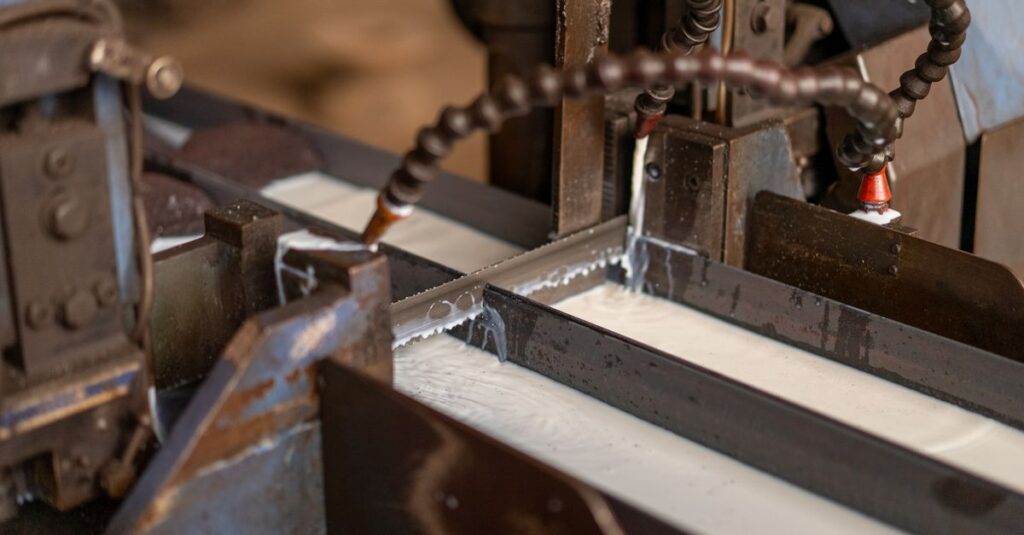
Then, that ruled paper is cut to size. King size, long, short, account book size — each gets guillotined precisely. Those cut sheets are gathered into sets — 92 pages, 200 pages, whatever the spec is. Then they go to the binding line.
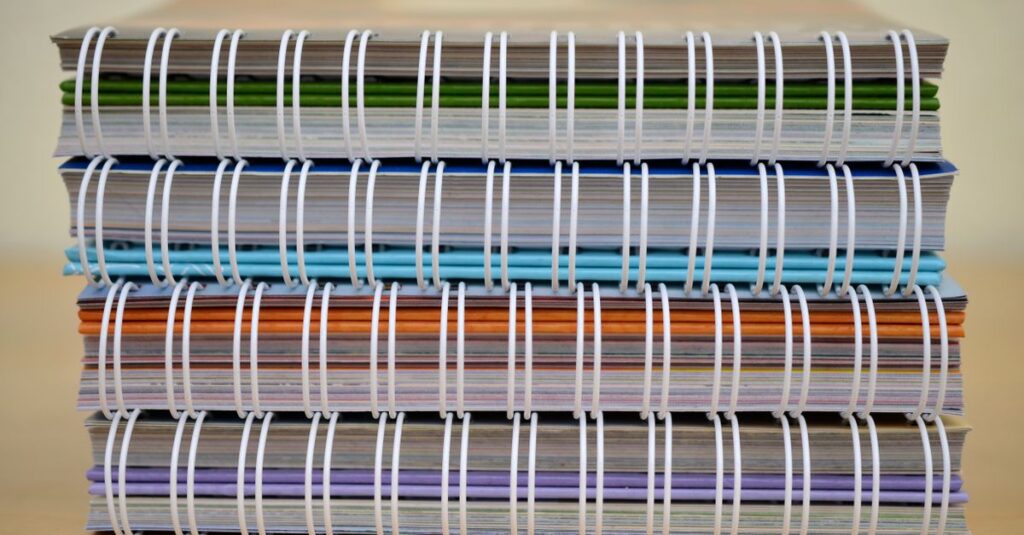
Binding is its own beast. Spiral binding? A machine punches a line of holes down the side and threads a continuous plastic or metal coil through. Perfect binding (like a paperback book)? The edge is ground flat and glued to the spine. Stitched binding? Thread is sewn through the fold. Each method suits a different use. School kids need rugged spirals that lay flat. Corporate diaries might use perfect binding for a clean look.
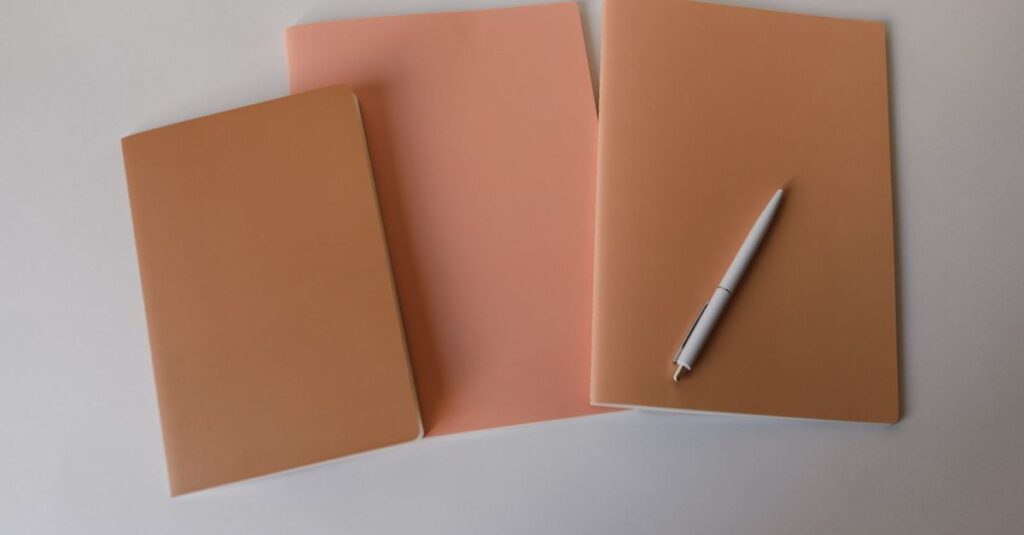
Finally, the cover. This is where your customization comes in — your school logo, your company branding. The cover stock is printed, often laminated for protection, then attached. Only then is it a finished notebook. This isn’t printing. This is manufacturing.
I remember a procurement manager from a college in Hyderabad telling me he spent a month going to local printers, getting quotes for “notebook printing.” Every quote was astronomical because they were subcontracting each step. He thought he was being thorough by finding someone local. He was just adding middlemen.
Who Actually Needs a Manufacturer (And Who Doesn’t)?
Let’s break this down. When does a “printer near me” search work, and when does it lead you astray?
You probably DON’T need a manufacturer if:
– You need under 100 custom notebooks for a small workshop.
– You’re prototyping a single design sample.
– You need one-off binding for a thesis or report.
For that, a local print/bind service is perfect. Go for it.
You absolutely DO need a manufacturer if:
– You’re ordering for a school, college, or university (hundreds or thousands of students).
– You’re a corporation ordering branded diaries or notepads for employees/clients.
– You’re a distributor or wholesaler supplying to retailers.
– You’re a government institution procuring stationery in bulk.
– You want consistent quality across a large order, with specific paper, ruling, and binding.
– Price per unit is a major factor (volume manufacturing brings the cost way down).
The line is quantity and specificity. If your need is measured in thousands, and the specs (paper quality, ruling, binding) matter to the end-user’s experience, you’ve crossed into manufacturing territory.
Expert Insight
I was talking to a stationery distributor from Chennai last month. He said something that stuck: “My customers don’t buy notebooks. They buy trust. They trust that the pages won’t tear, the lines are straight, the spiral won’t catch on a school bag.” He’s right. That trust isn’t built at the printing stage. It’s built in the paper selection, the precision of the ruling, the tension on the binding wire. A printer applies a finish. A manufacturer builds the product from the ground up. That’s the part most procurement searches miss entirely — they’re looking for someone to decorate a house, when they really need an architect and builder.
Sri Rama’s Notebook Specs: What’s Possible When You Go Direct
Let’s get concrete. When you work directly with a maker, you get choices. Lots of them. Here’s a snapshot of what we can do — which is typically what any real manufacturer offers, and what a local printer simply can’t.
Sizes: King Size (23.6×17.3 cm), Long (27.2×17.1 cm), Short (19.5×15.5 cm), Account (33.9×21 cm).
Page Counts: 52, 92, 200, 240, 320, even up to 700 pages.
Ruling: Single Ruled (SR), Double Ruled (DR), Four Ruled (FR), Unruled (UR), Graph, Cross Ruled (CR).
Binding: Spiral (plastic/metal), Perfect Binding (glued spine), Stitched (thread sewn).
Paper: 54 GSM and up, specific writing-grade paper.
The point is customization. Need a 200-page, graph-ruled, A4-sized notebook with a custom laminated cover for an engineering firm? That’s a production run. Need 50,000 92-page single-ruled notebooks for a school district, each with the school emblem? That’s also a production run. The process is the same; only the settings on the machines change.
| Feature | Local Printer / Copy Shop | Notebook Manufacturer (Like Us) |
|---|---|---|
| Core Service | Printing & small-format binding | Full-cycle manufacturing from raw paper |
| Ideal Order Quantity | 1 – 500 units | 1,000 – 1,000,000+ units |
| Paper Sourcing | Buys pre-cut sheets retail | Sources paper rolls/sheets in bulk from mills |
| Process Control | Only controls printing & final bind | Controls paper, ruling, cutting, binding, cover printing |
| Customization Depth | Cover design only | Paper type, ruling, page count, size, binding, cover |
| Cost Driver | High per-unit cost, low efficiency | Low per-unit cost, high volume efficiency |
| Best For | Samples, tiny batches, one-offs | Institutional supply, corporate gifts, distribution |
Finding the Right Partner: It’s Not About Proximity
This is the big shift. When you need bulk, “near me” becomes much less important than “can do.” We’re based in Rajahmundry, Andhra Pradesh. We supply schools in Kerala, corporations in Bangalore, distributors in Delhi, and exports to the Gulf and Africa. The logistics of shipping a pallet of notebooks across India are well-established and often cheaper than the cost inefficiency of using a local, under-equipped printer.
So what should you look for?
- Ask about the process: Do you source your own paper? Do you have ruling machines? Can you show me your binding lines?
- Ask for specifications: Can you provide a detailed spec sheet with GSM, sizing tolerance, binding types?
- Ask about capacity: What’s your daily output? Can you handle an order of my size within my timeline?
- Ask for samples — real ones: Not just a printed cover, but a finished notebook with the paper, ruling, and binding you’d actually get.
It shifts the conversation from “Can you print this?” to “Can you build this?” That’s how you find a partner, not just a vendor. If you’re evaluating options, seeing a full range of products from a manufacturer is a good way to gauge capability.
Wrapping This Up: Your Next Search
Look, I get it. “Printer near by me” is the default. It’s what you type when you need something on paper. But when that something is a core tool for education or business, when scale and durability matter, the search needs to evolve.
The real need isn’t for a printer. It’s for a reliable, quality-conscious producer who can translate your bulk requirement into a tangible, well-made product, consistently and at a fair price. That’s a different kind of relationship. It’s less about location and more about capability.
So next time that procurement need pops up, maybe try a different search. “Bulk notebook manufacturer.” “Custom diary supplier.” “School notebook production.” It’ll lead you to a different set of results — to the people who actually make the things, not just put ink on them. And that, nine times out of ten, is what you were looking for all along. If you’re figuring out the specifics of an order, talking to a team that handles this every day can save you weeks of back-and-forth.
Frequently Asked Questions
I just need 500 custom notebooks. Should I still look for a manufacturer?
Probably not. That’s in the grey area where a large-format printer with binding services might be more cost-effective. Manufacturers are geared for efficiency at scale. For 500 units, the setup costs per notebook might be high. Get quotes from both, but lean toward a trade printer or larger copy shop that handles short-run binding.
What’s the minimum order quantity (MOQ) for a custom notebook manufacturer?
It varies, but for a true manufacturer controlling the whole process, MOQs typically start at 1,000 pieces. This is because setting up the ruling, cutting, and binding lines for a custom spec takes time. Running lower quantities isn’t efficient. For standard, non-custom notebooks, MOQs can be lower as they’re running continuously.
How long does it take to manufacture bulk notebooks?
For a standard order of, say, 10,000 notebooks, lead time is usually 2-4 weeks from finalized design and spec approval. This includes paper sourcing, production, binding, and quality checks. Rush orders are sometimes possible but affect cost. Always factor in this time—it’s not like digital printing a brochure overnight.
Can a notebook manufacturer handle my specific logo and design?
Absolutely. That’s a core part of the service for corporate and school orders. You provide the print-ready design file, and they’ll print it on the cover, and can sometimes even print headers/footers on internal pages. The key difference from a local printer is that this is integrated into the manufacturing flow, not a separate step on a small digital press.
Is it more expensive to go directly to a manufacturer?
For bulk orders, it’s almost always less expensive per unit. You’re cutting out the middleman markups. A local printer subcontracting the work adds their own profit margin on top of the factory’s price. Going direct gets you the factory price. For small orders, the opposite is true—the manufacturer’s setup costs make it less economical.