Let's Talk About The Short Notebook
You're trying to order notebooks for the new school year, or for a corporate training program. You open a spec sheet. King Size. Long. Short. Account. And you just stare at it for a second. The numbers are all there — 19.5 by 15.5 centimeters — but what does that actually mean? Who's it for? How many pages do you need?
Most people get stuck right here. It's not just paper and binding. It's about getting the right tool into the right hands without overpaying or, worse, ordering something that sits unused in a storeroom. If you've ever had that moment of hesitation when ticking the box for a bulk short notebook order, you're not alone. Honestly, most procurement managers I talk to have a story about a sizing mix-up. It happens more than you'd think. Anyway. Let's get into it. If this is the exact headache you're dealing with, what we do here might just be the simple answer you need.
What Actually Is a Short Notebook?
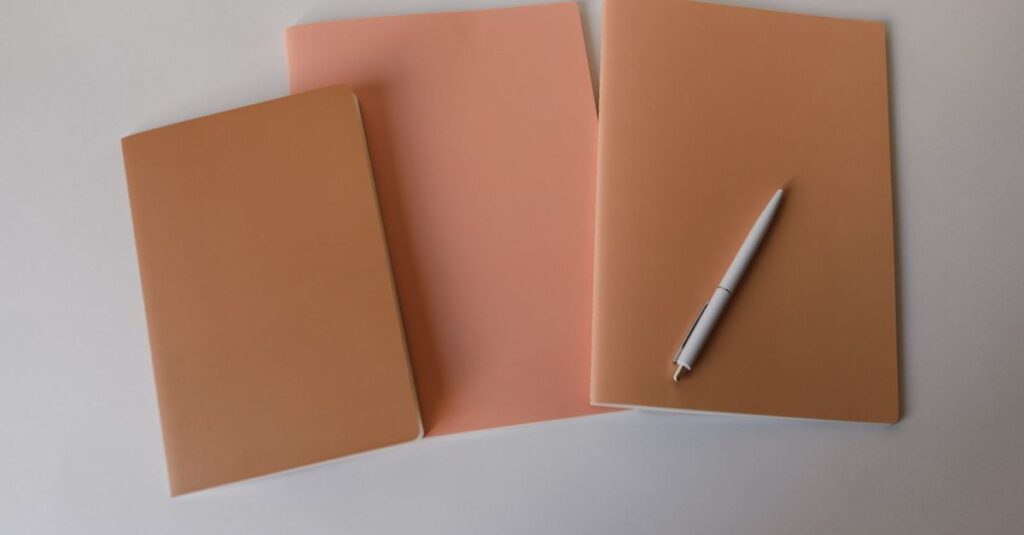
This is the part nobody says out loud. A “short notebook” isn't just a small notebook. It's a specific industry standard size, born from decades of use in schools and offices. In the Indian notebook market — and I've been in this for a long time — when we say “short,” we're talking about a book that measures 19.5 cm by 15.5 cm.
Why that size? Think practicality. It fits easily into a school bag without taking over. It's light enough for a kid to carry several subjects. For an office, it slips into a drawer or a laptop bag. It's the workhorse. The default. Not too big to be wasteful, not too small to be useless.
Here's the thing: I've seen buyers get this confused with an A5 size. They're close, but not the same. A5 is 21.0 cm by 14.8 cm. It's a bit taller and narrower. The short notebook is squarer, sturdier in the hand. It's a difference that matters when you're binding thousands of them. The machinery, the paper cutting — everything is set up for our standard dimensions.
The Real-World Uses (It's Not Just For Kids)
Okay, so who uses these things? Everyone assumes it's just for primary school students. That's partly true. But it's only half the story.
The Obvious: School & College
Younger students, from maybe Class 3 up to Class 8, are the classic users. The size is perfect for their handwriting and the amount they need to write per lesson. But I was talking to a college administrator last month — in Visakhapatnam, actually — and he told me they order more short notebooks for college administrative work than for anything else. Attendance registers for small tutorial groups, lab observation notes, quick meeting minutes. They go through them by the box.
- Primary & Middle School: The absolute staple. Single ruled, 92 pages is the sweet spot.
- College Admin: For temporary records, quick notes. Often unruled or single ruled.
- Coaching Centers: Bulk, low-cost practice books. They need them by the pallet.
The Not-So-Obvious: Business & Corporate
This is where most people get surprised. Corporate offices. Think about it. You need a notebook for the weekly team huddle. For jotting down a phone message. For brainstorming that doesn't need a full A4 page. The short notebook is perfect. It looks professional on a desk but doesn't have the intimidating blank space of a huge ledger.
We do a lot of custom printing for businesses that want their logo on a short notebook. It becomes a branded giveaway, an internal tool. It's cost-effective, useful, and gets seen every day. Far better than another pen that gets lost.
The Buyer's Dilemma: Navigating Paper & Page Options
You've chosen “Short.” Great. Now the dropdown menus hit you. 52 pages? 92? 240? GSM? SR, UR, DR? It feels like you need a degree in stationery.
Let me simplify it. Most of the time, you're deciding between two things: Durability and Cost. That's it.
A 52-page notebook is thin. It's for short-term use. A training seminar. A one-week project. It's the cheapest option. A 92-pager is the standard school issue — one term, usually. The 240-page book is for the serious note-taker, the account book for a small shop, the student who wants all subjects in one place. It costs more, but the cost-per-page is often better.
Paper quality? The standard is around 54 GSM writing paper. I think — and I could be wrong — that this is the single biggest point of confusion. GSM is grams per square meter. Thicker isn't always better. 54 GSM is smooth, takes ink well without bleeding, and is strong enough for daily use. Going to 70 GSM is overkill for a schoolchild's pencil notes. It drives the price up for no real benefit. But for a corporate diary where people might use fountain pens? Maybe then.
The ruling? SR (Single Ruled) is for writing. UR (Unruled) is for drawing, diagrams, freeform notes. DR (Double Ruled) is often for younger kids learning letter proportions. Choose based on the action, not the guess. Seeing the actual options laid out clearly usually makes this click for people.
Short vs. Long Notebook: The Real Comparison
This is the choice that defines most bulk school orders. Do you go for Short (19.5×15.5 cm) or Long (27.2×17.1 cm)? It's not just size. It's about intent.
| Factor | Short Notebook | Long Notebook |
|---|---|---|
| Primary User | Younger students (Class 3-8), quick office notes | Older students (Class 9+), college, detailed project notes |
| Portability | Excellent. Fits in any bag easily. | Good, but requires a larger bag or folder. |
| Writing Space | Sufficient for standard lessons & lists. | Ample space for long-form answers, diagrams with notes. |
| Perception | Casual, everyday utility. | More formal, suited for serious study/work. |
| Cost (Bulk) | Generally lower. Less paper, simpler to bind. | Higher. More raw material, more complex handling. |
| Binding Durability | Very durable for its size and page count. | Needs robust binding (stitched) for higher page counts. |
| Custom Print ROI | High. Lower unit cost means branded giveaways are feasible. | Moderate. Better for premium corporate gifts. |
Look, I'll be direct. If you're supplying a primary school, the short notebook is almost always the right answer. It's a cost-saving that doesn't compromise utility. For a senior school or an engineering firm where notes are extensive, the long book starts to make sense. The question isn't which is better. It's which is better for the specific person holding it.
The Manufacturing View: What You're Actually Paying For
When you place a bulk order, you're not just buying paper. You're buying a process. Knowing a bit about it helps you spot quality — and spot a bad deal.
The paper comes in massive rolls. It's cut down to size — 19.5×15.5 cm sheets. This happens on machines that have been running for years, maintained daily. The sheets are collated into sets of 52, 92, 240 pages. Then the cover goes on. For a short notebook, the binding is usually stitched. Not stapled. Staples rust and tear. Thread stitching through the fold (the “gutter”) means the book can lay flat and pages won't fall out.
Expert Insight
I was on the factory floor last week, watching a line of short notebooks being stitched. The rhythm of it is almost hypnotic. The foreman, who's been there since the 90s, pointed to the stitching head. “People think the cover is what makes it last,” he said. “It helps. But this stitch here? This is what makes it a book and not a pile of paper.” He's right. The cover protects, but the binding is the heart. A poorly stitched notebook will fail in a week. A well-stitched one will last until the last page is filled. I don't have a cleaner way to put it than that.
Then it's trimmed, quality-checked, and packed. We can produce 30,000 to 40,000 of these bound units a day. That scale is what brings the bulk price down. But scale without quality control is just waste. Every pallet that leaves our yard in Rajahmundry has been spot-checked. Not every single book, but enough to catch a problem. It's the only way to do it when you're dealing with numbers that high.
A Real Order: Priya's Story
Priya, 38, is the procurement manager for a chain of private schools in Vijayawada. She needed to order notebooks for 5,000 students across 12 schools. The previous supplier had sent a batch where the ruling was faint and inconsistent. Teachers were complaining.
She had the specs: Short Notebook, 92 pages, Single Ruled, 54 GSM. Her main worry wasn't price. It was consistency. She needed every book in that order of 60,000 units to be exactly the same. The headache of distributing different-looking books to different schools was real.
We sent her sample batches from three different production runs over two weeks. She gave them to her most particular teachers. No complaints. The order went through. The relief wasn't about saving money. It was about the silence. No calls from principals. No emails with photo attachments of faulty books. Just quiet classrooms where the tools worked.
That's it. That's the goal.
Making the Decision: Your Bulk Purchase Checklist
Before you send that PO, run down this list. It's saved more than one person from a costly mistake.
- Confirm the Exact Dimensions: Don't just say “short.” Specify 19.5 cm x 15.5 cm. Get it in writing.
- Define the Page Count & Paper: 92 pages / 54 GSM is the safe standard. Agree on a tolerance for page count (usually +/- 2 sheets).
- Clarify the Binding: Insist on thread-stitched binding for anything over 52 pages. Say it.
- Request Physical Samples: Never, ever order bulk without a physical sample from the exact production line. Check the stitching, the paper smoothness, the print clarity on the cover.
- Ask About Packaging: How are 100 notebooks bundled? How is a pallet secured? Damaged goods in transit are your problem.
- Understand Lead Time: A good manufacturer will tell you upfront. Rush jobs cost more and risk quality.
If a supplier hesitates on any of these points, especially the sample, that's your red flag. Right there.
Frequently Asked Questions
What is the standard size of a short notebook?
The standard Indian short notebook size is 19.5 centimeters by 15.5 centimeters. It's a specific industry size that's different from international A-series sizes like A5. This compact size makes it ideal for daily school use and quick office notes.
How many pages should a short notebook have?
It depends on the use. For primary school students, 92 pages is the most common — enough for a full term. For quick corporate notes or training, 52 pages works. For more intensive use, like a subject-specific notebook, 200 or 240 pages are options. The 92-page book is the all-rounder.
Can I get custom logos printed on short notebooks?
Absolutely. Custom printing is very common for corporate short notebooks. It's a cost-effective way to create branded stationery for employees or as promotional giveaways. You provide the logo and we handle the rest, from cover design to final binding.
What's the difference between stitched and spiral binding for a short notebook?
Stitched binding uses thread to sew the pages together at the spine. It's durable, allows the book to lay flat, and is the most common for bulk school orders. Spiral binding uses a metal or plastic coil. It lets the book fold back on itself completely but can snag and is generally more expensive per unit for large quantities.
What is the minimum order quantity for custom short notebooks?
This varies by manufacturer. For a standard, non-customized short notebook, bulk orders typically start at 500-1000 pieces to get a wholesale price. For custom printing with your logo or design, the MOQ might be higher, often around 2000-3000 units, to offset the setup costs for the printing plates. Always ask.
Wrapping This Up
Choosing a short notebook seems simple. Until you have to order 50,000 of them. Then every detail — the half-centimeter, the paper weight, the stitch — matters in a way that turns into real money and real frustration if you get it wrong.
My advice? Don't overcomplicate it. Start with the user. A young student needs a durable, portable, affordable tool. The standard short notebook exists because it fits that bill perfectly. For businesses, it's about utility and brand presence at a sensible cost.
I don't think there's one perfect answer for every situation. Probably there isn't. But if you've read this far, you're not just looking for a product code. You're looking for a reliable solution. And that starts with asking the right questions. If you want to talk specifics about an upcoming order, getting in touch is the logical next step. No jargon, just paper, size, and a realistic quote.