Let’s Get Real About A5 Notebooks
You're probably looking at specs, maybe comparing sizes for a bulk order of diaries or custom notebooks. And if you've seen 'A5' pop up in quotes and product lists, you're wondering — what is this, exactly? Is it too small? Is it some weird international thing? Does anyone actually use it? I'll tell you what I've seen over 40 years of making notebooks: the A5 size is the quiet, practical one that everyone underestimates. Right until they start using it.
Procurement managers for corporate diaries or schools ordering thousands of notebooks often zero in on 'standard' sizes like A4. But there's a whole other conversation happening about portability, cost-efficiency, and user preference that A5 fits perfectly. And honestly? Most people don't realize how versatile it is until they see the numbers.
Anyway. Let's break it down without the jargon. If you're sourcing notebooks in bulk, you need to understand this size. It matters. We've made a lot of them, and I'll tell you exactly why.
The Hard Numbers: What A5 Size Actually Means
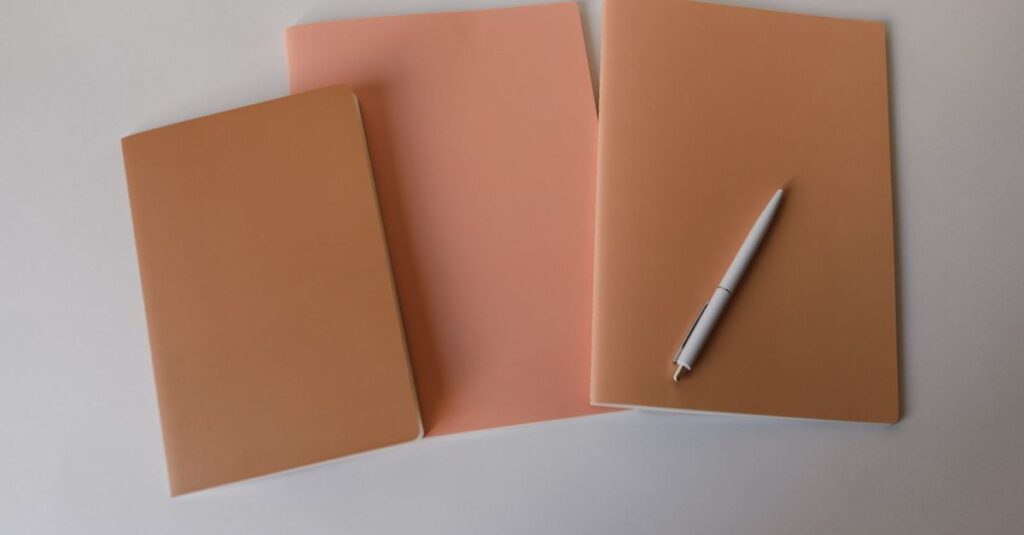
Look, I'll be direct. An A5 notebook is 148 millimeters by 210 millimeters. That's roughly 5.8 inches by 8.3 inches. Think of it as half of an A4 sheet. That's the simple, technical answer. But the real answer — the one that matters when you're ordering 5,000 units for a corporate launch or a school term — is about what that size does.
It's not a massive ledger. It's not a tiny pocket jotter. It sits right in that sweet spot where you can write comfortably, carry it without a hassle, and still have enough page real estate for proper notes. For businesses ordering branded diaries, it's the size that looks professional without being bulky. For schools, it's a cost-effective option that doesn't feel cheap for the students.
Three things happen when you move from A4 to A5: you cut paper costs, you increase portability, and you often get higher user adoption because people actually carry the thing. Which is… the whole point of a notebook, right?
Where You'll See A5 Notebooks in Action
I was talking to a procurement manager from a Hyderabad-based tech firm last month — over a call, actually — and he said their switch to A5 for internal meeting notebooks was purely logistical. They needed something that fit in the laptop bags everyone carried, looked uniform, and didn't cost a fortune per unit. The A4 diaries they used before? Half of them never left the desk.
Here's where A5 really shines:
- Corporate Diaries & Journals: Branded, elegant, meant for daily use. Not for archiving.
- Student Notebooks for Specific Subjects: Think languages, personal journals, supplementary notes. Not main course books.
- Event Giveaways & Conference Materials: Portable, premium-feeling, easy to pack.
- Personal Planners & To-Do Lists: The bulk of the custom planner market is A5.
- Internal Company Logs: Quality control sheets, maintenance logs, daily reports.
It's a utility player. And in bulk manufacturing, utility is what keeps orders consistent.
A5 vs. The Other Common Sizes: A Real Comparison
You can't decide on a size without comparing it to the others on the spec sheet. So let's put A5 side by side with the sizes we manufacture every day — A4, our standard Long Notebook, and the Short Notebook. This isn't just about dimensions; it's about use-case and cost.
| Notebook Size | Dimensions (approx) | Primary Use Case | Bulk Order Consideration |
|---|---|---|---|
| A5 Notebook | 148 x 210 mm (5.8" x 8.3") | Portable professional diaries, student supplements, event notebooks | Lower paper cost per unit, high portability, premium perception |
| A4 Notebook | 210 x 297 mm (8.3" x 11.7") | Main subject notebooks, accounting sheets, formal reporting | Higher paper cost, less portable, standard for formal documentation |
| Long Notebook (Our Common Size) | 272 x 171 mm (10.7" x 6.7") | Standard school notebooks across India, general writing | Balanced cost, familiar to students, high-volume production |
| Short Notebook | 195 x 155 mm (7.7" x 6.1") | Small exercises, rough work, economical option | Lowest cost, compact, often for younger students or rough use |
The table makes it obvious: A5 isn't the cheapest, and it's not the biggest. It's the one that tries to be both — professional enough for a corporate gift, practical enough for daily carry. For a bulk buyer, that middle ground is where you find repeat orders.
Why Bulk Buyers Are Starting To Ask For A5
Earlier I said A5 was underestimated. That's not quite fair — it's more that its demand is specific. It doesn't come from schools needing 50,000 generic notebooks for a new academic year. It comes from the corporate side, from institutions that want something a bit more tailored.
The headache, honestly, for a procurement manager is finding a product that meets three criteria: it looks the part (branding, quality), it gets used (so the investment isn't wasted), and it doesn't blow the budget per unit. A5, in our experience, ticks those boxes more often than you'd think.
I've heard this enough times now from clients in the Gulf and European markets: they want a 'European-standard' size that's recognizable internationally (A5 is an ISO standard), but they also need it produced at a scale that makes sense for their budget. Our factory in Rajahmundry gets those orders because we can run A5 sizes alongside our standard Long and Short notebooks without retooling everything. The binding lines, the cutting machines — they adapt.
That's the manufacturing insight: A5 isn't a niche product that requires special setup. It's a slight variation on a standard size, which means production can be flexible. For a buyer placing a 10,000-unit order, that flexibility translates to reliability and often a better price.
Expert Insight
I was reading something last month about paper standard adoption in institutional purchasing, and one line stuck with me. The researcher said something like — the more global a supply chain becomes, the more standardized the components need to be. A5 is an ISO paper size. It's recognizable in London, Dubai, Sydney, and Rajahmundry. For an international buyer looking at notebook manufacturers in India, that familiarity reduces friction. They don't have to explain the size; they just say 'A5'. I don't have a cleaner way to put it than that. It's a common language.
The Real-Life Choice: A Micro-Story
Anita, 38, procurement lead for a chain of private schools in Bangalore. She's evaluating notebooks for the upcoming year — main books, supplementary books, teacher planners. Her desk has samples: A4, Long, Short, and A5. The A5 sample is a custom-branded teacher's planner we'd sent. She picks it up, flips through it, puts it in her handbag. Later, in a meeting with the principals, she pulls it out to take notes. One of them asks, 'Is that the new planner size? It fits nicely.' That was the moment, she told me later, that sealed the order for 2,000 A5 teacher diaries. It wasn't the spec sheet. It was the fit in a handbag.
Not an epic tale. Just a Tuesday decision. But that's how most bulk orders happen.
Binding, Paper, and Customization for A5
Okay, so you're considering A5. What about the other specs? Because a size is just the outline. The feel — the quality — comes from the paper, the binding, and how you customize it.
For A5, the binding choice matters more than you might think. A bulky, hardcover perfect binding can make a compact notebook feel clumsy. A lightweight spiral binding can make it feel flimsy. We usually recommend a stitched binding for A5 diaries — it's durable, lays flat, and keeps the profile slim. For custom printed notebooks where pages need to be added or removed (like planners), spiral binding is the way to go.
Paper quality: 54 GSM writing paper is standard, and it works perfectly for A5. Heavier paper (like 70 GSM) starts to add thickness and weight, which defeats the portability. The goal is a smooth writing experience without turning the notebook into a brick.
And customization — this is where A5 gets interesting. The smaller cover area means design needs to be crisp. Logo placement, branding text, any artwork — it has to be intentional. We've seen corporate clients use the A5 cover almost as a minimalist branding piece. Clean, elegant, recognizable. Our printing setup handles that detail well because we're used to working at scale with precision.
The question isn't whether you can customize an A5 notebook. It's whether your design respects the scale.
FAQ: What Bulk Buyers Actually Ask About A5 Size
Frequently Asked Questions
Is A5 notebook size too small for student notebooks?
Not for all uses. For main subject notebooks where extensive writing is needed, larger sizes like Long or A4 are better. But for supplementary books, language practice, or personal journals, A5 is perfect. It's cost-effective for schools and doesn't feel inadequate to students.
Can A5 notebooks be custom printed with our corporate logo?
Absolutely. In fact, A5 is a popular size for corporate diaries and branded notebooks precisely because it's easy to customize. The cover area is sufficient for a logo and company name, and the compact size makes it a practical giveaway or internal tool.
What is the typical page count for an A5 notebook?
It varies by use. For standard writing notebooks, 92 or 120 pages is common. For premium diaries or planners, you might go up to 200 pages. The binding type (stitched vs. spiral) also influences how many pages you can comfortably include without making the notebook too thick.
Is A5 an international standard? Can we export them easily?
Yes. A5 is part of the ISO A-series paper sizes, which is recognized globally. This makes it straightforward for export buyers in Europe, the Gulf, or Australia — they know the size instantly, which simplifies ordering and reduces misunderstandings.
How does A5 compare in cost to other sizes for bulk orders?
Generally, A5 costs less per unit than A4 because it uses less paper. It might be slightly more expensive than a Short Notebook due to more precise cutting and finishing. The exact cost depends on page count, paper quality, and customization, but for bulk orders, A5 often offers a good balance between perceived value and actual expense.
Wrapping It Up
So, A5 size. It's not the hero of every notebook story. It's the reliable supporting actor that makes the practical scenes work. For corporate buyers, it's a branded diary people will actually use. For schools, it's a sensible, portable option for certain needs. For manufacturers, it's a size that fits into global standards and flexible production lines.
I don't think there's one universal answer on whether you should choose A5. Probably there isn't. But if you've read this far, you already know what you're looking for — you're just figuring out if it's okay to want something that balances cost, portability, and professionalism. In my experience, it is.
If you're sourcing notebooks in bulk and the A5 size fits your needs, it's worth talking to a manufacturer who understands the specifics. We do.