Look, Let’s Just Get Straight To It
You’re searching for A5 paper size. Probably not because you’re curious. You’ve got a quote to finalize, a bulk order to place, or a school’s stationery list to approve. You need to know if A5 is the right size for the 10,000 diaries or the 50,000 notebooks you’re about to commission. You need specs, uses, and the hard numbers that make a procurement decision easy. I get it. We talk to people in your shoes every single day. So here’s the thing — this isn’t just a dimension. It’s a workhorse. And if you’re ordering in bulk, you need to know exactly what you’re getting into. That’s where working with the right manufacturer starts to matter.
What Exactly Is A5 Paper Size?
Right. The basics. In the ISO 216 paper standard — which is what most of the world uses, including us in India for manufacturing — A5 is one half of an A4 sheet. Cut an A4 page right down the middle, and you get two A5 pages.
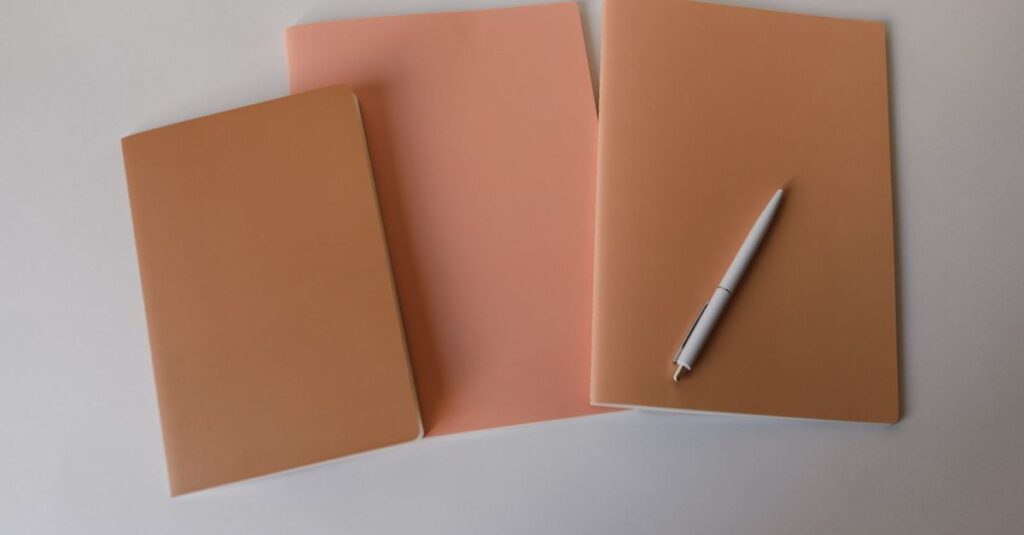
The official dimensions are 148 mm by 210 mm. In centimetres, that’s 14.8 cm x 21.0 cm. In inches, it’s roughly 5.8″ x 8.3″.
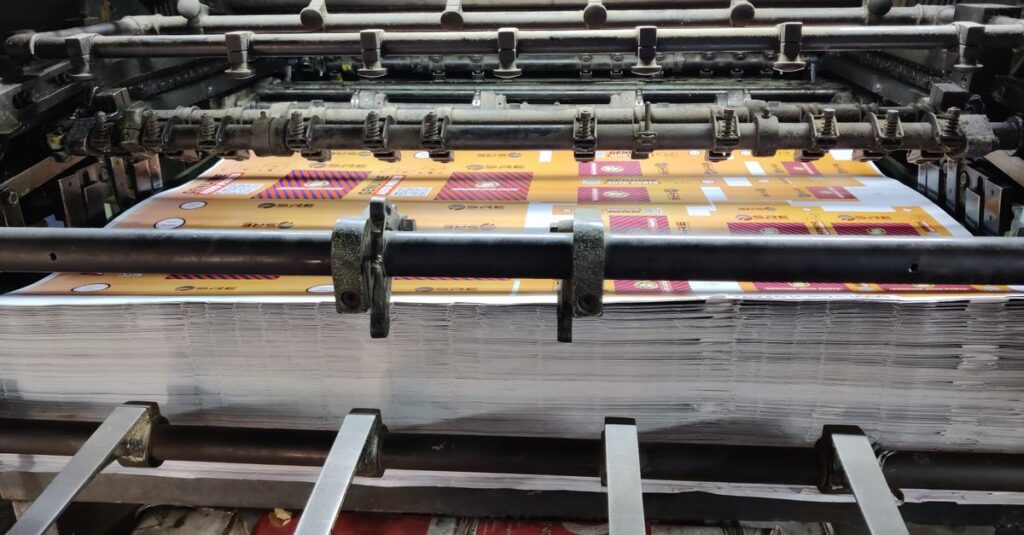
But here’s the part nobody in manufacturing talks about enough: those are the trimmed sizes. The actual paper we run through the printing press is bigger. We call that the “untrimmed” or “raw” size, and it’s usually about 3-5 mm bigger on each side. That extra bit gets cut off in the finishing process to give you that crisp, perfect edge. If you’re getting custom printed notebooks, you need to design your cover with a “bleed” area that accounts for this. Otherwise, your logo gets chopped. Happens more often than you’d think.
Expert Insight
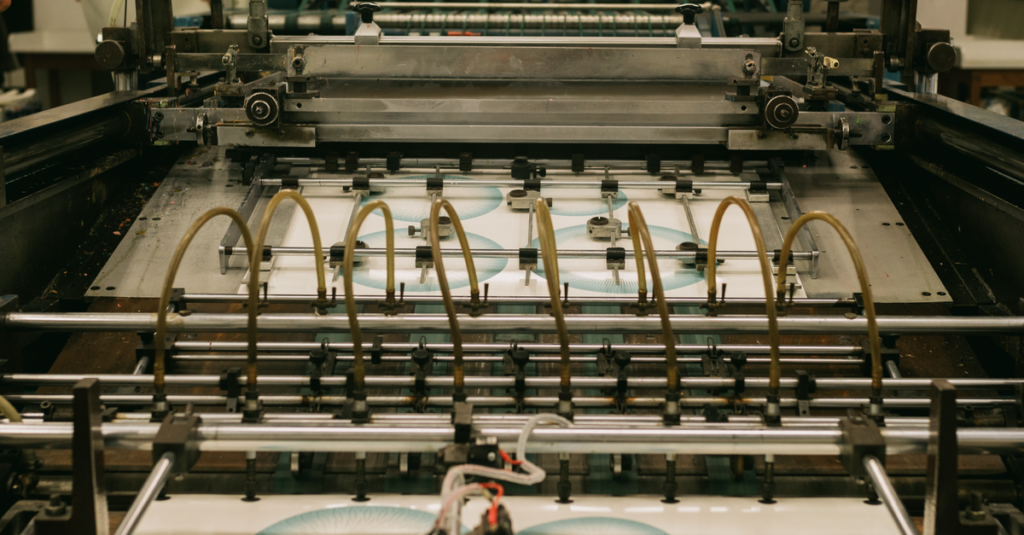
I was on the factory floor last week, watching a run of A5 corporate diaries. The production manager pointed at the guillotine and said something that stuck with me. “The tolerance on an A5 cut is less than a millimetre. People think paper is forgiving. It’s not. It’s precise.” He’s right. That precision — in cutting, in folding, in binding — is what separates a notebook that feels cheap from one that feels professional. It’s not magic. It’s just not missing the small details.
Why A5? The Real-World Use Cases
Okay, so you know the size. Why would you choose it? It’s a Goldilocks situation — not too big, not too small.
- Corporate Diaries & Planners: This is the biggest one. A5 is the default size for professional diaries because it’s portable enough for a briefcase or handbag but has enough real estate for daily planning. When businesses order custom diaries for their teams or clients, nine times out of ten, they go for A5.
- Mid-Size Notebooks for Schools & Colleges: It’s a great step up from smaller “short” notebooks. Perfect for subject-specific notebooks, project work, or lecture notes where an A4 feels like overkill but a pocket-size is too cramped.
- Specialty Books: Think logbooks, lab notebooks, prayer books, or guest books. It feels substantial without being bulky.
- Marketing Materials: High-quality product catalogs, lookbooks, or training manuals often use A5. It’s more elegant than a folded A4 leaflet.
I was talking to a procurement manager for a chain of coaching institutes a while back. They were using A4 notebooks for everything. He said the switch to A5 for their test-series booklets cut their paper costs by nearly a third and the students actually preferred the smaller, lighter book. Sometimes the right size is just about economics.
A5 vs. The Other Guys: A Quick Comparison
This is where it gets practical. You’re probably weighing A5 against other common notebook sizes. Let’s lay it out side-by-side.
| Feature | A5 Notebook (148×210 mm) | Common Indian ‘Long’ Notebook (~272×171 mm) |
|---|---|---|
| Primary Use | Corporate diaries, planners, project notes | Schoolwork, general notes, exam writing |
| Portability | Excellent. Fits easily in bags. | Good, but can be awkward in smaller bags. |
| Writing Space | Ample for structured lists & paragraphs. | More horizontal space for long-form writing. |
| Bulk Feel | Professional, compact, sleek. | Traditional, substantial, familiar. |
| Manufacturing Cost (Approx.) | Slightly higher per unit due to precision cutting. | Often lower, as it’s a high-volume standard size. |
| International Recognition | Universal. Understood globally. | Mostly a regional (India) standard. |
The choice isn’t about which is better. It’s about what you need it to do. Ordering for a global sales team? A5’s international standard makes it a no-brainer. Ordering for a local government school district? The familiar ‘Long’ notebook might be the smarter, more cost-effective buy. Seeing the full range of options helps.
The Manufacturing Nitty-Gritty (What Bulk Buyers Need to Ask)
If you’re about to place a large order, this section is probably the only one that matters. Here’s what we deal with every day in the factory.
- Paper Weight (GSM): For a standard A5 notebook, you’re looking at 70-80 GSM paper for the cover and 54-60 GSM for the inside pages. Lighter than 50 GSM and you’ll get ghosting (ink showing through). Heavier than 90 GSM for pages and it becomes a very expensive, very heavy book. For a premium corporate diary, we might use 100+ GSM cover stock.
- Binding: How will it hold up?
Perfect Binding: (Glued spine) gives that clean, book-like look. Great for diaries. Not so great if you need it to lay completely flat.
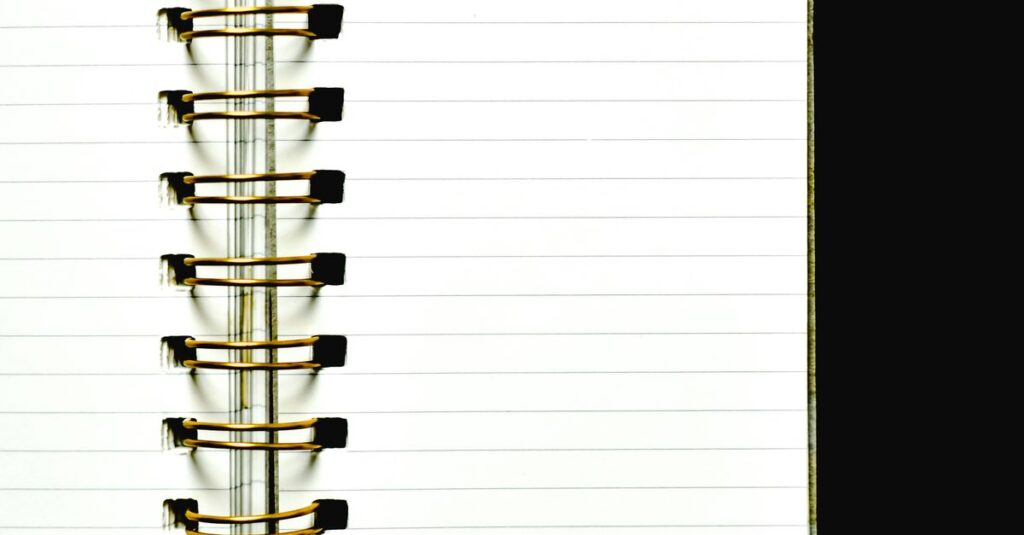
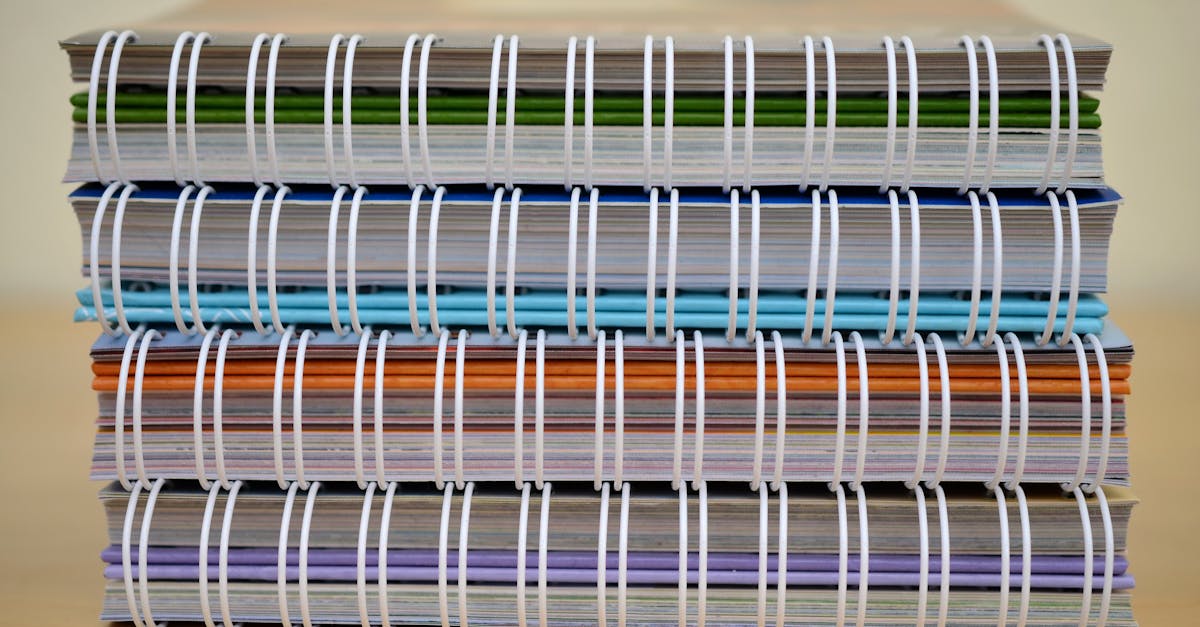
Spiral Binding: (Wire-O or plastic coil) lays flat, 360 degrees. More durable for heavy daily use, but the spiral can snag.
Stitched Binding: (Saddle-stitched) is classic for thinner notebooks. Cost-effective and strong. - Page Count & Bulk: An A5 notebook with 240 pages of 60 GSM paper will be about 15mm thick at the spine. Want 500 pages? That spine thickness jumps, and you might need to change the binding method. This is where a sample is non-negotiable.
- Customization: This is our bread and butter. Printing a logo on an A5 cover? You need the artwork in a vector format (like .AI or .EPS) at the right size, with a 3mm bleed area. The rule here is simple: give us print-ready files, and we’ll make it look perfect. Give us a low-res JPEG from a website, and we’ll call you to ask for a better one. It saves everyone a headache.
We had a client once who ordered 20,000 A5 notebooks with a complex foil-stamped logo. They sent the artwork a day before the press run. It was a 72 DPI JPG, stretched to fit. We had to stop. Redraw the logo from scratch. It added two days to the schedule. Moral of the story: Your manufacturer is your partner. The clearer you are upfront, the smoother it goes.
The Cost Equation for Bulk Orders
Let’s talk money. Because that’s why you’re here. The unit cost for an A5 notebook isn’t just about size. It’s a stack of variables: paper quality, page count, binding type, cover finish (plain, printed, laminated), and of course, the order quantity.
A basic, 92-page, single-ruled A5 notebook with a plain card cover might cost you X per unit in a 10,000-piece order. Make it a 240-page, hardcover, custom-printed diary with a ribbon marker? The cost might be 3X or 4X.
Here’s my direct advice: Don’t just ask for a price per notebook. Share the exact spec. Better yet, ask for a sample based on that spec first. Feel the paper. Test the binding. Write in it with the pen your team uses. The few hundred rupees you spend on a prototype sample can save you lakhs on an order that doesn’t meet expectations.
And volume matters. The difference in per-unit cost between an order of 5,000 and 50,000 is significant — sometimes 30% or more. It’s the economy of the long print run. If you have yearly, predictable demand, consolidating orders is probably your biggest lever for savings.
Frequently Asked Questions
Is A5 the same as a standard Indian notebook size?
No, it’s not. Common Indian sizes like ‘Long’ (approx. 27×17 cm) or ‘Short’ (approx. 19×15 cm) are different standards. A5 (14.8×21.0 cm) is an international ISO size. It’s taller and narrower than a ‘Short’ book and smaller than a ‘Long’ book. Always confirm the exact dimensions.
What is the best binding for an A5 diary that will be used daily?
For heavy daily use, spiral binding (metal or plastic) is the most durable because it lets the book lay completely flat. Perfect binding looks more professional but can crack at the spine if forced flat too often. For a corporate gift diary that might see lighter use, perfect binding is often the preferred choice.
Can I get A5 notebooks with different types of ruled pages?
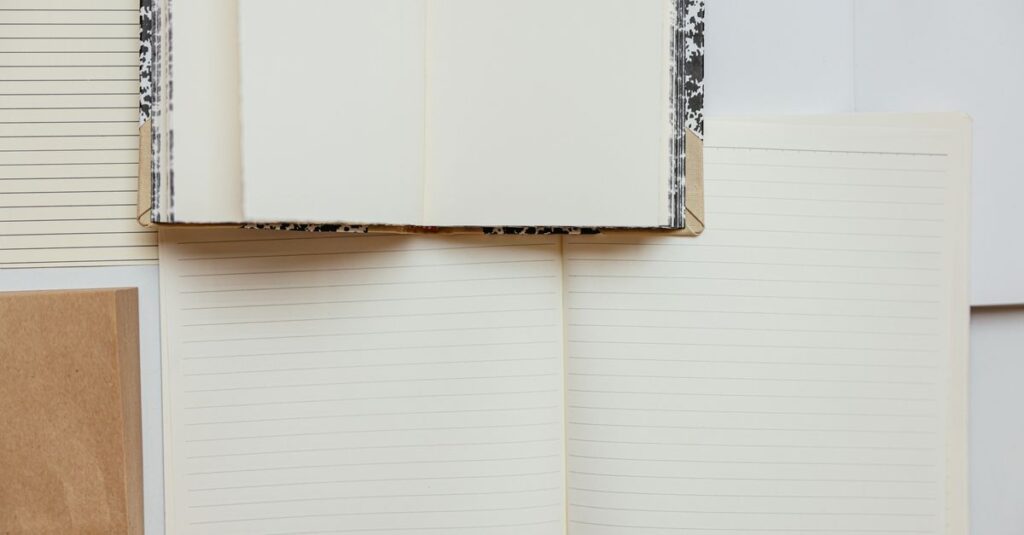
Absolutely. This is a standard customization. You can choose single-ruled, double-ruled, unruled (plain), grid (squared), or even a custom header/footer layout for things like timesheets or project logs. Just specify this when you request a quote.
How long does it take to manufacture a bulk order of custom A5 notebooks?
For a standard custom print run (say, 10,000 units), you should plan for a 4-6 week production timeline from the moment final artwork is approved. This includes paper sourcing, printing, binding, finishing, and quality checks. Rush orders are possible but will cost more.
Do you export A5 notebooks internationally?
Yes, we regularly ship bulk orders of A5 and other size notebooks to the Middle East, Africa, Europe, and the US. The international familiarity with the A5 paper size makes it one of our most popular products for export. We handle all the export documentation and logistics.
Wrapping This Up
So, A5 paper size. It’s 148 by 210 millimetres of potential. For a bulk buyer, the decision comes down to three things: the use case (diary, notebook, catalog), the audience (corporate, student, international), and the budget (which is really a function of specs and volume).
I don’t think there’s one perfect size for every job. Probably there isn’t. But if you’ve read this far, you’re not just curious — you’re evaluating. You’re figuring out if A5 fits the very specific need in front of you. And that’s the right place to start.
The next step is often just a conversation. Getting a quote based on your real numbers. Seeing and feeling a physical sample. It turns a spec sheet into a product. That’s a conversation we have all the time.