Double Ruled Notebooks: A Comprehensive Guide for Bulk Buyers
You probably know the feeling — you’ve got to place an order for notebooks. A big one. For a whole school year, a corporate training program, or to fulfill a tender. The specs come through, and there it is: “double ruled.” And for a second, you might pause. Is that just single ruled but doubled? What’s the actual point? Because, let’s be honest, you’re not buying just paper. You’re buying a tool, and if the tool’s wrong, it causes complaints, wasted money, and a whole lot of hassle. The choice between ruling types isn’t just an aesthetic one; it’s a functional decision that dictates the entire user experience. If you’re sitting there, trying to decide if double ruled notebooks are right for your bulk order, you’re asking the right question. Here’s a look from the manufacturing floor, not just the catalog.
I was talking to a procurement manager from a university last week — over email, actually — and his exact phrase was, “We need notebooks that guide the writing, not just hold it.” Stuck with me. It’s not about saving on paper; it’s about adding functionality. Getting the ruling right is one of the first choices.
What Exactly Is a Double Ruled Notebook?
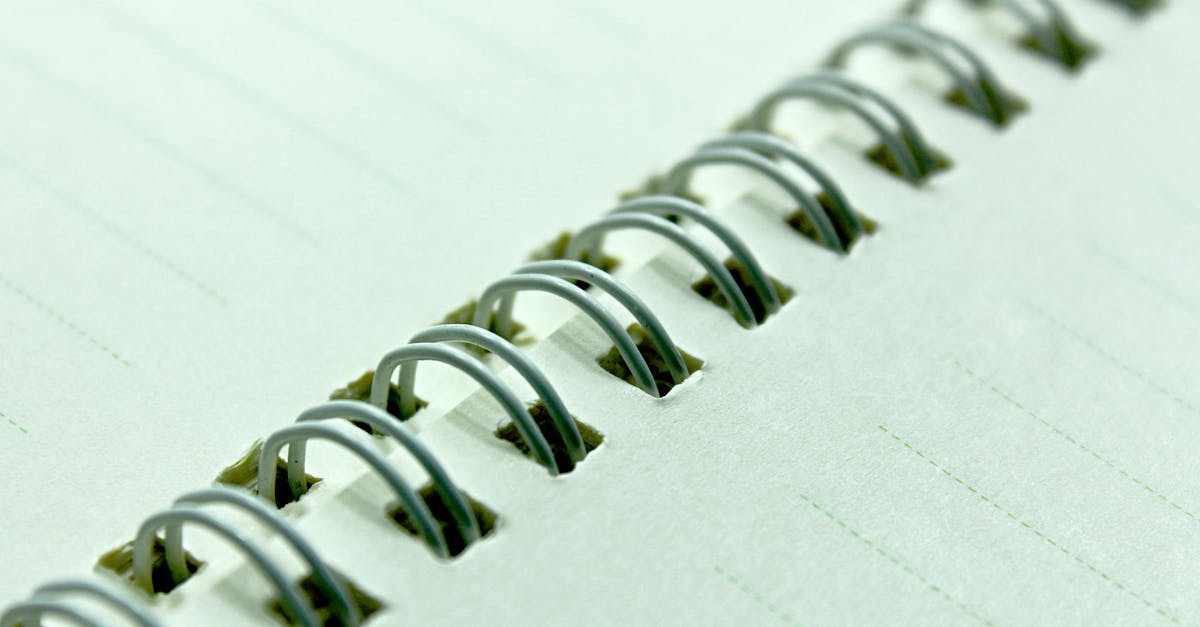
Let’s clear this up first. It’s not two lines for one line of text. That’s a common mix-up. In a single ruled notebook, you have one horizontal line every … what, 8mm or 9mm. That’s your baseline. The double ruled page adds a second, parallel horizontal line directly above or below the primary one — creating a narrower channel between them. It’s a specific, standardized ruling. Think of it as a built-in guide rail for handwriting. The space between those two lines is designed to control letter height, making for a cleaner, more uniform page of writing. It’s structure. Control.
Three things happen when you use double ruled paper:
- Letter sizing becomes consistent, almost automatic.
- Line spacing is fixed, which makes pages look organized, not messy.
- It reduces visual clutter on the page, which helps with focus.
The question isn’t whether you need fancy features. It’s whether you need order.
Who Actually Uses Double Ruled Notebooks? (Beyond the Obvious)
Sure, schools. Primary grades, especially. That’s the classic image. But that’s barely half the story. In my experience, the institutional demand for double ruled notebooks is way broader than most catalogs suggest.
- Corporate Training Academies & Banks: For teller training, process documentation, and compliance note-taking where every detail needs a specific place on the page.
- Government Clerical Departments: For official registers, inward/outward logs, and forms drafting where uniformity in handwritten records is non-negotiable.
- Language Learning Institutes: For script practice — Devanagari, Arabic, cursive English — where character proportions are everything.
- Research Field Stations: I know a guy who orders these for botanical fieldwork. The double lines help neatly catalog specimen details in columns. Weather data. Measurements. It’s a data-capture grid before you add the vertical lines.
Here’s a scene for you. Neeta, 34, Senior Trainer at a national bank in Hyderabad. Her batch of 60 new hires starts next Monday. She needs 60 notebooks, all identical, for a 3-month program. They’ll be taking notes on financial products, regulation updates, and customer scripts. A messy notebook means a messy process, she says. The double ruling imposes a discipline. “It signals how we work,” she told me. It gives them a structure to fill, which is the whole point of the training. She doesn’t have time to explain margins.
Anyway. Where was I.
The Manufacturing Angle: How Double Ruling Gets Onto the Page
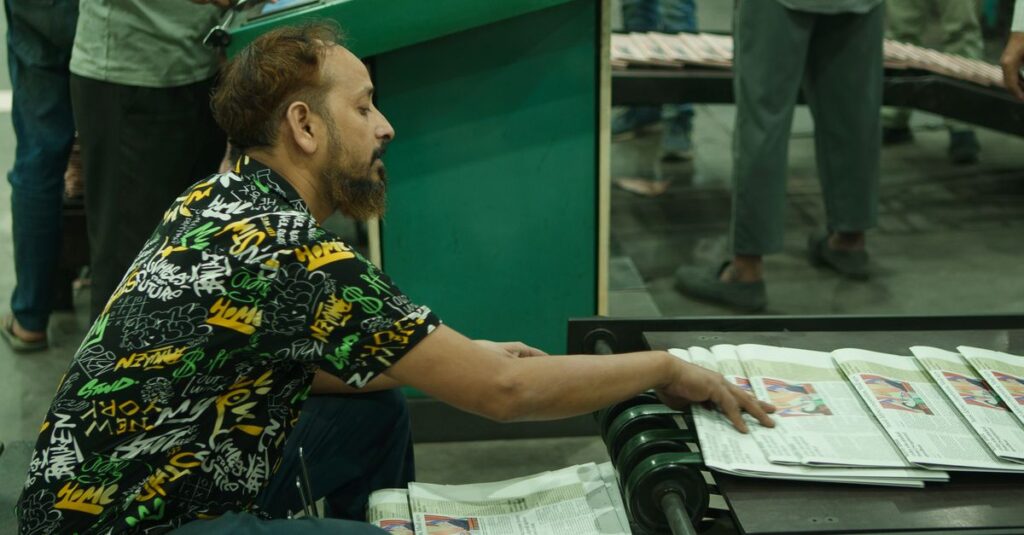
This is where most buyers just trust the supplier. But you should know a bit — it affects quality and cost. Double ruled lines aren’t just printed. They’re engineered onto the page during a specific stage of the notebook manufacturing process, usually on large parent reels of paper before they’re cut down to size.
It needs precise alignment. The space between the two lines has to be exact across millions of sheets. If the ruling cylinder on the press is even slightly misaligned, the lines blur, or the spacing varies, and you get rejections. Which means waste. Good manufacturers — and I’m talking about the ones who’ve been doing this for decades — have calibrated their presses for this. The paper feed, the ink viscosity (it’s usually a specific, non-bleed blue most of the time), the dry time. It’s a rhythm. At our factory, we run periodic checks where they’ll pull sheets from the middle of a run and measure the spacing with a loupe. Sounds over the top? Maybe. But it’s why school tenders don’t get sent back.
Expert Insight
I was reading something last month from an old printing manual, and one line stuck with me. It said the ruling pattern on a page is the first instruction. It tells the hand what to do before the brain even engages. For bulk institutional buyers, that’s what you’re purchasing: silent instruction. The more structured the task — think accounting entries, language alphabets, protocol notes — the more valuable that pre-drawn instruction becomes. It’s not passive paper. It’s an active template. And honestly? Most generic manufacturers don’t think about it that way. They just see lines.
Double Ruled vs. Single Ruled: A Quick Decision Matrix
Don’t just guess. Here’s a breakdown to make that procurement decision faster.
| Consideration | Double Ruled Notebook | Single Ruled Notebook |
|---|---|---|
| Primary Use Case | Handwriting practice, meticulous note-taking, form-like data entry. | General note-taking, brainstorming, longer-form writing. |
| User Audience | Young students, clerical staff, trainees, anyone needing writing discipline. | Older students, professionals, creative writers, general office use. |
| Visual Density | Higher (more lines on page). Can look “busy” to some. | Lower, more open. Feels less restrictive. |
| Cost Implication (Bulk) | Marginally higher due to precise printing setup. Usually negligible on large orders. | Standard. The most common ruling, so often the baseline cost. |
| Customization Flexibility | High. Can adjust spacing between the double lines for specific scripts (e.g., Urdu vs. Hindi). | Standard. Usually fixed at 8mm or 9mm spacing. |
| Perceived “Grade” | Often seen as more “specialized” or “institutional.” | Seen as the versatile, all-purpose default. |
Look, I’ll be direct. If your end-users are doing free-form thinking, go single ruled. If they’re filling in a system, go double ruled. It’s that simple.
Ordering for Bulk & Custom Needs: What to Specify
Most of the frustration in bulk procurement comes from unclear specs. You just say “double ruled” and hope. Here’s what you actually need to confirm with your manufacturer to avoid getting something you didn’t picture:
- Spacing Between the Pairs: How many millimeters between the two lines that make up the “double rule”? 6mm? 7mm? This defines the writing channel.
- Spacing Between Each Pair: How much gap is there between the bottom line of one pair and the top line of the next pair? This is the inter-line space.
- Line Color & Opacity: Is it pale blue, grey, green? The line should be clear but not so dark it dominates the user’s writing.
- Paper GSM: Are you using 58 GSM paper or 70 GSM? Thicker paper prevents show-through, which is critical with more lines on the page.
- Margins: Do you need a defined red margin line on the left? For account books or certain school requirements, this is mandatory.
I think the standard is — I can’t remember exactly — something like 6mm between the double lines and 9mm between pairs. Don’t quote me on that. It varies. But you get the point: be specific. A good manufacturer will ask these questions. A great one will have a spec sheet ready for you to tick off.
The Real Value Isn’t in the Notebook
It’s in the fit. Earlier I said it’s about structure and control. That’s not quite fair — it’s more about providing the right amount of structure for a specific task. A notebook that fights its user is a wasted investment. A notebook that guides them? That’s a tool that gets used, gets filled, and reinforces the process you’re trying to teach or standardize. For bulk orders, that’s your ROI: adoption and consistent use, not just price-per-unit.
I’ve heard this enough times now from school principals and office managers to know it’s not a coincidence. The ones who think about the ruling, the paper weight, the binding, they’re the ones who don’t have boxes of unused notebooks sitting in a storeroom two years later.
Frequently Asked Questions
What is the main purpose of a double ruled notebook?
Its main purpose is to guide and standardize handwriting. The two close-set lines create a channel that controls letter height and spacing, promoting neatness and uniformity. It’s ideal for teaching handwriting, clerical work, or any situation where consistent, structured notes are required.
Can I get double ruled notebooks with custom branding?
Absolutely. Most manufacturers, like us, offer full customization. You can have your logo, institution name, or specific cover design printed on double ruled notebooks. We can adjust the ruling specs to your needs and deliver bulk quantities for corporate gifts, school kits, or promotional distribution.
Are double ruled notebooks only for children?
Not at all. While common in primary education, they are widely used by adults in fields requiring precise notation: bank tellers, government clerks, researchers, and language students. Any task that benefits from a structured writing template is a good fit for a double ruled notebook.
What paper quality is best for double ruled notebooks?
We recommend at least 58-70 GSM paper. Since double ruling puts more lines on the page, using paper that’s too thin (like cheap 40-45 GSM) can cause ink to show through or lines from the back page to interfere. Good quality paper ensures the ruled lines and user’s writing remain clear and distinct.
What is the minimum order quantity for custom double ruled notebooks?
This varies by manufacturer. For standard customizations (logo print, cover design), MOQs can start around 500-1000 pieces. For fully custom specs (unique ruling size, special paper), the MOQ might be higher. It’s best to discuss your exact project with the manufacturer directly to get a precise quote.
I don’t think there’s one perfect notebook for everyone. Probably there isn’t. But if you’re sourcing for an institution, a school, or a corporate program, you already know the problem you’re solving — you’re just figuring out which tool solves it without creating new headaches.
The bottom line is this: a double ruled notebook is a specialized tool for a structured task. If that’s what your users are doing, it’s not an extra cost; it’s the right choice. Everything else is compromise. If you need to talk specs or want a sample mocked up, that’s what we’re here for.