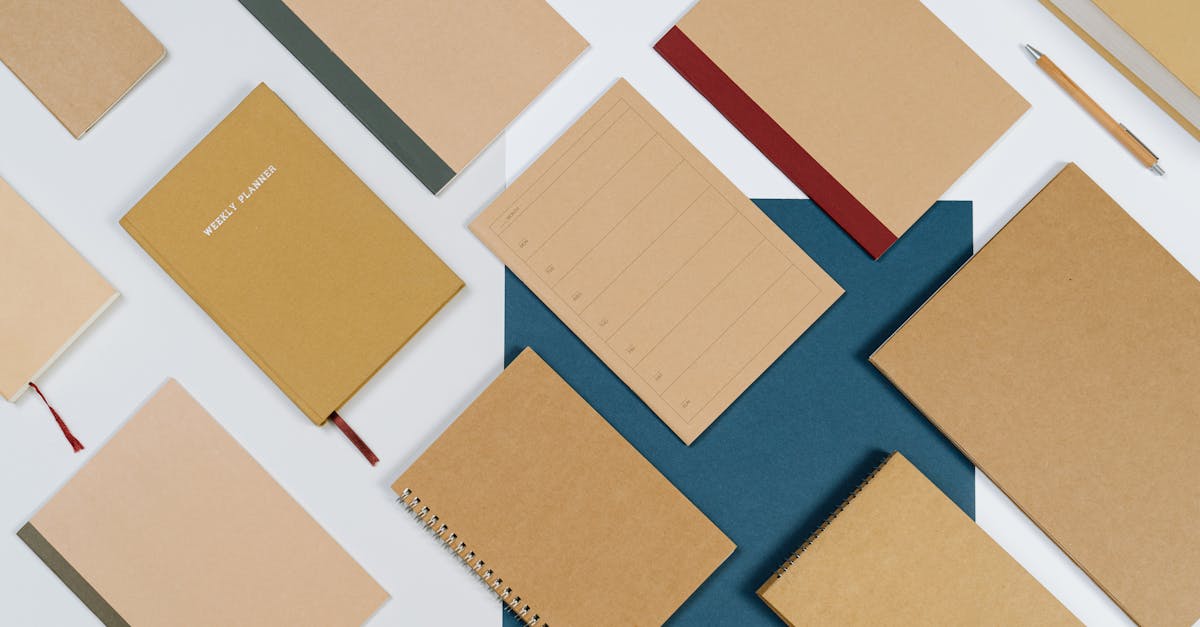
It’s Not Just About a Strong Spine
Okay. Let me start with something I see all the time. Someone — maybe a school administrator, or a corporate procurement manager — asks me about making notebooks. They want them to last. They want them to feel substantial. Professional. Dignified, even. And they always get to the same point: “And we need hard binding. A hard cover.”
I nod. Right. Of course. But then I ask: “What do you actually mean by that?” And it gets quiet. Because here’s the thing most people don’t realize. The phrase “hard binding” isn’t one thing. It’s two. It’s the cover, sure — that rigid, sturdy board wrapped in art paper or leatherette. But it’s also the way the pages are attached inside. That’s the real secret. And most shops that just say “yeah, we do hard binding” are talking about the cover. They’re not talking about the binding method that can make a 700-page account book lay flat for 20 years. There’s a difference. A huge one.
You’re probably looking for a hard binding shop because you’ve got a project. Year-end corporate diaries. A prestige product catalog. School textbooks that can survive 400 kids. You need it to feel like quality. You need it to look like investment. That’s what we’ve been doing at Sri Rama Notebooks since 1985, so let’s talk about what you’re actually buying.
The Anatomy of a Hard-Bound Notebook: It’s More Than Cardboard
I think people picture a machine that just slaps some cardboard onto a stack of paper and calls it a day. It’s not like that. If you want to know what you’re paying for, you need to understand the parts. The cover board — we use something called grey board. It’s dense. It doesn’t warp. Then you have the covering material. Could be art paper with a gloss lamination, could be a textured leatherette, could be a custom-printed design. That gets wrapped and glued around the board with a precision that… honestly, looks easy until you see it done badly. The spine gets a reinforcing strip of cloth. That’s the hinge.
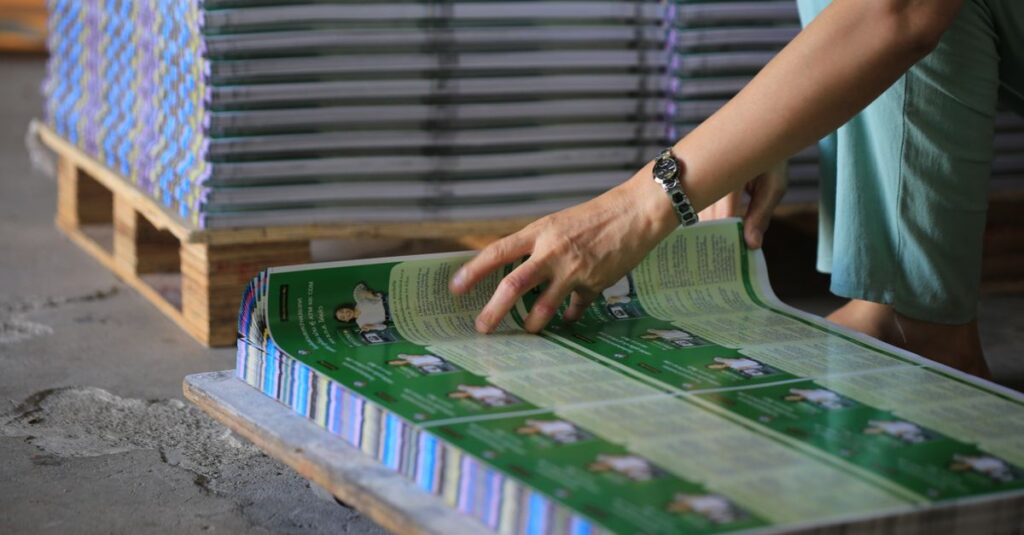
Then there’s the inside. This is where most “hard binding shops” cut corners. They’ll take the pages, gather them into what we call a “book block,” and just glue the spine. That’s perfect binding. It’s fine for a paperback. For a heavy-use notebook? It’s a headache waiting to happen. The pages start to fall out. The book won’t open flat. The real deal — the durable kind — uses something else. Smyth sewing. Or at the very least, notch binding, where they cut little grooves into the spine and glue flows into them, locking the pages. It needs machinery. It needs skill. It’s what we’ve run in Rajahmundry for 40 years. That’s the difference between a notebook and a ledger that outlives the person using it.
Expert Insight
I was talking to one of our production guys last week — Gopi, he’s been here 22 years — and he said something that stuck with me. He was holding a 320-page A4 account book we’d just bound. He flexed the spine, let it fall open on a random page. It just lay there. Flat. No fighting it. “The test isn’t when it’s new,” he said. “Anyone can make it feel solid when it’s fresh off the line. The test is on page 150, after six months of daily use, when the clerk is leaning on it. Does it hold? Does it feel the same?” I don’t have a cleaner way to put it than that. You’re not paying for the board. You’re paying for the memory in the spine.
When You Actually Need Hard Binding (And When You Don’t)
Let’s be direct. Hard binding costs more. It takes longer. You need to know it’s worth it. So here’s a simple list.
You probably need hard binding if:
- You’re making corporate gifts or executive diaries. The first impression is weight, solidity. It says “premium.”
- It’s for institutional use — school library books, university lab notebooks, hospital record books. Things that get handled by hundreds of different people.
- The page count is high. Anything over 200 pages really starts to benefit from that rigid support.
- You need the cover to be a branding canvas. A hard, flat surface is perfect for foil stamping, embossing, high-quality UV printing.
- The notebook is meant to be archived. Think project documentation, legal notepads, minutes of meetings.
You can probably skip it if:
- It’s a short-run, disposable notepad for a conference or event.
- You need extreme portability and light weight (think field sales notebooks).
- Your budget is the absolute primary driver and the notebook has a short expected lifespan.
The mistake I see? Businesses ordering 10,000 custom notebooks for a sales team, choosing hard binding because it “sounds better,” and blowing 30% of their budget on a feature their team will grumble about carrying. Right tool for the job.
The “Near Me” Dilemma: Local Shop vs. Specialized Manufacturer
This is the real heart of your search, isn’t it? “Hard binding shop near me.” You want someone you can visit. Someone you can yell at if things go wrong. I get it. But let me complicate that for you.
Rahul, a procurement manager for a chain of coaching institutes in Hyderabad, called me last month. He’d been using a local printer for his student workbooks. Hard covers. The price was good. The first sample was perfect. The order of 5,000? The glue failed in the summer humidity. Pages just… detached. The local guy shrugged. “Must be the paper you provided.” (It wasn’t). Rahul was left holding the bag — literally, boxes of failed notebooks — and a start-of-term deadline.
A local shop can be great for small jobs, for fast turnarounds. But hard binding for bulk, for commercial quality that has to be consistent across 40,000 units? That’s a different animal. That’s about humidity-controlled storage for paper. It’s about calibrated glue applicators. It’s about quality checks at every stage, not just at the end. A specialized manufacturer like us, who’s been doing notebook printing and binding as a core business for decades, is built for that kind of volume and consistency. We’re not “near” you in the sense of being in your city. But we’re a WhatsApp message away. We send video clips of production. We ship pan-India and internationally every single day. “Near me” is less about geography now, and more about reliability.
Hard Binding vs. Other Binding Types: A Quick, Honest Comparison
Look, I’ll just say it. Most comparison tables are written by people who’ve never had a notebook fall apart in their hands during an important meeting. This one is from the factory floor.
| Feature | Hard Binding (Case Binding) | Spiral / Wire-O Binding | Perfect Binding (Soft Glue) |
|---|---|---|---|
| Durability | Highest. Withstands years of heavy use, shelving, travel. | Good, but spirals can bend, snag. Covers are usually soft. | Lowest for thick books. Spine glue can crack. |
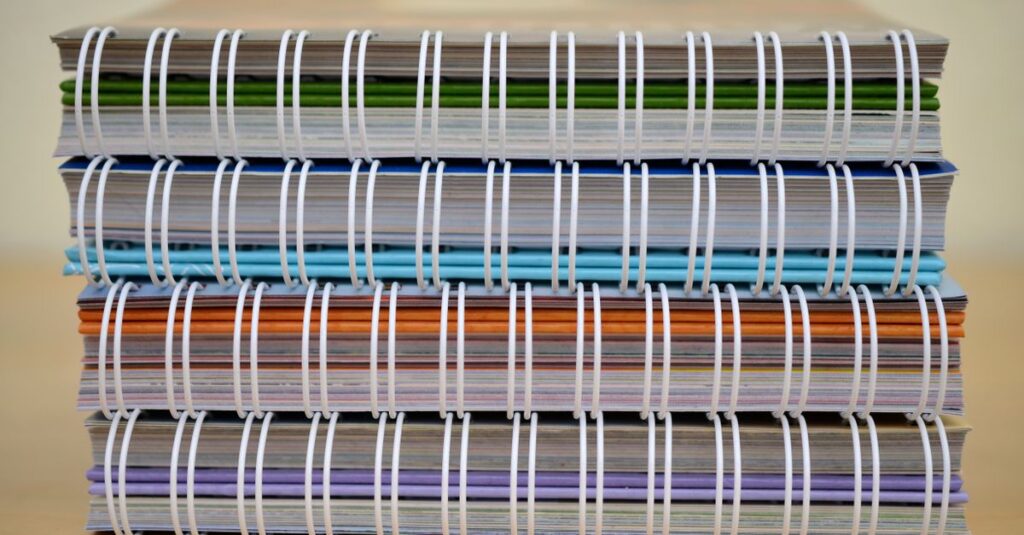
| Lay-Flat Ability | Excellent (if sewn). Opens fully and stays flat. | Best. Opens 360 degrees. | Poor. Tends to snap shut. |
| Professional Look | Premium. The standard for corporate & archival material. | Functional, often seen as utilitarian or academic. | Common for paperback books, can look cheap for notebooks. |
| Page Count Suitability | Best for medium to high page counts (100-700+ pages). | Good for most counts, but very thick books become bulky. | Really only suitable for lower page counts (<150 pages). |
| Cost | Highest. More materials, more skilled labor. | Medium. Efficient process, simple materials. | Lowest. Fastest, most automated process. |
| Customization | High. Endless options for cover materials, finishing, and imprinting. | Limited. Mostly to cover printing. | Moderate. Good for full-color cover prints. |
See what I mean? Hard binding isn’t the answer to everything. But for where it shines, nothing else comes close.
What to Ask When You’re Evaluating a Hard Binding Shop
Don’t just ask for a quote. Ask these questions. The answers will tell you everything.
- “What is your binding method for the pages inside?” If they just say “glue,” dig deeper. Ask if it’s notch binding or Smyth sewing. If they don’t know those terms, that’s your first red flag.
- “Can you provide a dummy?” A dummy is a blank sample in your exact specs — paper weight, page count, cover material. Any serious manufacturer will do this. It lets you feel the weight, test the lay-flat.
- “What is your standard turnaround time for an order of [your quantity]?” Compare it to others. If it’s suspiciously fast, they might be cutting corners on curing time for glue.
- “What kind of paper do you stock for the inside pages?” A shop that only offers one or two types of 70 GSM paper isn’t set up for serious notebook manufacturing. We keep everything from 54 GSM writing paper to 100+ GSM premium stock.
- “What’s your process for a printing mismatch or a binding defect in a bulk order?” You want to hear about a clear, written quality guarantee. Not a vague promise.
Asking these changes the conversation. It moves you from being a “customer” to being a “client.” They’ll know you know what you’re talking about.
The Real Cost: It’s Not Just the Unit Price
Here’s where business buyers get tripped up. They look at the per-unit price from Shop A ($1.20) and from Manufacturer B ($1.45). They go with Shop A. Seems obvious.
But let’s do the real math. The cheap hard binding from Shop A has a 5% defect rate. So out of 10,000 units, 500 are trash. You’ve now paid for 10,000 but only have 9,500 usable items, making your real unit cost… higher. Then there’s the longevity. The $1.45 notebook lasts the full academic year. The $1.20 notebook starts falling apart in Term 2. You get complaint emails. You have to process replacements. The hidden cost isn’t in the invoice. It’s in the time, the reputation damage, the logistical headache. The real cost is in the life of the product, not the price tag. I’ve seen this play out with school notebook suppliers so many times. The ones who come back are the ones who finally factored in the total cost of ownership, not the procurement cost.
Frequently Asked Questions
What is hard binding for notebooks?
Hard binding, often called case binding, is a method where the notebook’s inner pages are secured together and then attached to a rigid, hard cover. The cover is typically made of thick board wrapped in paper, leatherette, or cloth. It’s the most durable and professional binding type, used for products meant to last like corporate diaries, account books, and textbooks.
How long does hard binding last?
Honestly? A well-made hard-bound notebook can last for decades with normal use. The limiting factor is usually the paper yellowing, not the binding failing. We have clients using our hard-bound ledger books for 10-15 years of daily accounting. The key is the internal binding method (sewing is best) and quality materials.
What’s the difference between hard binding and perfect binding?
This is the big one. Hard binding refers to the rigid cover. Perfect binding is one type of internal binding where pages are glued at the spine. You can have a hard-bound book with perfect binding (common), but it’s not as durable as a hard-bound book with sewn binding. A ‘hard binding shop’ might just glue pages into a hard cover. A true manufacturer offers the stronger, sewn option.
Can you print custom logos on hard-bound notebooks?
Absolutely. In fact, that’s one of the main reasons businesses choose hard binding. The hard, flat cover is perfect for high-quality printing techniques like foil stamping, embossing, debossing, or full-color UV printing. It makes your branding look premium and permanent. This is a core part of our custom printing services.
Is hard binding worth the extra cost for school notebooks?
For standard student exercise books? Usually no. The cost is too high for a consumable item. But for specific uses — like a school’s custom-designed lab notebook, a premium planner for teachers, or a yearbook — then yes, 100%. It’s about matching the binding to the book’s purpose and expected lifespan.
Wrapping This Up
Look for a hard binding shop, sure. But more than that, look for a partner who understands why you need it. Someone who asks about page count, usage, and branding goals before they ever quote a price. The right binding is the foundation of the notebook’s entire life. Get it wrong, and the best paper and printing in the world won’t matter.
It comes down to this: are you buying a product, or are you sourcing a tool? A product has a price. A tool has a value. And value lasts a lot longer.
If you’re figuring out the specs for a bulk order of hard-bound notebooks or diaries and want to talk to someone who’s been in the factory for 40 years, we’re a message away.