Look, a lot of people get it wrong
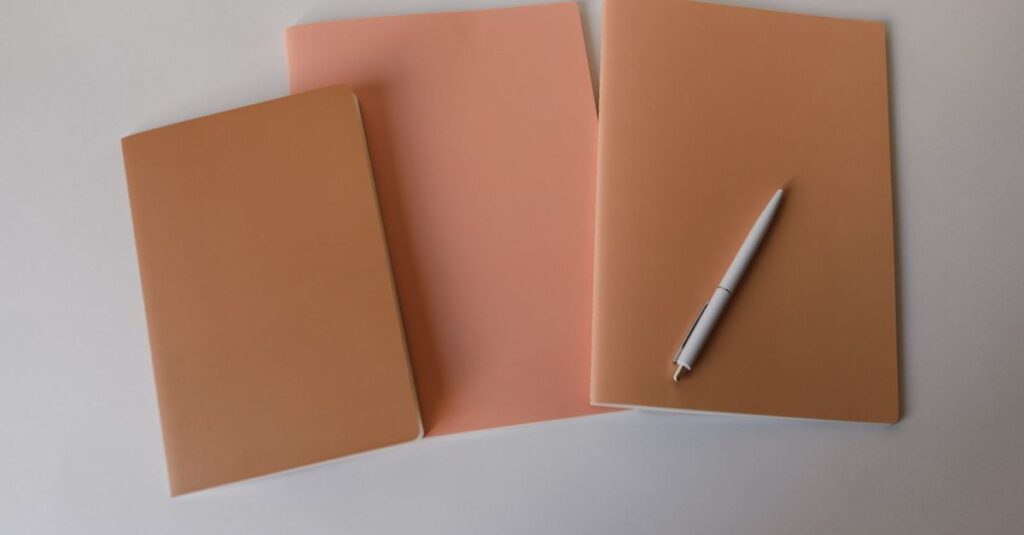
You've seen it a hundred times: a stack of notebooks on a shelf, and someone thinks, 'How hard can it be to make?' Right? A plain notebook is supposed to be the simplest thing in the world — just paper and a cover, stapled together. That's what most people see. But from where I stand, after four decades in this business, it's everything but simple. The blank page is where our whole industry starts. And the gap between a cheap notebook that falls apart in a week and one that lasts a school year — that gap is huge. You don't see the math. The logistics. The silent fight against corners being cut. If you're ordering in bulk — for a school, a corporation, a government tender — you need to understand this gap. Because the choice you make isn't just about cost per unit. It's about what happens when 5,000 students open them on the first day of class. The pressure on that spine. The bleed of ink on cheap paper. The cover that peels. I think about this a lot. The products we make end up in someone's hands, holding their ideas. That matters.
So what is a plain notebook, really?
Let's break this down. A plain notebook, in the bulk supply world, isn't an afterthought. It's a specification. It's a set of decisions you make before a single sheet is cut. You start with the paper — 54 GSM, 60 GSM, 70 GSM? That GSM number isn't just weight. It's feel. It's opacity. It's whether a ballpoint pen ghosts through to the other side. Then you pick the ruling. Single Ruled (SR) for general writing. Unruled (UR) for drawing or freeform notes. Double Ruled (DR) for account books. Four Ruled (FR) for younger students learning script. Each line is a promise of structure. The binding — stitched, spiral, or perfect bound — decides if the book lies flat or fights you. The cover paper weight determines if it survives a year in a backpack or a quarter in a meeting room. Calling it 'plain' is almost a joke. It's a highly engineered blank slate.
The Unspoken Math of Bulk
Here's where procurement managers lose sleep. You get three quotes. One is suspiciously low. One is mid-range. One is higher. The low quote usually means one of three things: lower GSM paper (thinner, see-through), fewer pages than advertised (52 instead of 92, hoping you won't count), or a weak adhesive in the binding that gives up in humid Indian weather. The mid-range quote is often the sweet spot — a manufacturer working on volume, not cutting corners. The high quote? Sometimes it's premium quality. Sometimes it's just a brand name. You have to know which is which. And honestly? Nine times out of ten, the school or office admin who actually uses the notebook never sees the quote. They just live with the result.
Why businesses keep coming back to plain
It's not about a lack of imagination. It's about function. A corporate training program needs consistency — every participant gets the same tool. A university buying for the engineering department needs graph-ruled pages that are actually accurate. A government office ordering record books needs them to last in archives. The plain notebook is a utility player. It does one job perfectly: it receives information. No distractions. No branded margins eating into writing space. Just a clean, reliable surface. I've seen companies try fancy, custom-designed notebooks for every employee. They look great in the onboarding kit. And then they sit in a drawer, unused, because they feel 'too nice' to scribble in. The plain one gets used. It's permission to make a mess, to think. That's its real value.
Let me tell you about Priya. She's a procurement manager for a chain of private schools in Hyderabad. Orders 20,000 notebooks every summer. She told me last season, her biggest headache wasn't price — it was inconsistent ruling lines from her previous supplier. Some books had faint, grey lines. Some had dark, smudgy ones. Teachers complained. Students struggled. A plain notebook had become a teaching obstacle. She switched. We sat down with a sample sheet under a bright light. We matched the line darkness, the spacing. It seemed like a tiny detail. It wasn't. It was the whole point.
Stitched vs. Spiral vs. Perfect Bound: The Binding War
This is the hinge of the whole operation. Literally. Get this wrong, and the notebook is junk, no matter how good the paper is.
- Stitched Binding: The classic. Thread runs through the centerfold of sheets, sewing them together. Durable. Lies reasonably flat. This is the workhorse for most school and office notebooks. The feel is 'substantial.' The limitation? You can't easily tear pages out. For a record book, that's a feature, not a bug.
- Spiral Binding: Metal or plastic coil punched through the pages. Lies completely flat. Pages can rotate 360 degrees. Fantastic for art pads, manuals, anything that needs to fold back on itself. The downside? The coil can get bent in transit or in a bag, jamming the pages. For bulk shipping, it requires careful packaging.
- Perfect Binding: Like a paperback book. Pages are glued at the spine with a strong flexible adhesive. Gives a very clean, professional look, especially for thicker notebooks. The risk? Cheap glue cracks in cold or dry climates, and the entire block of pages can detach from the cover. Good glue is non-negotiable.
Most of our institutional clients for plain notebooks go with stitched. It's the known quantity. It survives.
Expert Insight
I was reading an article about Japanese stationery craftsmanship last month — obsession over paper tooth and binding tension. One line stuck with me. The master bookbinder said something like, 'The notebook must feel eager to be used, but reluctant to be finished.' That's it. That's the entire goal. The spine should have just enough resistance to feel sturdy, but open without a crack. The paper should welcome the pen, not repel it. It's a tactile experience most buyers only understand subconsciously. But when it's wrong, they know immediately.
The comparison nobody shows you
Let's get practical. You're comparing two bulk quotes for 10,000 A4 plain notebooks. Here's what that table should show you, beyond just price.
| Specification | Budget Notebook (Low Quote) | Quality Notebook (Realistic Quote) |
|---|---|---|
| Paper GSM | ~48-50 GSM (feels flimsy, shows ink) | 54-60 GSM (opaque, smooth writing) |
| Page Count Accuracy | Often 48-50 pages sold as '52' | True count (52, 92, 200, etc.) |
| Binding Thread/Glue | Thin thread or low-tack glue | Sturdy thread or flexible, archival glue |
| Cover Stock | Thin 200 GSM card, prone to curling | 250+ GSM card, laminated for durability |
| Ruling Line Quality | Faint, inconsistent, may smear | Consistent, clean, light-grey lines |
| Trim & Cut Precision | Uneven edges, rough cuts | Sharp, clean, uniform trimming |
| Longevity | Spine fails, cover detaches in months | Lasts full academic/business year |
That right-hand column isn't luxury. It's just doing the job properly. The left-hand column is where the 'savings' come from. And those savings turn into complaints, wasted stock, and a lost supplier relationship.
How to actually order plain notebooks in bulk
Forget just sending an email with a quantity. If you want what you actually pay for, you need to become a minor specification expert. Here's what to ask for, every single time.
- Request Physical Samples. Always. Don't approve from a PDF. Feel the paper. Write on it with the pen your people will use. Try to tear a page out — see how the binding holds.
- Define 'Plain.' Does it mean blank cover? Or a single-color printed cover? Specify the Pantone color if needed. 'Blue' covers a million shades.
- Lock in the GSM. Get it in writing. 'Approx. 70 GSM' is a red flag. It should be '70 GSM writing paper'.
- Ask for a Production Sample. Before the full run starts, ask them to make 50 notebooks exactly as ordered. Check those. This catches 90% of production errors.
- Discuss Packaging. For 10,000 notebooks, how are they bundled? 10s? 50s? Shrink-wrapped? On pallets? Damaged goods in transit are your loss.
This sounds like a headache. It is, at first. But it turns a vague order into a precise contract. It turns you from a price-shopper into a valued client. Manufacturers respect it. We actually prefer it. It means you care about the outcome, not just the invoice.
The real cost of the cheapest option
I'll be direct. The race to the bottom in this industry hurts everyone. The buyer gets a product that fails. The manufacturer squeezes margins so tight they can't invest in better machines or pay fair wages. It's a dead end. A sustainable bulk supply chain is built on a fair price for a reliably good product. That's it. When a school principal doesn't have to deal with a parent complaining about a disintegrating notebook, that's value. When an office manager doesn't have to re-order mid-year, that's value. That value isn't in the lowest line item. It's in the absence of problems. Most people don't realize how much hidden cost there is in managing the fallout from a 'great deal' that went bad.
Frequently Asked Questions
What is the most common GSM for a quality plain notebook?
For general writing, 54 GSM to 60 GSM is the sweet spot. It's thick enough to prevent ink bleed-through, but not so heavy that it makes the notebook bulky or expensive. For drawing or markers, you'd go higher, like 70-80 GSM. For bulk school orders, 54 GSM is the standard workhorse.
Can I get plain notebooks with my logo on them?
Absolutely. That's where 'plain' often shifts to 'custom.' A simple, elegantly printed logo on the cover of an otherwise unadorned notebook is a classic corporate gift or internal tool. We do this all the time — the notebook is functionally plain inside, but the cover carries your branding. It's a popular middle ground.
What's the minimum order quantity for bulk plain notebooks?
It varies, but for a dedicated production run with specific paper and ruling, most serious manufacturers will have an MOQ around 500 to 1,000 pieces. For truly standard items (like a common size/ruling/GSM), you can sometimes order smaller quantities from stock. But for the best pricing and guaranteed specs, planning a larger run is key.
How long does it take to produce a bulk order?
From confirmed order and supplied specifications to delivery, allow 4-6 weeks for a typical order of tens of thousands of notebooks. This includes paper sourcing, printing, binding, quality checks, and packing. Rush orders are possible but affect cost. Planning ahead is the number one way institutional buyers save money and stress.
Are plain notebooks cheaper than printed ones?
Usually, yes — but not always as much as you'd think. The cost is primarily in the paper and binding. A full-color illustrated cover adds cost, but a simple one-color logo on a plain cover adds very little. The real savings come from skipping complex interior graphics or special page layouts. The plain notebook is cost-efficient because it's manufacturing-efficient.
Conclusion
So the plain notebook. It's a blank page, and a hundred decisions. It's the most basic tool we make, and in many ways, the one we have to get most right. There's no fancy cover to hide behind. The quality — or lack of it — is immediately obvious. For the procurement manager, the school administrator, the corporate buyer, the choice boils down to this: are you buying a price, or are you buying a promise? The promise that the tool won't get in the way of the work. That it will hold up. That it will do its job quietly, page after page. In a world full of noise, that's a rare thing. I don't think there's one perfect answer for everyone. But if you've read this far, you already know what you need — you're just figuring out who you can trust to make it. And maybe that's the point.
If the idea of a reliable, no-nonsense supply of plain notebooks for your institution sounds like a problem you'd like to stop thinking about, it's worth a conversation. We've been solving that one, specific problem since 1985.